TL;DR

Get business pricing on garage and car supplies
- Business-only prices and quantity discounts
- Tax-exempt purchasing
- Multiple users, one account, clear invoices
Cycling Weekly has published a retrospective on a 1981 Motobécane race bike ridden by Belgian rider Jean-Luc Vandenbroucke. The article highlights its metallic blue finish, French-made components and place in a French cycling industry that later lost ground to overseas competition and new materials.
Cycling Weekly has profiled a 1981 Motobécane racing bicycle ridden by Belgian professional Jean-Luc Vandenbroucke, focusing on its elaborate finish and largely French component set. The article presents the bike as an example of the craftsmanship and national identity associated with a major French bicycle brand whose prominence declined during the 1980s.
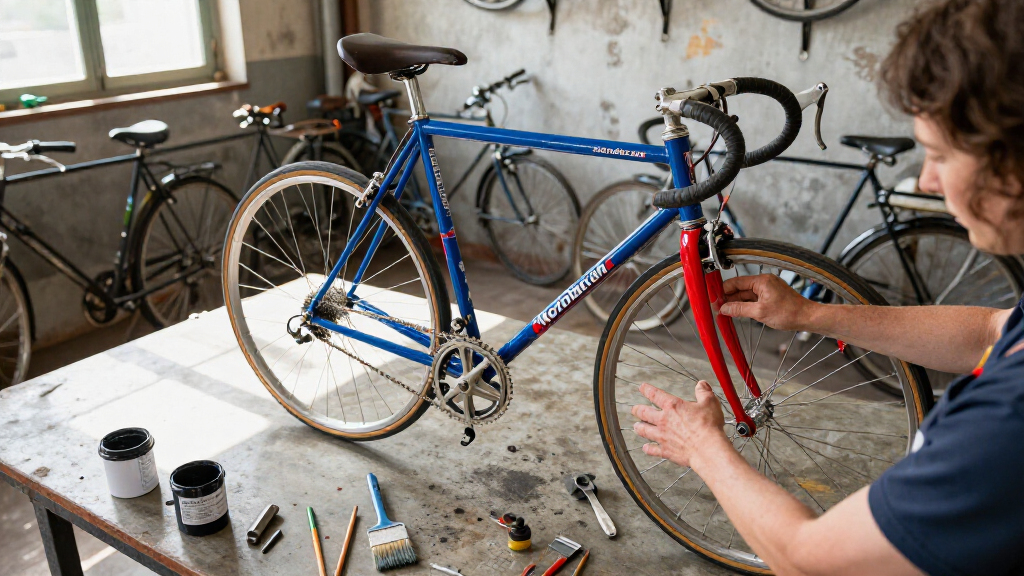
The bicycle is a 60-centimetre model from 1981, made during Vandenbroucke’s time with the La Redoute–Motobécane team. The article says he won numerous prologues for the team between 1980 and 1983. Its large frame is described as both substantial and light in appearance, with deep-blue metallic paint, chrome forks and a chrome rear triangle.
Owner Richard Hoddinott, who runs the vintage-bike collection and resource The Velo Pages, says the bicycle’s French character extends beyond its frame. The listed equipment includes a Stronglight chainset, Simplex derailleurs and shifters, a Sachs Maillard six-speed cassette, Maillard hubs and Mavic Super Champion rims. The article identifies the Cinelli cockpit, Selle Italia saddle and Weinmann 400 brakes as components sourced from elsewhere.
Cycling Weekly describes Motobécane as one of France’s established cycling brands in the early 1980s, alongside Peugeot, Gitane and Mercier. It says these companies’ bicycles continued to win races, even as the brands’ position weakened. The report attributes their decline to overseas competition and the arrival of carbon fibre, but does not provide company-by-company timelines or detail the business circumstances behind each brand’s fortunes.
A Snapshot of French Racing Craft
The bike offers a tangible example of a period when a national bicycle industry could be reflected in a racing machine’s components as well as its frame. Hoddinott’s inventory points to a largely French specification, while the striking paint and chrome work give the particular Motobécane a visual identity beyond its racing record.
That matters to cycling-history readers because the decline of older French manufacturers changed the landscape of the sport’s equipment industry. The article links Motobécane’s story with a wider loss of prominence among French bicycle and component makers. It also notes that French brands remain visible in professional cycling, naming Look, Lapierre and Van Rysel as current examples, though it does not claim they are direct continuations of the older companies.
As an affiliate, we earn on qualifying purchases.
Motobécane in the 1980s Peloton
Motobécane was part of a group of long-established French makers that included Peugeot, Gitane and Mercier. According to Cycling Weekly, their bikes were still achieving race wins in the early 1980s, but the decade brought pressures from international competitors and newer materials. The piece places this change within a broader decline that also affected French component manufacturers such as Simplex, Huret, Mafac and Maillard.
The featured machine is tied to Vandenbroucke’s professional years with La Redoute–Motobécane. Cycling Weekly reports that after retiring from racing, he became a directeur sportif at Lotto. It also mentions his coaching relationship with his nephew, Frank Vandenbroucke, describing it as a difficult period. The article does not give further detail about that personal history.
“It’s so wonderfully Gallic.”
— Richard Hoddinott, owner of The Velo Pages
As an affiliate, we earn on qualifying purchases.
What the Profile Does Not Establish
The report identifies the bicycle as a 1981 model ridden by Vandenbroucke, but it does not provide a detailed ownership history, frame serial number or documentation explaining how its connection to the rider was verified. It also does not state whether the bike is currently available for public viewing or sale.
The article describes the decline of French manufacturers in broad terms, citing overseas competition and carbon fibre, but gives no sales figures or company records to measure those effects. Its account should be read as a retrospective profile, not a full business history of Motobécane or the cycling industry.
As an affiliate, we earn on qualifying purchases.
The Bike’s Place in Cycling History
The profile does not announce a new product, exhibition or event, and it gives no future plans for the bicycle. For now, the development is a retrospective account of a specific race machine and its historical setting. Further details about the bike’s provenance or display arrangements would need to come from its owner or the publisher.
Readers interested in the period can use the component list and team dates as starting points for comparing surviving Motobécane models and other French race bikes. Any claims about the machine’s exact race use beyond the reported connection to Vandenbroucke would require additional documentation.
As an affiliate, we earn on qualifying purchases.
Key Questions
Who rode the featured Motobécane?
Jean-Luc Vandenbroucke rode the 1981 bicycle during his time with the La Redoute–Motobécane team, according to Cycling Weekly.
What makes the bike distinctly French?
The article points to its Stronglight, Simplex, Sachs Maillard, Maillard and Mavic components, as well as its Motobécane frame and finish.
What does the article say about the bike’s appearance?
It describes a deep-blue metallic paint job, chrome forks and a chrome rear triangle. The report says Motobécane was known for its frame finishes.
Why did older French cycling brands lose ground?
Cycling Weekly cites overseas competition and the arrival of carbon fibre as pressures on established manufacturers. The profile does not provide detailed company-level evidence or figures.
Source: rss
Halloween Picks
halloween
As an affiliate, we earn on qualifying purchases.