If you’re looking for the best chain and sprocket kits for vintage Japanese bikes, I recommend considering the D.I.D DKS-005 525VX chain paired with a 15/47T sprocket set, and the D.I.D MXY-001OEM 520DZ2 Gold chain with a 14/50T sprocket kit. These options combine durability, precise fit, and excellent performance, ensuring a smooth ride and long lifespan. Continue on to discover why these kits stand out and how to choose the perfect one for your bike.
Key Takeaways
- High-quality kits like D.I.D 525VX and MXY-001OEM 520DZ2 Gold Chain offer durability and corrosion resistance for vintage bikes.
- Compatibility with specific model years, sizes, and OEM specifications ensures precise fit and optimal performance.
- Advanced features like X-Ring technology enhance dirt resistance, lubrication retention, and longevity in various riding conditions.
- Proper installation, regular maintenance, and matching chain and sprocket sizes extend lifespan and improve safety.
- Choosing reputable brands with positive reviews ensures reliable performance and value for vintage Japanese motorcycle restoration.
| D.I.D (DKS-005 525VX Chain and 15/47T Sprocket Kit |  | Heavy-Duty Durability | Chain Type: 525VX O-Ring chain | Compatibility: Suzuki DL650 V-Storm (2007-2012) | Chain Material: Steel with X-Ring design | VIEW LATEST PRICE | See Our Full Breakdown |
| D.I.D MXY-001OEM 520DZ2 Gold Chain and 14 Teeth/50 Teeth Sprocket Kit | 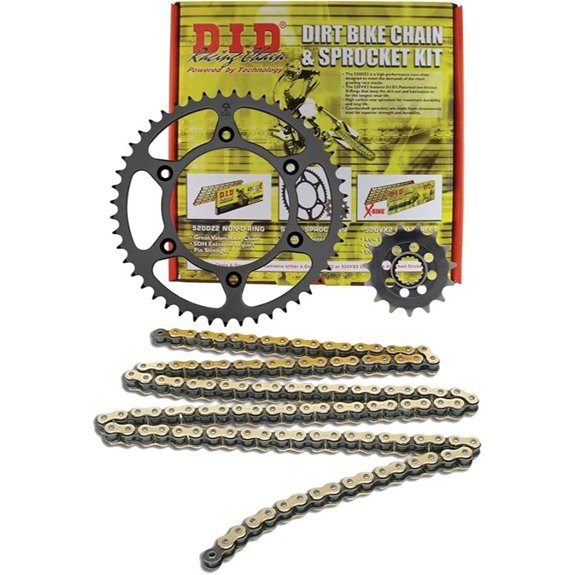 | Long-Lasting Performance | Chain Type: 520DZ2 Non-O-Ring chain | Compatibility: Yamaha YZ250 (1991-2015) | Chain Material: Steel with SDH pin treatment | VIEW LATEST PRICE | See Our Full Breakdown |
More Details on Our Top Picks
D.I.D (DKS-005 525VX Chain and 15/47T Sprocket Kit
If you’re restoring a Suzuki DL650 V-Storm from 2007 to 2012, the D.I.D (DKS-005 525VX Chain and 15/47T Sprocket Kit) is an excellent choice because it offers a reliable, high-performance upgrade. The 525VX chain features D.I.D’s patented X-Ring design, which seals out dirt and retains lubrication, boosting longevity. The 15-tooth front and 47-tooth rear sprockets are made from durable, heat-treated high carbon steel and chrome-moly steel, respectively. This setup reduces friction, improves power transfer, and withstands the rigors of daily riding or off-road adventures, making it a perfect match for your vintage bike’s needs.
- Chain Type:525VX O-Ring chain
- Compatibility:Suzuki DL650 V-Storm (2007-2012)
- Chain Material:Steel with X-Ring design
- Chain Length:118 links
- Gearing Range:15T front / 47T rear
- Sprocket Material:High carbon steel (rear), chrome-moly (front)
- Additional Feature:Patented X-Ring sealing
- Additional Feature:Twisting side plates design
- Additional Feature:Heat-treated high carbon steel sprockets
D.I.D MXY-001OEM 520DZ2 Gold Chain and 14 Teeth/50 Teeth Sprocket Kit
The D.I.D MXY-001OEM 520DZ2 Gold Chain and 14 Teeth/50 Teeth Sprocket Kit is an excellent upgrade for Yamaha YZ250 riders seeking maximum durability and performance. The non-O-ring chain features a redesigned design that offers twice the wear life of the original 520DZ and four times longer than standard chains, thanks to SDH pin treatment for added impact strength. The high carbon steel rear sprocket and chrome moly front sprocket are built for long-lasting durability. This kit improves shock absorption, reduces maintenance, and enhances riding stability, making it a reliable choice for riders looking to boost their bike’s efficiency and lifespan.
- Chain Type:520DZ2 Non-O-Ring chain
- Compatibility:Yamaha YZ250 (1991-2015)
- Chain Material:Steel with SDH pin treatment
- Chain Length:114 links
- Gearing Range:14T front / 50T rear
- Sprocket Material:High carbon steel (rear), chrome moly (front)
- Additional Feature:Gold chain color
- Additional Feature:Redesigned 520DZ2 chain
- Additional Feature:Impact-resistant pin treatment
Factors to Consider When Choosing a Chain and Sprocket Kit for Vintage Japanese Bikes

When selecting a chain and sprocket kit, I always check for compatibility with my bike’s specific model to guarantee a perfect fit. I consider the materials’ durability to avoid frequent replacements and look at chain length and gear ratio to match my riding style. Additionally, I evaluate maintenance needs to choose a setup that’s reliable and easy to care for over time.
Compatibility With Model
Choosing the right chain and sprocket kit for your vintage Japanese bike requires paying close attention to model-specific details. First, verify the size and pitch of the kit match your OEM components to avoid fitment issues. Check that the sprockets’ number of teeth aligns with your original gearing for proper performance and ride quality. It’s also essential to confirm the chain length and model are compatible with your bike’s frame and swingarm dimensions. Don’t forget to validate the sprocket bore diameter and mounting pattern fit your wheel hub or countershaft sprocket correctly. Lastly, review the product’s intended model years and engine specifications to ensure a perfect match. These steps help maintain your bike’s original feel while ensuring reliable operation.
Material Durability
Selecting a chain and sprocket kit that can withstand the rigors of riding a vintage Japanese bike depends heavily on the materials used in their construction. High-quality materials like high carbon steel and chrome-moly steel are essential, as they resist wear and extend the lifespan of the components. Heat treatments improve hardness and impact resistance, helping sprockets endure stress without cracking. Material choice also affects how well the chain handles harsh conditions like dirt, moisture, and temperature fluctuations, reducing the risk of premature elongation or breakage. Additionally, advanced coatings such as chromium carbide provide extra protection against corrosion and wear. Investing in durable materials guarantees your chain and sprocket kit remains reliable, minimizing maintenance costs and keeping your vintage bike running smoothly over time.
Chain Length & Fit
Ensuring the correct chain length is crucial for vintage Japanese bikes to perform smoothly and safely. I always recommend matching the chain length to the original specifications to avoid slack or tightness that can cause handling issues. To do this, measure your existing chain or consult the owner’s manual to find the right number of links. When selecting a chain, consider sprocket sizes and gear ratios, as these influence the ideal length. Keep in mind that aftermarket chains might need additional links for different models or modifications—double-check compatibility before installing. Proper chain length ensures efficient power transfer, minimizes sprocket wear, and keeps riding safe. Taking the time to get this right makes a noticeable difference in your bike’s performance and longevity.
Gear Ratio Suitability
The gear ratio plays a vital role in how your vintage Japanese bike performs, directly influencing acceleration, top speed, and fuel efficiency. It’s determined by dividing the number of teeth on the front sprocket by those on the rear sprocket. A lower gear ratio, with a smaller front or larger rear sprocket, delivers quicker acceleration but can limit top speed and reduce fuel economy. Conversely, a higher gear ratio improves top speed and fuel efficiency but may sacrifice initial throttle response. When choosing a kit, it’s important to match the gear ratio to your bike’s original specs or your riding preferences. Keep in mind that changing the ratio impacts chain tension and wear, so verify compatibility with your chain length and sprocket sizes for maximum performance.
Maintenance Requirements
Maintaining your vintage Japanese bike’s chain and sprockets requires consistent attention to detail to guarantee peak performance and longevity. Regular lubrication is essential, especially if your bike’s exposed to moisture, as it prevents rust and reduces wear. Frequently checking chain tension helps avoid slack or tightness, which can cause premature wear on the sprockets and chain. It’s also important to inspect for signs of wear, like elongation or broken links, to extend the drive system’s lifespan. Proper cleaning with suitable degreasers removes dirt and grime that can accelerate component degradation. Finally, replacing the chain and sprockets as a set ensures even wear and excellent performance, preventing damage to other drivetrain parts. Staying diligent with these maintenance steps keeps your vintage bike running smoothly.
Riding Conditions
Choosing the right chain and sprocket kit depends heavily on the riding conditions you’ll encounter. If you plan to ride mainly on paved streets, standard chains and sprockets will do, but off-road or mixed terrain demands durability. Dirt, mud, and water exposure require sealed or O-ring chains to keep dirt out and lubrication in. For high-impact riding or frequent acceleration, heat-treated steel sprockets and high-strength chains are essential to withstand stress. Wet or salty conditions accelerate corrosion, so coatings or corrosion-resistant materials become important. Additionally, vibration and shock absorption needs vary; some setups better handle shocks, reducing wear and maintaining smooth operation. Evaluating your typical riding environment ensures you choose a kit that performs reliably and lasts longer.
Budget Considerations
Considering your budget is essential when selecting a chain and sprocket kit for your vintage Japanese bike, as options range widely in price and quality. Premium kits typically cost more due to better materials and durability features, but they often last longer and require less maintenance. On the other hand, budget-friendly options may use lower-grade steel or lack sealing features, which can lead to quicker wear and more frequent replacements. It’s important to weigh the initial cost against the long-term savings—higher-quality parts might be more expensive upfront but can save you money over time. Also, factor in installation costs and any necessary modifications. Finding the right balance between affordability and durability *guarantees* you get the best value and keeps your vintage bike running smoothly.
Frequently Asked Questions
How Often Should I Replace My Vintage Japanese Bike’s Chain and Sprockets?
I recommend replacing your vintage Japanese bike’s chain and sprockets every 15,000 to 20,000 miles or annually, whichever comes first. I check mine regularly for wear, rust, and tightness, and replace them if I notice any elongation or damaged teeth. Proper maintenance extends their lifespan, but staying vigilant guarantees smooth rides and prevents costly damage. Trust your observations, and don’t wait too long to replace worn parts.
Are Aftermarket Chain and Sprocket Kits Compatible With Original Vintage Bike Parts?
Yes, aftermarket chain and sprocket kits can be compatible with your vintage Japanese bike if you choose carefully. I’ve seen riders install these kits and enjoy a smooth, reliable ride, feeling that same thrill as when they first bought their bike. Just double-check measurements and specifications, and you’ll get a perfect fit. It’s like giving your classic bike a fresh heartbeat, keeping it alive and roaring on the road.
Can I Install a Modern Chain and Sprocket Kit on My Vintage Japanese Motorcycle?
Yes, you can install a modern chain and sprocket kit on your vintage Japanese motorcycle. I’ve done it myself and found it straightforward, but I always double-check the compatibility with my bike’s specifics. Make sure to measure correctly and choose a kit designed for vintage models to guarantee proper fit and performance. It’s a great way to improve reliability while maintaining that classic look.
What Are the Signs of Worn or Damaged Chain and Sprocket Components?
You’ll notice some subtle signs when your chain and sprockets are getting tired. The chain might feel loose or have tight spots, and you might hear unusual noises or see it skipping over the sprockets. Worn sprockets often show hooked or broken teeth, and the chain could look elongated or rusty. Regular inspections help catch these hints early, keeping your ride smooth and safe.
How Does Chain and Sprocket Size Affect My Bike’s Performance and Ride Quality?
Larger sprockets can give you better acceleration and a more relaxed ride, while smaller ones boost top speed. If your chain is a different size than recommended, it can cause slipping or uneven wear, affecting performance. I always pay attention to sprocket size to match my riding style, and I find that choosing the right size improves smoothness and control, making every ride more enjoyable and efficient.
Conclusion
Choosing the right chain and sprocket kit is like fine-tuning a vintage engine—every detail matters. Imagine the smooth hum of your bike gliding effortlessly down the road, gears perfectly meshed, ready for adventure. With the right setup, you’ll feel that satisfying connection between rider and machine. So, weigh your options carefully, keep your bike’s soul in mind, and enjoy every ride as if it’s a timeless journey through open roads.