
If you’re looking for the best fork oils for vintage motorcycle forks in 2026, I recommend considering Maxima 55916 10WT, Liqui Moly 10W, V-Twin 20wt, Bel-Ray 20W, and V-Twin 10WT oils. These options offer excellent shear stability, proper viscosity, and seal protection to keep your suspension smooth and reliable. To guarantee optimal performance and longevity, it’s crucial to match the oil to your forks’ needs, and you’ll find useful details if you keep exploring.
Key Takeaways
- Select oils with the correct viscosity (10W or 20W) to ensure proper damping and handling for vintage forks.
- Prioritize shear-stable, fortified oils that maintain consistent viscosity under mechanical stresses.
- Use oils with seal conditioners and anti-corrosion additives to protect vintage rubber seals and internal components.
- Match oil formulations to OEM specifications for optimal compatibility and performance in classic motorcycle forks.
- Regularly inspect and replace fork oil to prevent internal wear, foaming, and maintain smooth suspension operation.
| Maxima 55916 10WT Standard Hydraulic Fork Oil – 16 oz. Bottle |  | Best Overall | Viscosity: 10WT | Formulation Type: Mineral-based | Compatibility: Cartridge and standard forks | VIEW LATEST PRICE | See Our Full Breakdown |
| Liqui Moly 10W Fork Oil 1L for Motorcycles | 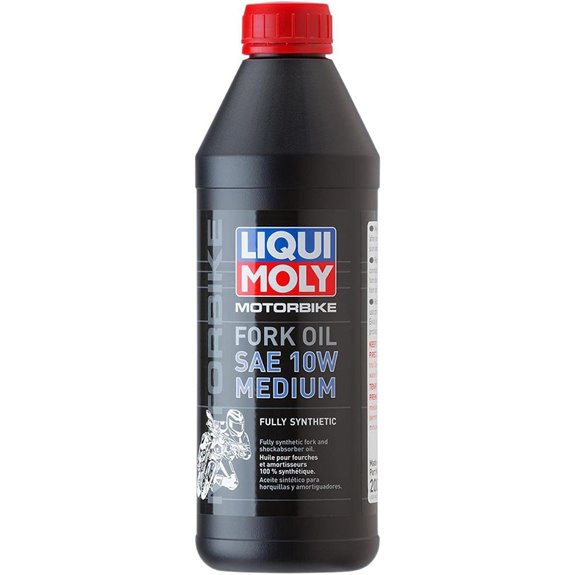 | Best Synthetic | Viscosity: 10W | Formulation Type: Full synthetic | Compatibility: Telescopic forks and shock absorbers | VIEW LATEST PRICE | See Our Full Breakdown |
| V-Twin Fork Oil 20wt |  | Harley-Approved | Viscosity: 20WT | Formulation Type: Lubricinol-fortified | Compatibility: Harley-Davidson forks | VIEW LATEST PRICE | See Our Full Breakdown |
| Bel-Ray High Performance Fork Oil – 20W – 1Liter 99340-B1LW |  | Professional Grade | Viscosity: 20W | Formulation Type: High-performance mineral | Compatibility: All suspension forks | VIEW LATEST PRICE | See Our Full Breakdown |
| V-Twin Fork Oil 10wt | 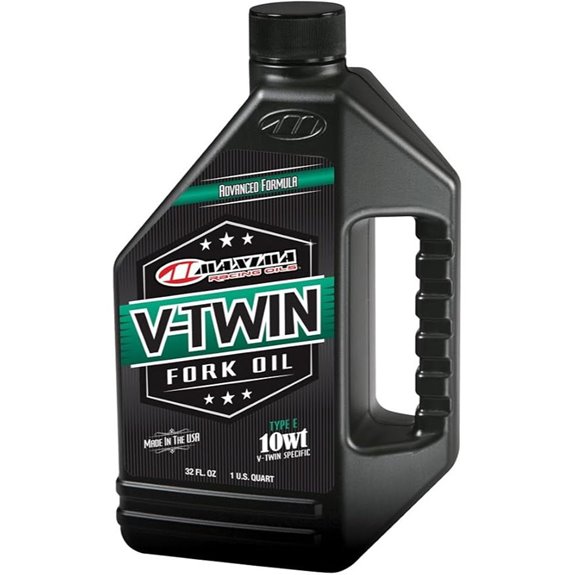 | Value Choice | Viscosity: 10WT | Formulation Type: Lubricinol-fortified | Compatibility: Harley-Davidson forks | VIEW LATEST PRICE | See Our Full Breakdown |

More Details on Our Top Picks
-

Liqui Moly 10W Medium Fork Oil - 1L, Universal for Motorcycles, Mopeds & More, 1.95 lbs
Full synthetic fork oil and shockabsorber oil. Reduces shear losses and provides sure handling performance even after long...
As an affiliate, we earn on qualifying purchases.
Maxima 55916 10WT Standard Hydraulic Fork Oil – 16 oz. Bottle
If you’re looking for a reliable fork oil that delivers consistent performance, Maxima 55916 10WT Standard Hydraulic Fork Oil is an excellent choice for vintage motorcycle forks. I’ve found that its lubricinol-fortified formula considerably reduces friction and stiction, making my ride smoother. The shear-stable, high viscosity index keeps the damping consistent and prevents wear over time. Plus, it helps keep internals clean, guards against corrosion, and conditions seals for longer life. I appreciate that it minimizes foaming and air entrainment, ensuring my suspension performs ideally. Following the manufacturer’s instructions guarantees I get the most out of this versatile, high-quality fork oil.
- Viscosity:10WT
- Formulation Type:Mineral-based
- Compatibility:Cartridge and standard forks
- Performance Benefits:Reduces friction, wear, and maintains damping
- Additives/Protection:Keeps internals clean, prevents corrosion
- Application Type:Cartridge and standard forks
- Additional Feature:Lubricinol-fortified formula
- Additional Feature:Keeps internals clean
- Additional Feature:Prevents corrosion
-

V-Twin Fork Oil 20wt
Developed and tested in H-D Fork Systems
As an affiliate, we earn on qualifying purchases.
Liqui Moly 10W Fork Oil 1L for Motorcycles
The Liqui Moly 10W Fork Oil 1L is an excellent choice for riders seeking a reliable, full synthetic oil that guarantees smooth handling and long-lasting performance. Its universal compatibility makes it perfect for motorcycles, mopeds, and other two-wheeled vehicles, working well in telescopic forks and shock absorbers. This oil reduces shear losses, ensuring consistent damping and stability over time. Designed for durability, it maintains performance even after prolonged use under various conditions. With a 1-liter capacity, it’s a convenient option for regular maintenance or top-ups. Overall, Liqui Moly’s synthetic formulation offers peace of mind for those wanting quality and reliability in their fork oil.
- Viscosity:10W
- Formulation Type:Full synthetic
- Compatibility:Telescopic forks and shock absorbers
- Performance Benefits:Reduces shear losses, ensures handling
- Additives/Protection:Long-term durability
- Application Type:Universal in forks and shock absorbers
- Additional Feature:Full synthetic formulation
- Additional Feature:Designed for long-term durability
- Additional Feature:Suitable for various conditions
-

Bel-Ray High Performance Fork Oil - 20W - 1Liter 99340-B1LW
Front suspension oil formulated for use in all suspension forks including those using cartridge and dual chamber systems
As an affiliate, we earn on qualifying purchases.
V-Twin Fork Oil 20wt
V-Twin Fork Oil 20wt is an ideal choice for Harley-Davidson enthusiasts seeking reliable suspension performance. I’ve found that its Lubricinol-fortified formulation markedly reduces friction and stiction, leading to smoother operation. Its shear-stable, high viscosity index formula maintains a strong film on internal components, preventing wear and ensuring consistent damping. It also minimizes foaming and air entrainment, which helps preserve suspension response and stability. Plus, it keeps the internal parts clean, prevents corrosion, and helps condition seals for longer fork system life. Just follow the recommended application instructions, and you’ll enjoy improved performance and protection from this specially designed fork oil.
- Viscosity:20WT
- Formulation Type:Lubricinol-fortified
- Compatibility:Harley-Davidson forks
- Performance Benefits:Minimizes foaming, maintains damping
- Additives/Protection:Keeps internals clean, prevents corrosion, seals
- Application Type:Harley-specific forks
- Additional Feature:Harley-specific formulation
- Additional Feature:Maintains suspension response
- Additional Feature:Helps seal conditioning
Bel-Ray High Performance Fork Oil – 20W – 1Liter 99340-B1LW
Bel-Ray High Performance Fork Oil 20W stands out as an excellent choice for vintage motorcycle enthusiasts seeking reliable suspension performance in 2026. Its carefully selected high-viscosity base oils ensure smooth operation across a wide temperature range, reducing fade and maintaining consistent damping. This oil eliminates striction and drag, greatly improving fork action and responsiveness. Suitable for all suspension types, including cartridge and dual chamber systems, it’s designed to enhance both performance and longevity. With a 1-liter bottle, it’s a practical option for restoring vintage forks to superior condition, making it a trusted choice for riders who demand quality and durability.
- Viscosity:20W
- Formulation Type:High-performance mineral
- Compatibility:All suspension forks
- Performance Benefits:Reduces fade, enhances responsiveness
- Additives/Protection:Designed for responsiveness and longevity
- Application Type:All suspension forks
- Additional Feature:Suitable for all forks
- Additional Feature:Reduces fade at temperature
- Additional Feature:Improves fork responsiveness
V-Twin Fork Oil 10wt
Looking for fork oil that delivers exceptional damping and wear protection on vintage Harley-Davidson models? V-Twin Fork Oil 10wt is my go-to choice. Developed and tested specifically for Harley systems, it has a shear-stable, high viscosity index formula that guarantees consistent performance. It reduces friction and stiction, helping your forks glide smoothly, while minimizing foaming and air entrainment. Plus, it keeps internal parts clean, prevents corrosion, and conditions seals effectively. With its strong film strength and wear-reducing properties, V-Twin Fork Oil 10wt helps maintain ideal damping and prolongs fork life, making it a reliable choice for vintage Harley enthusiasts.
- Viscosity:10WT
- Formulation Type:Lubricinol-fortified
- Compatibility:Harley-Davidson forks
- Performance Benefits:Reduces friction, maintains damping
- Additives/Protection:Keeps internals clean, prevents corrosion, seals
- Application Type:Harley-specific forks
- Additional Feature:Tested in Harley forks
- Additional Feature:Maintains film strength
- Additional Feature:Minimize foaming and air entrainment
Factors to Consider When Choosing Fork Oil for Vintage Motorcycle Forks
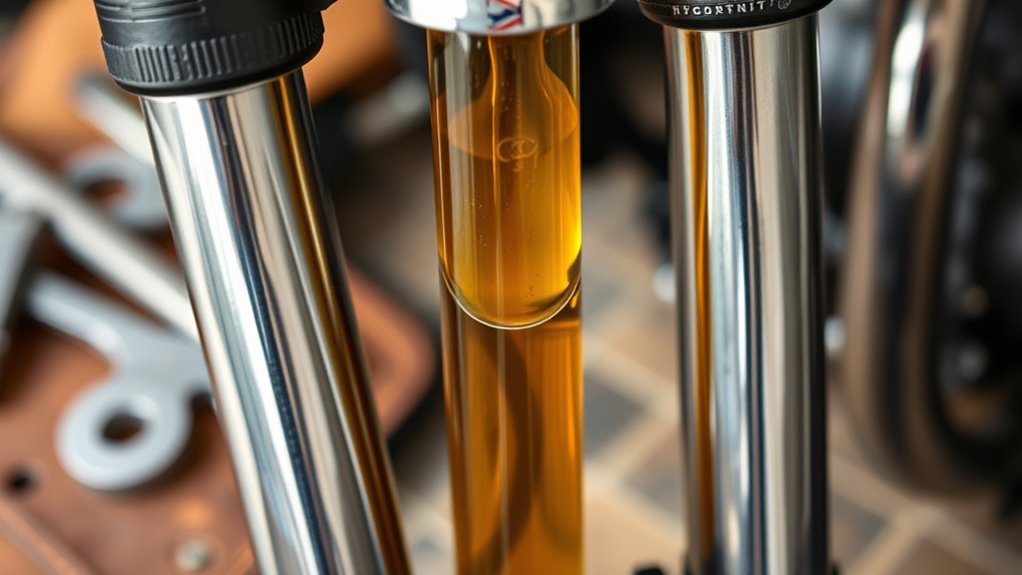
When selecting fork oil for vintage motorcycles, I consider key factors like viscosity compatibility and how well the oil handles shear stress. Seal compatibility and temperature performance are also critical to guarantee smooth operation and longevity. Finally, I keep in mind maintenance intervals to keep the forks functioning at their best over time.
Viscosity Compatibility Needs
Choosing the right fork oil for vintage motorcycle forks largely depends on matching the oil’s viscosity to the manufacturer’s specifications. This guarantees proper damping and handling. Using oil with too high viscosity can make the forks sluggish, reducing responsiveness, while too low viscosity may cause excessive fork dive and instability. The viscosity ratings like 10W, 20W, or 5W reflect how the oil flows at cold and operating temperatures, impacting cold starts and overall ride comfort. Older forks might need specific viscosity levels to account for wear and internal tolerances. Additionally, selecting an oil that maintains viscosity stability across temperature ranges helps keep suspension performance consistent during different riding conditions. Proper viscosity compatibility is essential for safe, smooth, and effective vintage motorcycle riding.
Shear Stability Importance
Shear stability is a critical factor because it determines how well fork oil can withstand the mechanical stresses of suspension movement without thinning excessively. When the fork compresses or rebounds rapidly, the oil experiences shear forces that can break down its structure. Oils with high shear stability maintain their viscosity and film strength under these conditions, ensuring consistent damping performance. Conversely, poor shear stability causes the oil to thin too much, leading to increased internal wear, inconsistent damping, and compromised suspension feel. Using shear-stable fork oils helps keep performance steady over time, even with frequent cycling. Additionally, these oils tend to have a stable viscosity index, reducing the need for frequent changes and maintenance, which is especially beneficial for vintage motorcycles.
Seal Compatibility Factors
Selecting the right fork oil for vintage motorcycles isn’t just about viscosity or shear stability—it also requires careful attention to seal compatibility. I always guarantee the oil’s viscosity matches the manufacturer’s specs to prevent seal swelling or hardening. Using oils with seal conditioners is vital, as they help maintain the rubber seals’ elasticity and prevent cracking over time. I avoid oils containing aggressive detergents or additives that could degrade or swell vintage seals. Checking compatibility with specific materials like rubber or leather is essential, since some formulations can cause damage. Additionally, I choose oils that perform well within the operating temperature range of vintage forks, preventing seal hardening or swelling during riding. Proper seal compatibility extends the longevity and performance of your forks.
Temperature Performance Range
Ensuring the fork oil performs well across varying temperatures is essential for maintaining consistent damping and handling. I look for oils with a viscosity grade suited to my riding conditions, whether I ride in cold or hot weather. Thinner oils, with lower viscosity, are better in cold temperatures because they flow easily and keep responsiveness sharp. Conversely, thicker oils, with higher viscosity, resist thinning in hot conditions, providing stable damping. Many modern fork oils are formulated with shear-stable, high viscosity index properties, allowing them to perform consistently across broad temperature ranges. Using oil that’s too thick in cold weather can cause sluggish response, while oil that’s too thin in heat may lead to reduced damping and increased wear. Checking the oil’s recommended temperature range helps ensure reliable performance all year.
Maintenance and Replacement Intervals
Regular maintenance of fork oil is crucial for keeping vintage motorcycle forks functioning properly, and knowing when to replace the fluid can make a significant difference in suspension performance. I recommend inspecting your fork oil levels regularly and replacing the fluid every 10,000 to 15,000 miles. In harsher riding conditions or if exposed to dirt and moisture, you should change the oil more frequently. Worn or contaminated oil leads to increased stiction, reduced damping, and faster internal wear. While manufacturers suggest specific intervals, a visual check for dark, gritty, or frothy oil can help you determine if an earlier change is needed. Proper maintenance and timely replacements extend fork lifespan and ensure safe, smooth handling on your vintage motorcycle.
Corrosion Resistance Features
When choosing fork oil for vintage motorcycles, it’s essential to take into account its ability to resist corrosion, as internal rust and damage can severely impair suspension performance. Oils with anti-corrosion additives help prevent internal rust, extending the lifespan of your forks. Seal conditioners are also important because they protect against moisture and corrosive elements that can degrade seals over time. Shear-stable formulations maintain a consistent film, reducing metal-to-metal contact and corrosion risks. Fortified oils with lubricinol or similar additives create a protective barrier against environmental contaminants and moisture. Regularly replacing your fork oil with a product that offers strong corrosion resistance minimizes internal damage and helps preserve fork integrity, ensuring smooth operation and longevity for your vintage motorcycle.
Original Equipment Specifications
Choosing the right fork oil for your vintage motorcycle means paying close attention to the manufacturer’s original equipment specifications (OES). These specifications specify the correct viscosity grade and type, ensuring your forks perform as intended. They often include specific additives or formulations tailored to the fork design and materials, which can be vital for longevity. Using oil that meets the OES guarantees compatibility with seals, bushings, and internal components, reducing the risk of premature wear or damage. Sticking to the original specs helps maintain ideal damping characteristics, preserving your motorcycle’s handling and ride quality. Deviating from these recommendations can compromise suspension performance, accelerate wear, or damage seals. Always consult your motorcycle’s manual or manufacturer’s guidelines to select the correct fork oil for your vintage bike.
Frequently Asked Questions
How Often Should Vintage Motorcycle Forks Be Serviced With New Oil?
I recommend servicing vintage motorcycle forks with new oil every 10,000 to 15,000 miles or at least once a year, whichever comes first. Regular maintenance ensures smooth operation and prevents wear. I always check the oil for contamination and change it if I notice any dirt or degradation. Staying consistent with these intervals keeps my vintage bike’s suspension functioning properly and extends the lifespan of the forks.
Can I Mix Different Brands of Fork Oil Safely?
Mixing different brands of fork oil isn’t ideal, but if you’re in a pinch, it’s usually okay as long as the viscosities are similar. I recommend sticking to one brand for consistency, though, because each formulation has unique additives that work best together. If you decide to mix, do so sparingly, and keep an eye on your fork’s performance to make certain of smooth sailing.
What Are Signs That My Fork Oil Needs Changing?
If your motorcycle’s suspension feels less responsive, or you notice increased stiction or knocking sounds, it’s time to change the fork oil. Milky or foamy fluid, or if the oil looks dark or contaminated, are also clear signs. I recommend checking your owner’s manual for specific intervals, but if in doubt, it’s best to replace the oil to guarantee smooth handling and protect your forks from wear.
How Does Fork Oil Viscosity Impact Vintage Motorcycle Handling?
Did you know that even a 10% change in fork oil viscosity can markedly alter handling? I’ve found that thicker oil increases damping, making the ride stiffer and more controlled, which is great for rough terrains. Conversely, lighter oil offers smoother travel, ideal for paved roads. Choosing the right viscosity helps me balance comfort and control, ensuring my vintage motorcycle handles exactly how I want it.
Are Synthetic Fork Oils Better for Vintage Bikes Than Mineral Oils?
I believe synthetic fork oils are generally better for vintage bikes because they offer superior performance and stability. They resist breakdown over time, providing consistent damping and smooth handling. Plus, they handle temperature changes better, which is vital for vintage bikes that might not have modern cooling systems. That said, always check your bike’s manual or consult an expert to make certain of compatibility; using the right oil makes all the difference.
Conclusion
Choosing the right fork oil is like fine-tuning a vintage engine—every detail matters. With these top options, you’ll guarantee your motorcycle’s suspension runs smooth as silk, even as time weaves its stories into your ride. Trust me, selecting the right oil keeps your vintage motorcycle feeling fresh and lively, like a well-rehearsed symphony. So, gear up and give your forks the care they deserve—your ride will thank you for it.