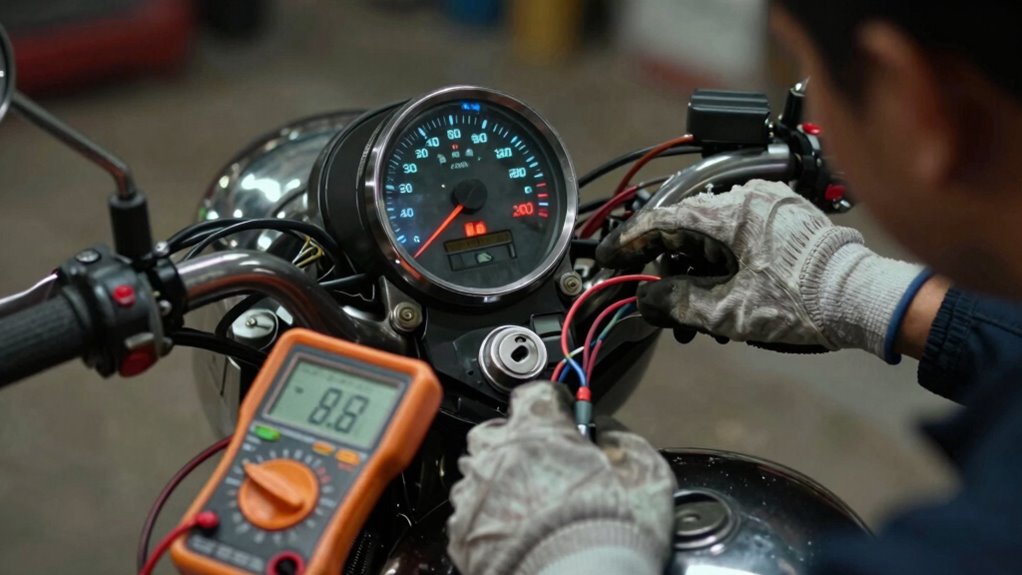

To diagnose electrical gremlins like no-spark and dim lights, start by inspecting your fuses, fuse links, and wiring for corrosion or damage. Check the battery and alternator to verify proper voltage and charging. Test ignition coils and modules with a multimeter or swapping them temporarily to spot faults. Also, examine spark plugs, connections, and grounds. If issues persist, you’ll discover more troubleshooting steps to pinpoint the root cause and restore proper function.
Listen free for 30 days with Audible
Thousands of audiobooks and originals — cancel anytime.
As an affiliate, we earn on qualifying purchases.
Key Takeaways
- Check fuses, fuse links, and wiring connections for damage, corrosion, or loose terminals affecting ignition and lighting circuits.
- Test ignition coils and modules with a multimeter or oscilloscope to identify potential faults or overheating.
- Inspect spark plugs for proper gapping, wear, and corrosion to ensure reliable spark generation.
- Verify battery health, terminal connections, and alternator output to maintain stable voltage and prevent dimming.
- Perform visual inspections for damaged wiring, grounding issues, and physical damage on coils, modules, and electrical components.

WINAMOO Automotive Test Light with 3-48V LED Digital Voltage Display, Auto Circuit Tester with Voltmeter & Dual Color Polarity Indicate, Electric Test Pen w/Stainless Probe for Car/Truck/SUV Checker
- Clear Digital Voltage Display: Bright LED with 0.1V resolution for easy readings
- Polarity Indication: Red and green LEDs show positive or negative polarity
- Wide Voltage Range Testing: Tests 3V-48V systems including car and boat batteries
As an affiliate, we earn on qualifying purchases.
As an affiliate, we earn on qualifying purchases.
Recognizing the Symptoms of Ignition Coil Failures
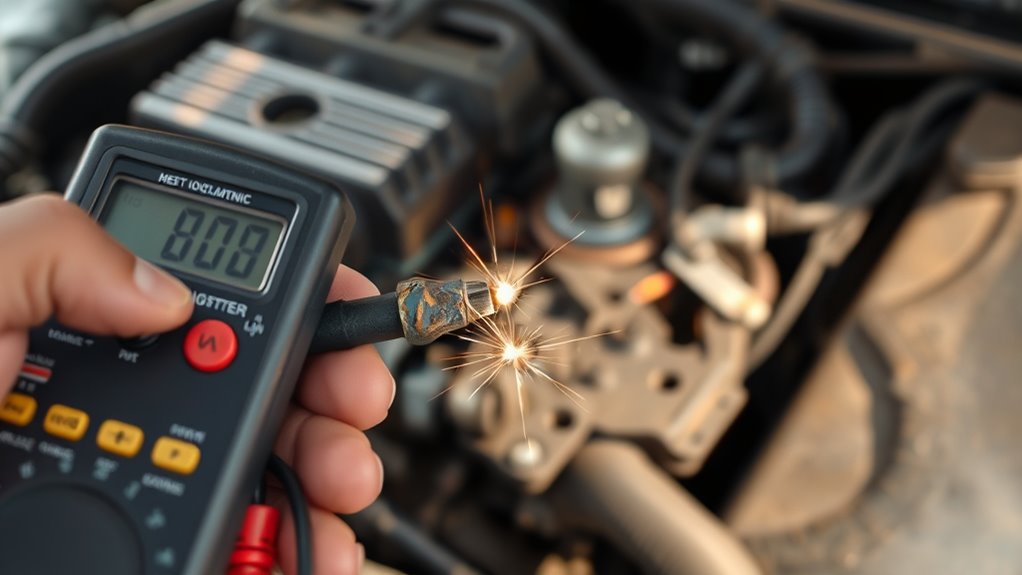
Recognizing the symptoms of ignition coil failures is essential for maintaining your vehicle’s performance. When coils fail, you might notice your engine stalls unexpectedly, especially during idle or acceleration. Misfiring and backfiring are common signs, causing rough running and vibrations. Difficulty starting your vehicle or a no-start situation often points to faulty coils not delivering sparks to the plugs. Overheating coils, caused by engine heat or cooling issues, can also signal trouble, leading to sudden failures. Electrical overloads from poor wiring or weak batteries can damage coils prematurely. Additionally, spark plug gaps that are too wide or narrow strain the coils, resulting in faster wear and ignition problems. Recognizing these symptoms early helps prevent more severe engine damage and costly repairs. Proper coil technology and regular inspections can improve ignition system reliability and longevity. Regular maintenance of electrical systems can help detect issues before coil failure occurs. Being aware of preventive maintenance practices can further extend the life of your ignition components and avoid unexpected failures.
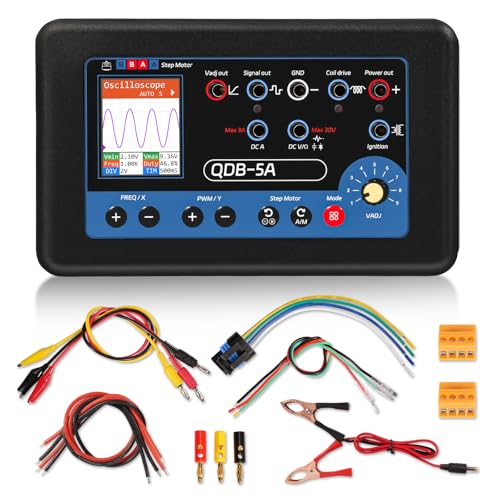
VORGENS Upgraded QDB-5A Ignition Coil Tester, Automobile Actuator Drive Detector, Fit for Ignition Coils, Fuel Injectors, PWM-Controlled Solenoid Valves, Urea Pump Motors – New Upgraded QDB-5A
- Upgraded Functions: Supports ignition drive, oscilloscope, measurements, PWM, step motor, voltage adjustment
- Compatible Parts: Tests sensors, injectors, ignition coils, PWM parts, step motors
- Package Includes: Tester, power cable, plugs, motor plug, welding cable, instruction
As an affiliate, we earn on qualifying purchases.
As an affiliate, we earn on qualifying purchases.
Common Causes of No-Spark Conditions
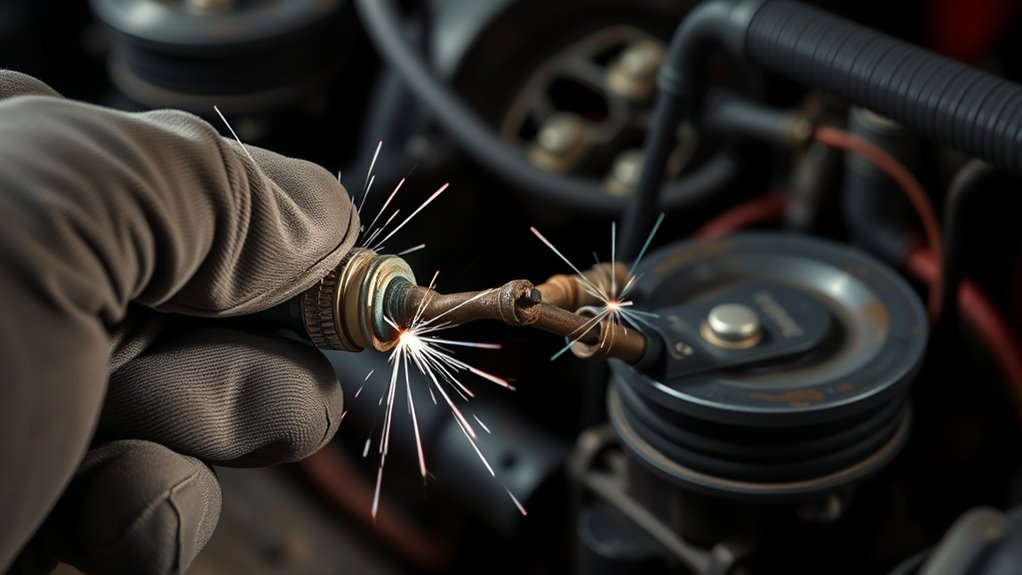
When your engine has no spark, the problem often comes down to faulty ignition coils or issues in the electrical system. A damaged coil, bad wiring, or poor connections can interrupt the flow of electricity needed for ignition. Troubleshooting these components helps you identify the root cause quickly and get your engine running again. Additionally, miscommunication between family members can sometimes lead to overlooked issues in the electrical wiring, emphasizing the importance of thorough inspection. Being aware of toilet flushing mechanisms and how they function can also help in diagnosing potential electrical or mechanical problems that affect overall system performance. Recognizing body jewelry measurements and materials can also be useful when inspecting components related to electrical connections, ensuring compatibility and safety. Maintaining proper electrical system grounding is essential to prevent no-spark conditions and ensure reliable engine operation. Proper diagnostic tools and techniques are crucial for accurately pinpointing electrical issues efficiently.
Faulty Ignition Coils
Faulty ignition coils are a common cause of no-spark conditions because they directly supply the high-voltage needed for spark plug ignition. When coils weaken or fail, the engine may not produce sparks, making starting and running difficult. You might notice misfires, rough idling, or difficulty starting. To diagnose coil issues, consider these signs:
- Engine misfires or sputters during acceleration or steady driving.
- Hard starting or no-start conditions despite a good battery.
- Engine stalling or backfiring due to inconsistent spark delivery.
Regular inspection of ignition system components can help identify wear or damage before complete failure occurs. Overheating, wiring problems, or age can accelerate coil failure. Replacing faulty coils promptly restores proper ignition and prevents further engine damage.
Electrical System Faults
Electrical system faults are a common reason your engine might not spark at all, even if the ignition coil and spark plugs are in good condition. Blown fuses or damaged fuse links cut off power to critical ignition components, preventing spark generation. A faulty ignition switch can interrupt voltage flow, leading to no spark or dim lights. Wiring faults, such as corroded terminals or poor grounds, cause resistance and voltage drops, disrupting ignition signals. Weak or discharged batteries can’t supply enough power, affecting both lighting and ignition. Alternator failures reduce the electrical flow needed for proper engine operation. Additionally, improper wiring modifications or accidental grounds can create open circuits, resulting in no spark. Diagnosing these faults involves checking fuses, wiring, and voltage supply systematically. Properly understanding Free Floating concepts in electrical systems can help identify issues more efficiently. Recognizing Electrical system faults early can prevent further damage and ensure reliable engine performance. Being aware of voltage supply issues and how they influence system behavior is crucial for accurate diagnosis. Understanding circuit continuity can also aid in pinpointing breaks or shorts in wiring that cause no-spark conditions. Furthermore, utilizing diagnostic tools like multimeters and oscilloscopes can greatly enhance troubleshooting accuracy.

CTA Tools 3235 Spark Plug Gapper: Coin-Style Spark Plug Gap Tool, 0.020"–0.100" Measurement Range, Plated Steel, Quick-Check Reference Tool
- Wide range of professional automotive specialy tools
- Professional grade
- Heavy duty design
As an affiliate, we earn on qualifying purchases.
As an affiliate, we earn on qualifying purchases.
Diagnosing Ignition Coil and Module Problems

To diagnose ignition coil and module problems, start by testing the coil’s resistance with a multimeter to see if it’s within specifications. Next, check the module’s function by observing its output signals or performing a swap test if possible. Identifying faults early helps prevent misfires and engine stalls. Additionally, understanding the electrical system can assist in troubleshooting these components more effectively. Knowing how home EV charging integrates with automotive diagnostics can also provide insights into electrical issues that affect both systems. Incorporating smart appliances and automation techniques can help streamline diagnostics and improve accuracy in identifying electrical faults. Consulting portable power concepts can sometimes reveal parallel wiring or power supply concerns that impact vehicle electronics.
Testing Coil Resistance
Testing coil resistance is a crucial step in diagnosing ignition coil and module problems because it helps determine whether the coil is within its proper electrical parameters. To do this, you’ll need a digital multimeter set to ohms. First, locate the coil’s primary and secondary terminals. Second, measure the resistance across the primary terminals to check for a reading within the manufacturer’s specifications. Third, test the resistance between the secondary terminal and the primary. If either reading is too high or too low, it indicates a faulty coil. This process helps you identify open or shorted coils, preventing unnecessary part replacements. Remember, always compare your readings to the vehicle’s service manual for accurate diagnosis.
Checking Module Function
Checking the module function is essential when diagnosing ignition coil problems because a faulty module can prevent the coil from firing properly. To do this, verify power supply and grounding. Use a multimeter to check for 12 volts at the module’s input and ensure proper grounding. If power and ground are good, test the module’s output signal. A failing module won’t send the correct signals to the coil, causing no spark. Here’s a quick reference:
| Test | What to Check | Possible Issue |
|---|---|---|
| Power supply | 12V at module input | Faulty wiring or blown fuse |
| Ground connection | Good continuity to chassis | Poor grounding |
| Output signal | Correct pulsing when cranking | Defective module |
| Visual inspection | Burn marks or damage on module | Physical failure |
Additionally, inspecting the module for any physical damage can help identify issues early. Ensuring that the electrical connections are secure and free of corrosion is also crucial for proper operation. Make sure you replace or repair faulty components to restore proper ignition.
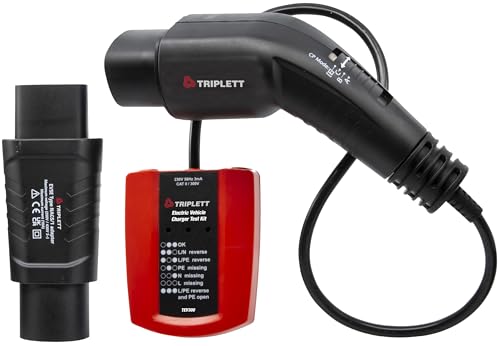
Triplett TEV300 Electric Vehicle Charger Test Kit
- Wiring Testing with LED Indicators: Basic EV charging system testing with LED alerts
- Standards Compliance: Meets EMC, Low Voltage, and EN61010-1 standards
- Charger Socket Status Indicator: LED and chart show socket condition
As an affiliate, we earn on qualifying purchases.
As an affiliate, we earn on qualifying purchases.
Electrical System Checks for Spark and Lighting Issues
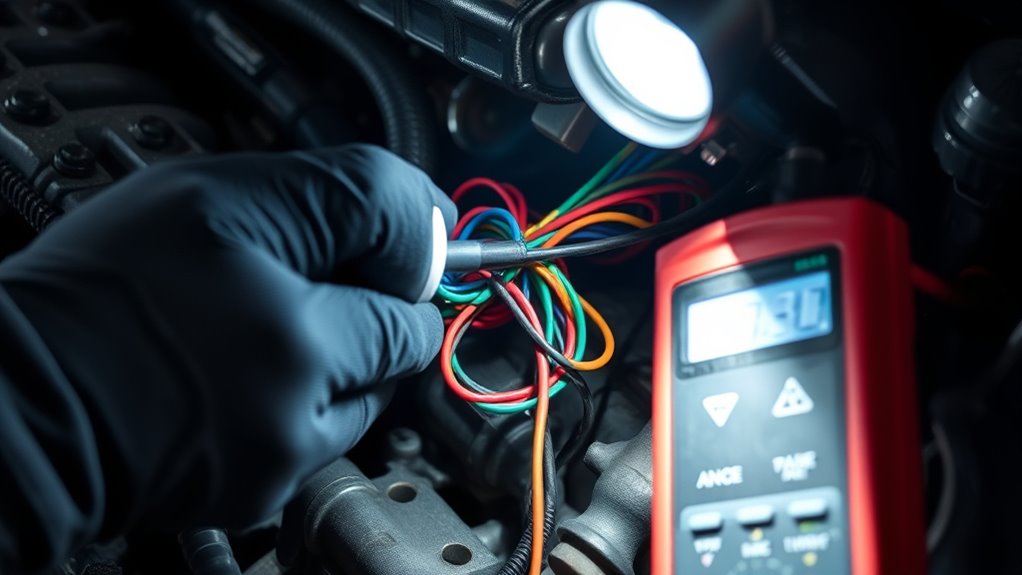
Electrical system issues that cause spark and lighting problems often stem from simple faults like blown fuses, corroded terminals, or wiring faults. To diagnose these, start by inspecting your fuses and fuse links; a blown fuse cuts power to critical components. Next, check all wiring connections for corrosion, loose terminals, or damaged insulation, especially around battery terminals and ignition switches. Additionally, inspecting circuit integrity can help identify hidden faults that disrupt electrical flow. Ensuring proper wiring connections can prevent many common issues; poor connections can cause intermittent spark and lighting issues. Proper system grounding is essential for stable electrical performance; poor grounding can cause unpredictable issues and erratic operation. Regularly testing and maintaining electrical components can help catch problems early before they lead to failures. Clear, consistent voltage flow indicates a healthy electrical system, reducing spark and lighting issues.
The Role of Spark Plugs in Engine Performance
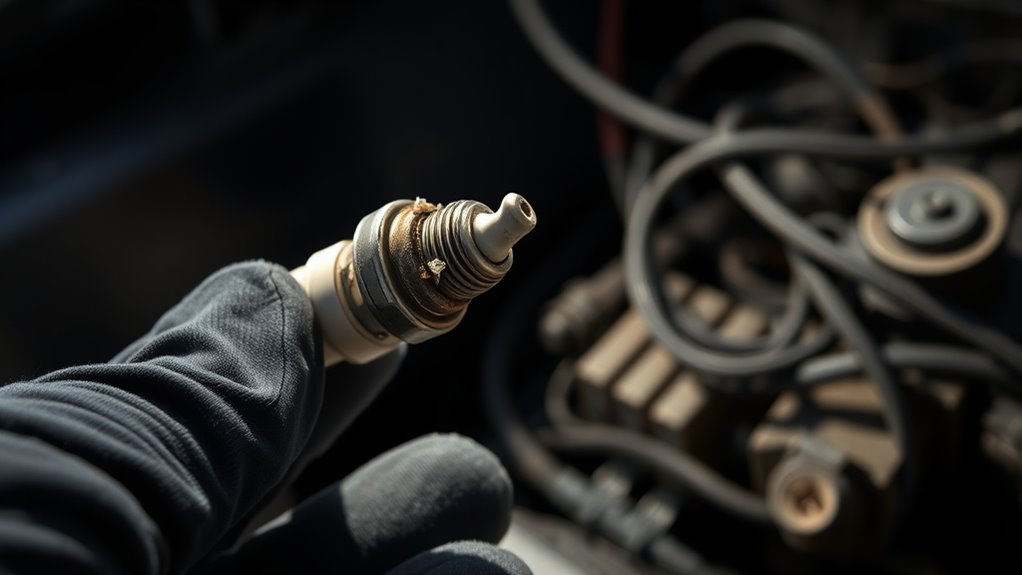
Spark plugs play a crucial role in your engine’s ability to run smoothly and efficiently. They create the spark needed to ignite the air-fuel mixture in each cylinder, powering your vehicle. When spark plugs are clean, properly gapped, and in good condition, they guarantee consistent ignition, smooth idling, and optimal acceleration. Worn or fouled spark plugs cause misfires, rough idling, and reduced fuel economy. If the gap is too wide or narrow, it can strain the ignition system and lead to engine hesitation. Proper maintenance, including regular inspection and replacement, helps maintain engine performance and prevents issues like difficulty starting or engine knocking. In short, spark plugs are vital for reliable combustion and overall engine health.
Troubleshooting Dim Lights and Power Loss
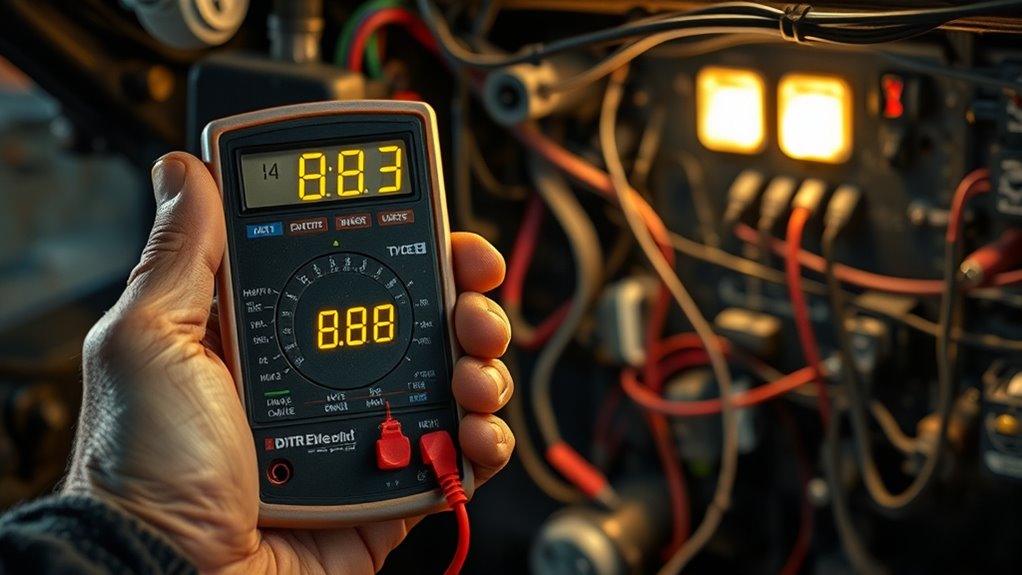
Dim lights and power loss often indicate underlying electrical issues that affect multiple systems in your vehicle. You might notice dim headlights, dashboard flickering, or sluggish performance. To troubleshoot, start by checking:
Dim lights and power loss signal hidden electrical issues affecting your vehicle’s performance.
- Battery condition and connections – Loose or corroded terminals can cause voltage drops, dimming lights and weak power.
- Fuses and fusible links – Blown fuses interrupt power supply, leading to dim lights and system failures.
- Alternator output – An underperforming alternator fails to charge the battery properly, causing electrical components to weaken.
Ensuring these components are in good shape helps maintain consistent power. If issues persist, test wiring for shorts or open circuits, as these can also lead to dimming and power loss.
Preventive Measures to Maintain Ignition System Health
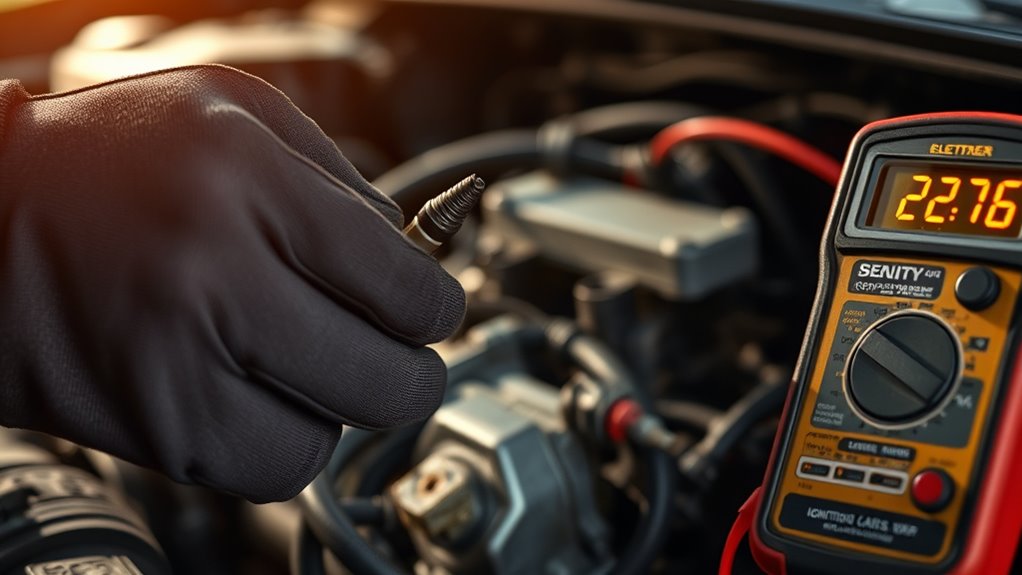
Regular maintenance is key to keeping your ignition system running smoothly and preventing costly failures. You should inspect and replace ignition coils and spark plugs regularly, especially if you notice rough idling or starting issues. Monitoring spark plug gaps ensures proper electrode spacing for reliable sparks. Address cooling system problems to prevent coil overheating, which shortens component lifespan. Check wiring, fuses, and battery health to avoid electrical interruptions that cause dim lights or no spark. Keep terminals clean and corrosion-free, ensuring good connections. Use the following table to understand common preventive actions:
| Action | Benefit |
|---|---|
| Regular coil and spark plug checks | Prevent misfires and hard starts |
| Cooling system maintenance | Reduce coil overheating |
| Wiring and fuse inspections | Ensure consistent electrical flow |
| Battery health monitoring | Maintain proper voltage and performance |
| Terminal cleaning | Improve connection reliability |
When to Replace Ignition Coils and Related Components
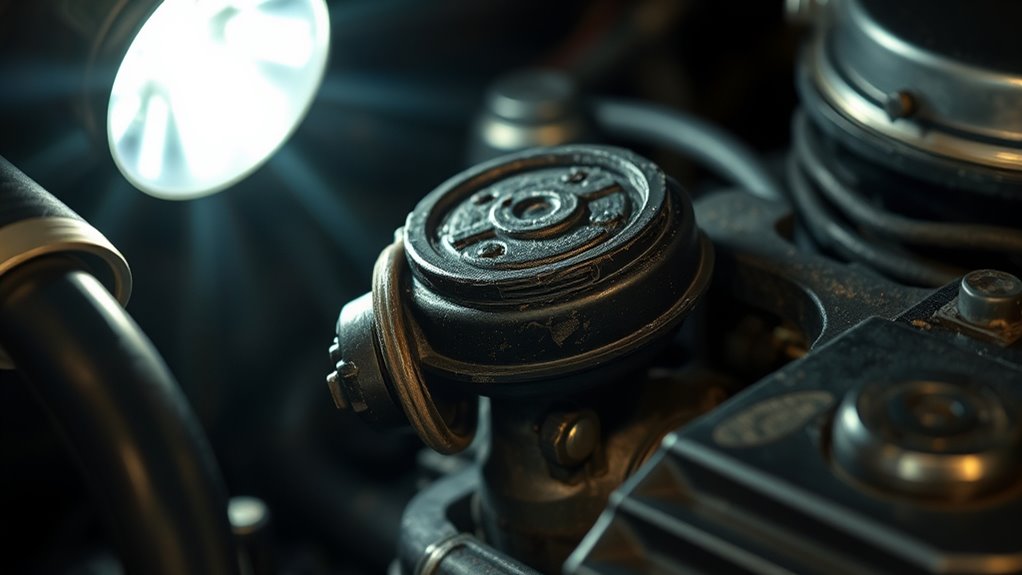
Knowing when to replace ignition coils and related components is essential for preventing unexpected engine problems. You should consider replacement if you notice:
- Engine misfires, jerking, or sputtering during normal driving, indicating weak or inconsistent sparks.
- Hard starting or failure to start, which suggests coils aren’t delivering enough voltage to ignite the fuel.
- Overheating or visible damage, like cracks or burn marks on the coil, signaling it’s degraded or failing.
Additionally, if your vehicle’s performance drops, acceleration feels sluggish, or you experience rough idling, it’s time to inspect and possibly replace these parts. Regular maintenance and prompt replacement of faulty coils prevent more severe engine damage and keep your vehicle running smoothly.
Using Testing Tools to Isolate Electrical Gremlins

Proper diagnosis of electrical gremlins begins with the right testing tools. A multimeter is essential for checking voltage, resistance, and continuity in wiring, coils, and grounds. Use it to verify 12 volts at the ignition switch and measure coil resistance—values outside specifications indicate coil failure. A spark tester helps confirm whether the ignition system produces a spark; attach it to the spark plug wire and crank the engine. An inductive clamp meter can measure current flow in ignition circuits, pinpointing overloads or insufficient current. Additionally, a dedicated scan tool can read trouble codes related to ignition faults or sensor issues. These tools help you systematically isolate faults, differentiate between electrical and mechanical causes, and prevent unnecessary replacements. Proper testing guarantees accurate diagnosis and efficient repairs.
Frequently Asked Questions
Can a Faulty Ignition Coil Cause Engine Stalling Without Warning?
Yes, a faulty ignition coil can cause your engine to stall unexpectedly. When the coil fails to deliver proper voltage to the spark plugs, the engine may lose its spark, leading to stalling without warning. You might also notice rough idling, misfires, or difficulty starting before it stalls completely. Keep an eye on these symptoms, and consider inspecting or replacing the coil to prevent sudden engine shutdowns.
How Do Temperature Changes Affect Ignition Coil Performance?
Temperature changes can substantially impact your ignition coil’s performance. When it’s hot, excessive engine heat can cause the coil to overheat, leading to quicker wear or failure. Cold temperatures may increase resistance in the coil’s windings, reducing spark strength. You might notice rough idling or misfires during temperature fluctuations. To keep your engine running smoothly, guarantee proper cooling and consider replacing coils showing signs of heat-related wear.
Are Dim Lights Always Linked to Ignition System Problems?
Dim lights aren’t always linked to ignition system problems. They can also result from issues like a weak or discharged battery, faulty alternator, blown fuses, or corroded terminals. Sometimes, wiring faults or poor grounds cause voltage drops that dim lights and affect the ignition. You should check your battery, alternator, and wiring connections first, as these are common causes. Troubleshooting these areas helps pinpoint whether the dim lights stem from the ignition or other electrical components.
What Impact Does a Weak Battery Have on Ignition Coil Longevity?
A weak battery directly impacts your ignition coil’s longevity by causing inconsistent voltage supply. When your battery is discharged or faulty, it struggles to deliver the necessary power to the coils, leading to increased strain and overheating. Over time, this stress accelerates coil wear and increases the risk of failure. To keep your ignition system running smoothly, regularly check and maintain your battery’s health and replace it if needed.
Can Wiring Modifications Lead to Intermittent No-Spark Issues?
Wiring modifications can definitely cause intermittent no-spark issues. When you alter or damage wiring, it may create poor connections, open circuits, or unintended grounds, all of which disrupt the electrical flow needed for ignition. Loose, corroded, or improperly routed wires can lead to voltage drops or intermittent contact, causing your engine to randomly lose spark. Always guarantee wiring changes are done correctly to prevent these frustrating ignition problems.
Conclusion
Stay vigilant as electrical gremlins can strike unexpectedly, leaving you stranded or struggling to start. By understanding the symptoms and using proper diagnostic tools, you can catch issues early before they escalate. Remember, the key to a reliable ride lies in proactive maintenance and quick troubleshooting. Don’t let hidden problems sneak up on you—dive deeper, stay prepared, and uncover the mystery behind those elusive no-spark and dim light issues before it’s too late.
Flea & tick season Picks
flea and tick prevention
As an affiliate, we earn on qualifying purchases.