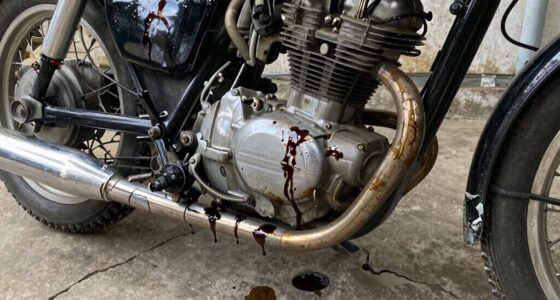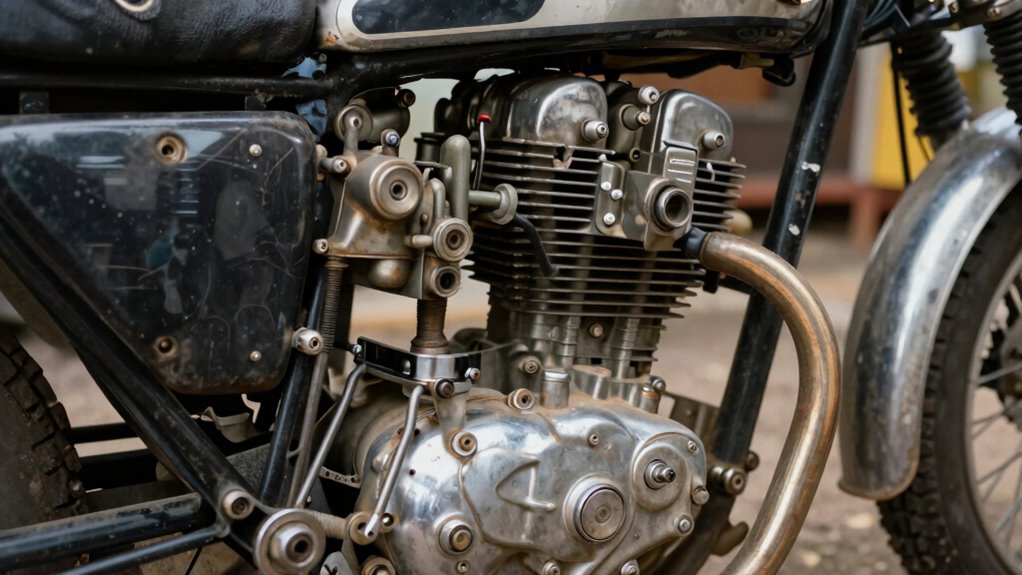

If your classic motorcycle won’t idle steadily, check for clogged or dirty carburetor circuits, worn throttle linkages, and air leaks in intake boots or hoses. Confirm your timing is correctly set and spark plugs are in good condition. Poor adjustments, faulty gaskets, or debris can all cause rough idling. Addressing these common issues can restore smooth operation, and if you keep exploring, you’ll find practical tips to troubleshoot and fix your specific problem.
Open a free Amazon Business account
Business pricing, bulk buying and tax-exempt orders.
As an affiliate, we earn on qualifying purchases.
Key Takeaways
- Dirty or blocked carburetor idle circuits can disrupt fuel flow, causing unstable idling.
- Air leaks from cracked intake boots or loose clamps lean out the mixture, leading to rough idle.
- Incorrect ignition timing or worn spark plugs weaken sparks, resulting in inconsistent engine idle.
- Worn or improperly adjusted throttle linkages cause fluctuating throttle response and idle instability.
- Improper or uneven idle mixture and speed screw adjustments can prevent the engine from maintaining steady RPM.
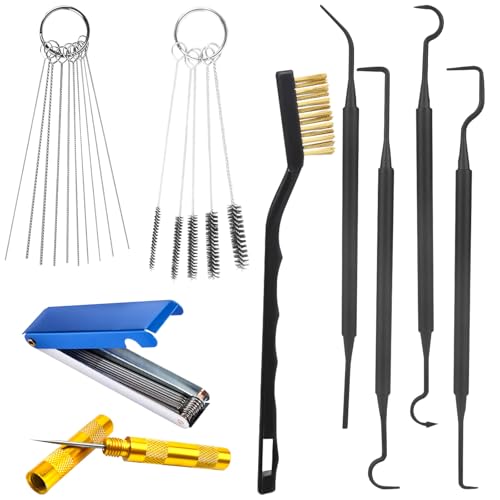
CYUXING 9Pcs Carburetor Cleaning Tool, Carb Jet Cleaning Kit & Welding Tip Cleaner with Stainless Steel Needles, Brushes & Hooks for Motorcycle ATV Chainsaw & Welder Professional
- High-Quality Materials: Stainless steel and nylon for durability
- Precise Cleaning Tools: Needles and bristles clear tiny passages
- All-in-One Maintenance Kit: Consolidates tools for efficient servicing
As an affiliate, we earn on qualifying purchases.
As an affiliate, we earn on qualifying purchases.
Common Causes of Idle Instability in Classic Motorcycles

Idle instability in classic motorcycles often stems from issues within the fuel delivery and ignition systems. Dirty or blocked idle circuits in your carburetor prevent smooth fuel flow, causing uneven engine performance. Incorrect float levels can lead to flooding or starvation, disrupting steady idling. Fuel lines filled with air bubbles or blockages restrict consistent fuel delivery, making your bike stall or idle erratically. Aging petcock components, such as valves and gaskets, may leak or create bubbles, further complicating fuel supply. Additionally, contamination in idle circuits, sticky slides, or bent pistons can cause throttle and idle instability. These issues interfere with the delicate balance needed for a stable idle, forcing your engine to struggle at low speeds and affecting overall performance. Regular inspection and maintenance help prevent these common problems. Moreover, understanding the role of contrast ratio and its impact on engine performance can also provide insights into optimizing your motorcycle’s operation and ensuring a steady idle. For example, fuel mixture adjustments can significantly influence idle stability, especially in older carbureted engines. Being aware of fuel system components, such as filters and valves, is crucial for diagnosing and resolving idle issues effectively. Properly managing air-fuel mixture and ensuring all components are clean and functioning can greatly improve idle stability. Additionally, checking for vacuum leaks is essential, as they can cause fluctuations in idle speed and engine performance.

Red Cable Luber Tool, Cable Lube Tool Throttle Puller, Bicycle Cable Refueling Adjustment Tool, Suitable for Motorcycle Cable Lube Tool, Car Oiler, Dirt Bike, Bicycle Throttle Cable Lube Tool
- Versatile cable lube tool: Lubricates motorcycle and equipment cables
- Firm grip design: Rubber and screw vise for secure hold
- Wide compatibility: Fits most cable sizes and lubricants
As an affiliate, we earn on qualifying purchases.
As an affiliate, we earn on qualifying purchases.
How Throttle and Linkage Problems Affect Idle Performance
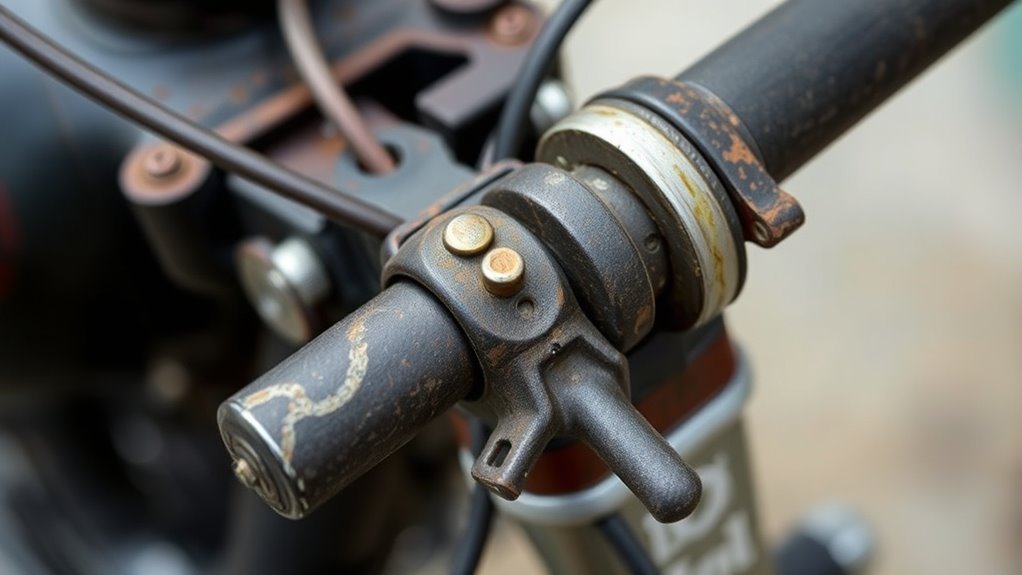
Throttle and linkage problems directly impact your motorcycle’s ability to maintain a stable idle by interfering with precise throttle control. When throttle shafts bind or cables are worn or improperly adjusted, your engine can’t respond smoothly to throttle inputs, causing fluctuating idle speeds or stalling. Loose rivets or bent components in the linkage can create inconsistent throttle movement, making it difficult to keep the engine steady at idle. If the choke isn’t fully disengaged, it can cause irregular running, especially when the engine is warm. Insufficient free play or incorrect linkage adjustments prevent the throttle from returning fully to idle position, leading to erratic engine behavior. Regular inspection, lubrication, and proper adjustment of throttle cables and linkages are crucial to ensure steady idle performance. Additionally, ensuring the piercing care and hygiene of your motorcycle’s components can prevent buildup and corrosion that may affect linkage movement. Proper cleaning and component maintenance help keep all parts functioning smoothly and prevent issues that could disrupt idle stability. Being aware of these common issues can help you troubleshoot and maintain your motorcycle more effectively. Incorporating visual and auditory cues during adjustments can further improve your ability to diagnose linkage problems quickly.

RectorSeal Better Bubble 65554 Advanced Leak Detector, Detects Refrigerant Gas, Air, and Oxygen, Fast Acting, Can Be Used at Varied Temperature/Pressure Conditions, Plumbing, 8 oz.
- Application Range: Detects refrigerant, air, oxygen from 20°F to 250°F
- Leak Detection: Pinpoints small gas leaks quickly and easily
- Easy to Use: Spray or apply on pipes, tanks, coils
As an affiliate, we earn on qualifying purchases.
As an affiliate, we earn on qualifying purchases.
The Impact of Ignition and Timing on Idle Quality
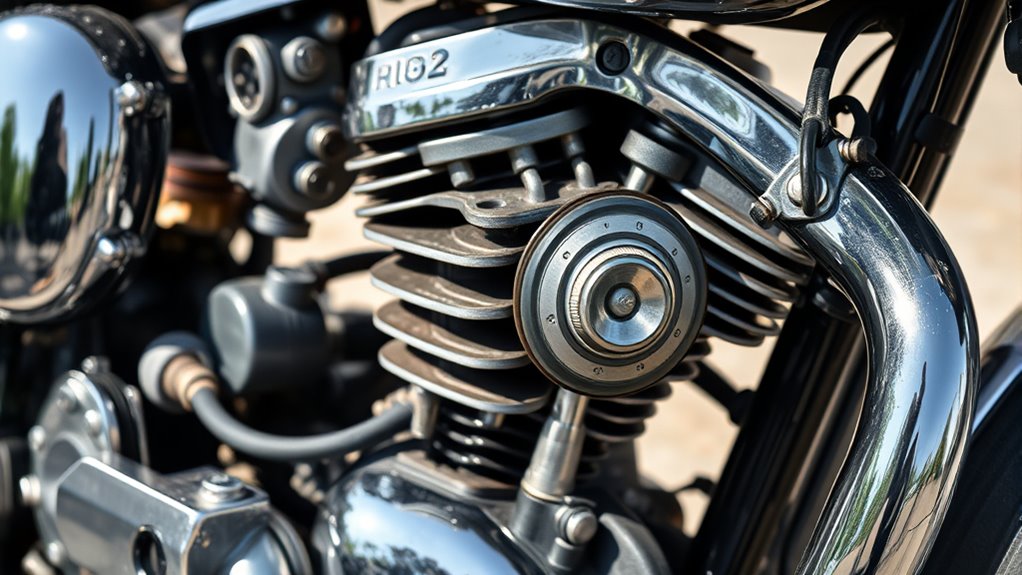
Proper ignition timing is essential for maintaining smooth engine operation at low speeds, as it directly influences how well the fuel-air mixture ignites within the cylinders. If your timing is off, your engine may misfire or run unevenly at idle, causing roughness or stalling. Too advanced timing can cause knocking and hesitation, while too retarded timing results in weak combustion and poor throttle response. You also need strong, consistent sparks from your spark plugs; worn boots or faulty coils weaken ignition and destabilize idle. Auto decompression mechanisms stuck open reduce compression, making the engine stumble. Regularly check and adjust your ignition timing and inspect your spark plugs to guarantee proper firing, which helps your motorcycle run smoothly and idle steadily.

SINGARO Inline Spark Plug Tester, Plug-in Engine Ignition Tester, Car Exterior Accessories, Automobile, Lawn Mower,Engine Verification-Armature Diagnostic Test Tool
- Universal Compatibility: Suitable for various engines and machinery
- Easy to Use: Connects between spark plug and wire, tests in 30 seconds
- Durable Materials: Made of high-quality rubber, metal, and plastic
As an affiliate, we earn on qualifying purchases.
As an affiliate, we earn on qualifying purchases.
Air Leaks and Intake System Troubles That Disrupt Idling
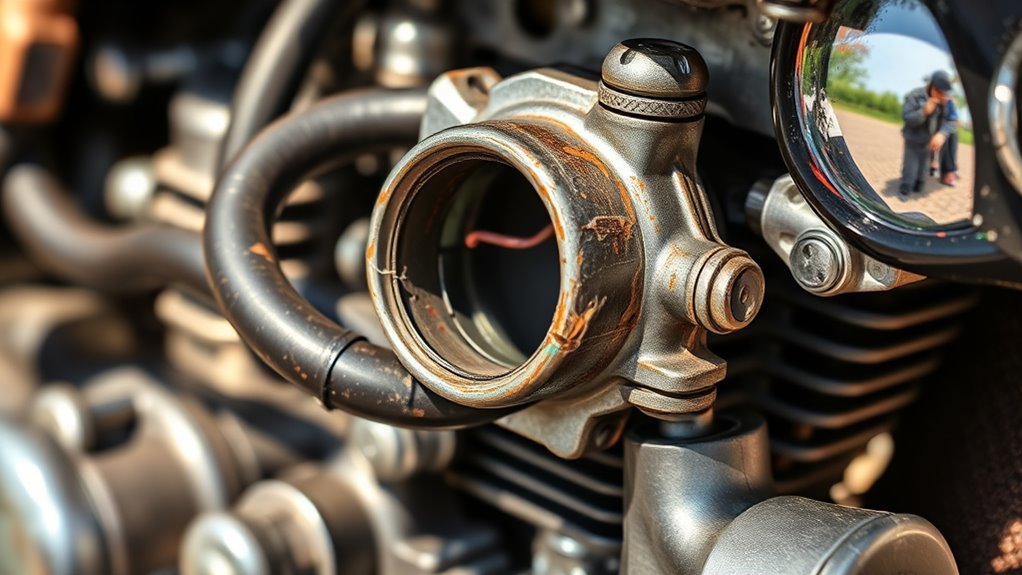
Air leaks around the intake system can cause significant issues with engine stability at low speeds. When unmetered air enters, it leans out the mixture, leading to rough or uneven idling. Cracked intake boots, loose clamps, or damaged carburetor mounting flanges let air bypass the carb, making it harder to maintain a steady idle. These leaks can cause stalling or fluctuating RPMs, leaving you frustrated on the road. To prevent this, inspect seals and boots regularly. Replacing worn or cracked parts restores proper air-fuel balance, ensuring smoother idling. Proper sealing techniques can help prevent leaks and improve engine performance. The following table highlights common causes and emotional impacts of intake leaks:
| Cause | Symptoms | Emotional Impact |
|---|---|---|
| Cracked intake boots | Irregular idle, stalling | Frustration, uncertainty |
| Loose clamps | Sudden RPM drops | Anxiety, loss of confidence |
| Damaged carb flange | Poor throttle response | Disappointment |
| Unsealed mounting flange | Engine hesitates or stalls | Stress, helplessness |
| Cracked rubber hoses | Erratic engine behavior | Anger, helplessness |
Tips for Proper Idle Adjustment and Troubleshooting
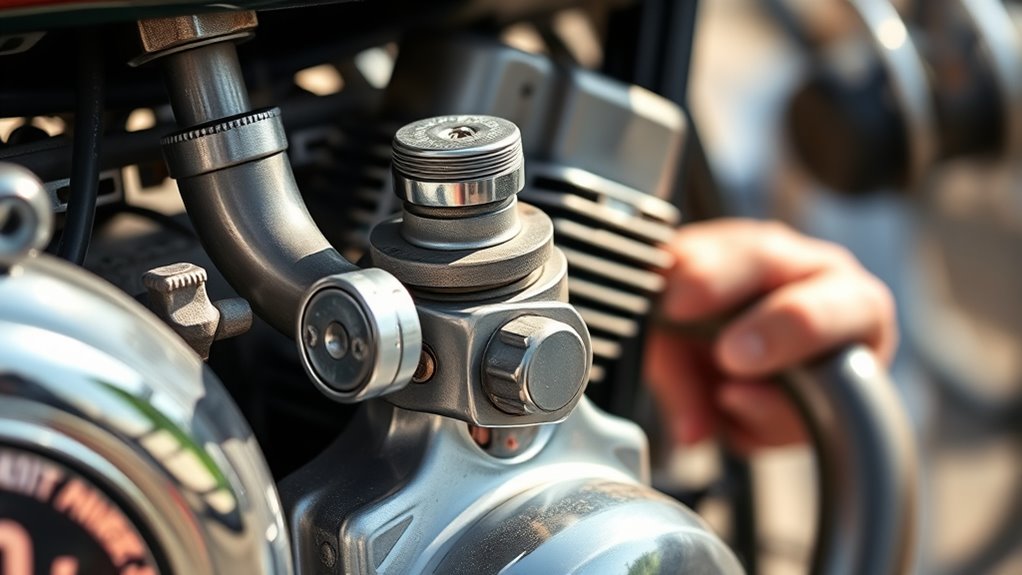
Achieving a stable idle on your classic motorcycle requires careful adjustment and troubleshooting. To do this effectively, follow these steps:
- Warm up your engine fully before adjusting the idle speed screw to guarantee accurate settings.
- Check for air leaks by inspecting intake boots, carb mounts, and gaskets; tighten or replace any cracked or degraded parts.
- Adjust the idle mixture screw gradually, ensuring the engine runs smoothly without stalling or roughness, and tweak the idle speed screw accordingly.
Frequently Asked Questions
Can Ambient Temperature Changes Cause Idle Fluctuations in My Motorcycle?
Yes, ambient temperature changes can cause your motorcycle’s idle fluctuations. As temperature drops, air becomes denser, which can lean out the fuel mixture, making the engine run unevenly or stall. Conversely, warmer temperatures can enrich the mixture, causing high or unstable idle speeds. You might need to adjust your carburetor’s idle mixture screw or synchronize the carburetor to maintain a steady idle as temperatures shift.
How Does Altitude Affect My Motorcycle’s Idle Stability?
Like a sailor adjusting to shifting tides, you’ll find that higher altitudes thin the air, reducing engine oxygen. This makes your motorcycle’s mixture too rich, causing rough idling or stalling. To keep your ride smooth, you need to lean out the carburetor mixture or rejet the carburetor. Regular tuning and adjustments help your engine adapt to altitude changes, ensuring it runs steady as the landscape changes beneath you.
Do Aftermarket Exhaust Systems Impact Idle Performance Significantly?
Aftermarket exhaust systems can markedly impact your motorcycle’s idle performance. They alter back pressure, which affects how the engine scavenges gases and manages fuel mixture at idle. If the new exhaust has different flow characteristics, your bike may run lean or rich, causing rough idling or stalling. You might need to adjust your carburetor settings, such as the idle mixture or needle position, to compensate for the change in exhaust back pressure.
Can Using Ethanol-Blended Fuel Lead to Inconsistent Idling?
Like a knight facing a dragon, you might find ethanol-blended fuel causes inconsistent idling on your classic motorcycle. Ethanol increases fuel volatility, which can lead to uneven combustion and rough idle, especially if your carburetor isn’t properly tuned for it. It also attracts moisture, leading to fuel contamination and corrosion. To keep things running smoothly, consider using ethanol-free fuel or adjust your carburetor for better compatibility with blended fuels.
Is a Faulty Tachometer a Common Cause of Incorrect Idle Adjustment?
Yes, a faulty tachometer is a common cause of incorrect idle adjustment. When your tachometer gives inaccurate readings, you can’t set the proper idle speed precisely. This leads to adjustments that are off, causing your engine to stall or run unevenly. To fix this, use a reliable, shop-grade tachometer to measure RPMs accurately, ensuring you set the idle speed correctly for smooth engine operation.
Conclusion
Dealing with idle issues is like tuning a delicate instrument—you need patience and a keen ear. By checking your throttle, ignition, and intake carefully, you’re tuning the heartbeat of your classic motorcycle. When everything’s in harmony, your engine will purr smoothly, like a well-trained orchestra. Keep troubleshooting and fine-tuning, and soon your bike will idle steady, ready to roar to life whenever you hit the throttle. Ride on with confidence and a smooth engine beneath you!
Summer Picks
summer essentials
As an affiliate, we earn on qualifying purchases.