To solve handling wobbles and weaving on your classic motorcycle, start by inspecting and adjusting your front wheel alignment, ensuring your tire pressure matches manufacturer specs, and checking for worn or loose wheel bearings. Make sure your spokes are evenly tensioned, and your steering head bearings are tight and smooth. Regular maintenance of suspension components and staying mindful of road conditions also help. Continue exploring these tips to discover more ways to maintain stability and confidence on your ride.

Get business pricing on garage and car supplies
- Business-only prices and quantity discounts
- Tax-exempt purchasing
- Multiple users, one account, clear invoices
Key Takeaways
- Regularly inspect and adjust steering head bearings to eliminate play and ensure smooth steering.
- Check wheel alignment, true rims, and even spoke tension to prevent wobbling during rides.
- Maintain proper tire pressure, inspect for wear or damage, and ensure correct mounting for stability.
- Examine suspension components for wear or leaks, and replace worn parts to improve handling.
- Ride smoothly, avoid abrupt maneuvers, and adapt to road conditions to maintain control and prevent weave issues.
Top picks for "solv handl wobbl"
As an affiliate, we earn on qualifying purchases.
Identifying Mechanical Causes of Wobbles and Weaves

To effectively identify mechanical causes of wobbles and weaves on your classic motorcycle, start by inspecting the steering head bearings. Loose or worn bearings create play in the steering, leading to instability at high speeds or during deceleration. Check for smooth movement and any looseness or grinding sounds. Next, examine wheel bearings for damage or wear; worn bearings cause irregular rotation and vibration. Ensure your wheels are true—out-of-round or bent rims can induce wobbling. Spokes should be properly tensioned and evenly tightened to maintain wheel integrity. Also, verify that your front and rear tires are correctly mounted, evenly worn, and properly inflated. These steps help you pinpoint mechanical issues before they escalate, ensuring your bike’s stability and safety.
Ensuring Proper Wheel and Tire Maintenance
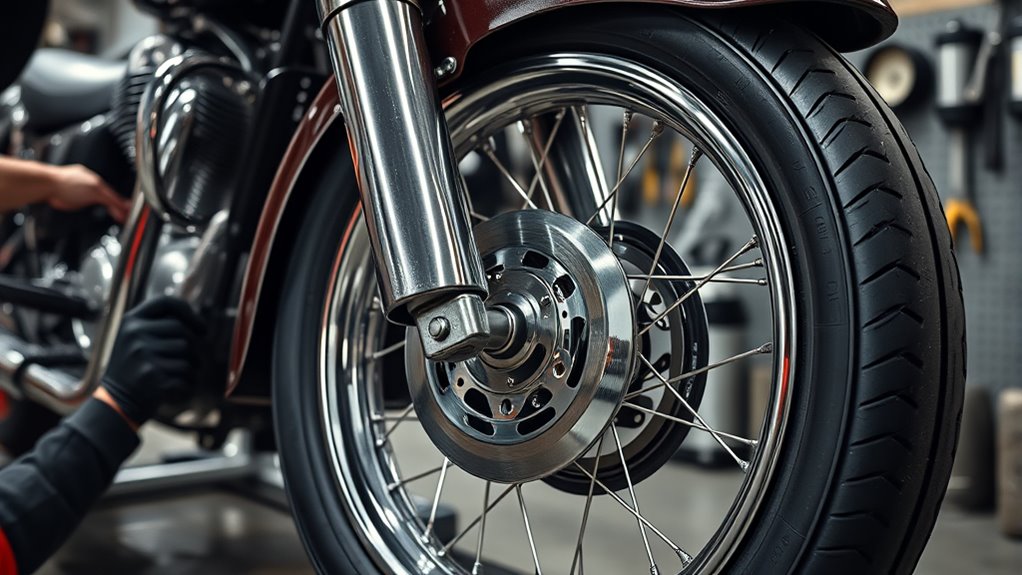
To keep your motorcycle stable, you need to regularly check tire pressure and make sure it’s within the recommended range. You should also verify that your wheels are true, with no wobble or misalignment, and that spoke tension is even. Proper maintenance of these components helps prevent vibrations and keeps your ride smooth and safe. Additionally, inspecting for signs of wear and tear can help you catch potential issues early and ensure your motorcycle remains in optimal condition wheel alignment. Regularly maintaining your bike’s electric component efficiency can also contribute to a smoother ride and better handling. Incorporating total-cost clarity into your maintenance schedule can help you budget for necessary repairs and avoid unexpected expenses.
Tire Pressure Checks
Proper tire pressure is essential for maintaining your classic motorcycle’s stability and handling. Underinflated tires can cause excessive flexing, leading to wobble and poor cornering. Overinflated tires reduce grip and make the ride harsher, increasing the chances of instability. Check your tire pressure regularly, ideally before every ride, using a reliable gauge. Refer to your motorcycle’s manual for the recommended PSI, which accounts for rider weight and load conditions. Always measure tire pressure when tires are cold, as heat from riding can skew readings. Properly inflated tires provide ideal contact with the road, improve handling, and reduce vibration. Regular maintenance of tire pressure aligns with European cloud innovation by promoting efficient and sustainable practices that enhance overall safety. Using a quality pressure gauge can help ensure accuracy during measurements. Additionally, maintaining correct tire pressure can prevent uneven tire wear, extending the lifespan of your tires and ensuring consistent performance. Keeping an eye on tire pressure also plays a role in vehicle stability by ensuring your motorcycle handles predictably under different riding conditions. Regularly inspecting tire condition and pressure can also help identify potential hazards before they cause issues. Consistent tire pressure checks help prevent wobble issues linked to improper tire conditions, ensuring safer, smoother rides on your classic motorcycle.
Wheel Trueness Verification
Ensuring your wheels are true is essential for maintaining stability and preventing wobbles on your classic motorcycle. You should regularly check for any wobbling or side-to-side movement while the wheel spins on a stand. Use a dial indicator or a truing stand for precise measurements, and look for deviations in the rim’s alignment. If you notice any runs or hops, spokes may be loose or the rim out of true. Tighten spokes evenly, adjusting tension gradually to bring the wheel back into alignment. Uneven trueness causes irregular rotation, which can lead to handlebar shimmy or weaving. Proper wheel maintenance and alignment are crucial for safe riding and optimal performance, and staying vigilant about these aspects helps prevent dangerous handling issues. Regularly inspecting for signs of rim deformation can help catch issues early before they affect ride quality. Additionally, understanding rim runout and how it impacts wheel stability is key to effective troubleshooting and repairs. Paying attention to spoke tension ensures the wheel remains true and prevents future wobbling problems.
Spoke Tension Adjustment
Spoke tension adjustment plays a vital role in maintaining wheel trueness and overall motorcycle stability. Properly tensioned spokes ensure the wheel stays true, reducing wobble and uneven wear. To achieve this, follow these steps:
- Check each spoke’s tension with a spoke wrench, aiming for uniform tightness across the wheel.
- Tighten loose spokes gradually in small increments to avoid warping the rim.
- Loosen overly tight spokes carefully to balance tension evenly.
- Recheck wheel trueness after adjustments and retension as needed.
Consistent spoke tension prevents irregular rotation and maintains proper wheel alignment. Regular inspection and adjustment keep your wheel true, ensuring smoother handling and reducing wobble. Proper spoke maintenance is essential for safe, stable riding on classic motorcycles.
Adjusting and Inspecting Steering Head Bearings
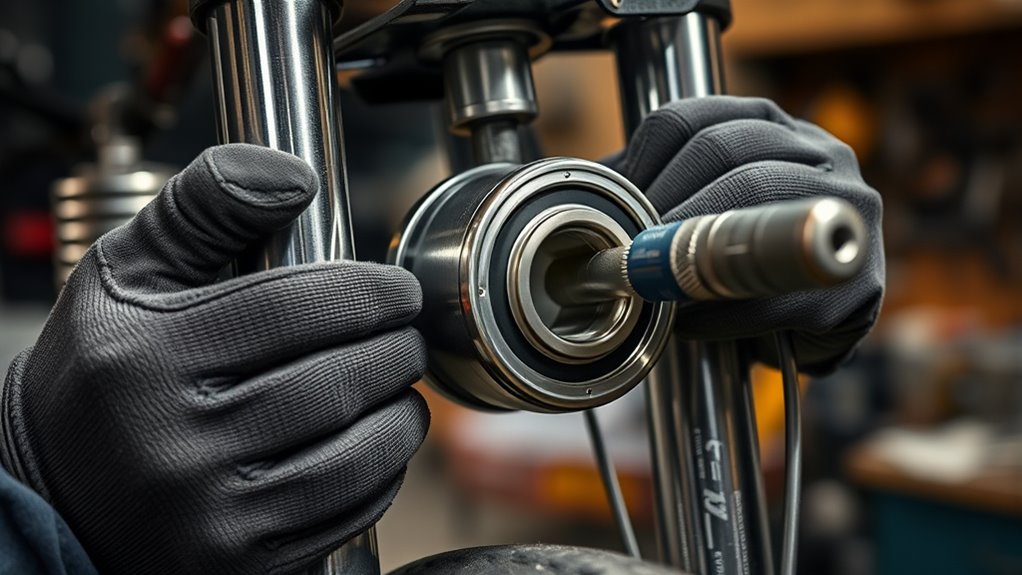
Adjusting and inspecting steering head bearings is essential for maintaining motorcycle stability and preventing wobbles. First, loosen the locking nut and carefully tighten the adjusting nut to eliminate any play without creating tightness that hampers steering. You should feel smooth, free movement with no slack or resistance. To check, grasp the fork tubes and gently rock the front end; there should be minimal movement. Remove the existing bearings if worn or damaged, and replace them with new, properly lubricated ones. Always clean the steering neck area thoroughly before reassembling. Properly adjusted bearings ensure a stable, responsive steering feel, reducing wobble risks. Regular inspections help identify wear early and keep your motorcycle handling predictably and safely.
Checking Fork Alignment and Suspension Components
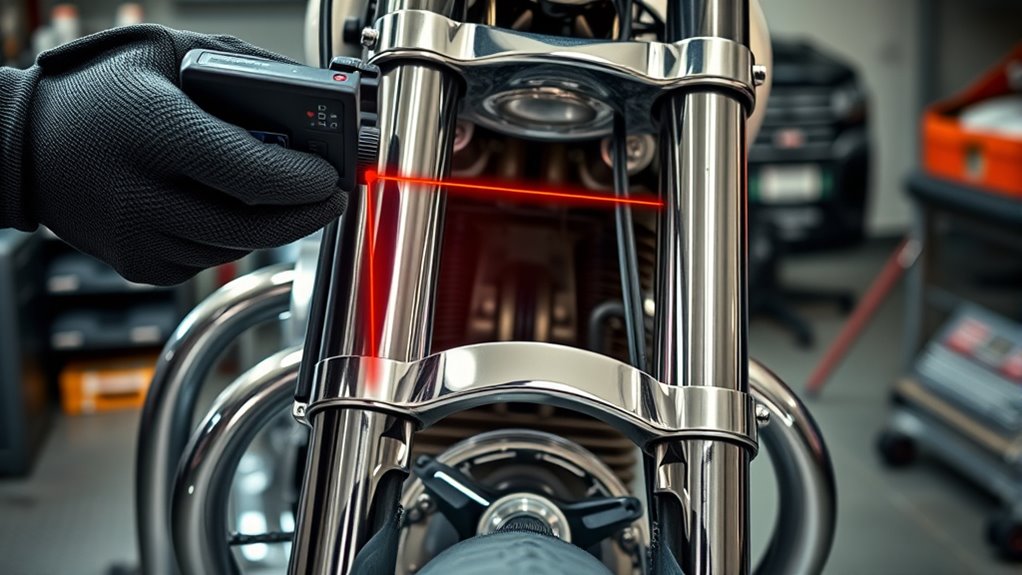
Checking fork alignment and suspension components is crucial because misaligned forks or damaged suspension parts can directly cause wobbles and instability. If your front end isn’t true, it can lead to uneven handling and wobbling at speed. To diagnose and fix this, start by:
Proper fork alignment and suspension check prevent wobbles and ensure stable, safe handling.
- Inspecting the fork tubes for bends, cracks, or corrosion.
- Ensuring the fork tubes are perfectly aligned with the frame and each other.
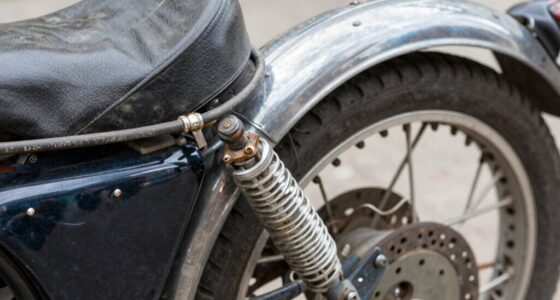
- Checking the suspension components, such as fork seals and dampers, for leaks or wear.
- Verifying that the front wheel is properly mounted, true, and free of play.
- Regularly inspecting suspension components to ensure optimal performance and safety.
- Remember that proper maintenance is key to preventing handling issues and maintaining motorcycle stability.
- Incorporating visual and auditory cues during inspections can help identify subtle issues before they affect handling.
Addressing these issues ensures smooth, stable handling and reduces wobble tendencies. Regular maintenance and precise adjustments keep your motorcycle handling sharp and safe.
Managing Tire Pressure and Selection for Stability

Proper tire pressure and the right tire selection are essential for maintaining motorcycle stability and preventing wobbles. Check your tire pressures regularly and keep them at the manufacturer’s recommended levels. Underinflated tires can cause excessive flex and instability, while overinflated tires reduce grip and shock absorption. Choose tires suited to your motorcycle’s design and riding style; bias-ply tires may handle differently than radials, affecting stability. Inspect tires for uneven wear, cuts, or embedded debris, and replace them if necessary. Proper mounting and balancing also play a crucial role in smooth handling. When tires are correctly inflated, well-chosen for your bike, and in good condition, they provide better grip and predictable handling, considerably reducing the risk of wobbles and weaving during your rides. Regularly assessing your tire pressure levels and understanding how different tire types influence handling can help you maintain optimal stability on the road. Additionally, considering tire construction types can impact overall handling and comfort, making it an important factor in your tire selection process.
Recognizing Road Surface and Environmental Impacts

You need to stay alert to how road surfaces affect your bike’s stability, especially on grooved or uneven pavement. Environmental hazards like loose gravel or slick spots can cause sudden wobbling that’s unrelated to your motorcycle’s condition. Recognizing these surface and environmental impacts helps you respond quickly and ride more safely. Being aware of technological influences on riding conditions can also aid in anticipating unexpected handling issues.
Surface Conditions Trigger Instability
Surface conditions play a significant role in triggering instability on classic motorcycles, often causing wobble or weave that aren’t related to mechanical issues. You can experience sudden instability on uneven or textured surfaces. Recognizing these surface impacts helps you react appropriately. Consider these points:
- Grooved or grated roads from construction create periodic handlebar shimmy.
- Loose gravel or slick patches cause sudden weaving or wobbling sensations.
- Uneven surfaces result in transient wobble that disappears once conditions improve.
- Changes in road texture, like potholes or bumps, can provoke brief but intense instability.
- Surface irregularities can unpredictably influence handling, making it essential to stay alert while riding. Being able to detect surface changes early allows you to adjust your riding and maintain control proactively. Additionally, awareness of road surface conditions enables you to anticipate potential hazards and adapt your riding style accordingly. Recognizing the impact of road surface variations on motorcycle handling helps you differentiate between environmental influences and potential mechanical faults, promoting safer riding.
Environmental Hazards Influence Control
Environmental hazards like road surface and weather conditions can considerably impact motorcycle stability, sometimes causing wobble or weave independent of mechanical issues. Grooved, grated, or uneven surfaces from construction or bridges can create vibrations that feel like handlebar shimmy. Loose gravel, wet patches, or slick surfaces can unexpectedly trigger weaving or wobbling, especially at higher speeds. These conditions often produce transient wobble that disappears once the surface improves or you slow down. Recognizing the difference between mechanical wobble and road-induced feedback is vital for safe riding. Staying alert to road conditions allows you to anticipate potential hazards and adjust your riding style accordingly. Understanding road surface effects and adapting your speed or route can help minimize the risk of losing control due to environmental influences. Being aware of environmental impacts on motorcycle stability enables you to better interpret and respond to wobble or weave sensations, enhancing safety. Additionally, effective rider awareness of varying surfaces can help you maintain control more confidently. By maintaining awareness and adapting your speed or route, you can minimize the risk of losing control due to environmental influences.
Implementing Rider Response Strategies During Wobbles

When a wobble occurs unexpectedly, your immediate response can make the difference between regaining control and losing stability. Stay calm and avoid overreacting. Focus on these key actions:
- Loose your grip slightly to allow the handlebars to absorb some vibration without fighting it.
- Gradually decelerate by easing off the throttle smoothly, reducing stress on the front end.
- Steer gently—avoid sharp or sudden inputs that can worsen the wobble.
- Maintain awareness of road conditions and your position to prevent overcorrecting.
Utilizing Steering Dampers and Stabilization Devices

Steering dampers and stabilization devices offer effective solutions for managing and reducing wobble issues on classic motorcycles. These devices work by absorbing and dissipating unwanted vibrations, providing extra stability during high-speed rides or rough surfaces. Proper installation and adjustment are vital for peak performance. You can choose from different types, such as hydraulic or friction dampers, to suit your bike’s handling needs. Consider the following options:
| Type | Function | Benefits |
|---|---|---|
| Hydraulic Damper | Uses fluid to absorb shocks | Smooths out vibrations |
| Friction Damper | Uses adjustable friction | Fine-tuned stability |
| Electronic Stabilizer | Active control with sensors | Precise handling enhancement |
| Frame Mount | Attaches to frame for support | Reduces front-end wobble |
| Fork Stabilizer | Fits onto fork tubes | Improves steering response |
Adding these devices can dramatically improve your control, especially on classic bikes prone to instability.
Conducting Regular Preventive Maintenance to Preserve Handling
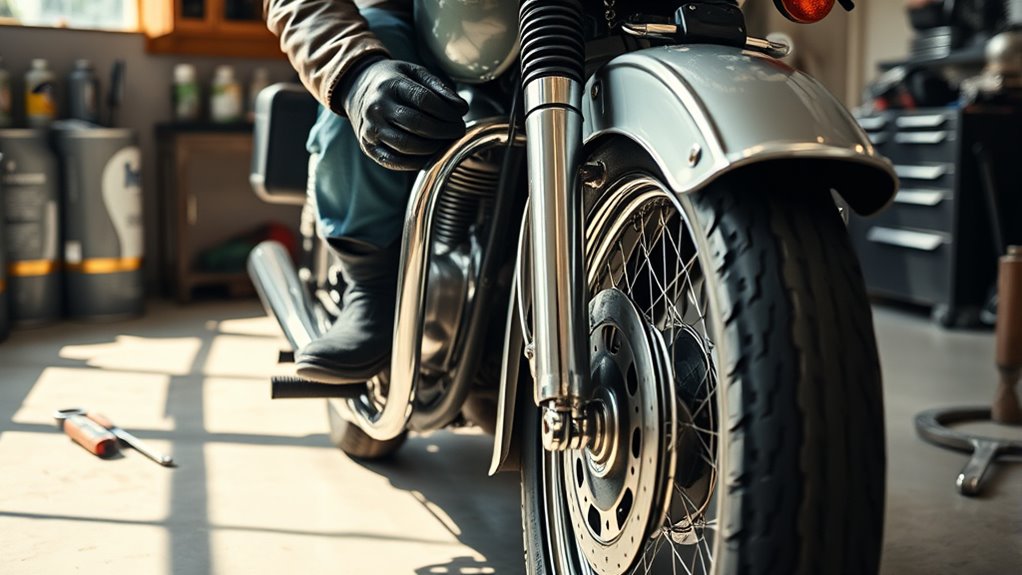
Regular preventive maintenance is essential for maintaining ideal handling and preventing wobbles on your classic motorcycle. By staying proactive, you catch issues early before they cause instability. Focus on these key areas:
Regular maintenance keeps your classic motorcycle stable and handling smoothly.
- Inspect and adjust neck bearings regularly to prevent looseness that can lead to wobbling.
- Check wheel bearings during tire changes or routine service, replacing worn ones to ensure smooth rotation.
- Ensure tires are properly inflated and balanced with even wear for optimal grip and stability.
- Verify spoke tension and wheel trueness to avoid irregular rotation that destabilizes the bike.
Consistent maintenance reduces the risk of mechanical failures, keeping your motorcycle handling predictable and safe. Staying attentive to these details helps preserve the bike’s stability and your riding confidence.
Frequently Asked Questions
How Do I Differentiate Between Mechanical Wobble and Road Surface-Induced Instability?
You can differentiate between mechanical wobble and road surface-induced instability by paying attention to how the wobble behaves. Mechanical issues usually persist regardless of road conditions and feel consistent at certain speeds or when accelerating. In contrast, road surface-induced wobble often appears suddenly on rough, grooved, or loose surfaces and disappears when the surface improves or you change speed. Stay alert to these cues for accurate diagnosis.
Can Aftermarket Steering Dampers Fully Eliminate Wobbles on Older Motorcycles?
An aftermarket steering damper can do wonders, but it won’t completely wipe out every wobble on your older motorcycle. Think of it as a superhero sidekick—great for reducing instability and smoothing out erratic handling—but if your bike’s mechanical parts are shot or misaligned, that’s a different battle. For total control, you need a combination of damper, proper maintenance, and mechanical fixes.
What Are Signs of Worn Wheel Bearings Causing Handling Issues?
You’ll notice worn wheel bearings through symptoms like excessive play or looseness in the wheel when you shake it, unusual noises such as grinding or humming during rides, and increased vibration or wobble at certain speeds. If the wheel feels loose or you hear rough sounds, it’s a clear sign you need to inspect and replace the bearings promptly. Regular maintenance helps prevent these issues from escalating and affecting your ride stability.
How Often Should Wheel Truing and Spoke Tension Checks Be Performed?
You should check wheel truing and spoke tension at least every 3,000 to 5,000 miles or whenever you notice handling issues like wobble or vibration. Regular inspections help catch loose spokes or rim misalignment early, preventing further damage. After riding in rough conditions or after a tire change, it’s wise to reexamine. Consistent maintenance ensures your wheels stay true, keeping your motorcycle stable and safe on the road.
Are There Specific Tire Brands Recommended for Classic Motorcycle Stability?
You should choose tire brands known for quality and compatibility with your classic motorcycle, like Michelin, Dunlop, or Firestone. These brands offer tires that provide reliable grip, proper fit, and consistent performance, which are vital for stability. Always select tires recommended by your motorcycle manufacturer, ensuring they match the specific model and riding conditions. Properly mounted and balanced tires from trusted brands greatly reduce wobble and enhance your bike’s handling.
Conclusion
By staying vigilant and keeping your motorcycle in top shape, you can tame those wild wobbles and weaves like a seasoned rider steering through a storm. Regular maintenance, proper tire care, and quick response are your best tools to keep your ride smooth and steady. Think of your motorcycle as a dance partner—you lead with confidence, and together you’ll glide effortlessly down the road, turning every journey into a graceful ride.
Fall Picks
fall essentials
As an affiliate, we earn on qualifying purchases.