
Understanding motorcycle titles helps you navigate registration, insurance, and resale more confidently. A clean title means your bike has no major damage history, making it easier to register and sell. A salvage title shows the bike was severely damaged or declared a total loss, while a rebuilt title indicates it has been repaired and passed inspections. Different states have varying rules for these titles, impacting your options. Keep exploring to learn how these factors influence your motorcycle’s value and legality.
Open a free Amazon Business account
Business pricing, bulk buying and tax-exempt orders.
As an affiliate, we earn on qualifying purchases.
Key Takeaways
- A clean title indicates no significant damage; salvage and rebuilt titles involve vehicle damage, repair, and inspection processes.
- Salvage titles are issued after severe damage, making the motorcycle unfit for registration until repaired and inspected.
- Rebuilt titles are granted after reconstructing a salvage motorcycle, passing safety inspections, and meeting repair standards.
- Title status affects registration, insurance premiums, resale value, and legal use of the motorcycle.
- Proper documentation and understanding regional differences are essential for legal transfer and resale of salvage or rebuilt motorcycles.
As an affiliate, we earn on qualifying purchases.
What Does a Clean Title Signify?

Have you ever wondered what a clean motorcycle title really means? It’s a legal document proving you own the bike outright, with no liens or disputes. The title includes key details like the VIN, make, model, year, owner’s info, and odometer reading. When a title is clean, it shows the vehicle has never been declared a total loss, salvage, or branded by insurance or state authorities. This means your ownership is clear, reducing legal risks during sale or transfer. To verify, check the title for absence of words like “salvage” or “rebuilt.” You can also confirm the record through DMV or services like Carfax. A clean title indicates no major damage or past issues, making your motorcycle easier to register, insure, and sell—boosting its value and your confidence. Additionally, a clean title can significantly improve the vehicle’s resale value and ease future transactions, which benefits owners looking to sell or upgrade. Furthermore, understanding vehicle history reports can help owners verify the accuracy of the title and identify any potential red flags before purchasing or selling.
motorcycle salvage title documentation
As an affiliate, we earn on qualifying purchases.
As an affiliate, we earn on qualifying purchases.
Defining a Salvage Motorcycle and Its Criteria
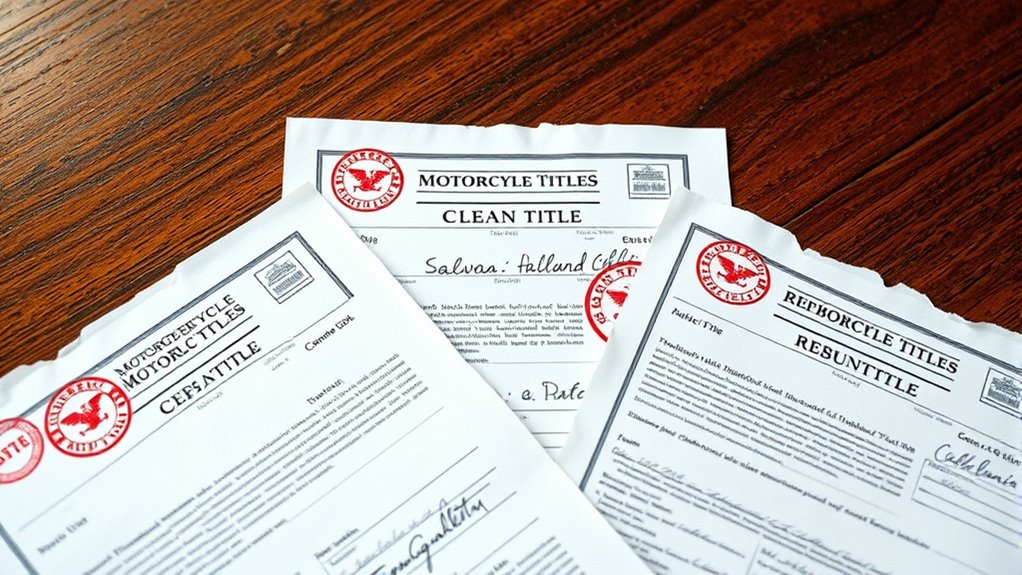
A salvage motorcycle is classified as a total loss by an insurance company after sustaining significant damage from an accident, natural disaster, theft recovery, fire, flood, or vandalism. It becomes a salvage when repair costs surpass a state’s threshold, typically between 70% and 90% of its market value. The damage can be structural, operational, or cosmetic, but if repairs are too costly, the bike is deemed uneconomical to fix. Once declared salvage, this status is usually permanent and recorded on the title. Here’s a quick comparison:
| Aspect | Details |
|---|---|
| Damage Causes | Collisions, floods, theft, fire, vandalism |
| Cost Threshold | 70-90% of pre-accident value |
| Repair Impact | Excessive costs, structural or cosmetic damage |
| Legal Status | Permanent salvage designation, recorded on title |
Additionally, a salvage motorcycle often has limited resale value and may require extensive repairs before it can be safely ridden again. It is important to understand that salvage titles can affect the bike’s insurability and future registration.
motorcycle rebuilt title inspection kit
As an affiliate, we earn on qualifying purchases.
As an affiliate, we earn on qualifying purchases.
The Process of Acquiring a Salvage Title
To get a salvage title, you’ll need to submit the proper application along with all required documentation, such as proof of total loss from your insurance company or DMV. Once your paperwork is approved, your motorcycle will undergo an inspection to verify damage and repair standards before the title can be transferred. After passing inspection, you’ll receive the salvage certificate, allowing you to register and legally operate the motorcycle. Many states also require a vehicle inspection to ensure the motorcycle meets safety standards before it can be registered.
Application and Documentation
Applying for a salvage title involves understanding the specific requirements set by your state and gathering the necessary documentation. First, you’ll need to complete the appropriate salvage title application form, such as Form 205 in Indiana or MV-83SAL in New York. You must also submit the original title or proof of ownership, which may require a physical inspection if it’s from out of state. Supporting documents like proof of insurance settlement, total loss declaration, and detailed damage or repair invoices are often necessary. Additionally, proof of payment of sales or use tax may be required if the motorcycle is transferred to a new owner. Fees vary by state, typically ranging from a few dollars to several hundred, and can include optional expedited processing fees. Ensuring that your documentation is complete and accurate helps facilitate a smooth title application process, especially since vetted procedures are essential for legal compliance.
Inspection and Title Transfer
Wondering how to get a salvage title for your motorcycle? Here’s what you need to know. First, you’ll need to schedule an inspection, which verifies parts provenance and vehicle history. Vehicles with proof of ownership as a NY salvage certificate require inspection. Second, gather essential documentation like the salvage title, repair invoices, photographs, and proof of ownership transfer. Third, submit your application, including all paperwork, to the DMV either by mail or online, depending on your state’s process. Once your motorcycle passes the salvage examination, the DMV issues a “REBUILT SALVAGE” title, usually within 3 to 5 weeks. This title allows you to register and legally operate your motorcycle. Keep in mind, delays can happen, and insurance costs may increase. Proper documentation and adherence to procedures are key to successfully transferring your salvage motorcycle title.
motorcycle VIN verification device
As an affiliate, we earn on qualifying purchases.
As an affiliate, we earn on qualifying purchases.
Rebuilding a Salvage Motorcycle and Securing a Rebuilt Title

When rebuilding a salvage motorcycle, you need to meet strict repair standards and keep detailed documentation of every repair and part used. After completing repairs, you’ll have to pass a safety inspection to verify the bike’s roadworthiness. Once approved, you’ll receive a rebuilt title, allowing you to register and legally ride your motorcycle again. Incorporating energy-efficient components can also enhance the sustainability of your rebuild and align with modern eco-friendly standards.
Repair Standards and Documentation
Rebuilding a salvage motorcycle requires strict adherence to repair standards and thorough documentation to guarantee safety and compliance with state laws. You must confirm repairs restore the motorcycle to a safe, roadworthy condition before applying for a rebuilt title. Proper documentation is essential to prove the rebuild process. A rebuilt title signifies that the motorcycle has been inspected and approved for safe operation, which is crucial for legal riding and resale. Consider these key steps:
- Keep detailed receipts and invoices for parts and labor to verify repair costs and scope.
- Complete all necessary forms, such as safety inspection certificates and title applications, as required by your state.
- Ensure repairs meet safety standards, especially for brakes, lights, and structural components, and obtain inspection approval.
Following these steps guarantees that your motorcycle’s rebuild is transparent, compliant, and ready for legal road use.
Inspection and Title Issuance
After completing the necessary repairs, you must have your motorcycle inspected by authorized officials to verify it meets safety and equipment standards. The inspection confirms compliance with state safety, equipment, and operational requirements, including VIN verification and possibly emissions testing. You’ll need to provide a detailed written statement of repairs and certify the motorcycle’s restored condition before inspection. If your motorcycle passes, the DMV will issue a rebuilt salvage title, which includes a permanent “Rebuilt Salvage” brand indicating its history. This title allows registration and insurance, unlike a salvage title. During the process, you’ll submit forms like the Salvage Certificate of Title Application and a Salvage Vehicle Statement, along with proof of ownership, repair receipts, and inspection certificates. Some states may have additional requirements or variations. A Rebuilt vehicles are those reconstructed following applicable federal and state regulations, ensuring they meet safety and legal standards before operation. Ensuring proper documentation and understanding the title classification helps prevent future legal or registration issues.
How Title Status Affects Registration, Insurance, and Usage
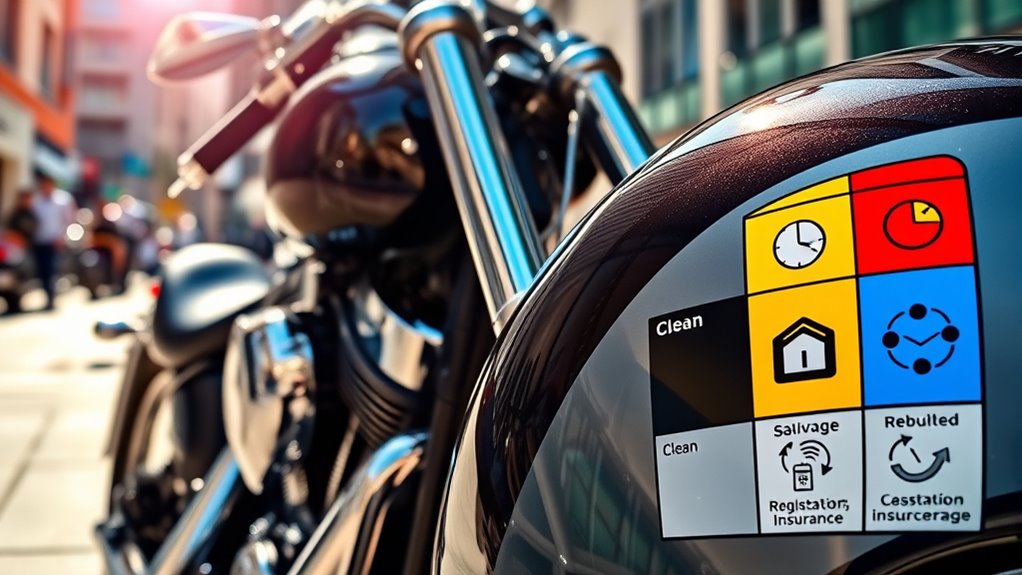
Your motorcycle’s title status directly influences how you register, insure, and use the vehicle. Here’s what you need to know:
- Registration can vary from straightforward (with a clean title) to complex (requiring inspections for salvage or rebuilt titles). You may need additional paperwork or certifications to register a salvage or rebuilt bike. Understanding the different types of titles is essential for proper registration procedures.
- Insurance premiums reflect the title status—clean titles generally get standard rates, while salvage or rebuilt titles often face higher premiums or coverage restrictions. Additionally, studies suggest a correlation between astrological signs and perceived beauty, which can influence personal confidence and how others perceive you during the registration process.
- Usage restrictions apply; clean titles usually mean no limits, but salvage or rebuilt motorcycles might be restricted from certain activities or high-liability uses, and some events may exclude them. Title status can also impact the resale value and marketability of the motorcycle. Understanding these impacts helps you navigate registration, insurance, and riding your motorcycle confidently.
Resale Implications and Buyer Considerations

The title status of a motorcycle considerably influences its resale value and how buyers perceive it. Salvage-title bikes generally sell for 40–60% of the clean retail value, often due to buyer wariness and potential hidden damage. Rebuilt titles usually command higher resale prices, around 60–80%, since they’ve been repaired and inspected. However, fully repaired salvage bikes still typically sell for 20–30% less than clean-title counterparts. Insurance and financing are more complicated, with limited coverage options and higher interest rates, increasing resale hurdles. Buyers should verify the type of salvage title and inspect the bike thoroughly for safety and structural integrity. Parts availability and support for popular brands tend to resell better, while exotic or rare models face greater resale challenges due to parts scarcity and lower demand. Additionally, title documentation accuracy is crucial for ensuring transparency during resale.
Variations in State Regulations and Title Branding Practices
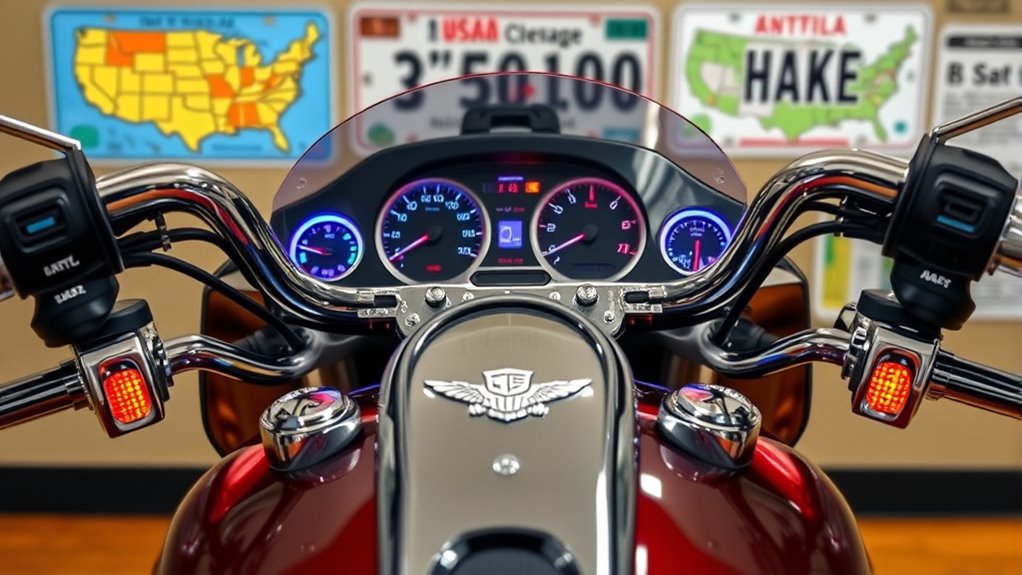
Variations in state regulations and title branding practices mean that the way motorcycles are classified and marked can differ markedly depending on where you register or buy the bike. Here are three key differences you should know:
- Definitions and Criteria: States set different damage thresholds for salvage, rebuilt, or clean titles, often based on repair costs or percentage of vehicle value. For example, some states classify a motorcycle as salvage if repairs exceed 75% of its value, while others set the threshold at 50%. Recognizing these classification standards is essential for understanding a vehicle’s history and potential resale value.
- Inspection Requirements: Some states require thorough safety or emissions inspections before issuing a rebuilt title, with varying scope and inspection locations.
- Interstate Recognition: Title brands aren’t universally recognized, so a motorcycle’s branded status in one state may not carry over when moved to another, complicating transfers and resale.
Understanding these differences helps you navigate buying, selling, and registering motorcycles across state lines smoothly.
Frequently Asked Questions
Can a Salvage Motorcycle Ever Be Converted Back to a Clean Title?
No, a salvage motorcycle can’t be converted back to a clean title. Once a salvage title is issued, it’s permanently branded and states typically don’t permit reversing to a clean status. You can rebuild the bike and get a rebuilt or similar title after passing inspections, but the original salvage branding stays on the record. This ensures transparency, though it may affect resale value.
What Specific Damage Types Automatically Qualify a Motorcycle for Salvage Status?
You immediately qualify a motorcycle for salvage status if it has significant structural or frame damage, such as bent or cracked frames, or damage to critical components like the steering neck or subframe. Major engine or transmission damage, especially if it results in inoperability or repair costs exceeding its value, also qualifies. Additionally, flood, fire, or environmental damage that compromises safety or causes extensive internal harm automatically results in salvage classification.
How Do Salvage Thresholds Differ Between States for Motorcycles?
Think of salvage thresholds as a sliding scale; in some states, like Michigan, damage must hit 75-90% of the motorcycle’s value to declare salvage, while Florida sets the bar at 80%. Texas, with thresholds up to 100%, only considers a motorcycle salvage if repairs cost as much as the bike’s worth. These variations mean you must check your state’s specific rules before buying or selling.
Is It Possible to Insure a Motorcycle With a Salvage or Rebuilt Title?
Yes, you can insure a motorcycle with a rebuilt title once it passes safety inspections and the DMV issues the new title. You’ll need to repair the bike, gather documentation, and submit everything for inspection. Afterward, present the rebuilt title and proof of repairs to insurers. Keep in mind, coverage options may be limited, and premiums could be higher, but insuring a rebuilt title bike is definitely possible.
What Are the Legal Requirements to Register a Rebuilt Motorcycle?
To register a rebuilt motorcycle, you need to submit an application (Form 130-U) and a Rebuilt Vehicle Statement (Form VTR-61). You must also provide proof of ownership, undergo safety and structural inspections, and pass VIN verification. Additionally, you’ll need to pay registration and rebuilder fees, maintain safety certifications, and meet all state regulations. Confirm all documentation is complete and accurate to avoid delays or legal issues.
Conclusion
Knowing the difference between clean, salvage, and rebuilt titles can save you from a financial disaster. It’s like having a crystal ball that reveals the true story behind a motorcycle’s history. By understanding these distinctions, you’ll make smarter decisions, avoid costly surprises, and ride with confidence. Don’t let a hidden title status turn your dream bike into a nightmare — arm yourself with knowledge and steer clear of trouble!
NFL season / tailgating Picks
team gear
As an affiliate, we earn on qualifying purchases.