
Before hitting the road in your classic car, make sure you check tire pressure, tread wear, and any signs of damage, while also inspecting your spare tire. Verify fluid levels, inspect belts and hoses, and test your battery for corrosion. Confirm brakes respond properly, and listen for unusual noises. Pack emergency supplies like jumper cables, first aid kit, and snacks. Proper route planning and final vehicle checks will make certain your journey is smooth—keep going to learn more key tips to prepare.
Key Takeaways
- Conduct comprehensive vehicle inspections, including tires, fluid levels, belts, hoses, and battery condition, to prevent breakdowns.
- Ensure brakes are responsive and test for unusual noises to confirm mechanical reliability.
- Pack essential emergency supplies such as a first aid kit, jumper cables, tools, and roadside assistance items.
- Verify route planning with fuel stops, rest areas, and navigation tools, and confirm vehicle readiness before departure.
- Organize personal items and packing essentials for easy access, comfort, and safety during the long journey.
Preparing for a road trip can make all the difference between a smooth adventure and a stressful ordeal. Before you hit the open road, you need to focus on vehicle maintenance to guarantee your classic car runs reliably throughout your journey. Start by checking your tires—inspect for proper inflation, tread wear, and any signs of damage. Remember, under-inflated tires can reduce fuel efficiency and increase the risk of flats, while over-inflated tires can lead to a rougher ride. Don’t forget to examine the spare tire, making sure it’s properly inflated and accessible. Next, check your fluid levels—engine oil, coolant, brake fluid, and windshield washer fluid. Top off or replace as needed. A well-maintained engine is less likely to break down miles from home.
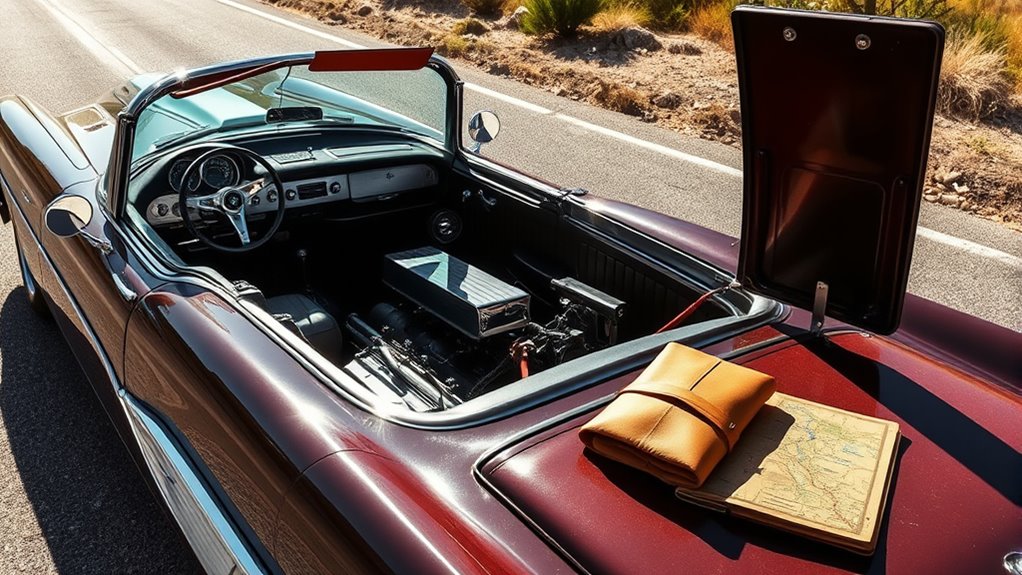
Ensure your classic car is road-ready with proper tire, fluid, and battery checks for a smooth journey.
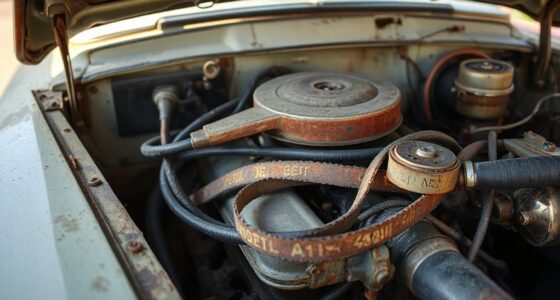
Additionally, inspect your battery for corrosion or loose connections; a dependable power source is critical, especially if you’re planning long stretches without service stations. Test your brakes for responsiveness and listen for any unusual noises that might indicate wear or issues. Also, examine your belts and hoses for cracks or leaks; replacing worn parts beforehand can prevent breakdowns in the middle of nowhere. Moreover, consider using wellness technology to monitor your vehicle’s health in real-time, as some advanced systems can alert you to potential mechanical issues before they become serious.
Alongside vehicle maintenance, packing essentials is equally important. Pack a roadside emergency kit that includes a flashlight, jumper cables, basic tools, first aid supplies, and a tire repair kit. Bring plenty of water and non-perishable snacks, especially if you’re traveling through remote areas. A paper map or GPS device is essential, even if you rely heavily on digital navigation—technology can fail, and backup is always smart. Guarantee you have your vehicle documents in order, including registration, insurance, and any necessary permits. Don’t forget to pack your driver’s license and a few extra vehicle keys, just in case. Clothing suitable for different weather conditions, sun protection, and personal hygiene items should also be part of your packing essentials. If you’re planning to spend nights on the road, pack bedding or a blanket, and consider portable chargers for your devices.
Finally, plan your route ahead of time, noting fuel stops, rest areas, and points of interest. Confirm your vehicle’s readiness, organize your packing essentials efficiently, and you’re ready to set out on your journey. Doing this prep work minimizes surprises and keeps you safe, so you can focus on enjoying the adventure. With your classic car in top shape and your essentials packed, you’ll set out with confidence and peace of mind, ready to make memories on the open road.
Frequently Asked Questions
How Often Should I Perform Maintenance on My Classic Car?
You should perform maintenance on your classic car every 3,000 to 5,000 miles or at least twice a year, whichever comes first. Follow a consistent maintenance schedule to keep your vintage car in top shape and prevent costly repairs. Regular checks of oil, brakes, and tires are essential for vintage car upkeep. Staying proactive guarantees your car stays reliable and ready for long journeys or everyday drives.
What Essential Emergency Kit Should I Carry for Long Trips?
For long trips, you should carry an emergency kit with essential supplies like first aid items, flashlight, batteries, and basic tools. Include safety gear such as reflective vests, gloves, and a warning triangle to stay visible and safe. Pack extra water, snacks, and a phone charger. These emergency supplies and safety gear guarantee you’re prepared for unexpected situations, helping you stay safe and ready to handle any roadside emergencies efficiently.
Are There Specific Tires Recommended for Long-Distance Travel?
For long-distance travel, you’ll want tires that offer a smooth ride and durability. Look for tires with reliable tread depth and maintain proper tire pressure to guarantee safety and efficiency. High-quality touring tires or those designed for long journeys are excellent choices, providing better grip and longevity. Regularly check your tire pressure and tread depth before hitting the road, so your ride stays comfortable and trouble-free mile after mile.
How Can I Improve Fuel Efficiency on a Vintage Vehicle?
To improve fuel efficiency on your vintage vehicle, consider adding fuel additives that clean the engine and improve combustion. You can also make aerodynamic modifications, like installing a front air dam or removing roof racks, to reduce drag. These tweaks help your classic run smoother and burn less fuel, making long trips more economical and enjoyable. Just guarantee any modifications stay true to your vehicle’s vintage style and integrity.
What Should I Do if My Car Overheats During a Trip?
If your car overheats during a trip, pull over safely and turn off the engine. Check for overheating signs like steam or a rising temperature gauge. Open the hood carefully and inspect the coolant check; verify the coolant level is adequate and there are no leaks. If needed, add coolant or water, but avoid opening the radiator cap when hot. Address the issue promptly to prevent engine damage.
Conclusion
Think of your classic car as a trusty steed, ready to carry you on an epic adventure. With each pre-ride check, you’re sharpening its senses and tightening its reins, ensuring a smooth journey ahead. When you’re well-prepared, the open road becomes a vast, inviting pasture, free of worries. Embrace these steps like a seasoned rider groomed for the trail—confident, ready, and enthusiastic to explore every mile that lies ahead.