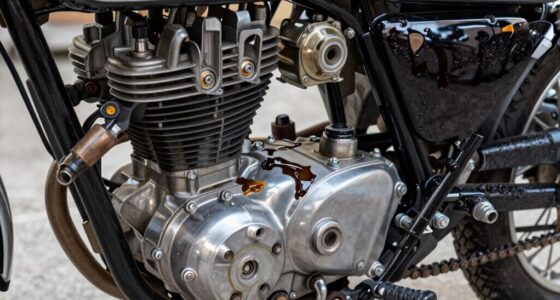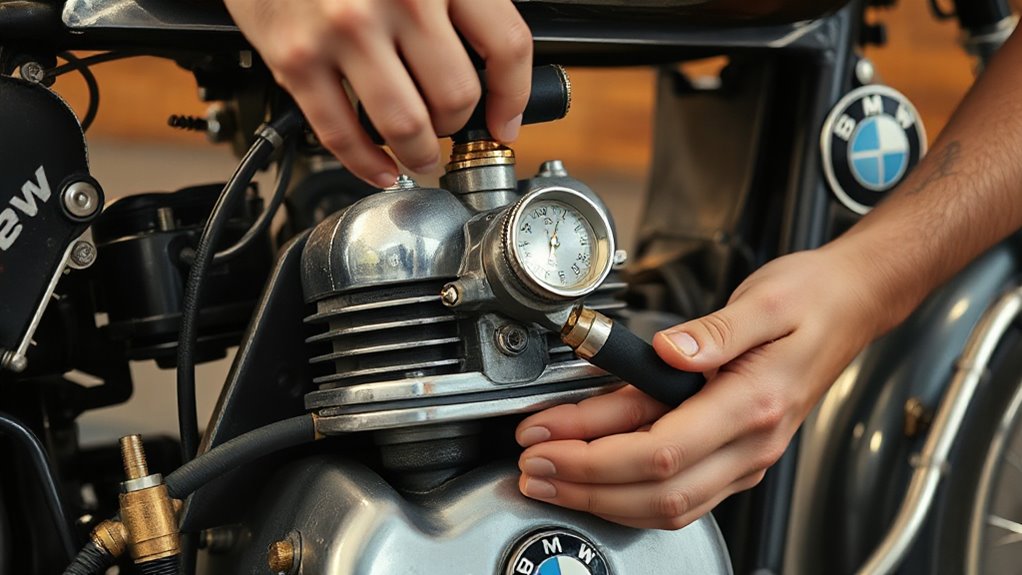

To maintain your 1970s BMW Airhead, focus on regular fuel system checks, including cleaning injectors, inspecting fuel lines, and replacing filters to guarantee smooth performance. Keep valve adjustments up-to-date to avoid engine issues and synchronize tuning for peak response. Proper maintenance preserves the motorcycle’s classic charm and reliability. Soon, you’ll discover more essential tips to keep your vintage BMW running like new and retain its unique character.
Key Takeaways
- Regularly clean and inspect fuel injectors and fuel lines to prevent blockages and leaks.
- Perform precise valve adjustments and engine tuning to maintain optimal performance.
- Replace fuel filters periodically to ensure clean fuel flow and prevent engine hesitation.
- Use diagnostic tools to monitor fuel injection system sensors and address error codes promptly.
- Maintain overall routine tasks like oil changes and spark plug checks to preserve vintage BMW Airhead reliability.
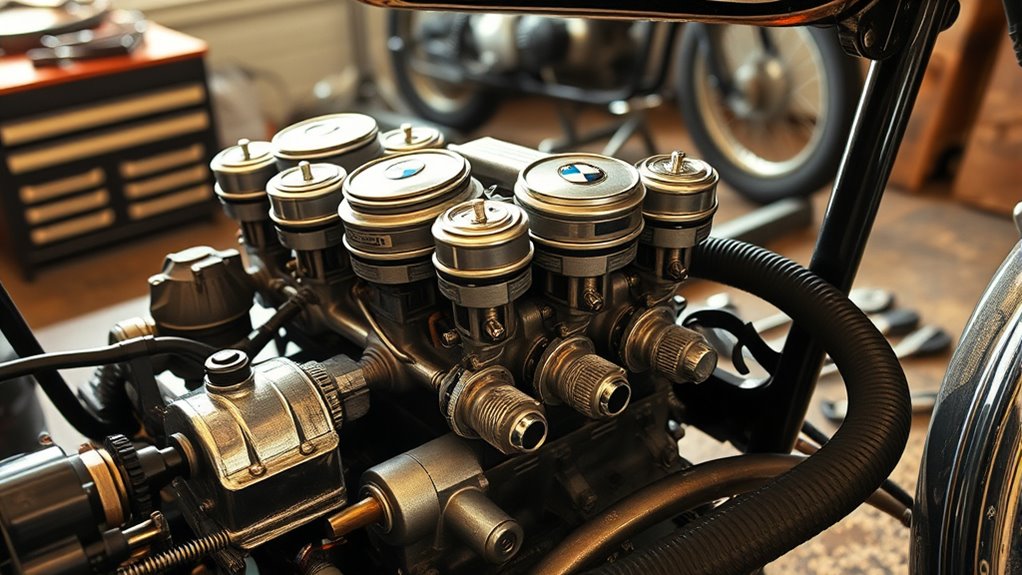
Maintaining a BMW Airhead requires regular attention to keep it running smoothly and reliably. These classic motorcycles, built in the 1970s, demand specific care to ensure peak performance and longevity. One of the most important aspects of keeping your Airhead in top shape is understanding its fuel system. While many models are equipped with carburetors, some later models and custom modifications feature fuel injection systems. If your bike has fuel injection, you need to regularly check and clean the injectors to prevent blockages that can cause rough running or poor fuel economy. Properly functioning fuel injection ensures a consistent air-fuel mixture, which is essential for smooth throttle response and reliable starts. For bikes with carburetors, tuning and synchronization are equally crucial, but fuel injection systems tend to be more sensitive and require precise maintenance. Regular inspection of fuel lines for cracks or leaks and replacing filters ensures clean fuel delivery. If your bike has a fuel injection system, it’s wise to periodically have it inspected using diagnostic tools to check for error codes or sensor issues. Keeping the fuel system clean and well-maintained prevents misfires, hesitation, and poor fuel economy. Combining this with regular valve adjustments keeps your BMW Airhead running at its best, providing a smooth, responsive ride every time. Additionally, using proper cleaning techniques for your specific model can help extend the lifespan of components and improve overall performance. Finally, don’t forget that other routine maintenance tasks, like changing oil, inspecting spark plugs, and checking tire pressure, complement these efforts. But focusing on fuel injection and valve adjustment is key to preserving the unique character and performance of your vintage BMW Airhead. With consistent care and attention, your classic motorcycle will reward you with dependable service and that timeless riding experience.
Frequently Asked Questions
How Can I Improve Fuel Efficiency on My BMW Airhead?
To improve your BMW Airhead’s fuel efficiency, start with proper engine tuning—adjust your carburetors and valves regularly. Follow fuel economy tips like maintaining correct tire pressure, reducing excess weight, and avoiding aggressive riding. Keep your air filter clean and ensure your ignition system is in top shape. These steps will help your motorcycle run smoother, use less fuel, and extend engine life, giving you better performance and savings on fuel costs.
What Are Common Electrical Issues in 1970S BMWS?
You might face electrical issues like fuse box problems and wiring corrosion in your 1970s BMW. These problems often cause blown fuses or electrical failures, so regularly inspect the fuse box and replace damaged fuses. Check wiring for corrosion or loose connections, especially in humid conditions. Keeping the electrical system clean and corrosion-free guarantees reliable performance and prevents more costly repairs down the line.
How Often Should I Replace the Timing Chain?
You should replace the timing chain every 80,000 to 100,000 miles, but don’t wait until it’s visibly worn or noisy. Many owners hesitate, thinking it’s unnecessary, but neglecting the replacement interval can lead to engine damage. Regular inspection for slack or wear helps determine if your timing chain needs replacing sooner. Staying on top of this maintenance keeps your 1970s BMW running smoothly and prevents costly repairs.
What Are Signs of Worn-Out Shock Absorbers?
Worn-out shock absorbers cause your BMW’s suspension to feel less stable, so watch for signs like excessive bouncing, nose-diving during braking, or uneven tire wear. You might also notice reduced handling or a rough ride. Conduct suspension diagnostics regularly to catch shock absorber wear early. If you experience these symptoms, it’s time to replace your shocks to restore smooth handling and safety on the road.
Can I Upgrade My Airhead’s Suspension for Better Handling?
Yes, you can upgrade your airhead’s suspension to improve handling. Suspension upgrades, like replacing worn shocks or installing modern forks, directly enhance ride quality, stability, and cornering. By choosing the right components, you’ll experience smoother rides, better control, and more confidence on the road. Upgrading your suspension makes a noticeable difference, so don’t hesitate to explore options for handling improvements tailored to your riding style and needs.
Conclusion
Maintaining your vintage BMW Airhead is like tending a delicate garden—each careful touch keeps it thriving through the years. By following these unique service tips, you become the skilled gardener, nurturing your bike’s legacy and ensuring it runs smoothly for miles to come. Remember, patience and attention to detail are your best tools. With proper care, your 1970s BMW will continue to be a proud, steadfast companion—an enduring masterpiece in motion.