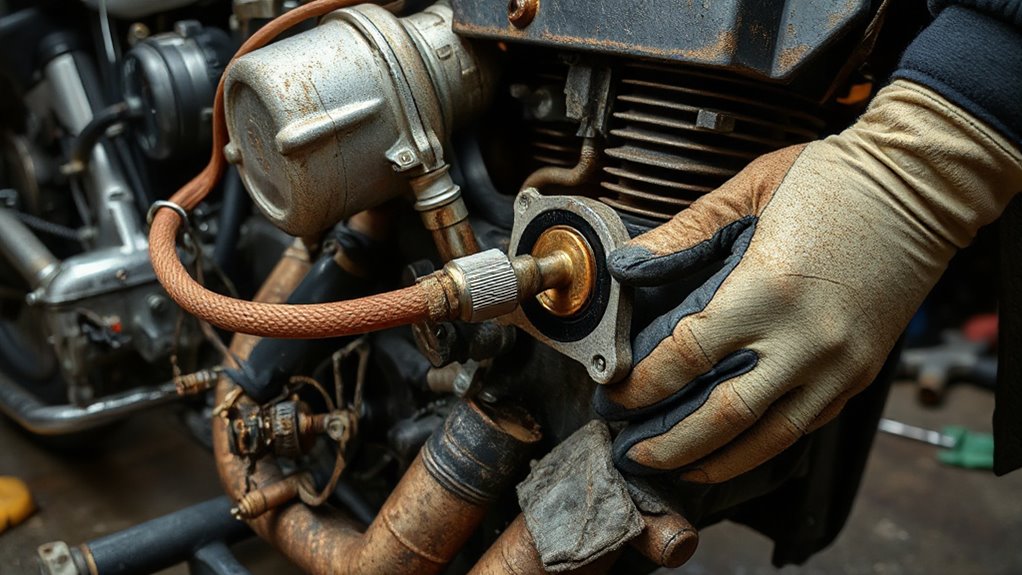

If your bike floods with fuel, turn off the fuel supply and open the throttle wide to vent excess fuel from the cylinders. Remove and inspect the spark plug, drying or replacing it if it’s wet or fouled. Check the carburetor for clogs, cleaning it thoroughly if needed. Reinstall everything and try starting the engine again, repeating the process if necessary. Following these steps helps clear the flood; understanding more will help you prevent future issues.
Key Takeaways
- Turn off the fuel supply and open the throttle wide to vent excess fuel from the engine.
- Remove and dry the spark plug; replace if it appears fouled or damaged.
- Disassemble, clean, and inspect the carburetor to prevent further flooding.
- Attempt to restart the bike carefully after ensuring the engine is clear of excess fuel.
- Regularly maintain your bike’s components to reduce the risk of future flooding.
A flooded engine can be be a frustrating and stressful problem, but knowing how to recover from it quickly can save you time and money. When your bike floods with fuel, the first step is to understand what’s happening. Excess fuel in the combustion chamber prevents the engine from firing properly, leading to difficulty starting or a near-impossible start. To fix this, you need to clear out the excess fuel and guarantee your engine is ready to run again.
A flooded engine is frustrating, but quick action can clear excess fuel and get your bike running smoothly again.
Begin by turning off the fuel supply to prevent more fuel from entering the engine. Next, open the throttle wide open and attempt to start the bike. This action helps to vent the excess fuel from the cylinders. If it doesn’t start after a few attempts, you might need to push the kickstand or use the electric start if available, but avoid repeatedly trying to start it without clearing the excess fuel, as this can flood the engine further. One effective step is to remove the spark plug and inspect it. A wet, sooty, or blackened spark plug indicates flooding. Dry it off and check for damage or corrosion. Replacing a fouled spark plug can profoundly improve your chances of starting the engine.
In addition to inspecting the spark plug, it’s important to check the carburetor. Flooding often results from a malfunctioning carburetor, where fuel gets into the intake uncontrollably. Performing carburetor cleaning can resolve underlying issues that caused the flooding. Carefully remove the carburetor, disassemble it, and clean all passages with carburetor cleaner. Pay close attention to the jets and float, ensuring they aren’t clogged or stuck, which would allow too much fuel into the engine. Reassemble the carburetor and reinstall it on the bike, making sure all connections are tight and secure. Proper carburetor maintenance not only helps recover from flooding but also keeps your bike running smoothly in the future. Regular support for breakfast and maintenance can help prevent issues like flooding by ensuring all components are functioning properly.
Once the spark plug is dry and the carburetor is cleaned, try starting your bike again. If it still doesn’t fire, repeat the process—venting the engine, inspecting the spark plug, and ensuring the carburetor is clean. Patience is key; sometimes it takes a few attempts to clear out the excess fuel. Remember, preventing future floods involves regular carburetor maintenance and timely spark plug inspections. Keeping these components in good shape minimizes flooding chances and keeps your bike ready to ride when you are. With these steps, you can confidently handle a flooded engine and get back on the road without unnecessary delays.

Motorcycle Speedometer MAIMEIMI 9-16V Universal Motorcycle Gauge Cluster with Digital Speedometer, Small Engine Tachometer, Odometer, 6 Gear 12000 RPM MPH Mini LCD VA Screen
【Motorcycle Speedometer Cluster】: Our combine motorcycle speedometer, Tachometer and gear indicator into one, not only that, motorcycle speedometer...
As an affiliate, we earn on qualifying purchases.
Frequently Asked Questions
How Can I Prevent My Bike From Flooding in the First Place?
You can prevent your bike from flooding by practicing good fuel management and carburetor maintenance. Always avoid over-priming the carburetor, and don’t turn the choke on longer than necessary. Regularly clean and inspect your carburetor to guarantee proper fuel flow. Additionally, shut off the fuel supply when your bike isn’t in use for extended periods. These steps help keep your engine running smoothly and prevent flooding.
Is It Safe to Start a Flooded Engine Immediately?
Like a cautious sailor avoiding rocky shores, you shouldn’t start a flooded engine immediately. Doing so risks engine damage and fuel leakage. Instead, wait for the excess fuel to evaporate, and then clear the cylinders carefully. If you attempt to start it prematurely, you could cause costly harm. Patience saves your bike, ensuring you don’t face the storm of engine damage or fuel leaks later on.
What Tools Are Recommended for Flooded Engine Recovery?
You’ll need a few tools to recover from a flooded engine. Start with a fuel drain to remove excess gasoline from the carburetor or fuel system. Next, remove the spark plug to allow any remaining fuel to evaporate and prevent misfiring. Having a socket wrench, screwdriver, and possibly a spark plug socket handy will make this process easier. Always wear gloves and work in a well-ventilated area for safety.
How Long Should I Wait Before Attempting to Restart My Bike?
Think of your engine like a sleeping bear—you need to let it rest before waking it. Wait about 15-30 minutes, giving the ignition system and fuel quality time to settle. This pause allows excess fuel to evaporate and prevents damage when you try to restart. Rushing could flood your engine further or harm your bike’s internal parts. Be patient, and your bike will be ready to roar again.
Can a Flooded Engine Cause Long-Term Damage?
A flooded engine can cause long-term damage if not addressed promptly. Continuous flooding leads to engine wear and can cause combustion issues, which impair performance over time. If you ignore the flood, buildup of fuel residues may corrode engine parts, reducing lifespan. To prevent this, fix the flooding immediately, avoid repeated attempts to start it, and have a mechanic inspect your bike for potential damage.

SHARKROAD Black 4.4'' Slip-On Mufflers for Harley 2017-up Touring Road King, Steet Glide, Road Glide, Electra Glide, 18BB
【FANTASTIC VOICE, SHINY LOOK.】Make your bike special for your eyes and ears with a SHARKROAD 4.4-inch muffler.
As an affiliate, we earn on qualifying purchases.
Conclusion
When your bike floods with fuel, staying calm and acting quickly is key. Follow the steps to clear the excess, let the engine breathe, and avoid turning the ignition repeatedly. Remember, even the great explorers of old faced setbacks—think of it as a minor tempest in your two-wheeled odyssey. With patience and proper recovery techniques, you’ll be back on the road faster than you can say “Eureka!” Keep your cool and ride on.

2" Black LAF Exhaust Pipes w/Flange Kits for Bobber/Chopper/Harley/Sportster/Softail.1984-2023.Rust-Resistant, Easy Installation, Enhanced Exhaust Flow & Performance
1. Precise Fit, Classic Coverage Compatible with the entire 1984-2023 Harley Softail lineup (including M8 engines), 1986-2023 Sportster...
As an affiliate, we earn on qualifying purchases.

KEMIMOTO Lithium Motorcycle Battery YTX9-BS/YTX7A-BS, LiFePO4 12v Lithium Battery 4Ah, Pre-Charged Powersports Battery, with 3 Universal-Fit EVA Spacers, Compatible with Motorcycle ATV UTV Jet Ski
PRE-CHARGED: The sealed battery features pre-charged, a power display, and pure copper terminals to support high current discharge...
As an affiliate, we earn on qualifying purchases.