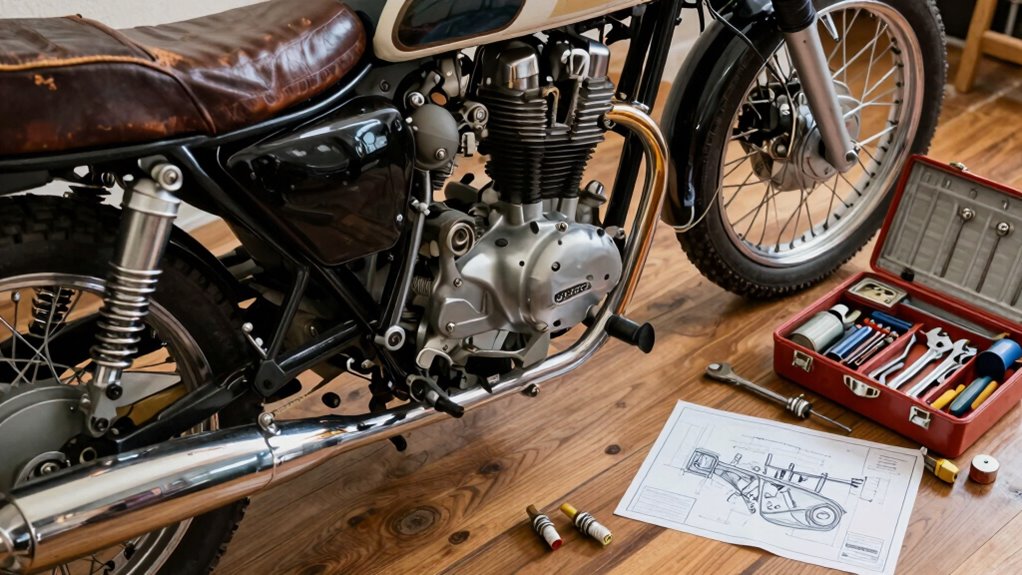

To maintain your classic motorcycle, regularly check and secure it in a dry, locked space, ensuring proper storage. Inspect tires for wear, proper pressure, and damage, then clean and lubricate the chain or drive belt. Keep engine oil, coolant, and brake fluids fresh, and examine electrical connections, fuses, and the battery for corrosion or leaks. Don’t forget to service brakes, suspension, and controls. Continuing further will help you master each step of keeping your bike in top shape.

Get business pricing on garage and car supplies
- Business-only prices and quantity discounts
- Tax-exempt purchasing
- Multiple users, one account, clear invoices
Key Takeaways
- Regularly inspect and replace tires, brake pads, and suspension components to ensure safety and proper handling.
- Check and maintain electrical systems, including batteries, wiring, fuses, lights, and switches for reliable operation.
- Change engine oil and coolant per schedule; clean cooling fins and inspect hoses for leaks or damage.
- Examine and lubricate drive chains, belts, or shafts; keep wheels clean and free of corrosion.
- Store in a dry, secure area, and perform routine checks on lights, battery, and wiring to prevent failures.
Securing and Storing Your Classic Motorcycle
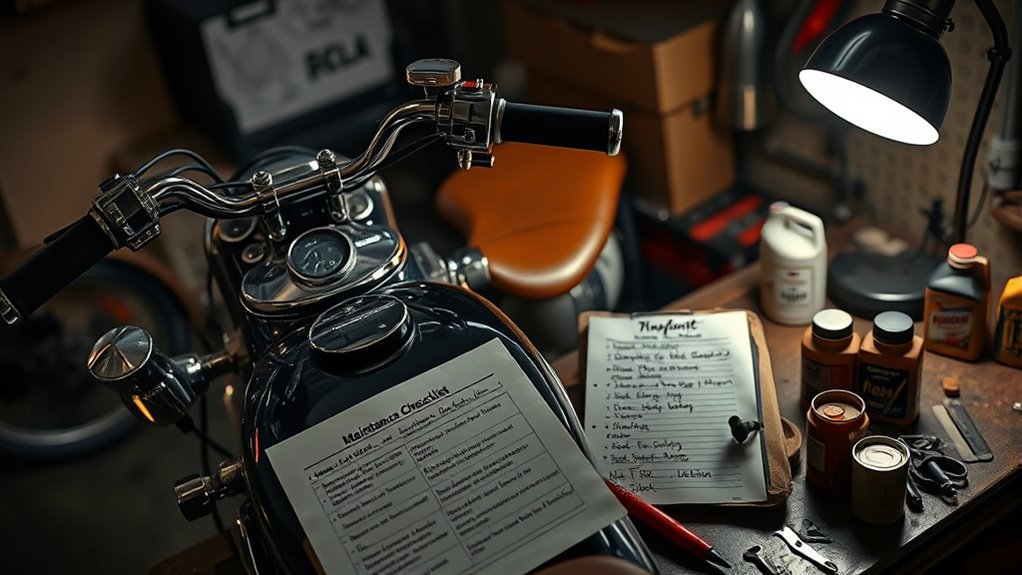
To keep your classic motorcycle safe and in top condition, proper securing and storage are essential. Store it indoors in a secure, lockable space like a garage, shed, or workshop to prevent theft. Use multiple locks or security devices, especially since classic bikes have increased value. Ensure the storage area is dry and well-ventilated to avoid moisture buildup that can cause rust and corrosion. Cover your motorcycle with a breathable cover to protect it from dust, UV rays, and dirt, but avoid plastic covers that trap moisture. Regularly check that the lights, including headlamps, brake lamps, and indicators, are functioning properly, even when not in use. Proper storage preserves your motorcycle’s condition and keeps it ready for your next ride. Maintaining proper storage conditions helps prevent rust and corrosion, ensuring your motorcycle remains in excellent condition over time. Additionally, implementing adequate ventilation can significantly reduce the risk of moisture-related damage, which is especially important for preventing rust. Proper wiring checks can further ensure that your motorcycle’s electrical system remains safe and reliable during storage. Regular maintenance and inspections, even when stored, can further extend the life of your classic motorcycle and keep it in optimal running order.
Tire and Wheel Inspection and Maintenance
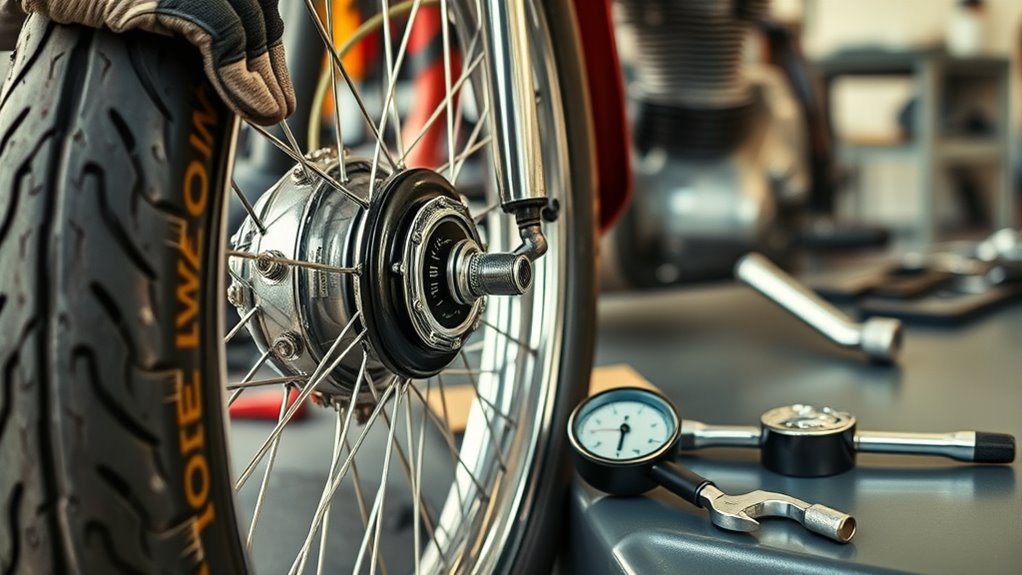
Regularly inspecting your motorcycle’s tires and wheels is essential for safe riding and ideal performance. Before each ride, check the tire tread depth and sidewalls for cracks, cuts, or signs of wear. Proper tire pressure, as specified by the manufacturer, guarantees maximum grip and handling, so always top up your tires before riding. During maintenance, examine the wheels for any damage, such as bent rims or loose spokes, and ensure wheel bearings rotate smoothly without wobbling. If you ride on tube-type tires, replace the tubes whenever you change the tires to prevent leaks. Keeping your wheels clean and free of dirt and debris also helps prevent corrosion and prolongs their lifespan. Regular inspection and maintenance keep your motorcycle safe and performing at its best. Additionally, tire and wheel maintenance is crucial for overall motorcycle safety and longevity. Monitoring tire condition regularly can help you identify early signs of deterioration, ensuring timely replacements and avoiding potential accidents. Performing proper wheel alignment checks periodically can also enhance riding stability and tire longevity. Staying informed about security zone info can further enhance your safety by protecting your motorcycle from theft or vandalism.
Drive System Upkeep and Lubrication
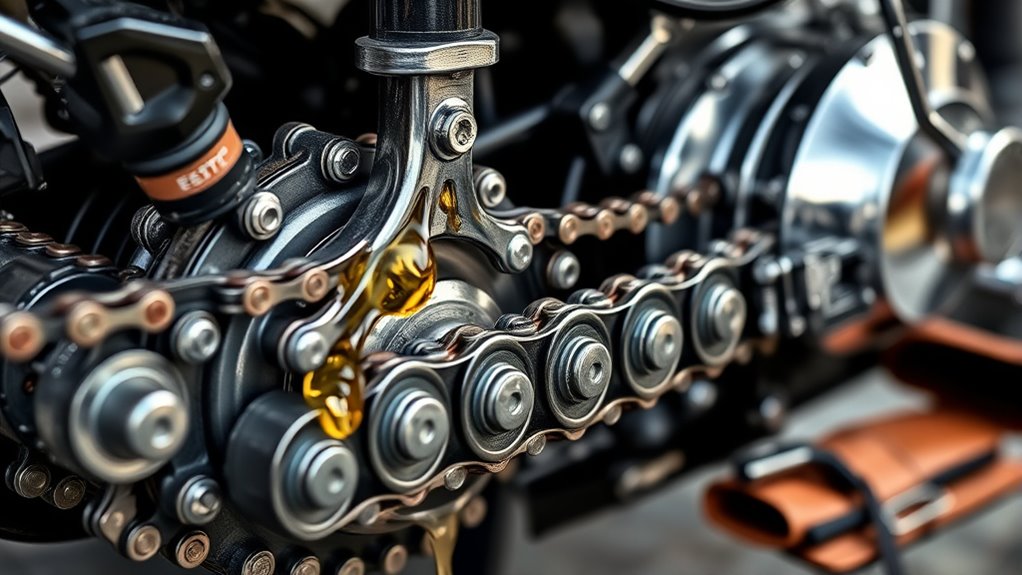
Maintaining your motorcycle’s drive system is essential for smooth power transfer and reliable performance. Regularly inspect your chain, belt, or shaft drive, depending on your setup. For chain drives, clean and lubricate the chain with the proper lubricant, checking tension and adjusting it to the manufacturer’s specs. Look for rust, stiff links, or signs of wear every few hundred miles or after wet rides. Belt drives should be checked for cracks, fraying, or missing teeth, with correct tension maintained as per the manual. Shaft drives require periodic inspection for fluid leaks and proper fluid levels. Always keep drive components dry and free of dirt, and use recommended lubricants to prevent corrosion and excessive wear. Incorporating sound vibrations and frequencies into your maintenance routine, such as using sonic cleaning methods, can also help in removing stubborn debris and ensuring optimal operation. Understanding drive system technology helps in choosing the right maintenance procedures for your motorcycle’s specific setup, and staying informed about latest advancements can improve your maintenance effectiveness. Additionally, paying attention to vibration patterns can help identify early signs of drive system issues before they become serious. Regularly consulting manufacturer guidelines ensures you follow the most accurate and current maintenance protocols for your specific motorcycle model.
Engine Oil, Fluids, and Cooling System Care
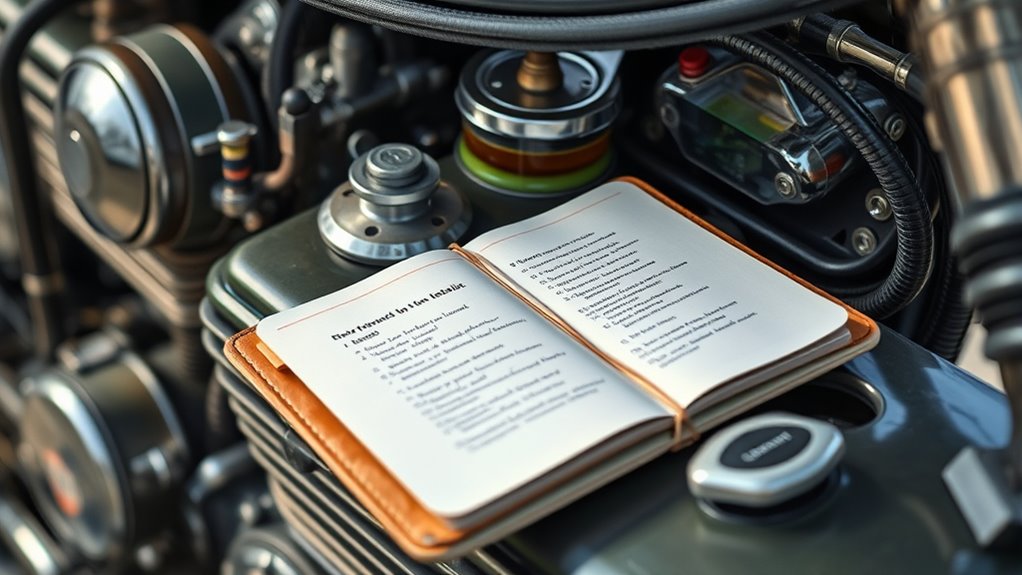
Ensuring your motorcycle’s engine runs smoothly requires attentive care of the oil, fluids, and cooling system. Regularly check oil levels and change the oil and filter according to the manufacturer’s schedule or more often if you ride hard or in tough conditions. Keep an eye on coolant levels, topping off or flushing the system as recommended. For air-cooled engines, ensure fins are clean and free of debris to facilitate heat dissipation. Use the correct coolant and oil types to prevent corrosion and overheating. Inspect hoses and radiator for leaks or cracks, replacing them if needed. Maintaining proper fluid levels and keeping cooling components clean will help your engine stay cool, perform reliably, and last longer. Incorporating regular maintenance practices and understanding cooling system components can significantly enhance your motorcycle’s longevity and performance, especially by paying attention to coolant quality and its impact on engine temperature. Additionally, monitoring coolant circulation ensures the cooling system functions optimally under various riding conditions. Moreover, staying aware of thermal management strategies can further prevent overheating during intense riding sessions.
Electrical System Checks and Battery Maintenance
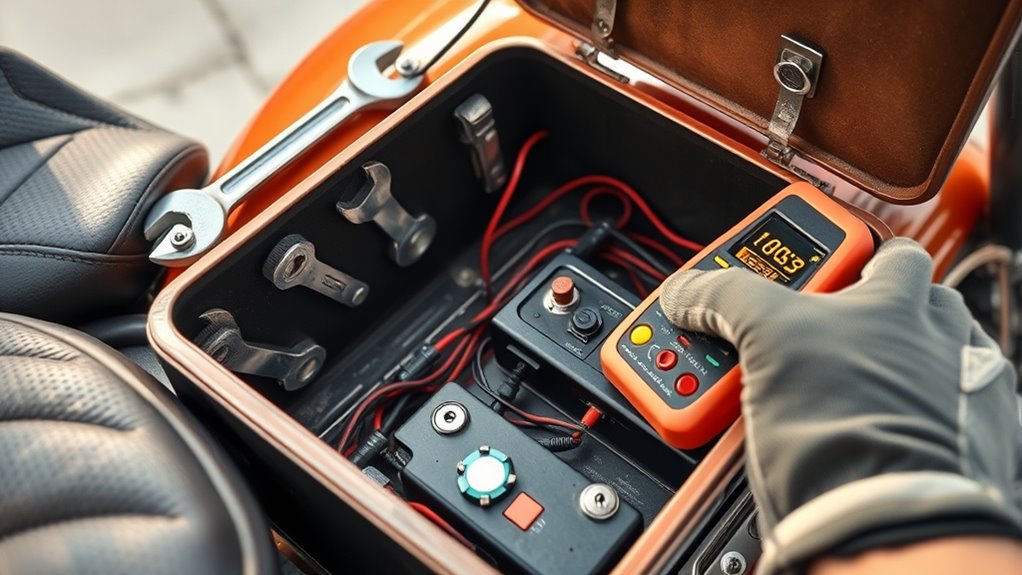
You should regularly check your battery’s condition and perform load tests to guarantee it’s holding a charge. Inspect electrical connections and wiring for corrosion or looseness, tightening or cleaning as needed. Don’t forget to examine fuses and wiring for damage, replacing any blown fuses to keep your system reliable. Additionally, ensure your power tools and equipment are properly maintained and stored to prevent electrical issues. Regularly inspecting your electrical system for corrosion and loose connections can help prevent unexpected failures and extend the lifespan of your components. Staying informed about security system features can also enhance your motorcycle’s safety and ensure optimal performance. Incorporating LED lighting diagnostics can further assist in early detection of electrical problems. Moreover, using smart energy management tools can optimize your motorcycle’s electrical load and efficiency.
Battery Condition and Testing
Regularly checking your motorcycle’s battery condition is crucial for reliable performance and electrical system health. Start by inspecting the battery for corrosion, leaks, or swelling. Use a multimeter to test the voltage; a fully charged lead-acid battery should read around 12.6 volts. If it drops below 12.4 volts, recharge or consider replacing it. Perform a load test to see if the battery maintains voltage under load; if it fails, replace it. Clean terminals and apply dielectric grease to prevent corrosion. Check the electrolyte level in non-sealed batteries and top up with distilled water if needed. Keep the battery securely mounted and ensure terminals are tight. Regular testing prevents unexpected failures and helps maintain your motorcycle’s electrical reliability. Additionally, inspecting piercing care and hygiene can help prevent infections that might affect overall electrical contact in some cases. Maintaining clean connections and proper hygiene can also prevent corrosion and electrical issues, ensuring consistent performance.
Electrical Connection Inspection
Have you checked your motorcycle’s electrical connections lately? Regular inspection ensures reliable performance and prevents electrical failures. Start by examining the battery terminals; clean any corrosion with a wire brush and apply dielectric grease to prevent future buildup. Next, inspect wiring harnesses for loose, cracked, or frayed wires, and secure any loose connections. Check connectors for corrosion or dirt and clean them with electrical contact cleaner. Pay attention to ground connections—ensure they’re tight and free of rust. Test the integrity of relays and switches to confirm they’re functioning correctly. Finally, verify that all lights, indicators, and gauges receive steady power. Addressing these electrical connection points keeps your motorcycle’s system reliable and prolongs component life.
Fuse and Wiring Maintenance
Maintaining your motorcycle’s fuse and wiring system is essential for reliable performance and safety. Start by inspecting the fuse box for any blown fuses and replace them with the correct ratings. Keep spare fuses handy for quick replacements. Check all wiring connections for corrosion, looseness, or damage; clean and tighten as needed. Pay special attention to ground connections—they prevent electrical faults and wiring issues. Use dielectric grease on terminals to prevent corrosion and ensure a solid connection. Regularly test electrical components like lights and indicators to confirm they’re working properly. If you notice flickering or inconsistent operation, trace wiring for damage or loose connections. Proper upkeep of your fuse and wiring system guarantees your motorcycle runs smoothly and reduces the risk of electrical failures.
Brake System and Suspension Servicing
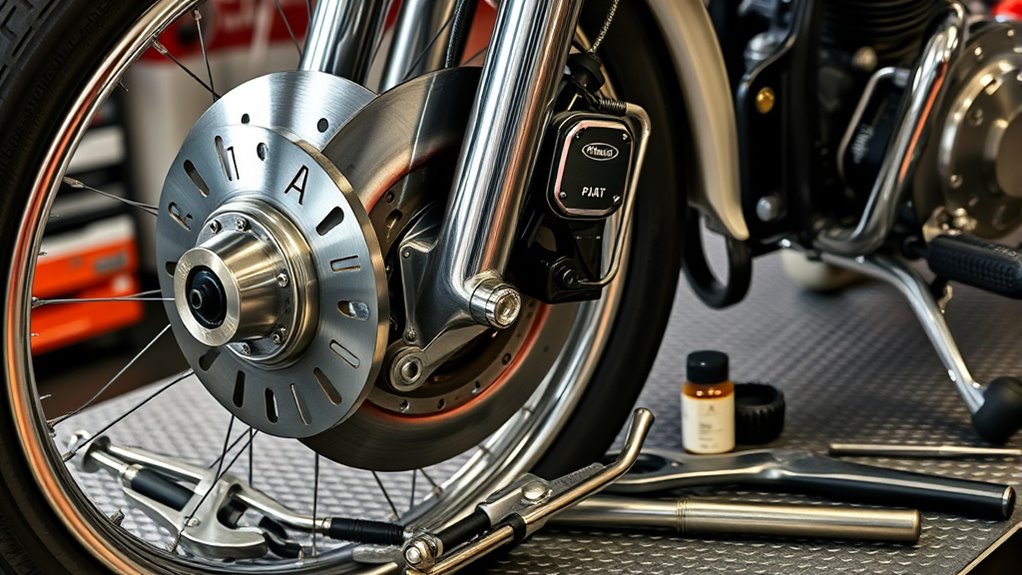
Proper brake system and suspension servicing are essential for safe and smooth motorcycle operation. You should regularly check brake pads, discs, and calipers for wear, replacing as needed. Lubricate caliper slides and pins to ensure smooth action. Drain and refill front fork oil according to your manual, as degraded oil hampers suspension performance. Adjust brake and suspension settings to match riding conditions. Keep control cables clean, lubricated, and free of dirt to prevent sticking. Below is a quick reference:
| Service Task | Frequency |
|---|---|
| Brake pad check | Every 1,000 miles |
| Caliper lubrication | Every 6 months |
| Fork oil change | Annually or as needed |
| Suspension adjustment | When handling feels off |
| Control cable lube | Every 3 months |
Regular servicing keeps your motorcycle safe and reliable.
Regular Inspection of Controls and Cables
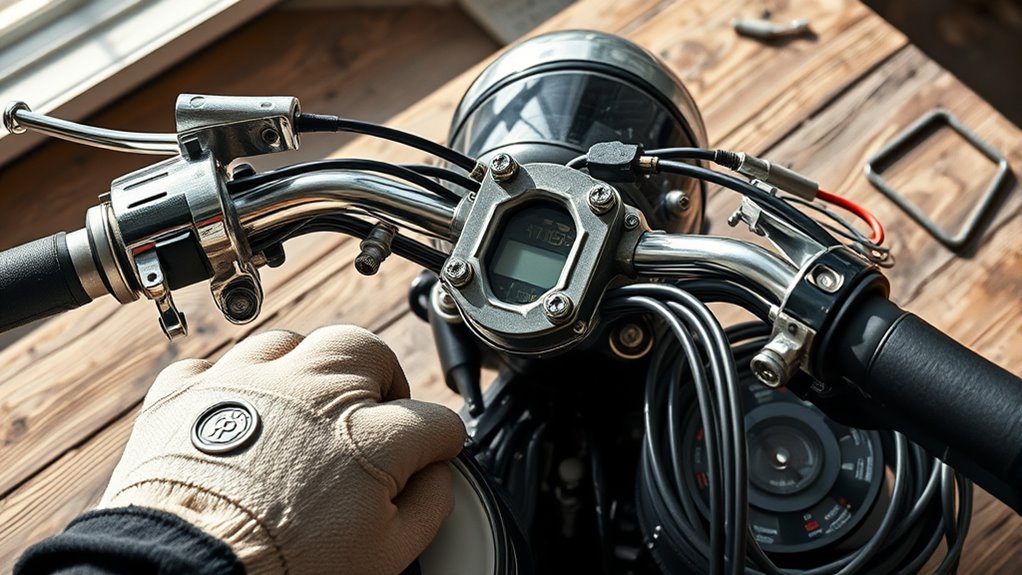
Regularly inspecting your controls and cables helps make certain smooth, responsive handling. Proper lubrication techniques prevent sticking and fraying, extending their lifespan. Checking control response often reveals early signs of wear, allowing you to address issues before they become safety hazards.
Cables Lubrication Techniques
To keep your motorcycle controls operating smoothly, you need to pay close attention to your cables and connections. Regular lubrication prevents corrosion, reduces friction, and guarantees smooth operation. Start by removing the cable from its housing, then clean it with a suitable degreaser or contact cleaner. Use a cable luber or apply lubricant directly into the outer casing, working the lubricant through the entire length. For throttle and clutch cables, choose a lubricant designed specifically for control cables—light, non-gumming, and penetrating. After lubrication, reassemble carefully, ensuring the cables move freely without sticking. Regular lubrication reduces wear and prolongs cable life, keeping your controls responsive and safe. Make this part of your routine maintenance to avoid sticking or sluggish responses while riding.
Control Response Checks
Have you ever noticed sluggish or unresponsive controls on your motorcycle? If so, it’s time for a control response check. Start by testing each control—throttle, clutch, brake—and ensure they move smoothly without sticking. Check cables for signs of wear, fraying, or corrosion, and replace if necessary. Adjust cable tension to factory specs for ideal response. Lubricate cables and pivot points regularly to prevent stiffness. Use the table below to guide your inspection:
| Control Type | Check for | Action Needed |
|---|---|---|
| Throttle | Smoothness, play | Adjust or replace cable |
| Clutch | Engagement point | Tighten or lubricate |
| Brake | Response, wear | Replace pads or cables |
Consistent checks keep your controls responsive, ensuring safe and smooth rides.
Seasonal and Long-Term Storage Procedures
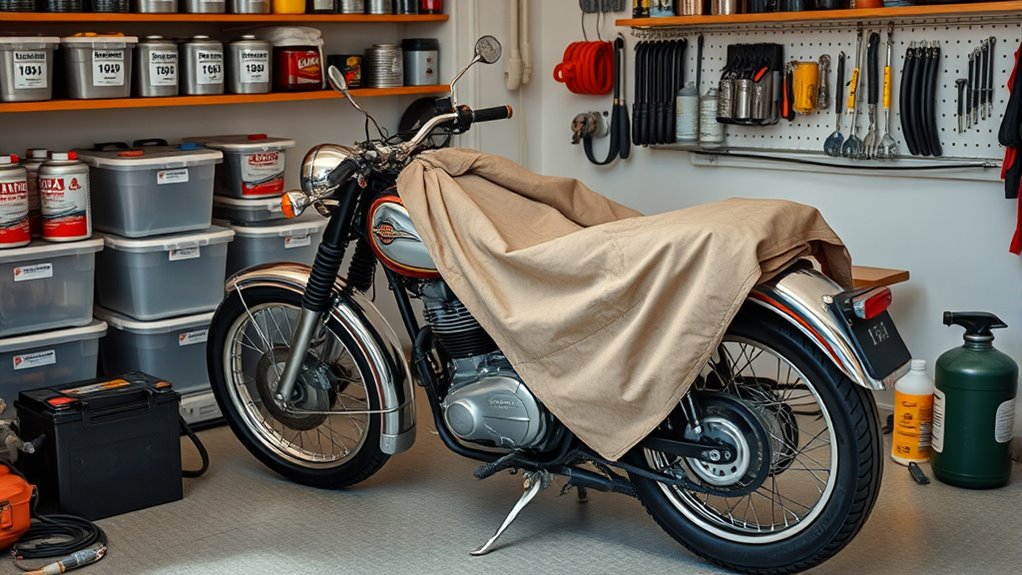
Preparing your motorcycle for seasonal or long-term storage requires careful planning to guarantee it’s ready to ride when you return. First, give it a thorough cleaning, removing dirt and grime to prevent corrosion. Change the oil and filter, and top off all fluids, including coolant and brake fluid. Drain the carburetor or add fuel stabilizer to prevent rust inside the tank. Disconnect and remove the battery, storing it in a cool, dry place; consider using a trickle charger. Cover the motorcycle with a breathable cover, ensuring it’s protected from dust and UV damage. Store it in a dry, well-ventilated area, away from extreme temperatures. Regularly check on your bike during storage to catch any issues early and maintain its condition.
Frequently Asked Questions
How Often Should I Perform a Full Safety Inspection on My Motorcycle?
You should perform a full safety inspection on your motorcycle at least once every three to six months, or more often if you ride frequently or in challenging conditions. Regularly check brakes, tires, lights, and fluid levels before each ride. Keep an eye out for signs of wear or damage, and address issues promptly. Consistent inspections guarantee your bike remains safe, reliable, and ready for any ride.
What Are Signs of a Failing Wheel Bearing or Rim Damage?
Did you know wheel bearing failure accounts for about 30% of motorcycle accidents? You’ll notice signs like unusual noise—grinding or humming—when riding, especially during turns or braking. Feel for looseness or play in the wheel, and check for wobbling or uneven tire wear. Rim damage may cause vibrations, cracks, or dents. Regularly inspecting these components helps prevent accidents and costly repairs, keeping your ride safe and smooth.
How Do I Identify and Fix Electrical Wiring Issues?
You can identify wiring issues by looking for loose or corroded connections, blown fuses, or dim lights. Use a multimeter to check for voltage drops or continuity problems. Fix wiring issues by cleaning terminals with dielectric grease, tightening loose connections, and replacing damaged wires or blown fuses. Always disconnect the battery before work, and verify all connections are secure to prevent future electrical failures.
When Should Brake Pads and Discs Be Replaced?
You should replace brake pads and discs when you notice signs of wear, like thinning pads, squealing, or reduced braking performance. Regularly inspect the pads for thickness; if they’re below the manufacturer’s recommended minimum, it’s time for a change. Check discs for cracks, warping, or excessive scoring. Replace both promptly to maintain safe, effective braking and prevent damage to other components. Routine checks ensure your motorcycle stays reliable on the road.
What Are Best Practices for Prolonging My Motorcycle’s Storage Life?
To prolong your motorcycle’s storage life, store it indoors in a secure, dry, and well-ventilated space. Use breathable covers to protect it from dust and UV damage. Regularly check and maintain lights, tires, and fluid levels. Keep the battery charged and connections clean. Lubricate moving parts and inspect for rust or corrosion. Taking these steps guarantees your bike stays in top condition and ready to ride when you need it.
Conclusion
Follow this maintenance checklist, and your classic motorcycle will stay legendary for decades to come. Neglect it, and you risk turning your prized ride into a rusted relic lost to time! With regular care, your bike will roar louder, run smoother, and turn heads like it’s just off the showroom floor—forever. Don’t let your vintage beauty fade into obscurity; keep it alive, vibrant, and unstoppable with these essential tips!
Fall Picks
fall essentials
As an affiliate, we earn on qualifying purchases.