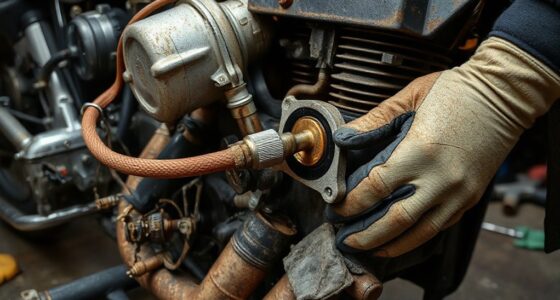

If your clutch cable snaps, stay calm and pull over safely. If you have a spare cable and tools, you can replace it quickly to get back on the road. In a pinch, you can disconnect the cable and manually disengage the clutch for a short-term fix, but it’s not a long-term solution. Regular inspections, lubrication, and using quality cables help prevent this. Keep going to learn essential tips for avoiding future failures.

Get garage and car supplies delivered free — and shop member deals
- Fast, free delivery on millions of items
- Access to Prime Big Deal Days deals on October 6–7
- Prime Video, Amazon Music and more included
Key Takeaways
- Recognize signs of cable wear early, such as difficulty shifting or fraying, to prevent sudden snapping.
- If the cable snaps, safely pull over, turn off the engine, and replace or manually disengage the clutch.
- Use high-quality, compatible clutch cables and perform regular inspections and lubrication to prevent failures.
- Keep emergency tools and a spare cable on hand for quick replacement during a breakdown.
- Maintain the clutch system proactively to reduce the risk of sudden cable failure and ensure smooth gear operation.
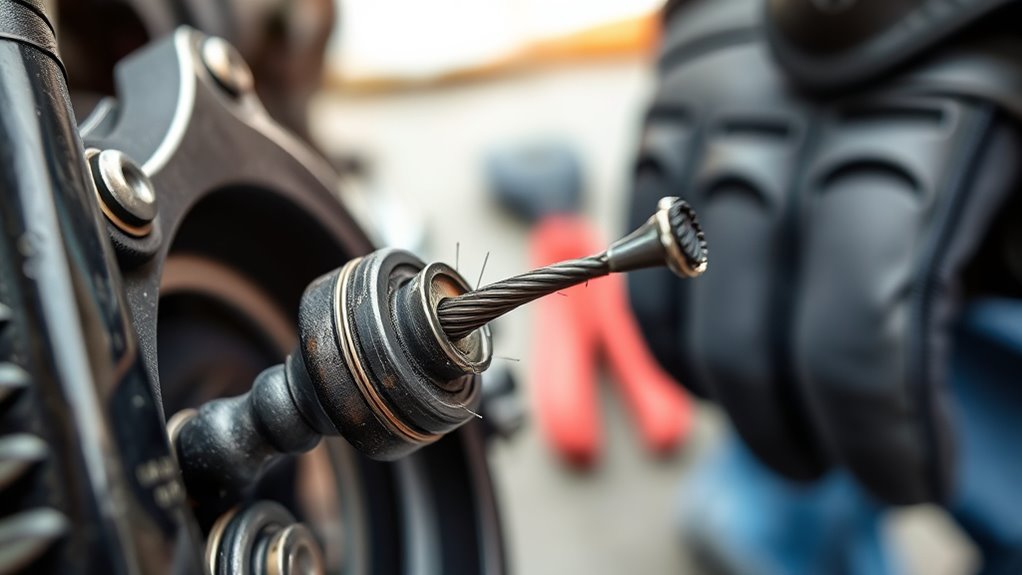
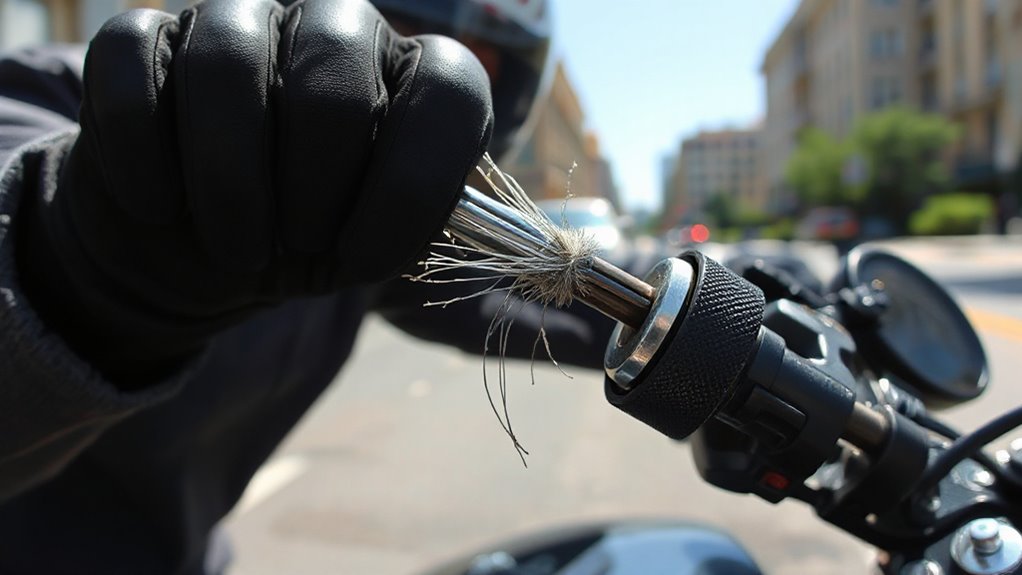
Have you ever experienced sudden difficulty shifting gears while riding your bike or driving your car? If so, you know how frustrating and potentially dangerous it can be. Many gear shifting issues stem from problems with the clutch cable, especially if it’s snapped or worn out. The clutch cable is essential for transmitting your foot’s force to disengage the clutch, allowing smooth gear changes. When it snaps unexpectedly, you might find yourself unable to shift at all, leaving you stranded or forcing you to make emergency fixes. Recognizing the signs early and knowing how to handle a snapped clutch cable can save you time and trouble.
Clutch cable maintenance is key to preventing unexpected failures. Regularly inspecting the cable for signs of wear, fraying, or corrosion can help you catch issues before they turn into full-blown snap scenarios. If the cable looks worn or shows signs of deterioration, replacing it proactively is a wise move. Proper lubrication of the cable is equally important; a well-lubricated cable reduces friction, smoothens gear shifting, and extends its lifespan. When you notice increased resistance or difficulty shifting gears, it’s often a sign that your clutch cable might need attention. Addressing these issues early can prevent sudden failures and keep your ride smooth. Additionally, using high-quality cables designed for your specific vehicle or bike model can significantly reduce the risk of failure.
However, if your clutch cable does snap unexpectedly, there are a few emergency fixes you can try. First, safely pull over and turn off your engine. If you have a mechanic’s kit or spare cable, replacing it on the spot is ideal, but it can be tricky without proper tools or experience. In a pinch, you might be able to manually disengage the clutch by using alternative methods, such as disconnecting the cable from the clutch lever and forcing the clutch open or closed, but be cautious—incorrect handling can cause further damage. Keep in mind that these are temporary solutions; you’ll need to replace the snapped cable as soon as possible to restore normal gear shifting functionality.
Prevention is always better than emergency fixes. Regular clutch cable maintenance, including inspection, lubrication, and timely replacement, greatly reduces the risk of snap failures. Using high-quality cables designed for your specific vehicle or bike model also helps. When you experience resistance or irregular gear shifting, don’t ignore it—address it immediately. Doing so keeps your clutch system in good shape and minimizes the chances of a sudden cable snap ruining your ride. Staying attentive to your clutch cable’s condition ensures smoother gear shifts and safer riding, avoiding the inconvenience and potential hazards of unexpected clutch failure.
motorcycle clutch cable replacement kit
As an affiliate, we earn on qualifying purchases.
As an affiliate, we earn on qualifying purchases.
Frequently Asked Questions
How Long Does a Clutch Cable Typically Last Before Snapping?
Your clutch cable usually lasts between 30,000 to 60,000 miles, but this depends on cable deterioration factors like frequent use, exposure to elements, and poor maintenance. Over time, the cable weakens from constant friction and rust, increasing the risk of snapping. Regular inspections and lubrication can extend its lifespan. Keep an eye out for signs of wear, and replace it promptly to avoid sudden failure.
Can I Drive Safely With a Broken Clutch Cable?
A stitch in time saves nine, and that applies here. You shouldn’t drive safely with a broken clutch cable, as it compromises your control and safety. Driving safety depends on proper clutch maintenance, so avoid risking damage or accidents. If your clutch cable breaks, it’s best to have it repaired immediately and avoid driving until fixed. Prioritize safety over convenience to keep yourself and others out of harm’s way.
What Are the Signs of an Impending Clutch Cable Failure?
You can spot impending clutch cable failure through signs like difficulty shifting gears, a spongy or loose clutch pedal, or unusual noises when engaging or disengaging. Regular clutch cable inspection helps catch early failure indicators, such as fraying or corrosion. If you notice these signs, address them promptly to prevent complete cable failure, which can leave you stranded and cause more damage to your vehicle’s clutch system.
Are There Alternative Clutch Systems That Don’t Use Cables?
Imagine a world where your clutch feels like a gentle push, not a cable snapping. You can opt for hydraulic systems or electronic actuators, which replace traditional cables with fluid power or electronic signals. These alternatives offer smoother operation, fewer mechanical failures, and less maintenance. Switch to these modern systems and experience reliable, effortless clutch control, leaving behind the risk of cable failures and embracing a more advanced driving experience.
How Much Does It Cost to Replace a Clutch Cable Professionally?
Replacing a clutch cable professionally costs between $100 and $300, depending on your vehicle and location. Regular clutch cable maintenance can help prevent issues, saving you money in the long run. If you’re considering aftermarket clutch options, they might be more durable but can affect overall costs. Always ask your mechanic about the best choice for your vehicle to guarantee reliable performance and avoid future replacements.
As an affiliate, we earn on qualifying purchases.
Conclusion
A clutch cable snap can strike when you least expect it, leaving you stranded and frustrated. But with quick emergency fixes and regular maintenance, you can turn this unexpected mishap into a minor bump in your journey. Remember, prevention is always better than cure—think of it as your vehicle’s heartbeat, essential and worth protecting. Stay vigilant, keep your cable well-lubricated, and you’ll keep driving smoothly, turning potential chaos into a distant memory.
emergency clutch cable repair tools
As an affiliate, we earn on qualifying purchases.
As an affiliate, we earn on qualifying purchases.
high-quality clutch cable for motorcycle
As an affiliate, we earn on qualifying purchases.
As an affiliate, we earn on qualifying purchases.
Halloween Picks
halloween
As an affiliate, we earn on qualifying purchases.