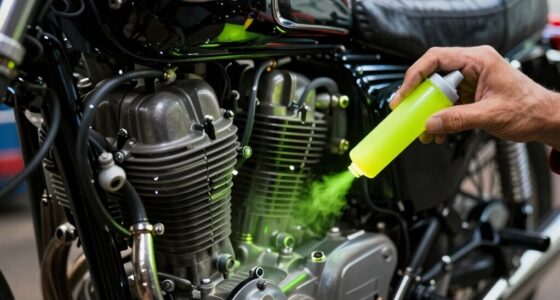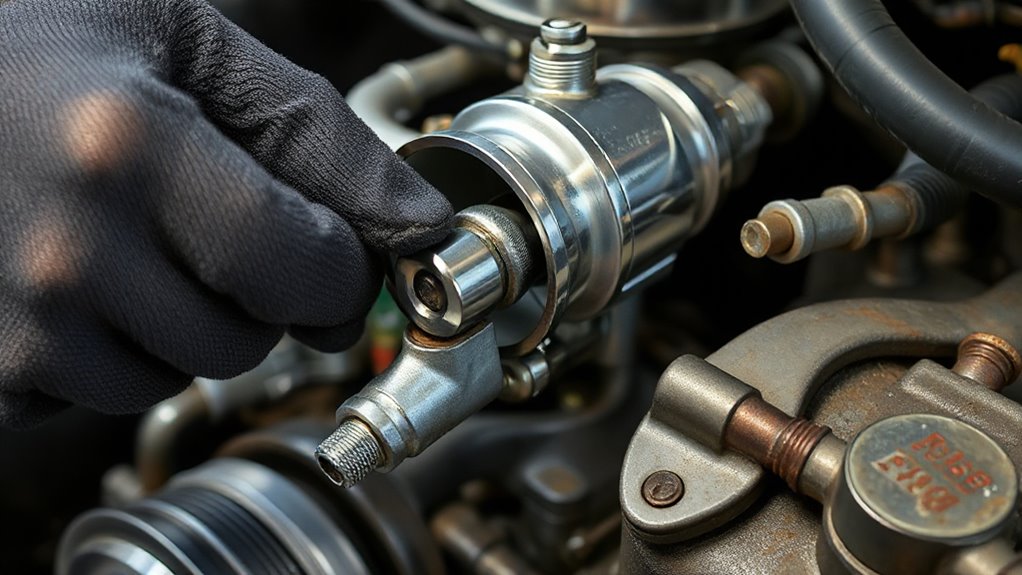

If your engine has a fast or hanging idle, start by inspecting the throttle body for carbon buildup and clean it thoroughly. Check all vacuum lines for cracks, disconnections, or leaks, as these can cause unsteady airflow. Also, test the idle control valve and the idle air control (IAC) system for proper operation or signs of clogging. Addressing these issues can restore smooth idle performance; continue to explore the causes behind these symptoms to keep your engine running properly.
Listen free for 30 days with Audible
Thousands of audiobooks and originals — cancel anytime.
As an affiliate, we earn on qualifying purchases.
Key Takeaways
- Check and clean the idle control valve and IAC to ensure proper engine speed regulation.
- Inspect vacuum hoses and intake manifold for cracks or disconnections to eliminate air leaks.
- Clean the throttle body thoroughly to remove carbon buildup that causes high idle RPM.
- Conduct diagnostic scans for sensor or control module faults affecting idle control.
- Regularly maintain and seal the intake system to prevent future vacuum leaks and idle issues.
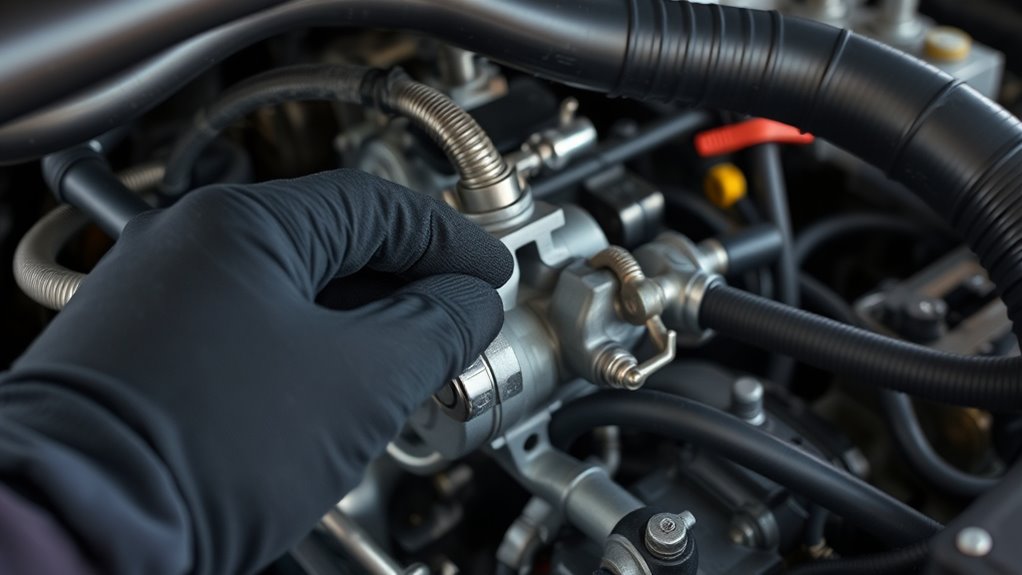
If your engine is idling too fast or the RPMs hang after you turn off the vehicle, it can indicate underlying issues that need attention. One common cause is problems with the idle control system. Your vehicle’s idle control valve or motor manages engine speed when you’re not pressing the accelerator. If this component becomes dirty, stuck, or malfunctions, it can cause your engine to idle too high or remain at elevated RPMs even after shutting off the engine. Cleaning or replacing the idle control valve often resolves these issues, restoring proper idle speed.
Problems with the idle control system can cause high or hanging RPMs after engine shutdown.
Another frequent culprit is vacuum leaks. These leaks occur when there’s a crack, loose hose, or faulty gasket in your intake manifold or vacuum lines. Vacuum leaks disrupt the air-fuel mixture, causing the engine to run lean or rich, which can lead to a fast or hanging idle. You might notice hissing sounds, rough idling, or fluctuating RPMs if a vacuum leak is present. To diagnose this, inspect all vacuum hoses for cracks or disconnections, and listen for hissing sounds while the engine runs. Replacing damaged hoses or sealing leaks with proper gaskets can considerably improve idle stability.
In addition to vacuum leaks, issues with the throttle body can contribute to fast or hanging RPMs. Over time, carbon deposits can build up inside the throttle body, preventing the throttle plate from closing completely. This partial obstruction causes excess airflow, resulting in a higher idle. Cleaning the throttle body with a specialized cleaner can often resolve this issue without needing replacement. When cleaning, pay close attention to the throttle plate and surrounding areas to remove all carbon buildup.
Sometimes, the problem lies with the idle air control (IAC) valve, which works in tandem with the idle control system to regulate engine speed. If the IAC valve becomes clogged or fails, your engine may idle erratically or at a higher RPM than intended. Testing or replacing the IAC valve is a straightforward fix that can restore smooth idling. Additionally, modern engine control modules rely on accurate sensor inputs, so ensuring these sensors are clean and functioning properly is essential for proper idle speed regulation.
In many cases, addressing these issues requires a systematic approach: start by inspecting vacuum lines, then move to cleaning or replacing the idle control components and throttle body. If you’re unsure where to start, a diagnostic scan can reveal sensor or control module faults contributing to the problem. Ultimately, maintaining a clean, well-sealed intake system and ensuring your idle control system functions properly will keep your engine running smoothly at the right RPM, preventing the annoyance and potential damage caused by fast or hanging idle speeds.
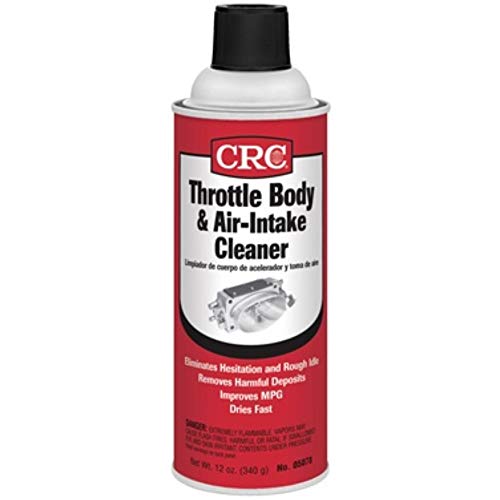
CRC 05078 Throttle Body and Air-Intake Cleaner – 12 Wt Oz.
- Deep cleaning of deposits: Removes carbon, varnish, and gum buildup
- Enhances engine performance: Easier starts and smoother operation
- Universal compatibility: Suitable for all fuel-injected gasoline engines
As an affiliate, we earn on qualifying purchases.
As an affiliate, we earn on qualifying purchases.
Frequently Asked Questions
Can a Dirty Throttle Body Cause High RPM Issues?
Yes, a dirty throttle body can cause high RPM issues. When you don’t keep up with throttle cleaning, carbon buildup restricts airflow, making your engine idle erratically or hang at high RPMs. To fix this, clean your throttle body regularly and replace your air filter to prevent dirt from entering. These simple steps help maintain proper airflow and keep your engine running smoothly without high idle problems.
How Do I Identify an Air Leak in My Intake System?
You can identify an air leak in your intake system through air intake inspection by listening for hissing sounds or feeling for leaks around hoses and connections. Use leak detection methods like spraying carb cleaner or soapy water around the intake joints—if the engine RPM changes, you’ve discovered the leak. Check all clamps and hoses thoroughly to verify they’re sealed properly, helping you pinpoint and fix the problem.
Is It Safe to Drive With a Hanging RPM Problem?
Did you know that faulty idle control can increase your vehicle’s emissions by up to 15%? You shouldn’t drive with a hanging RPM because it compromises vehicle safety and can cause unpredictable engine behavior. It’s best to address the issue promptly to avoid further damage. Until fixed, avoid aggressive driving and keep a close eye on your engine’s response. Prioritizing repairs guarantees safer driving precautions and prevents costly repairs later.
Can a Faulty Sensor Cause Fast Idle or Hanging RPM?
Yes, a faulty sensor can cause fast idle or hanging RPM. Sensor malfunctions, like a bad idle air control or throttle position sensor, send incorrect signals to your engine’s computer, leading to inconsistent idle speeds. Wiring issues can also disrupt these signals, causing the RPM to hang or jump unexpectedly. You should have these sensors and wiring checked and replaced if needed to restore proper idle behavior and prevent further problems.
How Often Should I Check My Throttle and Air Intake?
You should inspect your throttle and air intake every 5,000 to 10,000 miles or during your regular maintenance schedule. Skipping these checks could silently cause issues like fast idle or hanging RPM, leading to more serious engine problems. Don’t wait for symptoms—regular inspection frequency guarantees your engine runs smoothly. Stay proactive, and you’ll catch potential leaks or throttle issues before they become costly repairs.

Multipurpose Vacuum Line Kit,6PCS 5Ft Vacuum Hose Automotive+64PCS Vacuum Line Connectors,Max 130PSI Silicone Hose for Variety Car Piping System Automotive Replacement Vacuum Hoses (70PCS)
- Complete Set with Multiple Hoses: Includes 6 hoses and 64 connectors
- Durable Silicone Construction: Made from high-quality black silicone
- Wide Temperature Range: Operates from -40°F to 392°F
As an affiliate, we earn on qualifying purchases.
As an affiliate, we earn on qualifying purchases.
Conclusion
If your engine’s fast idle or hanging RPM persists, don’t ignore it—think of it as your vehicle’s way of shouting for help, much like a trusty steed calling out in a bustling marketplace. Check for throttle and air leaks, and clean or replace faulty parts. Remember, even the most well-oiled machine needs a little TLC now and then. Fixing it now keeps you cruising smoothly, avoiding a future breakdown that would make even a modern-day knight wish for simpler times.
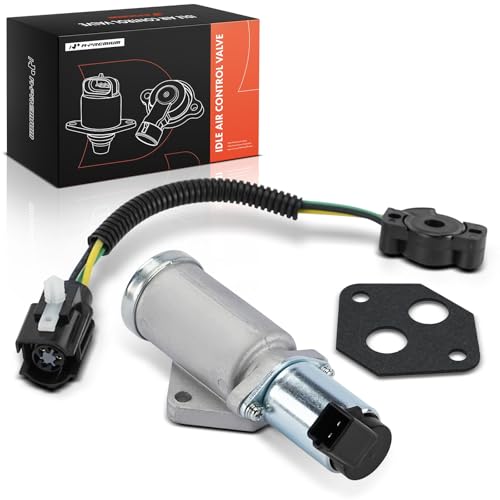
A-Premium Idle Air Control Valve IAC + Throttle Position Sensor TPS
- Vehicle Compatibility: Fits various Ford trucks and vans
- Part Numbers: Multiple reference numbers included
As an affiliate, we earn on qualifying purchases.
As an affiliate, we earn on qualifying purchases.

Bar's Leaks 1109 Liquid Copper Block Seal, 18 oz, 1-Pack
- Permanent Leak Repair: Fixes cooling system leaks permanently
- Compatible with Antifreeze: No draining needed, safe with antifreeze
- Easy to Use: Pour directly into radiator, no draining required
As an affiliate, we earn on qualifying purchases.
As an affiliate, we earn on qualifying purchases.
Baby shower & registry season Picks
baby registry must-haves
As an affiliate, we earn on qualifying purchases.