If your motorcycle cuts out in rain, moisture might be getting into electrical connections or exposed wiring, causing corrosion and poor contacts. Worn tires with shallow treads or improper inflation can reduce traction, increasing slipping risks, while contaminated brake pads or rusty chains affect safety. To fix these issues, make certain all electrical components are sealed and dry, check your tires and brakes regularly, and adopt smoother riding techniques in wet conditions. Keep exploring to learn more about preventing and fixing these common rain-related motorcycle problems.
Key Takeaways
- Water ingress into electrical connections causes corrosion, leading to poor contact and engine cutouts during rain.
- Worn or improperly inflated tires reduce grip, increasing the risk of slipping and engine shutdown in wet conditions.
- Moisture buildup on spark plugs or ignition components can cause misfires and sudden engine stalls.
- Lack of proper sealing and maintenance of electrical components allows water to cause corrosion and system failures.
- Aggressive riding in the rain, such as hard acceleration or braking, can lead to loss of traction and engine cutoff.
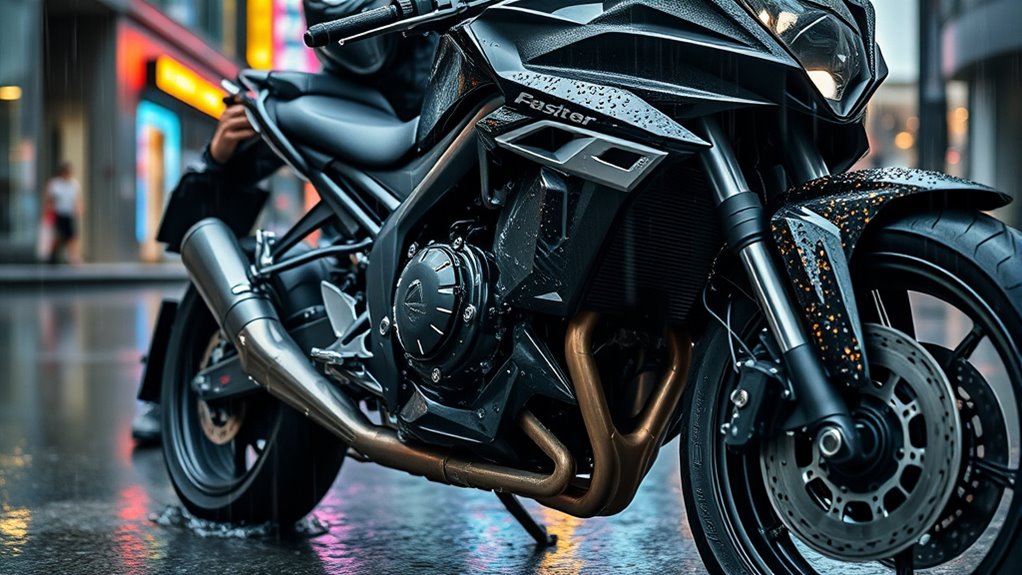
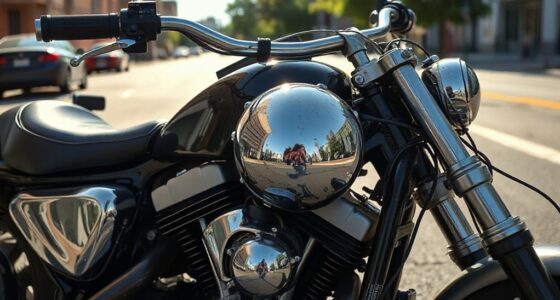
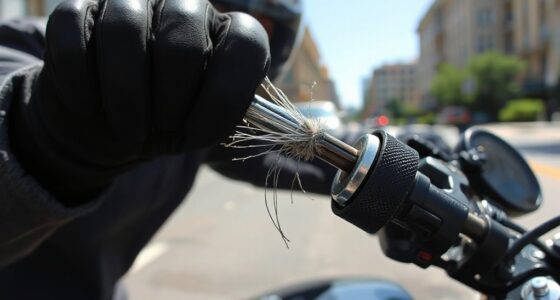
Wet weather can considerably impact your motorcycle ride, making it more challenging to stay safe and maintain control. One of the biggest concerns during rainy conditions is how the moisture affects your bike’s electrical system. When water gets into connectors or exposed wiring, it can cause electrical corrosion, which leads to poor electrical connections. This corrosion can disrupt essential systems like your ignition or fuel injection, causing your motorcycle to cut out unexpectedly. To prevent this, regularly inspect your wiring and connectors, and apply dielectric grease to protect against moisture. Keep all electrical components sealed and dry, especially after riding in heavy rain, to avoid corrosion buildup that could lead to sudden stalls. Additionally, using high-quality electrical components and connectors can help resist water ingress and prolong the lifespan of your bike’s electrical system.
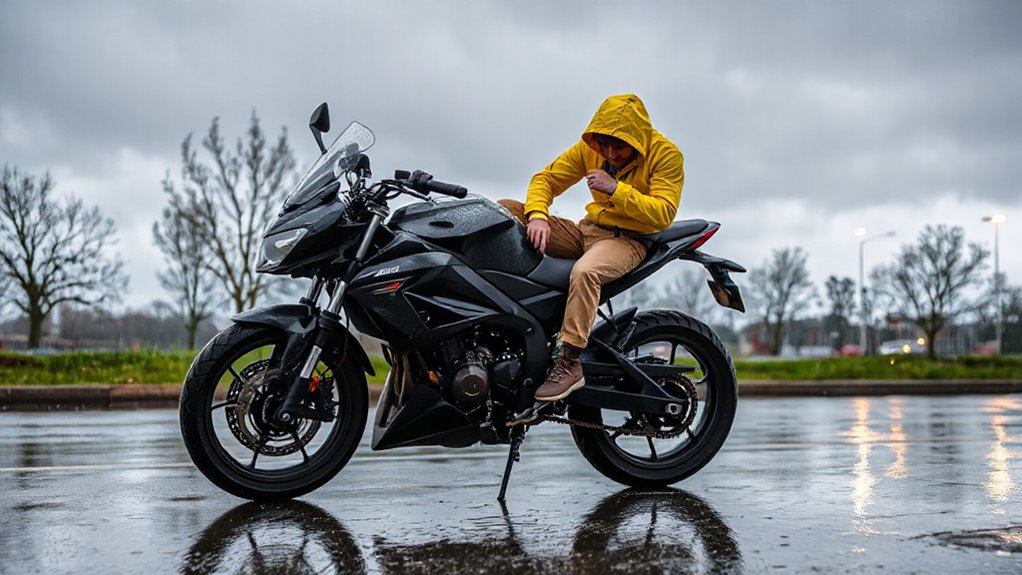
Another critical factor that influences your safety in wet weather is tire traction. As you ride through rain, the road surface becomes slick, and your tires need to grip the pavement to prevent slipping and sliding. Worn or improperly inflated tires reduce traction, increasing the risk of losing control. Before heading out in the rain, check your tire tread depth; if it’s too shallow, replace those tires promptly. Also, ensure your tires are inflated to the recommended pressure, as under-inflation can decrease contact with the road, while over-inflation reduces grip. When riding in wet conditions, your riding style should adapt—avoid aggressive acceleration or hard braking, which can cause your tires to lose traction. Instead, maintain a steady, smooth throttle and gentle braking to keep the bike stable.
It’s also important to be mindful of how water affects other parts of your motorcycle. Wet conditions can cause brake pads to become less effective if they are dirty or contaminated with oil or grease. Regularly inspect and clean your brakes to ensure maximum performance. Additionally, your motorcycle’s chain and sprockets can accumulate dirt and moisture, leading to rust and reduced efficiency. Keep these components well-lubricated and clean. Maintaining a vetted quality electrical system and regular checks can significantly reduce the chances of electrical issues during wet weather.

VEVOR Motorcycle Lift, 1100 LBS Motorcycle Lift ATV Scissor Lift Jack with Dolly & Hand Crank, Center Hoist Crank Stand with Wide Deck & Tool Tray for Street Bikes, Cruiser Bikes, Touring Motorcycles
Large Weight-bearing Capacity: When you need to lift your motorcycle for maintenance and cleaning, you can partner with...
As an affiliate, we earn on qualifying purchases.
Frequently Asked Questions
Can Waterproofing Products Prevent Motorcycle Stalling in Rain?
Waterproofing products can help prevent motorcycle stalling in rain by enhancing waterproofing effectiveness and providing better electrical protection. They seal vulnerable areas like connectors, wiring, and electrical components, reducing moisture intrusion. While they won’t eliminate all issues caused by wet weather, applying quality waterproofing products minimizes the risk of electrical shorts and corrosion, keeping your bike running smoothly in rainy conditions. Just guarantee proper application for the best results.
How Often Should I Check My Motorcycle’s Electrical System Before Wet Rides?
Think of your motorcycle’s electrical system as a garden that needs regular tending. Before wet rides, you should check it at least once a month. Focus on battery maintenance, ensuring it’s charged and corrosion-free, and do wiring inspections for any loose or damaged connections. This proactive approach keeps your bike’s electrics in top shape, reducing the risk of stalling or electrical failures during rain.
Are Certain Motorcycle Models More Prone to Rain-Related Issues?
Yes, some motorcycle models are more prone to rain-related issues due to model-specific issues and manufacturer design. You’ll find that older bikes or those with less weatherproofing often struggle in wet conditions. Manufacturers that focus on robust electrical seals and corrosion-resistant parts tend to perform better. To prevent problems, check your specific model’s common rain-related issues and maintain all electrical connections and seals regularly, especially before riding in wet weather.
What Are Quick Fixes if My Motorcycle Stalls Unexpectedly During Rain?
A rain stall is like a sudden thunderclap—unexpected and frustrating. To fix it quickly, pull over safely and check for wet or dirty spark plugs; dry or clean them as needed. Make certain your fuel and air filters aren’t clogged. Sometimes, a quick restart after drying your ignition switch helps. If it persists, consider carrying a waterproof cover or using dielectric grease on connections to prevent future stalls.
Does Riding Style Influence Motorcycle Performance in Wet Conditions?
Yes, your riding style considerably influences motorcycle performance in wet weather. Using proper riding techniques like smooth throttle control, gentle braking, and avoiding sudden maneuvers helps maintain traction and stability. In wet conditions, stay relaxed, keep a steady speed, and lean less into turns. Adjusting your riding techniques for wet weather improves safety and reduces the risk of stalls or losing control, ensuring a smoother ride even in rainy conditions.

MAXIVMAN Aluminum Motorcycle Ramp with Handle – 750 Lbs Capacity, 7.5ft Folding Ramp with Load Straps for Pickup Trucks, Dirt Bikes, Motorcycles | 89" L x 12" W | 1 Pc
Heavy Duty 750 Lbs Capacity:This aluminum motorcycle ramp with a handle is designed to safely load motorcycles, dirt...
As an affiliate, we earn on qualifying purchases.
Conclusion
When rain hits, your motorcycle faces challenges—flooded plugs, damp wires, and slipping grips. Don’t ignore the signs, don’t delay the fixes, and don’t let wet weather win. Stay vigilant, stay prepared, and stay safe. With proper maintenance, quick troubleshooting, and cautious riding, you can conquer rain and keep your motorcycle running smoothly. Remember, a dry bike is a happy bike, and a prepared rider is a confident rider.

FACHNUO 10FT Motorcycle Ramp for Pickup Trucks, 1500lbs Capacity 1PC, Aluminum Heavy Duty Loading Ramp for Dirt Bike, Trailer, Lawn Mower, ATVs, UTVs, Golf Cart, Tailgate, 120" L x 18" W
【 Heavy-Duty & Lightweight Aluminum Ramp】 Built with high-strength aluminum, each ramp can support up to 1,500 pounds...
As an affiliate, we earn on qualifying purchases.
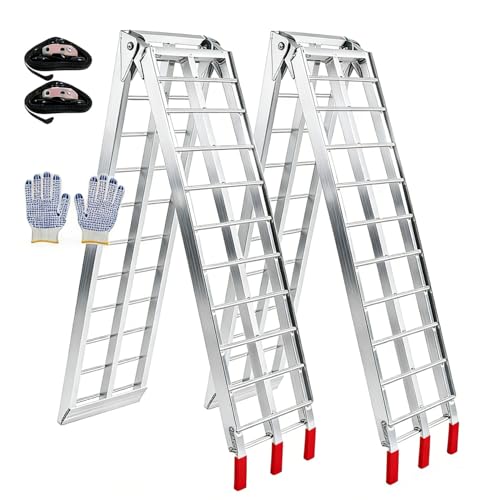
GarveeTech Lightweight Motorcycle Ramps for Pickup Trucks, 750 LBS Loading Capacity Aluminum Dirt Bike Ramp, 89 in x 12 in, 2pcs
Superior Strength & Lightweight: High-strength aluminum ramps support 750 LBS each (1500 LBS total). Each ramp weighs just...
As an affiliate, we earn on qualifying purchases.