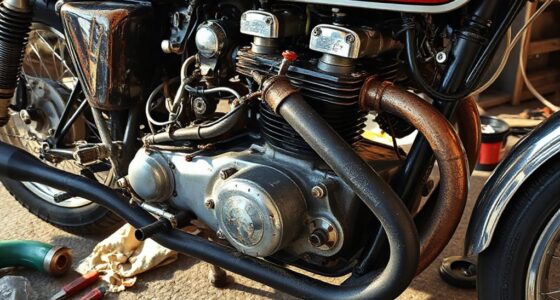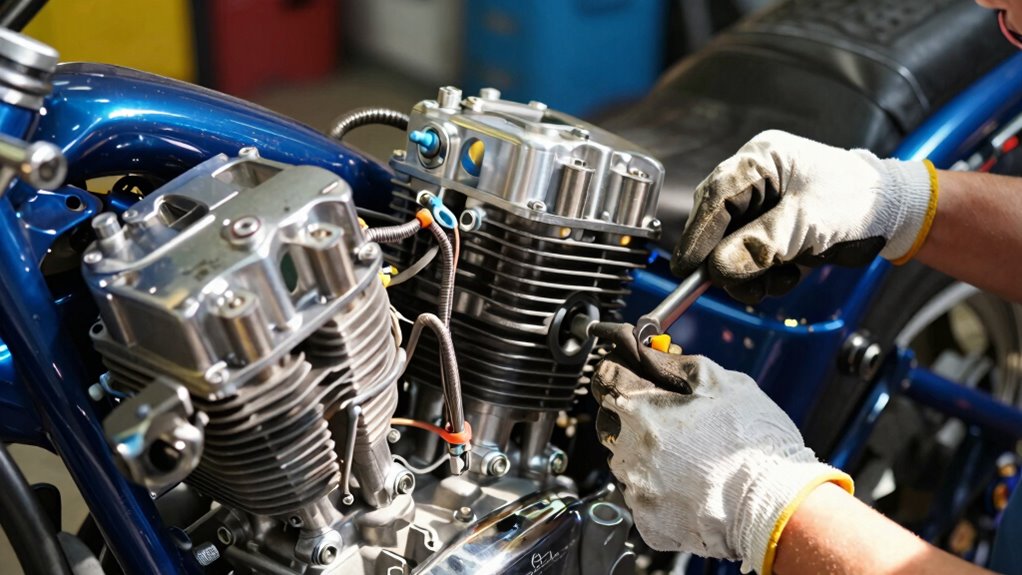

To properly break in your rebuilt motorcycle engine, start by using high-quality oil with the right additives and avoid highRevving or pushing the engine too hard early on. Keep the engine temperature steady within the recommended range and avoid overheating. Follow proper procedures, such as avoiding excessive revving and allowing components to seat evenly, while monitoring oil quality and temperature. If you want to keep your engine running smoothly longer, make certain you follow all key steps carefully.

Get business pricing on garage and car supplies
- Business-only prices and quantity discounts
- Tax-exempt purchasing
- Multiple users, one account, clear invoices
Key Takeaways
- Use high-quality, break-in-specific oil with proper additives to ensure optimal lubrication and protect engine components.
- Gradually increase engine RPMs and avoid excessive revving during the initial break-in period.
- Maintain steady, moderate engine temperature within the manufacturer’s recommended range.
- Follow a careful break-in procedure, including short trips and avoiding extended idle time.
- Regularly inspect and monitor oil quality, cooling system, and engine components for early issues.
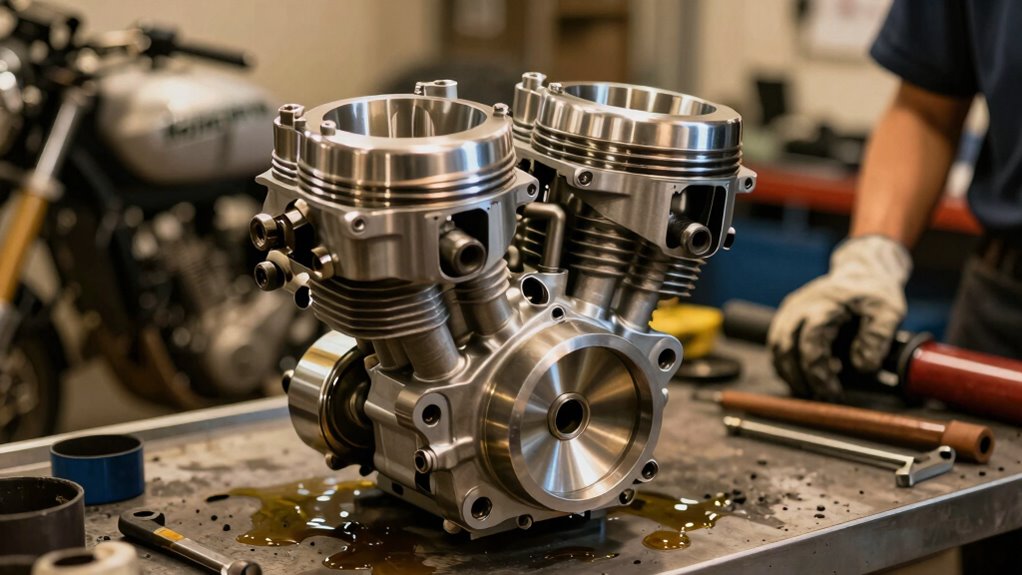
Rebuilding a motorcycle engine is an exciting process, but how you break it in can make a big difference in its long-term performance and durability. The initial break-in period is essential for guaranteeing your engine runs smoothly for miles to come. One of the most important factors during this time is choosing the right oil. High-quality oil with the proper additives helps provide better lubrication, reducing friction and wear on new components. Avoid cheap or low-grade oils, as they can break down quickly and fail to protect your engine during those critical first miles. Instead, opt for a premium, break-in-specific oil that offers excellent film strength and thermal stability. This guarantees your engine’s moving parts stay properly lubricated, especially when it’s working hard under load.
Keeping an eye on engine temperature is equally important. During the break-in period, you want to avoid running your engine at extremes—either too hot or too cold. Overheating can cause metal parts to expand unevenly, leading to premature wear or even damage. On the other hand, running the engine too cold for too long can prevent proper sealing of piston rings and other components. The goal is to maintain a steady, moderate engine temperature, typically around the manufacturer’s recommended range. You can do this by avoiding extended idle times, not revving the engine excessively, and ensuring your cooling system is functioning properly. Proper airflow and coolant levels are key to keeping temperatures stable and preventing hot spots that could compromise the engine’s integrity. Additionally, understanding the importance of engine components during this process can help you better care for your motorcycle’s longevity. To further ensure proper wear patterns, paying attention to break-in procedures is crucial for achieving optimal engine performance. Regularly inspecting lubrication systems during this period can also help catch potential issues early and ensure everything operates smoothly.
Furthermore, using the correct break-in techniques can help promote optimal engine seating and prevent uneven wear. Remember, patience is essential. Rushing the process by pushing the engine too hard or neglecting oil quality and temperature control can lead to long-term issues like oil consumption, reduced power, or engine failure. Proper break-in procedures, such as engine component maintenance and careful monitoring, can significantly extend your motorcycle’s lifespan and performance.
high-quality motorcycle engine oil
As an affiliate, we earn on qualifying purchases.
As an affiliate, we earn on qualifying purchases.
Frequently Asked Questions
How Long Should I Idle the Engine During Break-In?
You should idle the engine for about 20-30 minutes during break-in, making certain the engine temperature gradually reaches normal operating levels. Keep an eye on oil viscosity, verifying it’s properly circulating and not too thick or thin. During this time, avoid high RPMs and sudden acceleration, allowing components to seat properly. This gentle approach helps guarantee ideal engine performance and longevity after your rebuild.
Can I Use Synthetic Oil During the Break-In Period?
Yes, you can use synthetic oil during the break-in period. Synthetic oils often have better oil viscosity stability and can withstand higher engine temperatures, which helps reduce wear during initial startup. However, make certain the oil is suitable for break-in, as some synthetic oils are formulated specifically for this phase. Keep an eye on engine temperature and oil pressure, and change the oil after the recommended break-in miles for ideal engine health.
How Often Should I Check the Oil During Break-In?
Ever wonder how often you should check the oil during break-in? You should inspect it every 50 to 100 miles or as recommended by your manufacturer. During these checks, verify the oil viscosity remains consistent and look out for any changes in engine temperature or unusual noise. Regular checks help prevent engine damage, making sure the oil level stays adequate and the engine operates smoothly throughout the break-in process.
Is It Necessary to Change the Oil Immediately After Break-In?
Yes, you should change the oil immediately after break-in. During this period, your engine’s oil viscosity can break down from metal shavings and debris. Fresh oil helps maintain ideal engine temperature and prevents damage from contaminants. Changing the oil promptly guarantees your engine stays clean, lubricated, and runs smoothly as you start regular riding. It’s an essential step to prolong the life of your rebuilt motorcycle engine.
What Are Signs of Improper Engine Break-In?
If your engine makes unusual noise or you’re noticing decreased fuel efficiency, these are signs of improper break-in. You might hear rattling or knocking, indicating parts aren’t seating correctly. Poor fuel economy can also signal incomplete bedding of piston rings or other components. Keep an ear out for engine noise and monitor your mileage closely; addressing these issues early can prevent long-term damage and guarantee your rebuilt engine runs smoothly.
As an affiliate, we earn on qualifying purchases.
Conclusion
So, after all that careful breaking-in, you might think your engine’s finally ready for the open road. Ironically, the real test isn’t just about following the steps but trusting that your meticulous care has paid off. Sure, your rebuilt engine might purr now, but remember—sometimes, the true thrill is knowing you’ve tamed the beast just enough to keep it running smoothly (and secretly hoping it doesn’t surprise you). Happy riding, and may your engine always run as smoothly as your patience allows.
coolant and cooling system for motorcycles
As an affiliate, we earn on qualifying purchases.
As an affiliate, we earn on qualifying purchases.
motorcycle engine inspection tools
As an affiliate, we earn on qualifying purchases.
As an affiliate, we earn on qualifying purchases.
Halloween Picks
halloween
As an affiliate, we earn on qualifying purchases.