
To diagnose a charging problem with a multimeter, first turn it to DC voltage mode and check your battery voltage when the engine is off; a healthy battery should show around 12.6 volts. Then, start your engine and test again; a proper charging system will display 13.8 to 14.8 volts. If the voltage is outside this range or unstable, it could point to an issue with the alternator. Keep going to learn more about pinpointing the exact problem.

Get business pricing on garage and car supplies
- Business-only prices and quantity discounts
- Tax-exempt purchasing
- Multiple users, one account, clear invoices
Key Takeaways
- Check battery voltage with multimeter at rest; a healthy battery should read around 12.6 volts.
- Start the engine and measure voltage; 13.8–14.8 volts indicates proper charging system function.
- Compare voltage readings; below 13.8 volts suggests charging issues, above 15 volts risks overcharging.
- Inspect alternator belt, wiring, and connections for wear, looseness, or corrosion that may cause charging problems.
- Listen for unusual noises and observe dashboard warning lights to identify potential alternator or electrical issues.
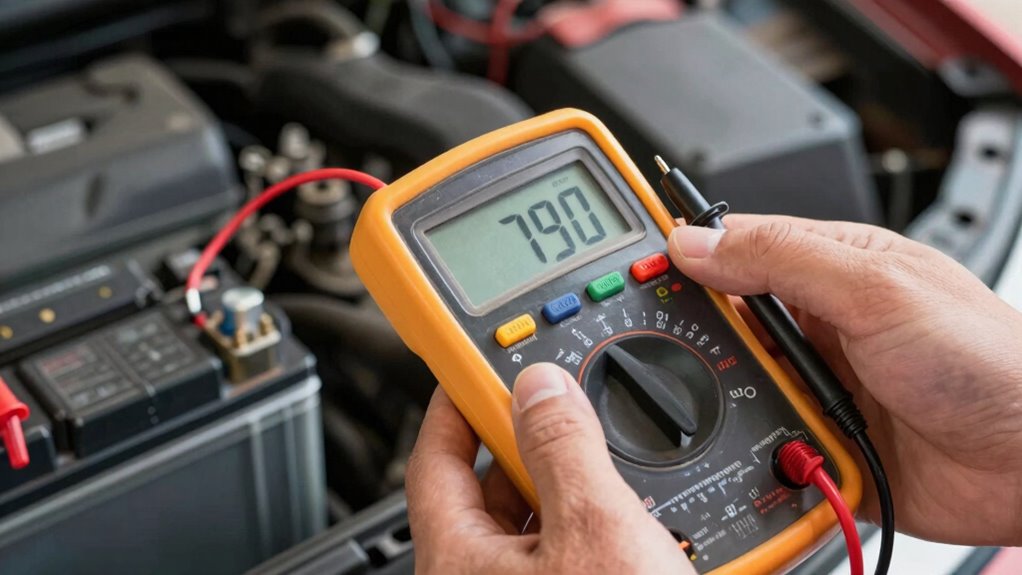
Next, you want to check the charging system while the engine is running. Keep the multimeter set to DC voltage and start your vehicle. Test the battery again by placing the black lead on the negative terminal and the red on the positive. A properly functioning alternator will raise the voltage reading to somewhere between 13.8 and 14.8 volts. If you see a reading below this range, your alternator may not be charging the battery properly. Conversely, if the voltage exceeds 15 volts, your alternator might be overcharging, which can damage your battery and electrical system.
Performing a thorough alternator check involves also listening for unusual noises and observing the dashboard for warning lights, but the multimeter provides clear, quantifiable data. If your voltage remains low or unsteady during the engine run, it indicates an issue with your alternator or its connections. Check the alternator’s belt for looseness or wear, as a slipping belt can prevent proper charging. Also, inspect the wiring and connections to the alternator for corrosion or looseness, which could hinder the flow of electrical current. Ensuring proper electrical connections is crucial for accurate diagnostic results. Additionally, understanding alternator function can help you better interpret the diagnostic signs. Knowing the electrical system operation can further assist in troubleshooting potential issues. Being familiar with battery testing procedures can also help determine if the issue stems from the battery itself. Regularly testing your battery voltage can help identify early signs of a failing battery before it impacts your vehicle’s performance.
If your battery testing shows a good voltage but your vehicle still isn’t charging properly, then the problem likely resides within the alternator itself. You might need to replace or repair it. However, if the battery voltage is low even when the engine is off, consider replacing the battery first before focusing further on the alternator. Using your multimeter for these tests provides quick, reliable insights, helping you pinpoint whether your issue lies with a weak battery, a faulty alternator, or poor connections. This simple diagnostic process can save you time and money before heading to a mechanic.
digital multimeter for car battery testing
As an affiliate, we earn on qualifying purchases.
As an affiliate, we earn on qualifying purchases.
Frequently Asked Questions
Can a Multimeter Diagnose All Types of Charging System Issues?
A multimeter can diagnose many charging system issues, but it doesn’t cover all problems. You can check charging system components like the alternator, battery, and voltage regulator, and perform voltage fluctuation analysis to spot irregularities. However, some issues, like wiring faults or internal component failures, may require specialized tools or professional inspection. So, while useful, a multimeter alone might not catch every charging system problem.
What’s the Best Multimeter Setting for Checking Alternator Output?
To check your alternator output, set your multimeter to DC voltage, ideally around 20 volts. Start your car and measure the voltage across the battery terminals. A healthy battery and alternator should show around 13.8 to 14.4 volts, indicating good alternator voltage. If it’s lower, your battery health or alternator might be compromised. Always guarantee the engine is running for an accurate reading.
How Do I Interpret Multimeter Readings on a Failing Battery?
When you check a failing battery with a multimeter, look for voltage readings below 12.6 volts, indicating decreased battery capacity. If the voltage fluctuates or drops markedly under load, it suggests poor voltage stability and a weakening battery. Consistently low or unstable readings mean the battery can’t hold a proper charge, signaling it might be time for replacement. Accurate interpretation helps determine if your battery needs attention.
Can I Use a Multimeter to Test for Parasitic Drains?
Yes, you can use a multimeter to test for parasitic drains. Turn off your vehicle and disconnect the negative battery cable. Set your multimeter to current mode and connect it between the battery post and the negative cable. Watch for abnormal current readings; high drain could be caused by battery corrosion or alternator noise. If the reading’s too high, investigate your vehicle’s electronics and look for signs of corrosion or unusual alternator sounds.
How Often Should I Test My Vehicle’s Charging System?
You should test your vehicle’s charging system every 3 to 6 months to guarantee peak battery performance and prevent unexpected failures. Regular checks help monitor the charging system’s health, extending its lifespan. If you notice dimming lights or slow cranking, test more frequently. Consistent testing allows you to catch issues early, maintain a healthy battery, and avoid costly repairs, especially in extreme weather conditions or after long trips.
auto alternator tester multimeter
As an affiliate, we earn on qualifying purchases.
As an affiliate, we earn on qualifying purchases.
Conclusion
Just like Sherlock Holmes unraveled mysteries with keen observation, diagnosing your car’s charging issue becomes straightforward with a trusty multimeter. By systematically testing your alternator, battery, and connections, you decode the clues hidden beneath the hood. Remember, every spark of insight brings you closer to the solution, turning a frustrating problem into a manageable puzzle. With patience and the right tools, you can restore your vehicle’s power, keeping you moving forward—just like solving a case from start to finish.
As an affiliate, we earn on qualifying purchases.
automotive multimeter for electrical diagnostics
As an affiliate, we earn on qualifying purchases.
As an affiliate, we earn on qualifying purchases.
Fall Picks
fall essentials
As an affiliate, we earn on qualifying purchases.