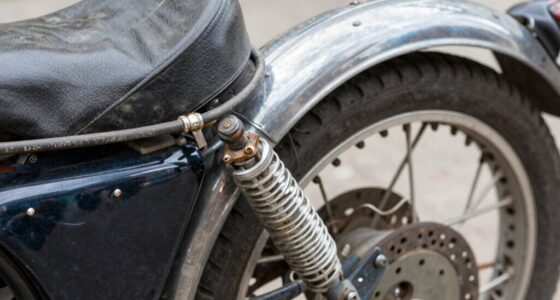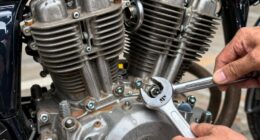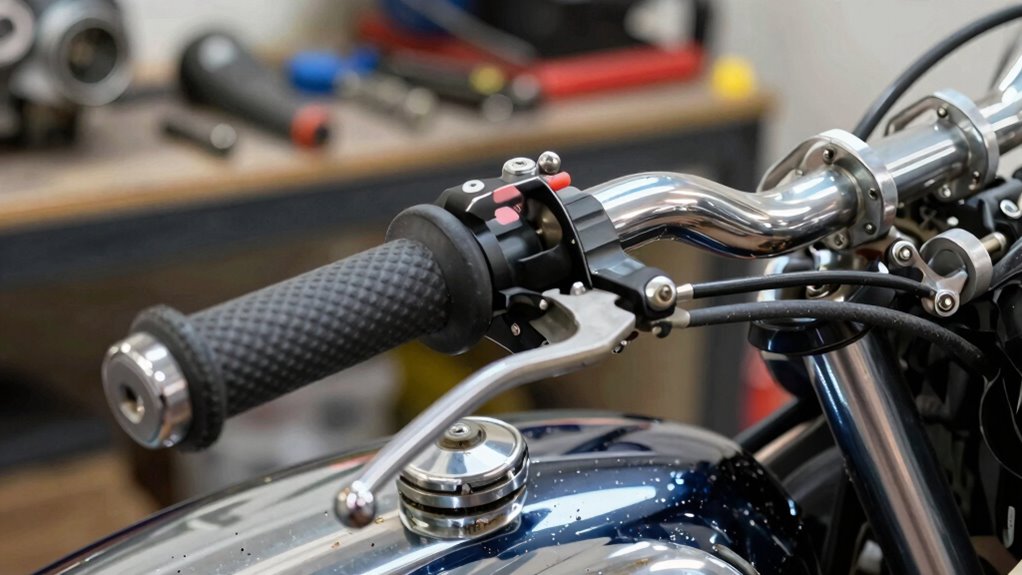

To fix a sticky throttle on your classic motorcycle, start by inspecting and lubricating the clutch and throttle cables, replacing them if they’re frayed or corroded. Next, remove the carburetor and thoroughly clean it to remove varnish, dirt, and old fuel residues, paying special attention to the throttle slide and bore. Make sure the throttle moves smoothly, then adjust the tension and check for worn gaskets or seals that could cause air leaks. For more detailed steps, keep exploring how to restore your motorcycle’s throttle performance efficiently.
Key Takeaways
- Inspect and replace or lubricate the throttle cable if it’s frayed, kinked, or sticking.
- Remove and clean the carburetor thoroughly to remove deposits and ensure smooth throttle slide movement.
- Check for air leaks from worn gaskets or seals and replace them to prevent sticking caused by vacuum issues.
- Adjust the throttle cable tension so it moves freely without being too tight or loose.
- Regularly lubricate the throttle cable and clean the carburetor to prevent future sticking.

A sticky throttle can turn a fun ride into a frustrating experience, but fortunately, fixing it is often straightforward. The most common cause is a problem with the throttle cable or buildup inside the carburetor. To start, you’ll want to inspect the throttle cable. Lift the fuel tank if necessary to get clear access. Check if the cable moves smoothly when you twist the throttle grip. If it feels stiff or catches, the cable may be frayed, kinked, or corroded. In such cases, replacing the cable is usually the best solution. However, if the cable appears intact, you can try lubricating it with a suitable cable lubricant to restore smooth operation.
A sticky throttle often results from a damaged cable or carburetor buildup, but fixing it is usually simple.
Next, focus on the carburetor, since deposits and grime can cause the throttle to stick. Remove the carburetor from the bike carefully, following your motorcycle’s service manual. Once removed, disassemble the carburetor, paying close attention to the throttle slide and bore. Use carburetor cleaner to thoroughly clean all parts, especially the throttle bore and slide. Built-up varnish, dirt, and old fuel residues often cause resistance, so cleaning helps restore proper movement. Be gentle but thorough, ensuring all passages are free of obstructions. After cleaning, inspect the throttle slide and bore for signs of wear or damage, replacing any parts if necessary.
When reassembling, make certain the throttle slide moves freely within the bore before reinstalling the carburetor. Reattach the carburetor to the motorcycle, making sure all gaskets and seals are in good condition to prevent air leaks that can further cause throttle issues. Once back on, reconnect the throttle cable, adjusting the tension so it isn’t too tight or too loose. A properly adjusted cable allows for smooth throttle response and prevents sticking. Regular maintenance, including lubricating the cable and cleaning your carburetor, can help prevent throttle sticking and keep your motorcycle running smoothly. These simple steps can keep your classic motorcycle running smoothly, letting you enjoy every ride without frustration.
motorcycle throttle cable replacement kit
As an affiliate, we earn on qualifying purchases.
As an affiliate, we earn on qualifying purchases.
Frequently Asked Questions
Can a Sticky Throttle Cause Engine Damage?
Yes, a sticky throttle can cause engine damage. When the throttle sticks due to issues like cable corrosion or improper throttle calibration, it can lead to unintended acceleration or sudden deceleration, stressing engine components. Over time, this strain may cause damage. Regularly inspecting and lubricating the throttle cable, and ensuring proper throttle calibration, helps prevent sticking and protects your engine from potential harm.
How Often Should I Lubricate the Throttle Cable?
Ever wonder if you’re neglecting your bike’s health? You should lubricate your throttle cable every 500 to 1,000 miles or monthly if you ride frequently. Proper throttle lubrication and cable maintenance prevent sticky throttles and ensure smooth acceleration. Regularly check for any signs of wear or rust, and use a quality lubricant to keep everything moving freely. Isn’t your safety worth a little routine maintenance? Keep your ride responsive and reliable!
What Tools Are Necessary for Fixing a Sticky Throttle?
To fix a sticky throttle, you’ll need a set of basic tools like screwdrivers, pliers, and a wrench. Start by adjusting the throttle cable to guarantee smooth movement. Then, clean the carburetor to remove any buildup that might cause sticking. These steps help improve throttle response, and having the right tools makes the process easier and more effective. Always make sure everything is properly reassembled before riding.
Is It Safe to Ride With a Sticky Throttle Temporarily?
Riding with a sticky throttle isn’t safe—statistics show that mechanical issues are a factor in 30% of motorcycle accidents. You shouldn’t ride until you’ve performed proper throttle maintenance and addressed the problem. It’s essential to follow safety precautions, like testing the throttle’s responsiveness before riding. Ignoring this risk can lead to unpredictable acceleration or loss of control, making your ride dangerous and potentially life-threatening.
When Should I Replace the Throttle Cable Instead of Fixing It?
You should replace the throttle cable if inspection shows fraying, corrosion, or significant wear. When brake adjustment techniques don’t resolve the sticky throttle, and the cable feels stiff or has excessive slack, replacement is best. Regularly inspect your throttle cable for signs of damage, and consider replacing it if repairs don’t restore smooth operation. This guarantees safe riding and prevents sudden throttle failures.
carburetor cleaner spray for motorcycles
As an affiliate, we earn on qualifying purchases.
As an affiliate, we earn on qualifying purchases.
Conclusion
Regularly inspecting and maintaining your motorcycle’s throttle can prevent sticky issues and guarantee safe riding. Did you know that according to the Motorcycle Industry Council, proper maintenance reduces accidents caused by mechanical failures by up to 30%? Taking a few minutes to clean and lubricate your throttle not only keeps it responsive but also extends the life of your bike. Stay proactive with maintenance, and enjoy smoother, safer rides every time.
motorcycle throttle cable lubricant
As an affiliate, we earn on qualifying purchases.
As an affiliate, we earn on qualifying purchases.

OXCANO 27421-99C Carburetor Rebuild Carb Repair Kit Compatible with Harley Davidson Dyna Sportster 40mm XL883 XLH1200, Keihin HD CV40, 883 Roadster XL, HD Super Glide FXR, HD Softail Deluxe FLSTN
- Compatibility: Fits Harley Davidson models and Keihin carbs
- OE Numbers: Includes original OE part numbers
- Package Content: Single rebuild carburetor repair kit
As an affiliate, we earn on qualifying purchases.
As an affiliate, we earn on qualifying purchases.