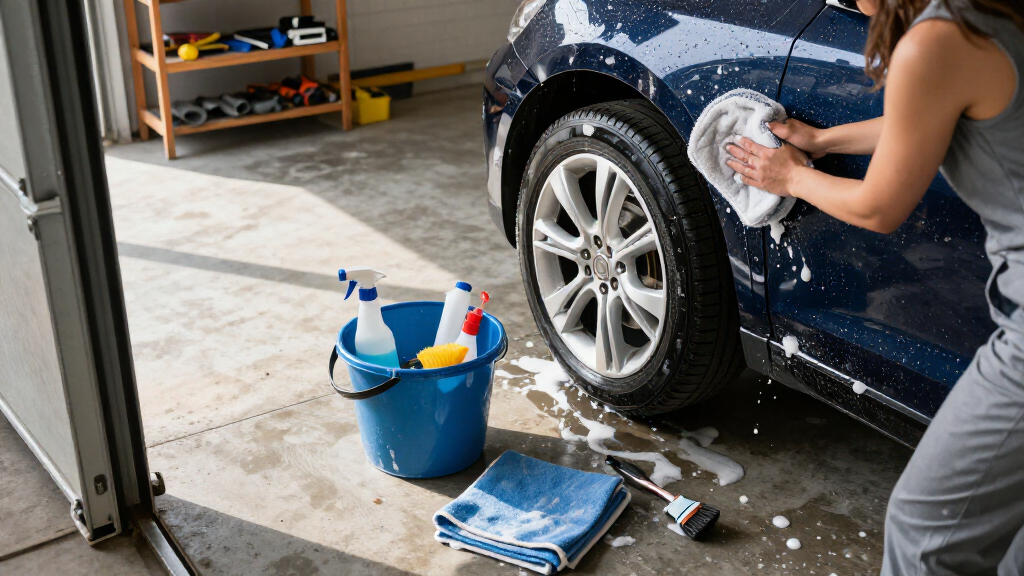

TL;DR

Get business pricing on garage and car supplies
- Business-only prices and quantity discounts
- Tax-exempt purchasing
- Multiple users, one account, clear invoices
A car detailing kit groups cleaning and care products, but its contents vary from a few basics to a broad collection. Check that each product suits your car’s surfaces, compare useful quantities and tools, and follow labels with clean microfiber and careful technique.
A shiny row of bottles can make a car detailing kit look like a one-box route to a spotless car. But one bottle may be meant for glass, another for paint, and a third for wheels. Use the wrong one on a leather seat or let a cleaner bake onto hot paint, and that tidy bundle can leave streaks or discoloration.
This guide helps you choose a kit that fits your car and your patience. You’ll learn what the contents actually do, which tools make a difference, how to compare bundles, and how to work safely from the roof down. Think of the kit as a toolbox: the right tool for the right surface makes the job easier, while extra tools you never use just take up space.
You’ll also see why washing, polishing, and protecting aren’t interchangeable. A Sunday wash on a dusty hatchback has different needs from restoring cloudy paint or refreshing a family SUV after a week of muddy shoes.
Read each label to confirm which vehicle surfaces a product suits.
A beginner kit can start with shampoo, a mitt, a drying towel, glass and interior cleaners, and several microfiber towels.
Compare kit contents, quantities, tools, and directions instead of counting bottles.
Use separate clean towels and tools for paint, wheels, glass, and interior surfaces.
Treat polishing as paint correction, not a step you need for every wash.
Know what a car detailing kit can—and can’t—do
A car detailing kit is a bundle of products and tools for cleaning, caring for, or protecting parts of a vehicle. Kits range from small starter sets with a few cleaners and towels to larger collections with brushes, applicators, waxes, and specialty products. The word “kit” does not promise that you’ll get every item you need.
A regular wash removes loose dirt and grime from the outside. Detailing can go further: it may include a deep interior clean, paint decontamination, polishing, or adding a protective layer. These are separate jobs. For example, a driver who wants to wash pollen off a blue sedan probably doesn’t need an abrasive polish; polishing removes a small amount of clear coat and belongs in the job only when paint needs correction.
It helps to imagine each step as a different part of a kitchen cleanup. Soap lifts the mess, a scrub handles stubborn residue, and a protective finish helps keep the surface looking good afterward. Some products combine functions, but the results depend on their formula and how you use them.
So start with your actual goal. If your main problem is crumbs and fingerprints, an interior kit makes more sense than a box focused on paint shine. That choice leads to the next question: which surfaces will you be treating?
Products Worth Considering

Chemical Guys 17-Piece Car Detailing Kit for Interior, Wheels, and Exterior

Chemical Guys 14-Piece Arsenal Builder Car Wash Kit with Foam Blaster

Chemical Guys 10-Piece Car Wash Kit with Foam Gun
As an affiliate, we earn on qualifying purchases.
Match every product to the surface you’re cleaning
Choose products according to the surface they name on the label: paint, glass, leather, fabric, plastic, or wheels. Formulas made for one surface may streak, discolor, or damage another, so a broad “all purpose” claim doesn’t automatically make a product safe everywhere. Check the kit’s item list before you buy.
Think about a car with leather seats, textured plastic trim, and a glass roof. A cleaner suitable for the plastic might leave a shiny film on leather, and a wheel cleaner could be far too aggressive for the cabin. A targeted interior cleaner, glass cleaner, and wheel product each earn their place by handling a different material.
Tools need the same care. Soft, clean microfiber towels suit delicate surfaces, but a towel that has picked up brake dust or grit belongs nowhere near paint or a screen. Keep separate towels for glass, paint, wheels, and interior work; color-coding them with tape or a permanent marker makes it easier to remember which is which.
Before using an unfamiliar product, read its label and test it on a discreet spot when appropriate. Work on cool surfaces, out of direct sun unless the instructions say otherwise, and don’t let cleaner dry on the car. A quick test behind a seat is much less painful than discovering a blotch in the middle of a visible panel.
Build a beginner kit around the jobs you actually do
A practical beginner’s kit usually needs car shampoo, a wash mitt, a drying towel, glass cleaner, interior cleaner, and several microfiber towels. Add basic brushes or applicators if you’ll clean vents, seams, or trim, and consider a wheel cleaner and paint protectant if those tasks matter to you. Clear directions and dilution instructions make products easier to use well.
Picture a first-time owner cleaning a commuter car in a driveway. Shampoo and a mitt handle the bodywork, a separate drying towel reduces water marks, glass cleaner clears fingerprints from the windshield, and an interior product lifts dust from the dashboard. That’s a useful day’s work without a machine polisher or a shelf full of specialty bottles.
Before buying, check whether the bundle includes the supplies around the products. You may still need a bucket, hose, vacuum, gloves, or machine polisher. Some bundles combine concentrates with bottles; others include liquids but no applicators. If you don’t already own the missing basics, the advertised price may not tell you the full cost.
Start with what your car needs each month. Someone parking outdoors under trees might value regular washing and paint protection; a garage-kept car that mostly needs a cabin refresh calls for different supplies. Small starter sets can be a sensible way to learn whether you like doing the work before investing in more tools.
Compare kit bundles by useful contents, not bottle count
Compare a kit by surface compatibility, useful quantities, included tools, and instructions—not by how many containers fill the box. A low-priced bundle might include small bottles, duplicate cleaners, or no drying towel; a smaller set may give you more of the supplies you’ll use every wash. Read the contents list as carefully as the front label.
| What to check | Why it matters | Example |
|---|---|---|
| Products and surfaces | Stops you assuming one cleaner works everywhere | Separate glass and interior products |
| Quantity and dilution | Shows how many uses you can expect | A concentrate may make several bottles |
| Tools and towels | Reveals what you’ll need to buy separately | Check for a mitt, applicator, and drying towel |
| Directions | Makes the kit easier to use correctly | Look for clear dilution and surface guidance |
Suppose two bundles have similar prices. One includes six small bottles and one cloth; the other has shampoo, an interior cleaner, a wheel brush, and enough towels to separate paint from wheels. If your car needs regular washes, the second may provide more useful value even though it has fewer products.
Some kit bundles and products focus on one task, such as interior care or wheel cleaning. Others claim to cover both. Either style can work; check the labels and decide whether the included items fit your routine. A kit’s usefulness comes from the jobs it can handle, not the size of its packaging.
Follow a simple wash sequence to avoid scratches and streaks
Use a clean-to-dirty sequence: start with paint, move to wheels using separate tools, then clean the cabin and glass with their own towels. Work on cool surfaces in the shade, and follow the product label for dilution, dwell time, and rinsing. A careful order helps keep grit away from delicate areas and cleaners from drying in the sun.
- Read the labels and gather separate towels and tools for paint, wheels, glass, and interior surfaces.
- Wash the paint with car shampoo and a clean mitt, moving carefully so grit doesn’t get dragged across the finish.
- Clean wheels separately with a wheel-safe product and dedicated brush or towel.
- Dry the exterior with a clean drying towel, then clean glass and interior surfaces with their intended products.
- Add protection if your chosen wax or sealant suits the paint and its instructions.
For example, after a weekend drive on wet roads, the lower doors and wheels may carry heavy grime. Keep the wheel brush away from painted panels and don’t reuse a dirty wheel towel on glass. Small separations like these reduce the chance of leaving scratches or greasy smears behind.
Detailing trends include rinseless and waterless washes, which can reduce water use when used with suitable products and careful technique. They are not a shortcut for wiping grit across paint: follow the method on the label and use clean towels. Ceramic spray sealants can also be convenient, but a spray is not automatically equal to a professionally applied ceramic coating.
Spend more time on clean tools than extra products
Clean tools and careful technique matter at least as much as a long list of products. A towel that feels rough or traps grit can mar a finish, while residue left on a surface can cause streaks. Wash microfiber separately from lint-producing or heavily soiled laundry, skip fabric softener, and retire towels that stay rough or contaminated.
Imagine drying a dark car with a towel that just came out of a load with fluffy bath towels. Lint catches the light across the hood, and you may need to redo the job. Keeping detailing cloths in their own wash load helps avoid that frustration; separate storage also keeps a clean paint towel from getting mixed up with one used on the wheels.
Routine upkeep varies with how and where you drive. A car parked beneath sap-dripping trees or used on salty winter roads may need more frequent washing than a garage-kept weekend car. Deeper interior cleaning and paint protection also depend on use and preference. Check the car when it needs attention rather than relying on a schedule that ignores its real conditions.
If you’re thinking about paint correction, remember that polishing is not routine washing: it removes a small amount of clear coat. Work carefully with products and tools suited to the task. For safety-critical repairs involving brakes, airbags, or high-voltage EV systems, use a certified mechanic; a detailing kit does not replace repair expertise.
Frequently Asked Questions
Are car detailing kits worth buying?
They can be convenient and may cost less than buying comparable items separately. Check that the kit’s products, quantities, and tools match your needs; a low price can hide tiny bottles or missing basics.
Can one kit clean both the interior and exterior?
Some kits include products for both areas, while others focus on a single task. Read each label and confirm that a cleaner is safe for the specific surface before using it.
Can detailing products damage car paint or interiors?
Yes. A product may damage or mark a surface if it is incompatible, misused, or left to dry in unsuitable conditions. Follow the label, use clean tools, and test unfamiliar products on a discreet spot when appropriate.
Do I need a machine polisher?
No. You can handle many routine cleaning and protection tasks by hand. A machine polisher is mainly useful for paint correction or more even polishing, which calls for suitable products, pads, and technique.
Is a ceramic spray sealant the same as a ceramic coating?
No. A ceramic spray sealant is a convenient protective product, while professionally applied coatings generally involve more preparation and are designed to last longer. Performance varies, so check product directions and care claims.
How often should I detail my car?
There’s no single schedule for every vehicle. A car that faces harsh weather or daily use may need more frequent washing than a garage-kept car, while deeper interior cleaning and paint protection depend on condition and preference.
Conclusion
Choose a kit by matching its products and tools to your car’s surfaces and the jobs you’ll actually do. Read the labels, keep towels separated, and let your routine grow only when your needs do.
A clean, well-used set of basics beats a box of bottles you can’t name. Start with one careful wash, and let the shine tell you what you need next.