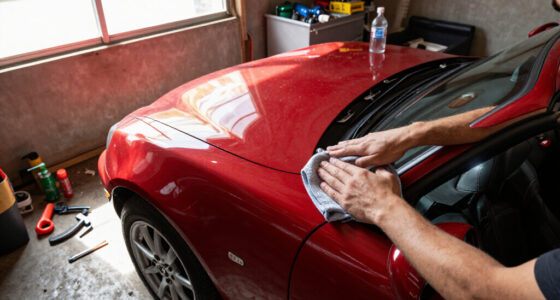

Choose a car detailing kit that suits your vehicle and cleaning goals, then use it to wash and refresh the exterior and interior. This guide is for beginners with a basic understanding of vehicle care; plan on 2–4 hours for a thorough first detail, with drying time and vehicle size affecting the total.

Get business pricing on garage and car supplies
- Business-only prices and quantity discounts
- Tax-exempt purchasing
- Multiple users, one account, clear invoices

45-Piece Car Detailing Kit with Brushes, Vacuum, Foam Gun, and Collapsible Bucket
- ✔ Brand: Qydipclin
- ✔ Piece count: 45
- ✔ Bucket capacity: 11 L

AUTODECO 39-Piece Car Cleaning Kit with Handheld Vacuum, Brushes, and Windshield Tool
- ✔ Brand: AUTODECO
- ✔ Piece count: 39
- ✔ Vacuum suction power: Approximately 7,500 Pa

Chemical Guys 17-Piece Car Detailing Kit
- ✔ Brand: Chemical Guys
- ✔ Kit size: 17 pieces
- ✔ Interior cleaner: Total Interior Cleaner and Protectant
Difficulty: Beginner | Time: 2–4 hours
What You’ll Need
Tools & Materials:
- Car detailing kit with vehicle-safe wash products, microfiber towels, and any brushes or applicators you plan to use
- Two clean wash buckets, or one bucket plus a hose-fed rinse method
- Garden hose or access to a vehicle-safe wash station
- Vacuum with upholstery attachment
- Nitrile gloves and eye protection, if product labels recommend them
Knowledge:
- Ability to follow product labels and basic vehicle washing instructions
- Ability to identify leather, fabric, glass, and painted surfaces before applying products
Check the kit’s contents and read each product label before use. Products vary: some kits include wax, wheel cleaner, or interior dressing, while others contain only wash essentials. Add any missing supplies before starting. Work in a shaded, well-ventilated area with a stable water supply.
45-Piece Car Detailing Kit with Brushes, Vacuum, Foam Gun, and Collapsible Bucket
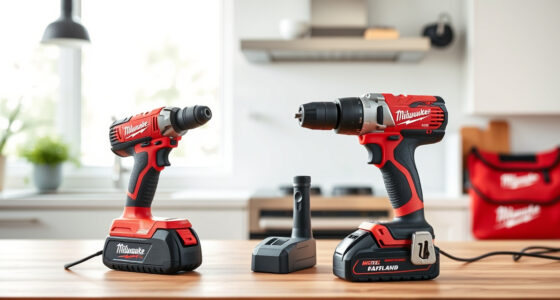
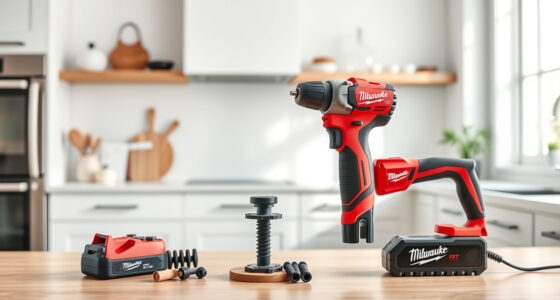
Qydipclin is the most equipment-rich choice in this group, and its advantage is not simply the 45-piece count. It brings together a vacuum, a collapsible 11 L bucket, wash mitt, towels, a windshield tool, brushes, polishing pads, and a low-pressure foam gun with eight spray patterns. That combination makes it the strongest fit for someone building a mixed interior and exterior setup in one purchase. Compared with AUTODECO, it gives more attention to the wash process; AUTODECO’s standout is its specified suction power and corded vacuum arrangement.The breadth comes with a practical catch: the drill is not included, so the drill brushes and polishing pads are not ready to use straight from the bag. Buyers should also wash the towels before first use. The included vacuum has three attachments and a long cord, but the supplied details do not state its suction power, so AUTODECO is easier to assess if vacuum performance is a primary decision factor. Chemical Guys offers a more focused assortment of cleaners and wash products, while Qydipclin is the better pick when tools and accessories across more tasks matter most.We would choose this kit for a household that wants to clean cars, motorcycles, or other listed vehicle types and already owns a compatible drill. If the buyer wants a ready-to-go set with no extra equipment or mainly needs product-led washing basics, the drill requirement and sheer assortment may make Chemical Guys the simpler place to start.
Pros:
- Combines vacuum, foam gun, bucket, brushes, towels, and wash mitt in one kit.
- Eight foam gun spray patterns provide options for rinsing and applying foam.
- Collapsible 11 L bucket and storage bag support compact storage.
- Contents are described for cars plus motorcycles, trucks, boats, and some household tasks.
Cons:
- Drill needed for drill brushes and polishing pads is not included.
- Towels should be washed before first use.
- Vacuum suction power is not specified in the supplied details.
Best for: Buyers who want a wide-ranging interior and exterior tool kit and already own a drill.
Not ideal for: Anyone expecting every included brush and polishing pad to be usable without supplying extra equipment.
Bottom line: Choose Qydipclin when you want the broadest equipment selection and can supply the drill its accessory tools require.
“Choose Qydipclin when you want the broadest equipment selection and can supply the drill its accessory tools require.”
AUTODECO 39-Piece Car Cleaning Kit with Handheld Vacuum, Brushes, and Windshield Tool
AUTODECO puts its most distinctive capability up front: a handheld vacuum rated at approximately 7,500 Pa, paired with a 15-foot power cord and four listed attachments. For buyers who want to pick up loose dirt from seats, floor areas, and tighter spaces as part of a larger cleaning routine, that gives this kit a clearer interior-cleaning focus than Chemical Guys. The 180-degree swivel windshield tool adds a different kind of convenience by helping reach glass from a longer handle.Its 39-piece assortment also includes a wash mitt, brushes, and towels for jobs beyond vacuuming, and the set is described for use around the home or office as well as in a car. Still, its range is not the same as Qydipclin’s. Qydipclin includes a foam gun and collapsible bucket, giving buyers more support for exterior washing; AUTODECO’s strengths are the specified vacuum and glass tool. The key constraint is that the vacuum requires a vehicle auxiliary power connection, so it is not a cordless or standalone household vacuum.We see this as the more targeted choice for drivers who want one kit to handle routine interior cleanup and some basic exterior tasks. Consider Chemical Guys instead if your priority is having soaps and cleaners in the package, or Qydipclin if a more complete assortment for washing and accessory-based detailing matters more than a stated vacuum specification.
Pros:
- Vacuum is specified at approximately 7,500 Pa suction.
- 15-foot cord and multiple attachments support access to different interior areas.
- Swiveling windshield tool has a 180-degree head and extra-long handle.
- Includes a range of tools for interior and exterior cleaning.
Cons:
- Vacuum needs a vehicle auxiliary power connection.
- Does not include the foam gun and collapsible bucket found in Qydipclin’s kit.
- The kit’s broad assortment may be more than needed for buyers seeking only wash chemicals and basic tools.
Best for: Drivers who want a vacuum, varied cleaning attachments, and an extended-reach windshield tool in one bundle.
Not ideal for: Buyers who need a cordless vacuum or want an exterior-wash setup centered on a foam gun and bucket.
Bottom line: Pick AUTODECO when its specified corded vacuum and windshield reach solve more of your routine than a foam-wash setup would.
“Pick AUTODECO when its specified corded vacuum and windshield reach solve more of your routine than a foam-wash setup would.”
Chemical Guys 17-Piece Car Detailing Kit
Chemical Guys takes a different approach from the two larger equipment assortments: its 17 pieces combine soaps and cleaners with core wash tools. The kit covers interior cleaning, exterior washing, wheels and tires, and drying, with a heavy-duty bucket, Dirt Trap, wash mitt, brushes, and microfiber towels. That makes it a natural fit for a buyer who wants cleaning products as part of the bundle and values a straightforward routine over collecting a wide range of accessories.Compared with AUTODECO, Chemical Guys does not include a vacuum, so it is less suited to buyers whose first priority is clearing crumbs or debris from the cabin. Against Qydipclin, it gives up the foam gun, collapsible bucket, and larger selection of general tools, but it also avoids Qydipclin’s stated need for a separate drill to use its drill brushes and polishing pads. The Dirt Trap bucket setup supports the two-bucket wash method, a useful detail for buyers organizing their exterior wash routine.This is still a starter kit rather than a complete paint-care system. Paint sealant and wax are separate additions, and buyers taking on specialized detailing tasks may need further products. We would choose it for familiar wash and clean steps, especially when included soaps and interior cleaner are more useful than a vacuum or foam gun. For broader equipment coverage, Qydipclin leads; for cabin vacuuming, AUTODECO is the better match.
Pros:
- Combines cleaning products and tools for several common care areas.
- Bucket includes a Dirt Trap and lid for a two-bucket washing routine.
- Interior cleaner is described for multiple surface types.
- Includes a wash mitt, wheel and tire brushes, and microfiber towels.
Cons:
- Paint sealant and wax are suggested as separate additions.
- Starter scope may leave specialized detailing jobs uncovered.
- Does not include the vacuum found in AUTODECO and Qydipclin.
Best for: Newer detailers who want cleaners, soaps, and the basic tools for routine interior, exterior, and wheel care.
Not ideal for: Buyers who need a vacuum, foam gun, or a more specialized collection of detailing equipment in one package.
Bottom line: Choose Chemical Guys when included cleaning products and a focused starter routine matter more than a larger tool assortment.
“Choose Chemical Guys when included cleaning products and a focused starter routine matter more than a larger tool assortment.”
As an Amazon Associate we earn from qualifying purchases.
Before You Start
Move the vehicle out of direct sun and let hot paint, wheels, and glass cool. Cleaning products can dry too quickly on hot surfaces and leave marks. Do not mix products or use a product on a surface unless its label lists that use. Keep wheel tools separate from paint towels to avoid transferring abrasive brake dust. Check the vehicle manual for restrictions on screens, coated surfaces, or interior materials.
If using a pressure washer, keep the nozzle at a safe distance and avoid directing high pressure at seals, sensors, cameras, or chipped paint. Collect runoff according to local rules; do not let chemical runoff enter storm drains where prohibited.
Step-by-Step Instructions
Step 1: Inspect the kit and vehicle
Lay out the kit and group products by use: paint, wheels, glass, and interior. Check labels for dilution ratios, dwell times, protective equipment, and surface restrictions. Walk around the vehicle and note heavy soil, insect residue, stains, or delicate areas so you can address them with suitable products.
Tip: Do not assume a product is universal. An all-purpose cleaner may still be unsuitable for leather, screens, or certain trim.
Check: You can identify which product and tool are intended for each surface, and you have the supplies needed for the planned cleaning.
Step 2: Prepare the work area and tools
Park in shade on a level surface, close the windows, and remove loose items from the cabin. Fill the wash bucket or buckets according to the shampoo label. Set out separate microfiber towels for paint, glass, wheels, and interior work. Rinse new towels before use if their care label recommends it.
Tip: A dropped towel can pick up grit. Set it aside for laundering instead of using it again on paint.
Check: The vehicle is cool, the work area is clear, and clean tools are separated by task.
Step 3: Clean the wheels and tires
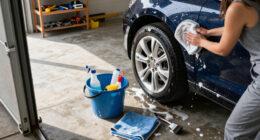
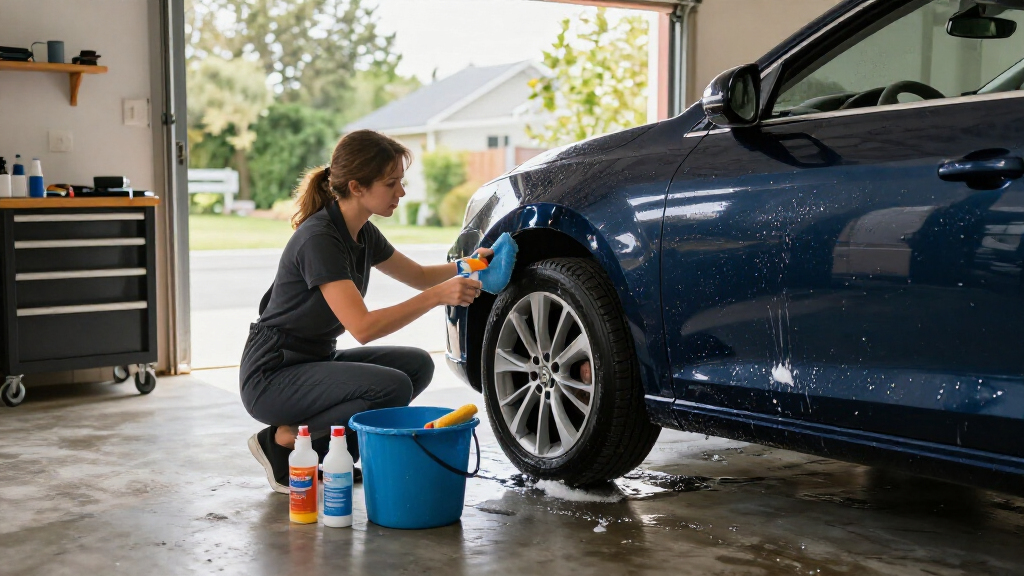
Rinse one wheel to remove loose dirt. Apply the wheel cleaner only if it is compatible with the wheel finish and follow the label’s dwell time. Agitate with a dedicated wheel brush, including the tire sidewall, then rinse thoroughly before the product dries. Repeat for each wheel.
Tip: Clean wheels before washing paint because brake dust and cleaner can splash onto nearby panels. Never use a wheel brush on the bodywork.
Check: The visible brake dust and tire grime are removed, and no cleaner residue remains on the wheels.
Step 4: Rinse and wash the exterior
Rinse the vehicle from top to bottom to loosen grit. Wash one small section at a time, starting with the roof and upper panels, using a clean wash mitt and the shampoo solution. Rinse the mitt often in a separate rinse bucket or under clean running water. Finish the lower panels last, then rinse the whole vehicle thoroughly.
Tip: Use light pressure and straight passes. Circular scrubbing and a gritty mitt can create visible paint marks.
Check: The paint, trim, and exterior surfaces look clean, with no suds or visible dirt left in seams.
Step 5: Dry the vehicle and clean the glass
Use a clean, soft drying towel to blot or gently draw water from the panels. Dry mirrors, door handles, and panel gaps where water can drip later. Apply the kit’s glass cleaner to a glass towel or as directed on its label, then wipe the inside and outside of the windows with separate clean sections.
Tip: Avoid household glass products unless they are confirmed safe for automotive glass and any window tint.
Check: The paint is free of standing water, and the glass is clear without streaks or lint.
Step 6: Vacuum and wipe the interior
Remove floor mats and loose debris. Vacuum seats, carpets, footwells, and the gaps between seats using suitable attachments. Apply an interior cleaner to a microfiber towel rather than spraying near switches or screens. Wipe compatible hard surfaces gently, then clean mats according to their material and product directions.
Tip: Test a cleaner on a hidden spot first. Use very little liquid around electrical controls and never soak upholstery.
Check: Loose dirt is removed, hard surfaces are clean, and no damp residue remains around controls.
Step 7: Treat upholstery and apply protection
Identify whether the seats are fabric, leather, or a coated synthetic material. Use only a matching cleaner, following its label and testing a hidden area first. Blot stains rather than rubbing them deeper into the material. If the kit includes wax, sealant, or interior protectant, apply a thin layer only to approved surfaces and buff or allow it to cure as directed.
Tip: Skip any treatment when you cannot confirm compatibility. Dressing on steering wheels, pedals, or seat surfaces can make them slippery.
Check: Treated surfaces look even, feel dry where they should, and have no greasy residue or strong lingering chemical odor.
Step 8: Review the vehicle and put supplies away
Walk around the vehicle in good light and check paint, glass, wheels, and trim for missed spots, streaks, or residue. Rewipe small areas with the correct clean towel. Close product containers, store them away from heat and children, and launder used towels separately from lint-producing items according to their care labels.
Tip: Let wet mats and upholstery dry fully before closing the vehicle for an extended period.
Check: The vehicle is clean and dry to the touch, windows are clear, and tools are stored or set aside for washing.
Common Mistakes to Avoid
- Washing in direct sunlight or on hot paint — Work in shade and let panels cool first; clean one section at a time so products do not dry on the surface.
- Using the same towel or brush on wheels and paint — Keep wheel tools separate and clearly set aside paint-safe microfiber towels.
- Applying a product to an incompatible surface — Read the label, check the vehicle manual for special surfaces, and test in a hidden area when appropriate.
- Using too much cleaner or protectant — Follow label amounts and dilution instructions; thin applications are easier to remove and less likely to leave residue.
Troubleshooting
Problem: Water spots appear after washing
Solution: Dry the vehicle promptly with a clean drying towel. If spots remain, use a paint-safe water-spot product according to its label; do not scrub with an abrasive pad.
Problem: Glass looks streaky
Solution: Use a clean, dry glass towel and a small amount of automotive glass cleaner. Wipe again with a dry section, and avoid cleaning hot glass in direct sun.
Problem: A stain remains in fabric upholstery
Solution: Check that the cleaner is approved for the fabric, then follow its application and extraction instructions. Blot gently and let the area dry; avoid soaking the seat.
Problem: A surface feels slick or greasy after dressing
Solution: Buff it with a clean, dry microfiber towel. Remove product from steering wheels, pedals, or other contact surfaces and leave them with a dry, nonslip finish.
What Success Looks Like
The exterior is free of loose dirt, the wheels have no visible cleaner residue, and paint and glass are dry without obvious streaks or spots. The cabin has been vacuumed, hard surfaces are clean, and any treated upholstery is dry according to its product directions. No product remains on pedals, steering wheel, or other surfaces that need a secure grip.
Next Steps
Let damp mats and upholstery dry completely before regular use. Wash microfiber towels separately using their care instructions and inspect them for grit or damage before the next detail. Store products sealed and out of heat. Repeat a routine wash when the vehicle becomes dirty, and use wax or other protection only at the interval stated on that product’s label.
Frequently Asked Questions
What should a beginner car detailing kit include?
Start with pH-appropriate car shampoo, a wash mitt, microfiber towels, and a safe way to clean glass and interior surfaces. Wheel cleaner, brushes, wax, and upholstery products are useful additions when they match your vehicle’s materials and your cleaning goals.
Can I use one cleaner on the whole car?
Use a product on multiple surfaces only when its label names those surfaces. Paint, glass, wheels, leather, fabric, and screens can need different products and methods.
How often should I detail my car?
Wash when dirt builds up and visibility or cleanliness suffers. Apply protective products based on their label and the vehicle’s exposure to weather, rather than assuming every product needs the same schedule.
Do I need two buckets to wash a car?
Two buckets help keep grit out of the wash solution: one holds soapy water and the other is for rinsing the mitt. If you use one bucket, rinse the mitt frequently with clean running water and avoid returning visible grit to the paint.
Can I detail my car in a driveway?
Yes, if you have shade, safe access to water, and a way to manage runoff. Follow local rules for wash water and product disposal, and choose a wash location where the vehicle can be cleaned without blocking traffic.