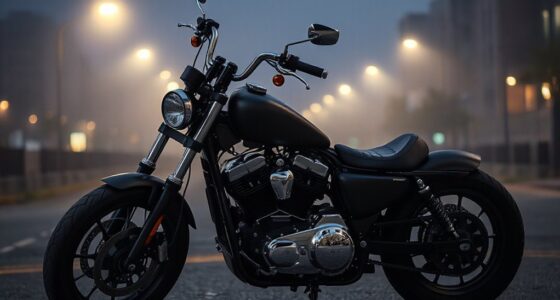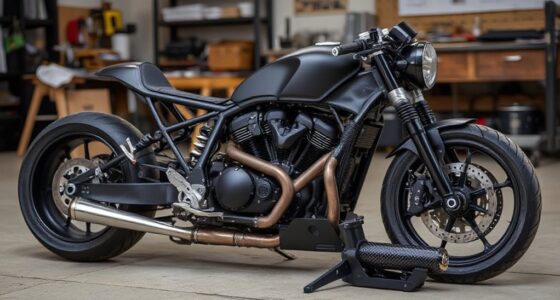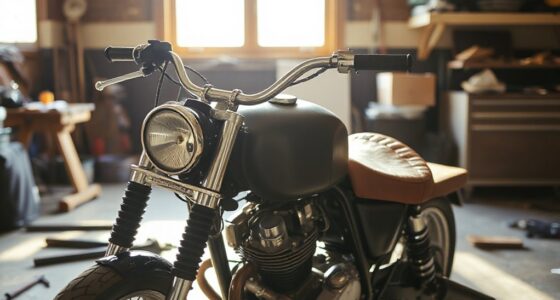
Transforming a classic bike into a cafe racer involves stripping down unnecessary parts, upgrading the engine for more speed, and customizing the style with vintage-inspired paint, seats, and accessories. Focus on lightweight modifications like clip-on handlebars and slim fuel tanks to boost performance and a sleek look. Incorporate modern electronics for safety and convenience while maintaining retro charm. To create a unique, fast, and stylish machine, explore these essential tips in detail as you begin your build.
Key Takeaways
- Select a suitable vintage British or Japanese bike with a solid frame and manageable engine size for easy modification.
- Strip unnecessary parts and replace with minimalist, race-inspired components like clip-on handlebars and slim fuel tanks.
- Enhance speed with engine tuning, carburetor upgrades, lightweight bodywork, and weight reduction techniques.
- Customize aesthetics using vintage paint finishes, retro accessories, and modern electronics for a unique style.
- Upgrade safety and handling with suspension, brakes, lighting, and perform regular maintenance for reliable performance.
Understanding the Origins and Cultural Significance
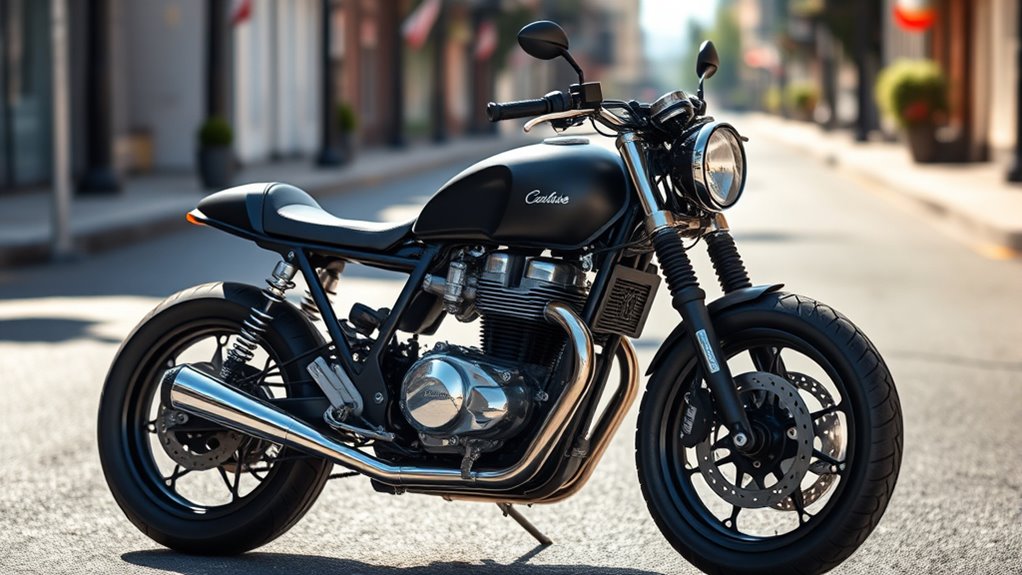
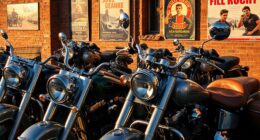
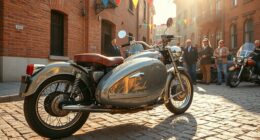
Have you ever wondered where café racers came from and why they hold such cultural significance? These bikes started in 1950s and 1960s Britain, born from the rebellious Rocker subculture focused on speed and style. Riders stripped down their motorcycles, racing between cafés like London’s Ace Café, aiming to beat jukebox songs with quick sprints. The culture reflected youth rebellion, blue-collar pride, and a love for rock ’n’ roll. Café racers symbolized freedom, individuality, and a DIY spirit, blending performance with style. Originally based on British bikes like Triumph and Norton, they evolved into icons of counterculture. Over time, the movement spread worldwide, influencing motorcycle design and youth identity, making café racers much more than just bikes—they’re a statement of attitude and heritage. Mastering the art of customizing these bikes has become a key aspect of the café racer culture, emphasizing personal expression and craftsmanship. Additionally, the heritage of these bikes continues to inspire modern builders who seek to preserve their historical significance while pushing design boundaries. Understanding the design elements and engineering behind classic café racers helps enthusiasts appreciate their unique blend of aesthetics and performance, which is essential for authentic restorations and custom builds. Recognizing the importance of community and shared knowledge has fueled the ongoing evolution of café racer culture, inspiring new generations to innovate while respecting tradition.
Choosing the Right Base Bike for Your Build
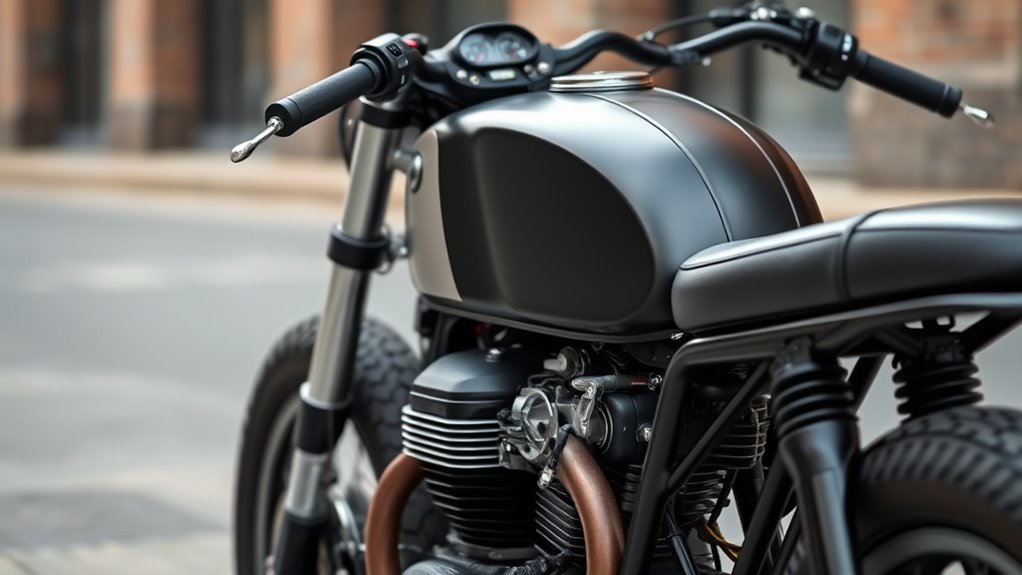
When choosing a base bike for your café racer, consider how well it can handle modifications like lightweight bodywork and performance upgrades. Classic British models such as Triumph or Norton often provide authentic styling and good parts availability, but Japanese bikes like the Honda CB series can offer modern reliability and performance potential. Make sure the bike’s engine and frame are compatible with your planned upgrades to guarantee a smooth build process.
Compatibility With Modifications
Choosing the right base bike is essential for a successful café racer conversion because not all motorcycles are equally suited for customization. You need a bike with a sturdy frame, good handling, and enough engine capacity to support performance upgrades. Classic British bikes like Triumph or BSA are popular because they’re designed for easy modifications and have a vintage appeal. Japanese models such as the Honda CB series also work well due to their reliability, lightweight frames, and wide aftermarket support. Avoid bikes with complex wiring, heavy components, or fragile frames, as they can complicate your build. Confirm the bike’s existing parts can be easily swapped or removed, and check that the frame can accommodate the modifications you plan. Compatibility is key to creating a sleek, functional café racer.
Classic British or Japanese
Selecting the right base bike sets the foundation for a successful café racer build. You want a bike that’s reliable, lightweight, and easy to modify. Consider these options:
- British Classics – Triumph, Norton, BSA: Iconic, easy to customize, with a rich history that matches the café racer vibe.
- Japanese Bikes – Honda CB series, Yamaha XS: Known for reliability, affordability, and a wide aftermarket for parts.
- Frame Compatibility – British frames often have vintage charm, while Japanese frames are more modern and easier to find parts for.
- Engine Size – Opt for 350cc-750cc for a balance of speed and manageability, especially if you’re new to custom builds.
Choose a bike that aligns with your goals, skill level, and style preferences for a smoother transformation.
Engine Performance Potential
Your choice of a base bike considerably impacts your café racer’s engine performance potential, as different models offer varying levels of power, reliability, and modifiability. Japanese bikes like the Honda CB series and Yamaha XS are popular for their affordability, ease of tuning, and widespread aftermarket support. British classics such as Triumph and Norton are revered for their historical performance and robust frames, making them excellent candidates for engine upgrades. Consider the engine’s displacement and condition; larger engines generally provide more power but may require extensive modifications. Lightweight, well-maintained engines respond better to tuning and custom exhausts. Additionally, engine tuning techniques can significantly enhance performance potential and tailor the bike to your desired riding style. Ultimately, selecting a reliable, adaptable engine with a good power-to-weight ratio ensures your café racer will deliver speed, responsiveness, and the potential for future upgrades.
Key Design Features to Enhance Speed and Style
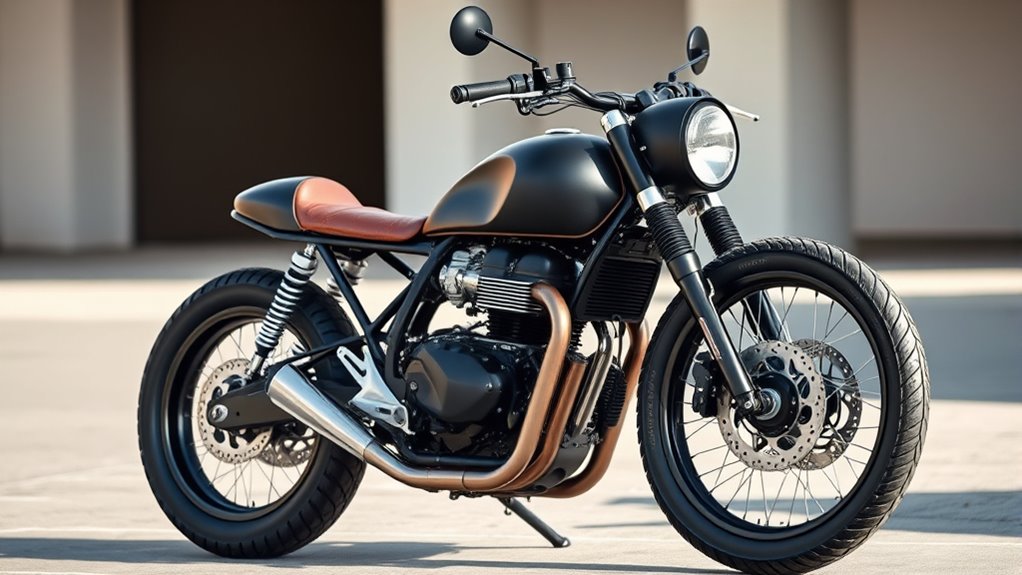
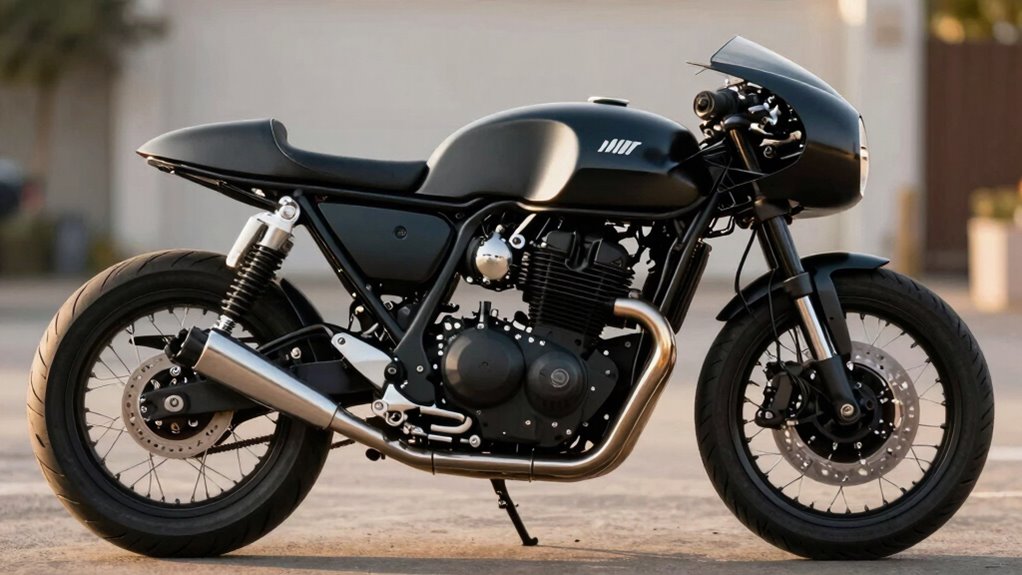
To achieve both speed and style in a café racer, designers focus on key features that optimize aerodynamics and reduce weight. These elements help you carve through air efficiently and look sleek. Incorporating energy-efficient technology can further enhance performance and sustainability. 1. Low, narrow handlebars—clip-ons or clubman style—create a forward-leaning stance that cuts wind resistance. 2. Long, slim fuel tanks with knee indents improve grip and streamline the silhouette. 3. Single, tapered seats keep weight minimal and give a minimalist aesthetic. 4. Stripped-down bodywork—removing fenders, passenger seats, and excess parts—reduces weight and emphasizes a raw, aggressive look. Additionally, paying attention to weight reduction techniques can significantly improve acceleration and handling.
Performance Upgrades and Engineering Tips
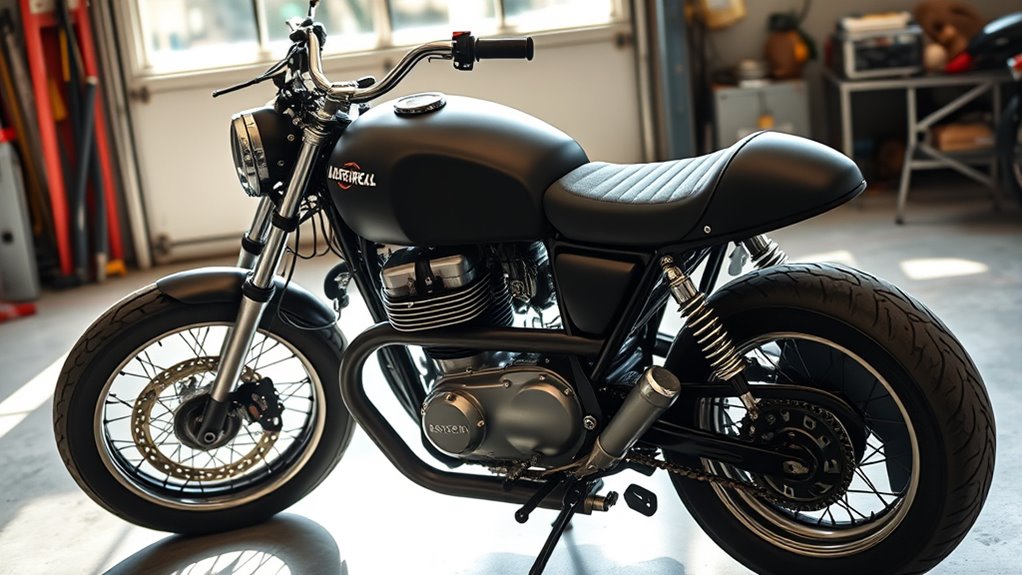
Enhancing a café racer’s performance hinges on precise engineering modifications that boost power, handling, and reliability. To do this effectively, focus on upgrading key components and tuning your bike for ideal output. Incorporating passive voice detection techniques can help ensure your instructions remain clear and direct. Start by installing a high-performance exhaust to free up airflow. Upgrade your carburetors for more precise tuning. Proper paint sprayer techniques are essential for applying coatings evenly and avoiding overspray during modifications. Additionally, selecting the right power tools for fabrication tasks can streamline the customization process. Recognizing the importance of projector technology can also inspire innovative upgrades to your bike’s lighting and display systems. Moreover, paying attention to aerodynamic improvements can further enhance your bike’s speed and efficiency. Finally, invest in suspension and brake enhancements to improve handling and safety. These targeted modifications will give your café racer the speed, agility, and dependability it needs.
Customization and Aesthetic Styling Ideas

When customizing your café racer, choosing the right paint and finishes can dramatically shape its look, from matte blacks to vintage-inspired metallics. Adding authentic accessories and details, like classic badges or retro mirrors, helps capture that timeless style. You can also blend modern components with vintage elements to enhance performance and update the aesthetic effortlessly. To ensure your modifications are reliable and durable, understanding professional maintenance practices can be highly beneficial. Moreover, considering lifestyle factors such as regular maintenance schedules can prolong the lifespan of your customizations and ensure consistent performance.
Custom Paint and Finishes
Custom paint and finishes are key to giving your café racer a distinctive look that reflects its personality and style. A well-chosen color scheme can make your bike stand out and showcase your individuality. Here are some ideas to contemplate:
- Matte finishes—offer a sleek, understated look that highlights the bike’s minimalist design. They also tend to hide scratches and imperfections better than gloss finishes.
- Vintage-inspired colors—such as British racing green or classic black with pinstriping for authentic appeal.
- Custom graphics—add flames, stripes, or pin-up art to inject personality.
- Weathered or distressed paint—create a rugged, retro vibe that echoes the bike’s rebellious roots.
- Incorporating specialized finishes like gloss, satin, or textured coatings can further enhance the visual impact and durability of your custom paintwork. Experimenting with different finishing techniques can help you achieve unique textures and effects that complement your bike’s overall style. Using advanced painting methods can also give your project a professional edge and personalized touch. Additionally, understanding color theory can assist in selecting hues that evoke specific moods or themes, elevating your customization to a new level. Paying attention to the visual harmony of your design choices ensures a cohesive and striking final appearance.
Vintage Accessories and Details
To truly capture the vintage soul of a café racer, adding authentic accessories and details can elevate its classic appeal. Start by choosing retro-inspired gauges and minimalist lighting—think small, round speedometers and bullet-shaped turn signals—that evoke mid-20th-century style. Leather seat covers with vintage stitching, along with classic leather tool rolls, add a rugged, timeless touch. Chrome or brass accents on mirrors, footpegs, and exhaust tips enhance the nostalgic vibe. Vintage badges or decals from iconic brands give your bike personality, while retro-style bar-end mirrors and handlebar grips complete the look. Incorporate old-school grips, knurled levers, and minimalist number plates to emphasize simplicity. These details not only boost aesthetics but also tie your build to the rebellious, stylish roots of the café racer culture. Customization techniques can further help you achieve a truly unique vintage aesthetic.
Modern Components Integration
Integrating modern components into a café racer allows you to enhance both its performance and aesthetic appeal with cutting-edge technology and sleek design elements. You can upgrade your bike with features that improve handling, safety, and style.
- Digital gauges – Replace traditional instruments with modern digital displays for clearer readouts and added functionality like GPS or Bluetooth connectivity. Digital instrument panels can also be customized to display specific data relevant to your riding preferences.
- LED lighting – Use LED headlights, taillights, and turn signals for a sharper look and better visibility.
- Performance electronics – Install ECU remapping or ride-by-wire systems to optimize engine performance and efficiency.
- Suspension upgrades – Modern adjustable forks and shocks improve ride quality and handling, giving your bike a contemporary edge.
These updates blend vintage charm with modern tech, making your café racer truly stand out. Electronics integration can also include smart features that enhance overall riding experience and safety.
Practical Steps for a Successful Conversion
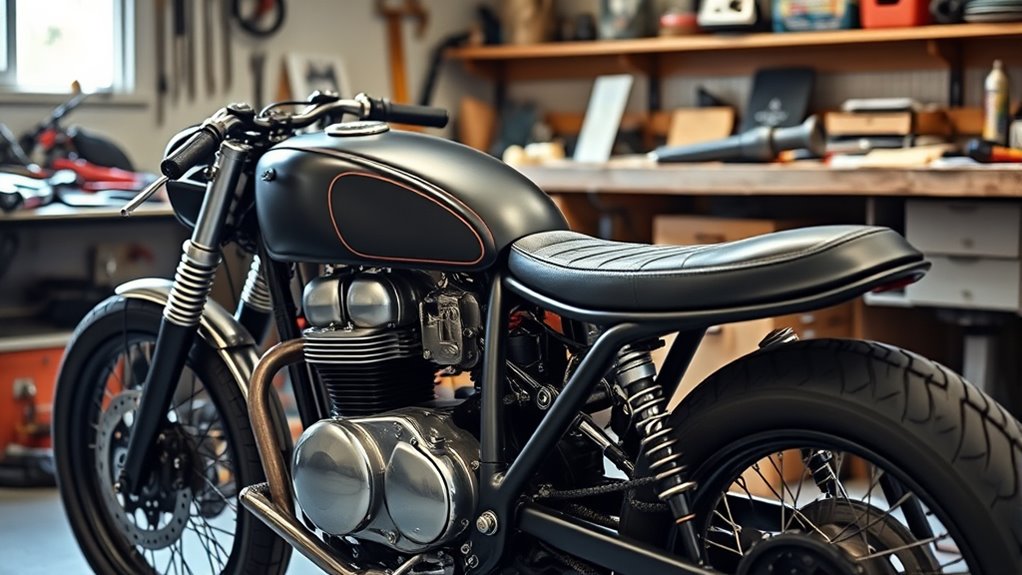
Starting a successful café racer conversion involves careful planning and choosing the right foundation. First, select a vintage motorcycle with a solid frame and engine, preferably British or Japanese, that suits your style and goals. Next, strip unnecessary parts like passenger seats, fenders, and bulky accessories to reduce weight. Replace the handlebars, fuel tank, and seat with minimalist, race-inspired components to achieve the desired aesthetic. Focus on tuning the engine by upgrading carburetors, installing aftermarket exhausts, and optimizing performance. Guarantee safety and legality by upgrading lighting, brakes, and suspension. Keep a clear plan for wiring and electrical systems to prevent future issues. Balancing style and functionality is key, so prioritize modifications that improve handling, speed, and overall look without sacrificing safety. Incorporating aesthetics and personalization can enhance the overall appeal of your custom build, making it uniquely yours. Additionally, understanding and implementing DIY tools and techniques can make the conversion process more manageable and ensure quality results. Paying attention to performance upgrades ensures your café racer not only looks great but also performs reliably on the road. Moreover, considering body modifications such as customizing the frame or fairings can further elevate the bike’s appearance and aerodynamics.
Frequently Asked Questions
How Much Does a Complete Café Racer Conversion Typically Cost?
A complete café racer conversion typically costs between $2,000 and $10,000, depending on your bike’s starting point and the level of customization. You’ll spend on parts like handlebars, fuel tanks, seats, exhausts, and performance upgrades. If you do some work yourself, you can save money, but hiring professionals adds to the cost. Keep in mind, quality parts and thorough tuning guarantee a stylish, safe, and high-performing café racer.
What Safety Considerations Should I Keep in Mind During Modification?
When modifying your bike, prioritize safety by guaranteeing all upgrades meet legal standards, like proper lighting and brakes. Double-check that the wiring is secure to prevent electrical issues, and verify the stability of handlebars, suspension, and tires after adjustments. Test ride carefully to feel how your modifications affect handling. Always wear protective gear, and consider consulting a professional to ensure your customizations don’t compromise safety or legality.
Can I Legally Ride a Café Racer on Public Roads?
Yes, you can legally ride a café racer on public roads if it meets all local safety and registration requirements. Make sure your bike has proper lighting, mirrors, and a functioning horn. You’ll need valid registration, insurance, and a valid driver’s license. Check your local laws, as regulations vary by region. Keep your bike maintained and compliant to avoid fines or penalties, ensuring a safe and legal ride.
How Long Does a Typical Café Racer Build Take?
It usually takes you several weeks to a few months to complete a café racer build, depending on your skill level and the complexity of the project. You’ll want to take your time to get every detail just right, because haste makes waste. Planning, sourcing parts, and labor all factor in, so be patient and enjoy the process. The end result will be worth it when you hit the road in style and speed.
What Skills or Tools Are Essential for a Successful Conversion?
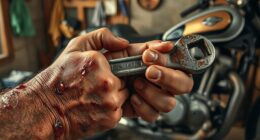
You need basic mechanical skills like engine tuning, wiring, and brake work to succeed. Essential tools include wrenches, screwdrivers, a torque wrench, and a bike lift or stand. Familiarity with welding and fabrication helps with custom parts. Also, having a good set of files, sanders, and paint supplies guarantees a smooth finish. Being patient and detail-oriented makes the process safer and results in a stylish, high-performance café racer.
Conclusion
Transforming your bike into a sleek cafe racer is like tuning a musical instrument—you’ll find harmony between speed and style. With the right choices and careful planning, you’ll craft a machine that’s not only eye-catching but also thrilling to ride. Embrace the process, enjoy the journey, and soon your bike will roar down the road like a well-played song—smooth, powerful, and uniquely yours.