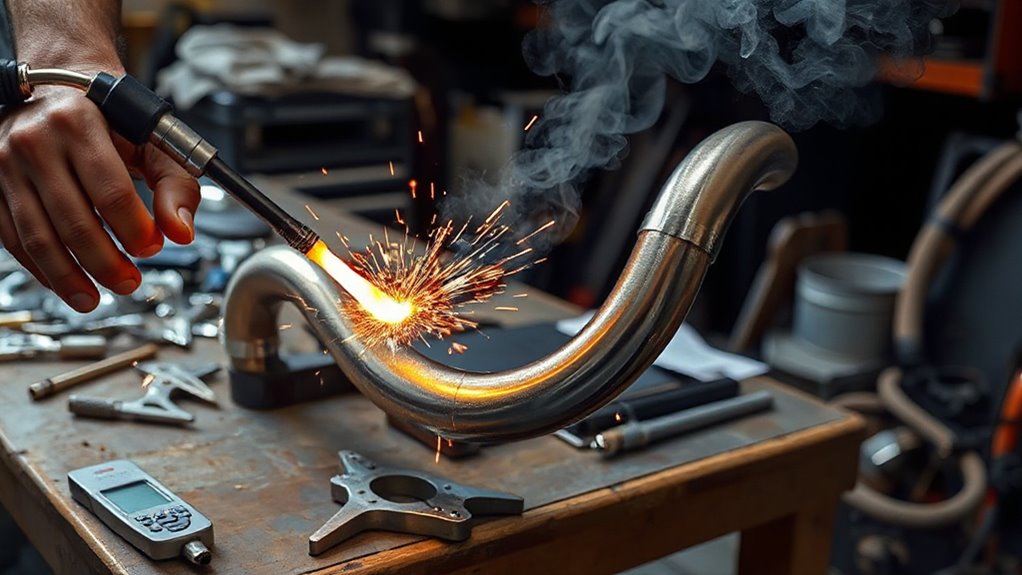

To build your own custom exhaust pipes, start by planning your design, selecting durable materials like stainless steel. Gather fabrication tools such as a hacksaw, tubing bender, and MIG welder. Carefully measure and cut your pipes, then bend and fit them according to your plan. Weld the components securely, add mufflers or resonators if desired, and test for leaks. Proper prep and assembly guarantee a high-quality system—continue exploring for detailed tips to perfect your project.
Open a free Amazon Business account
Business pricing, bulk buying and tax-exempt orders.
As an affiliate, we earn on qualifying purchases.
Key Takeaways
- Select suitable exhaust materials like stainless steel for durability and heat resistance, considering your budget and vehicle needs.
- Measure and plan pipe dimensions carefully to ensure proper fit, performance, and sound, then cut pipes precisely.
- Use appropriate fabrication tools such as a tubing bender, hacksaw, and MIG welder for accurate shaping and secure assembly.
- Practice welding on scrap pieces to achieve strong, leak-proof joints before assembling your exhaust system.
- Test the completed exhaust on your vehicle, check for leaks or rattles, and make adjustments for optimal performance and safety.
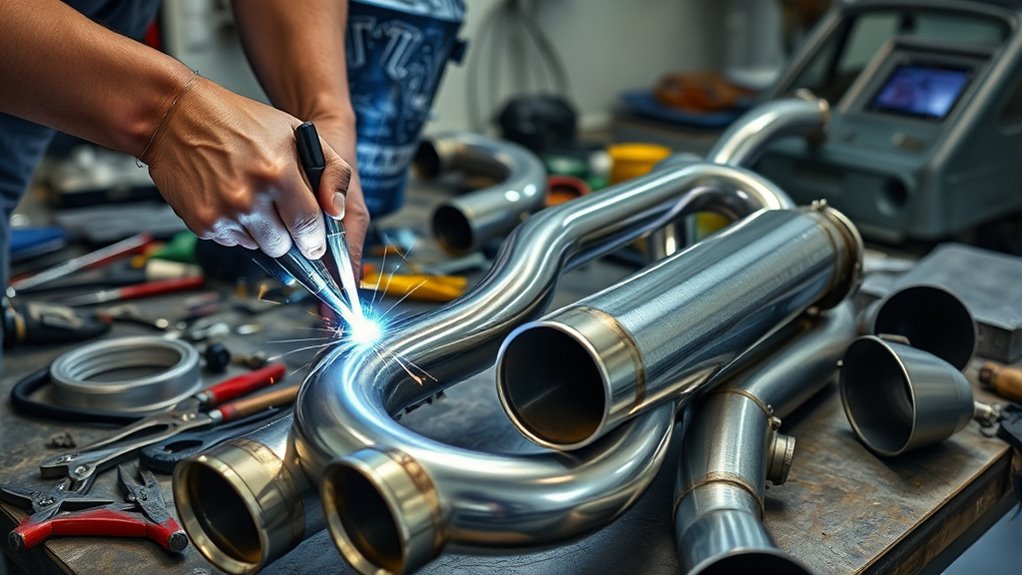
Ever wondered how to customize your vehicle’s exhaust system without spending a fortune? Building your own exhaust pipes might sound intimidating, but with the right approach, it’s entirely doable. The key is understanding the materials and tools involved. First, you’ll need to familiarize yourself with exhaust materials. Stainless steel is a popular choice because of its durability, corrosion resistance, and heat tolerance. Aluminum is lighter but less heat-resistant, making it less ideal for high-performance exhausts. Mild steel is affordable and easy to work with but tends to rust faster. Selecting the right material depends on your budget, vehicle use, and desired longevity. Once you’ve picked your exhaust materials, the next step is gathering fabrication tools. Basic tools like a hacksaw or angle grinder will help you cut pipes to size. You’ll also need a welder—preferably a MIG welder—for joining sections securely. A tubing bender will help you create smooth curves, essential for fitting your custom pipes precisely. Clamps, brackets, and high-temperature gasket sealants ensure a tight, leak-free connection. Before starting, plan your design carefully, considering the length and diameter of each pipe segment to optimize performance and sound. Measure twice, cut once. When you cut your exhaust materials, ensure clean, straight edges; this will make welding easier and stronger. Use your fabrication tools to shape and fit the pipes together, following your design plan. Welding is the most critical step—if you’re new to it, practice on scrap pieces beforehand. Make sure your welds are continuous and solid, as weak spots can cause leaks or failures down the line. Once assembled, you might want to add resonators or mufflers for sound tuning, which also involve working with similar materials and tools. After completing your exhaust system, double-check all connections for tightness and proper alignment. Test it on your vehicle, listening for leaks or rattles, and make adjustments as needed. Remember, patience and precision are crucial for a successful DIY exhaust fabrication project. Proper material selection is essential to ensure your custom pipes withstand the high temperatures and stresses they will face. With the right materials and tools, you can create a custom exhaust that enhances your vehicle’s performance and sound, all while saving money. It’s a rewarding process that combines technical skill with creative design, giving you a sense of pride in a job well done. Just keep safety in mind—wear protective gear, work in a ventilated area, and follow proper welding procedures. Building your own exhaust pipes isn’t just about saving money; it’s about gaining a deeper understanding of your vehicle and customizing it to your personal tastes.
stainless steel exhaust pipe kit
As an affiliate, we earn on qualifying purchases.
As an affiliate, we earn on qualifying purchases.
Frequently Asked Questions
What Tools Are Essential for DIY Exhaust Fabrication?
You need essential tools like a MIG or TIG welder to master welding techniques for your exhaust design, ensuring strong, durable joints. A angle grinder helps cut and shape pipes accurately, while clamps and a pipe bincer aid in fitting everything together. Don’t forget a measuring tape and marker for precision. These tools streamline your DIY exhaust fabrication, giving you the confidence to customize your pipes effectively and safely.
How Do I Choose the Right Materials for Custom Pipes?
To choose the right materials for your custom pipes, focus on material durability and heat resistance. You want stainless steel or aluminized steel because they withstand high temperatures and resist corrosion. Avoid cheaper options that may crack or rust quickly. Consider your budget and performance needs, and opt for materials that can handle the heat and stress of exhaust gases while lasting long-term. This guarantees your pipes stay reliable and safe.
What Safety Precautions Should I Take During Fabrication?
Your safety is more essential than crossing a busy highway blindfolded. Always wear personal protective equipment like gloves, goggles, and a mask to shield yourself from sparks, fumes, and sharp edges. Keep a fire extinguisher nearby and work in a well-ventilated area to prevent fire hazards and inhaling harmful fumes. Never ignore fire safety protocols — your health and safety depend on it during every step of fabrication.
How Can I Ensure My Custom Exhaust Passes Emissions Tests?
To guarantee your custom exhaust passes emissions tests, focus on maintaining proper exhaust emissions levels by incorporating a high-quality catalytic converter. Regularly inspect and replace it if needed, as it reduces harmful emissions effectively. Use accurate measurements and quality materials during fabrication to prevent leaks or malfunctions that could increase emissions. Testing your vehicle after modifications can help verify it meets emissions standards before an official test.
What Are Common Mistakes to Avoid in DIY Exhaust Building?
Imagine sparks flying as you weld your exhaust, but don’t overlook welding hazards or material compatibility. Avoid rushing, which can cause weak welds or leaks. Always double-check your materials match your design and are suitable for high temperatures. Keep a clean workspace to prevent accidents, and wear proper safety gear. By paying attention to these details, you’ll prevent costly mistakes and create a durable, effective exhaust system.
mIG welder for exhaust fabrication
As an affiliate, we earn on qualifying purchases.
As an affiliate, we earn on qualifying purchases.
Conclusion
Now that you’ve explored the art of crafting your own exhaust, you’re ready to embrace the journey. With patience and a bit of ingenuity, you can create something uniquely yours, blending function with style. Remember, every weld and bend brings you closer to a custom masterpiece. So keep your tools close and your vision clear—your perfect exhaust isn’t just a dream, it’s just a few steps away. Happy building!
As an affiliate, we earn on qualifying purchases.
As an affiliate, we earn on qualifying purchases.
Fall Picks
fall essentials
As an affiliate, we earn on qualifying purchases.