To improve comfort on your rigid or hardtail bike, consider upgrading to aftermarket suspension seat posts or fork upgrades that absorb shocks better. Adjust your bike fit by setting the right saddle height, angle, and reach to reduce strain. Use ergonomic saddles with proper padding and shock-absorbing grips to lessen hand fatigue. Small tweaks like these make a big difference, and exploring further tips can help you enjoy longer, more comfortable rides.
Key Takeaways
- Install aftermarket suspension seat posts or fork upgrades to absorb shocks and reduce vibrations on rough terrain.
- Choose ergonomic saddles with proper padding and positioning to enhance long-term comfort.
- Adjust bike fit, including saddle height and reach, for optimal weight distribution and reduced strain.
- Use ergonomic grips, padded tape, or handlebar modifications to lessen hand fatigue.
- Incorporate additional comfort measures like riding technique, clothing, and fine-tuning components for a smoother ride.
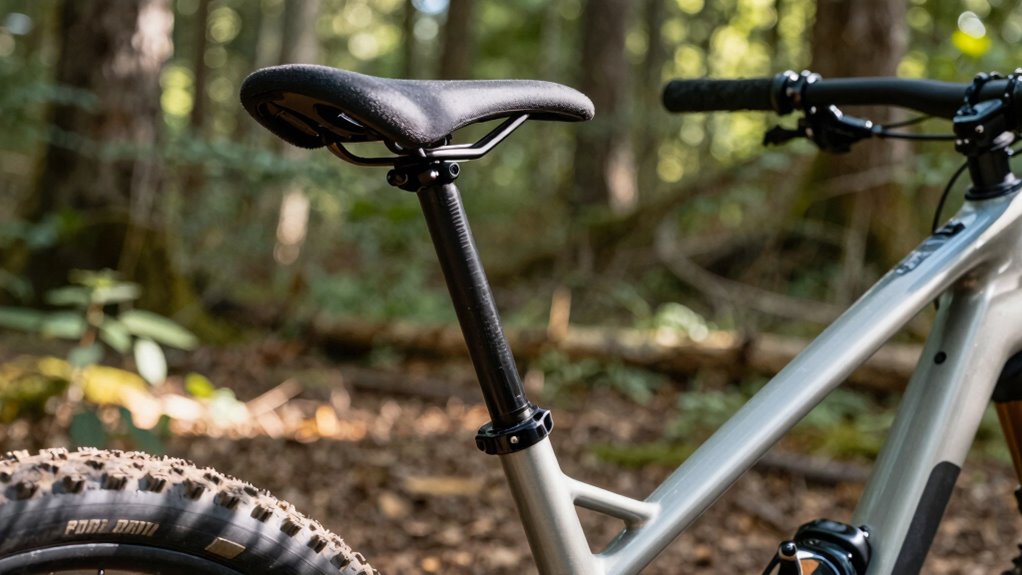
Riding a rigid or hardtail bike can deliver a direct, responsive feel, but it often comes at the expense of comfort on rough terrain. To make your ride smoother and less fatiguing, you need to focus on key upgrades that address shock absorption and rider ergonomics. One of the most effective ways to improve comfort is through suspension upgrades. Even if you’re committed to a rigid frame, you can add aftermarket suspension seat posts or fork upgrades that absorb some of the impacts from bumps and roots. These enhancements don’t turn your bike into a full-suspension model but can notably reduce jarring vibrations, allowing you to ride longer distances without discomfort. Pay attention to the type of suspension, ensuring it’s compatible with your bike’s geometry and your riding style. Adjustable suspension options give you control over firmness, letting you tailor the ride to different terrains.
Upgrade with compatible, adjustable suspension to improve comfort and reduce vibrations on rough terrain.
Alongside suspension improvements, ergonomic saddles play an essential role in enhancing comfort. A well-designed saddle reduces pressure points and minimizes numbness, especially during long rides. Look for saddles with ergonomic contours, padding suited to your body type, and sufficient width to support your sit bones comfortably. Sometimes, switching to a saddle with a cutout or relief channel can improve blood flow and reduce numbness, especially if you spend hours in the saddle. Proper saddle height and angle also matter—adjusting these can prevent unnecessary strain on your hips, back, and knees. Don’t hesitate to experiment with different saddle models or materials until you find one that feels natural to you. Additionally, proper bike fit is crucial for maximizing comfort and efficiency on your rides. Ensuring correct positioning helps distribute your weight evenly and can prevent overuse injuries. Incorporating ergonomic adjustments into your setup can further enhance comfort by reducing strain during long rides. Paying attention to bike geometry and how it influences your posture can also make a significant difference in long-term comfort.
In addition to suspension upgrades and ergonomic saddles, consider your handlebar and grip setup. Comfortable grips, padded tape, or ergonomic handlebar shapes can diminish hand fatigue and improve overall riding comfort. Proper bike fit is essential—make sure your saddle height, reach, and stem length are adjusted to match your body dimensions. This prevents awkward postures that cause soreness or fatigue over time. You might also want to add bar ends or ergonomic grips to change hand positions and relieve pressure points. Additionally, adding suspension components can help further absorb shocks and improve overall comfort on rougher terrains. Being mindful of your riding technique and clothing choices can also significantly enhance your experience, reducing the likelihood of discomfort during longer rides.
adjustable suspension seat post for mountain bike
As an affiliate, we earn on qualifying purchases.
As an affiliate, we earn on qualifying purchases.
Frequently Asked Questions
Can Changing Tires Improve Comfort on a Rigid Bike?
Changing tires can definitely improve comfort on a rigid bike. You should focus on adjusting tire pressure—lowering it slightly allows for better shock absorption on rough terrain. Additionally, choosing tires with a softer, more flexible tread pattern helps cushion impacts and reduce vibrations. These tweaks make your ride smoother and more comfortable, especially on longer rides or uneven surfaces, without sacrificing too much performance.
What’s the Best Saddle for Reducing Vibrations?
Imagine riding your bike and feeling every bump—sounds uncomfortable, right? The best saddle for vibration reduction features ergonomic padding and allows you to adjust its position for maximum comfort. For example, a rider switched to a saddle with gel padding and adjusted it slightly forward, instantly minimizing shock and pressure points. Focus on ergonomic padding and proper saddle position to smooth out your ride and reduce vibrations effectively.
Do Handlebar Grips Affect Ride Comfort?
Yes, handlebar grips considerably affect your ride comfort. Good handlebar ergonomics guarantee your hands and wrists stay relaxed, reducing fatigue. Grip materials like gel, foam, or rubber absorb vibrations and provide better cushioning, making your ride smoother. Choosing ergonomic grips that fit your hand size and preferences helps minimize pressure points. Upgrading your grips to quality materials can make a noticeable difference, especially on rough terrain or long rides, enhancing overall comfort.
How Can Bike Fit Influence Overall Comfort?
Your bike fit directly influences your comfort by optimizing your bike frame and riding posture. When your bike frame suits your body, it reduces strain and promotes a natural riding position. Properly adjusting saddle height, handlebar reach, and stem length guarantees your riding posture is ergonomic, preventing discomfort and fatigue. A well-fitted bike supports your body, enhances control, and makes your ride more enjoyable and less tiring.
Are Suspension Seat Posts Worth Installing?
A suspension seat post is definitely worth installing if you want better shock absorption and increased comfort on your bike. It helps absorb bumps and vibrations from rough terrain, reducing fatigue and strain on your body. While it adds some weight and cost, many riders find the added comfort and control worthwhile. If you ride on uneven trails or long distances, a suspension seat post can truly enhance your riding experience.
ergonomic bike saddle with padding
As an affiliate, we earn on qualifying purchases.
As an affiliate, we earn on qualifying purchases.
Conclusion
By tuning your setup and embracing small adjustments, you transform your ride into a gentle dance over rough terrain, turning discomfort into a soothing melody. Think of your bike as a trusted steed, where each tweak and upgrade acts as a calming hand guiding you through the rocky symphony of trails. With patience and care, you’ll find your ride gliding smoother than silk, making every journey not just a trip, but a harmonious adventure.
bike handlebar grips ergonomic padded
As an affiliate, we earn on qualifying purchases.
As an affiliate, we earn on qualifying purchases.
hardtail mountain bike fork upgrade
As an affiliate, we earn on qualifying purchases.
As an affiliate, we earn on qualifying purchases.