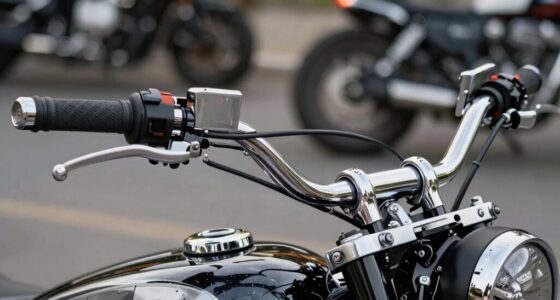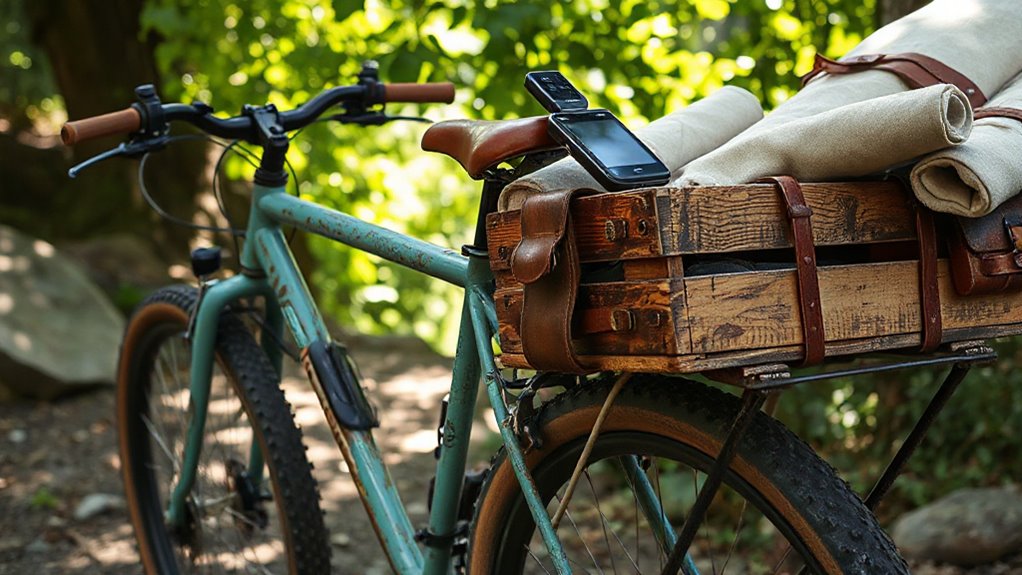
To equip your vintage bike for modern touring, start by carefully restoring the frame—removing rust, repairing dents, and protecting it with quality finishes. Upgrade parts like tires, brakes, and drivetrain for durability and smooth shifting, choosing vintage-style components where possible. Add reliable lighting, a sturdy rack, and discreet wiring, all while maintaining your bike’s nostalgic look with classic colors and accessories. For more tips on balancing authenticity with practicality, keep exploring.
Key Takeaways
- Restore the frame with rust removal, surface prep, and vintage-inspired finishes to maintain authenticity and durability.
- Refurbish or replace drivetrain components with vintage-style or modern parts suited for reliable touring.
- Fit puncture-resistant tires, discreet lighting, and a sturdy rack for safety and practicality on long-distance rides.
- Incorporate classic design elements like leather grips, brass accents, and era-appropriate colors for authentic aesthetics.
- Regular maintenance, proper wiring routing, and protective coatings ensure longevity and reliable performance for touring adventures.
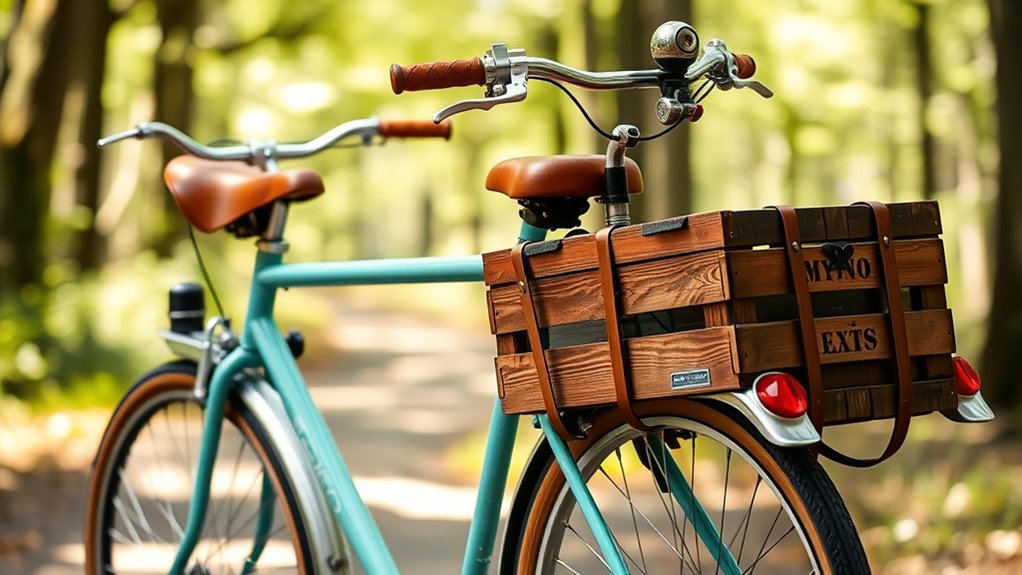
Building a vintage bike is a rewarding project that combines craftsmanship with nostalgia. When you’re restoring an old bicycle for modern touring, every detail matters, and understanding restoration techniques will help you preserve its character while making it functional for today’s adventures. Start by inspecting the frame thoroughly, checking for rust, cracks, or dents. Using proper restoration techniques, like rust removal with gentle abrasives or rust converters, guarantees the frame stays solid without compromising its integrity. Sandblasting or hand-sanding can prepare the surface for repainting, allowing you to apply classic design elements that give your bike a timeless look. Choosing colors and finishes reminiscent of the era not only honors its vintage appeal but also helps it stand out on the road.
Pay attention to the bike’s components, many of which can often be refurbished rather than replaced. Clean and lubricate the drivetrain, replacing worn-out chains, cogs, and derailleurs with parts that match the bike’s original style. When selecting new parts, aim for components that complement its classic design elements—such as vintage-style handlebars, leather grips, or chromed accents—that evoke the era you’re restoring. If you find the brake system outdated or unreliable, consider upgrading to modern brakes that blend seamlessly with the vintage look. You can often find modern equivalents that use the same mounting points, allowing you to maintain authenticity while improving safety and performance.
Refurbish vintage components for authenticity, upgrading only where safety and performance demand modern solutions.
Fitting your bike for modern touring involves more than just aesthetics. You’ll need to upgrade the tires to durable, puncture-resistant models suitable for long distances, and consider adding modern but discreet features like a comfortable saddle, reliable lights, and a sturdy rack. When choosing accessories, keep the vintage vibe in mind, opting for leather or brass details that match the aesthetic. Wiring and cabling should be neatly routed and protected, ensuring reliability during extended rides. Don’t forget to install a modern yet unobtrusive gear system that offers smooth shifting—many vintage bikes can be retrofitted with gear setups that maintain their classic appearance but enhance riding versatility. Additionally, understanding the importance of proper maintenance can help prolong the life of your restored vintage bike and keep it running smoothly for years to come.
Ultimately, restoring a vintage bike for modern touring is about balancing preservation and practicality. By applying careful restoration techniques and selecting classic design elements, you create a bike that’s not only a nod to the past but also ready for new adventures. It’s a process that requires patience and attention to detail, but the end result—a reliable, stylish touring bike with authentic charm—is worth every effort. With your skills and a keen eye for vintage aesthetics, you can craft a unique machine that bridges the gap between history and the open road.
Frequently Asked Questions
How Do I Choose the Right Vintage Bike for Touring?
To select the right vintage bike for touring, consider its frame size, condition, and compatibility with modern upgrades. Look for bikes with solid restorations or minimal restoration needs, and keep in mind vintage modifications that can enhance comfort and durability. Check for reliable components, and prioritize models known for long-distance riding. Doing thorough restoration tips research guarantees your bike is ready for adventure, making your touring experience smooth and enjoyable.
What Safety Gear Is Essential for Vintage Touring Bikes?
You might find it funny, but the first thing you should do is prioritize helmet safety; a good helmet can be your best friend on the road. Reflective gear is equally essential, especially during early mornings or late nights, making sure you’re visible to others. Don’t forget gloves and sturdy riding shoes for protection. These essentials keep you safe and confident, turning your vintage ride into a secure adventure.
How Can I Ensure Reliability on Long-Distance Rides?
To guarantee reliability on long-distance rides, you should regularly check your tire pressure to prevent flats and maintain peak performance. Keep your gear well-lubricated, especially the chain and moving parts, to avoid breakdowns and ensure smooth operation. Carry a basic toolkit for quick fixes, and plan regular stops for inspections. Staying attentive to these details helps your vintage bike run smoothly and reliably throughout your adventure.
What Maintenance Routines Are Best for Old Bikes?
Like tending to a trusty steed, you should regularly inspect tires for wear and proper inflation, and keep your chain well-lubricated to prevent rust and guarantee smooth rides. These routines are the backbone of old bike maintenance, helping you avoid breakdowns on long journeys. Make a habit of checking your tires and chain before every ride, and your vintage bike will thank you with reliable performance.
How Do I Balance Vintage Aesthetics With Modern Functionality?
To balance vintage aesthetics with modern functionality, focus on restoration techniques that preserve paint and original details. Upgrade essential components like brakes, lighting, and tires with modern, reliable parts while keeping the bike’s classic look intact. You can discreetly hide new features to maintain its vintage charm, ensuring you enjoy modern performance without sacrificing the bike’s nostalgic appeal. This approach blends history with practicality seamlessly.
Conclusion
Now that you’ve outfitted your vintage bike with modern gear, it’s ready to take on new adventures. Just like a well-worn map guiding you through uncharted territory, your bike combines history and innovation, offering a ride full of stories and discovery. Embrace the journey ahead with confidence, knowing your classic build is both reliable and ready for the road. After all, a vintage bike is like a fine wine—better with age and perfectly suited for the open road.