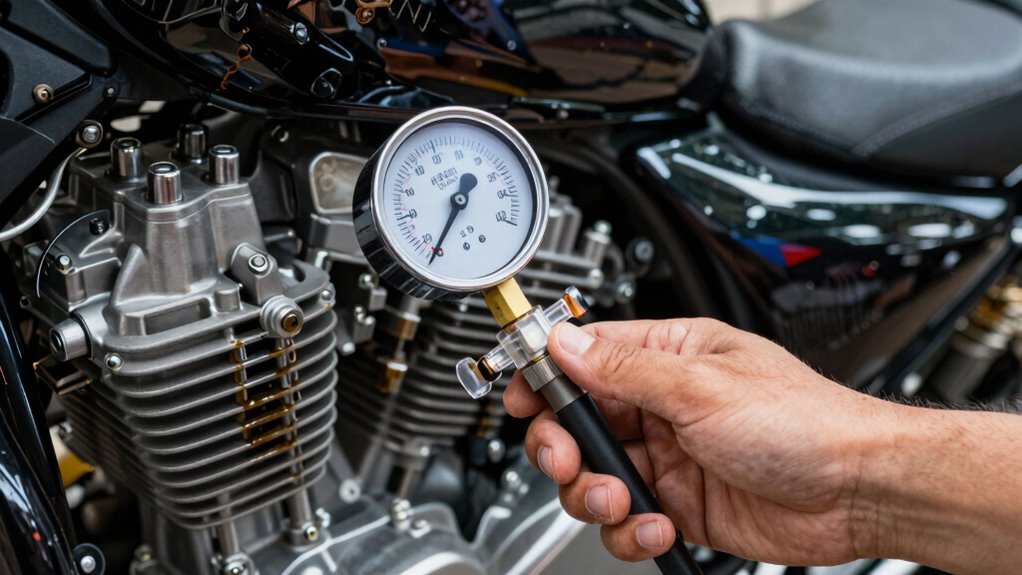

A leak down test shows how well your motorcycle engine’s cylinders seal under pressure. It can reveal worn piston rings, damaged valves, or head gasket issues that cause air leaks and affect performance. If the test indicates significant leakage, you might face engine power loss, poor fuel efficiency, or unusual noises. Understanding these signs helps you target repairs early. Keep exploring to discover how this test can pinpoint specific engine problems and save you money.
Key Takeaways
- Identifies the sealing condition of engine cylinders by detecting air leaks through valves, piston rings, or gaskets.
- Reveals worn or damaged piston rings, valves, or gaskets causing pressure loss and potential engine inefficiency.
- Indicates specific issues like valve sealing problems or piston ring wear based on leakage location.
- Helps assess overall engine health, preventing further damage and guiding targeted repairs.
- Monitors engine performance over time to maintain optimal fuel efficiency and prevent major failures.
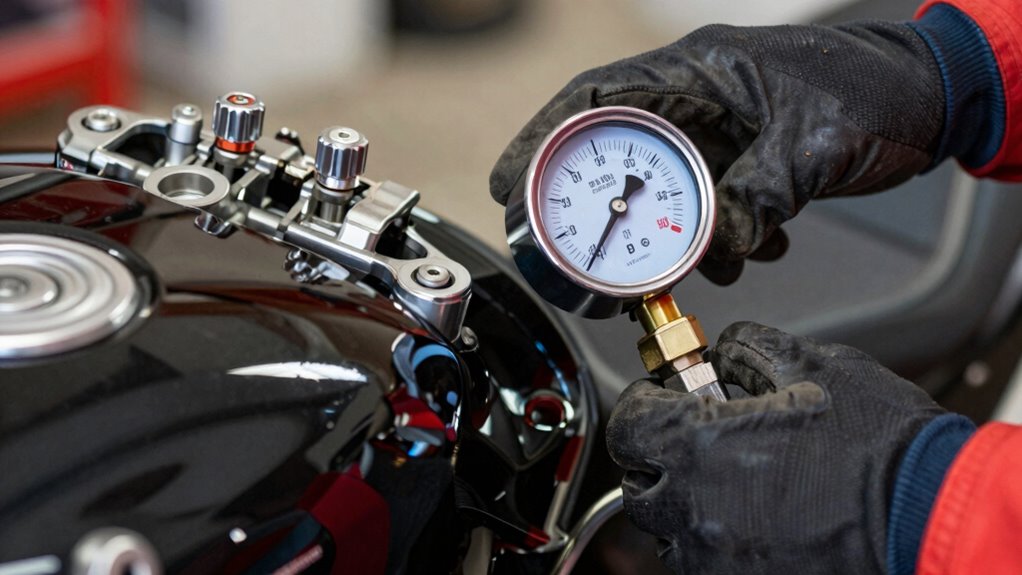
Ever wondered how to accurately assess the health of your motorcycle engine? A leak down test is one of the best ways to do it. This simple yet effective procedure can reveal a lot about your engine’s condition, especially when it comes to fuel efficiency and engine noise. When you perform a leak down test, you’re fundamentally checking how well your engine’s cylinders seal under pressure. If your engine isn’t sealing properly, you might notice a dip in fuel efficiency because unburned fuel can escape or cause incomplete combustion. Additionally, an engine with poor sealing often produces unusual engine noise, such as knocking or hissing sounds, which can hint at leaks or worn piston rings.
During the test, you’ll introduce compressed air into the cylinder through the spark plug hole and observe how much air escapes. If there’s minimal leakage, your engine is likely in good shape. However, if you see a significant drop in pressure, it indicates that your engine isn’t sealing properly, possibly due to worn piston rings, a damaged valve, or a blown head gasket. These issues can lead to decreased fuel efficiency because your engine isn’t burning fuel as thoroughly as it should. Plus, the increased leakage often results in abnormal engine noises, which you might hear as hissing or rattling during operation. Recognizing the importance of cylinder sealing can help you better understand what the test reveals about your engine’s health.
Minimal leakage indicates a healthy engine; significant pressure drops signal worn parts and potential efficiency loss.
A leak down test also helps you identify specific problem areas. For example, if air leaks out through the intake or exhaust valves, it points to valve sealing issues. If the leak is mainly through the crankcase or piston rings, it suggests that those components are worn or damaged. Knowing where the problem lies allows you to target repairs more effectively, saving you time and money in the long run. Furthermore, by catching these issues early, you can prevent further damage that might lead to more significant problems, like overheating or complete engine failure. These diagnostic insights are essential for maintaining engine longevity and overall performance. Recognizing the importance of diagnostic testing can help you stay ahead of potential engine failures.
In essence, a leak down test offers a window into your motorcycle’s internal health. It’s not just about diagnosing faults but also about maintaining peak performance. With accurate readings, you can make informed decisions regarding repairs or adjustments to restore your engine’s efficiency and smoothness. Regular testing can also help you monitor the effects of engine wear over time, ensuring you catch problems before they escalate. So, if you’re serious about keeping your motorcycle running at top performance, investing in a leak down test should be part of your regular maintenance routine. It’s a small step that can save you big headaches down the road, ensuring your rides are as smooth, efficient, and quiet as possible.

TU-21Cylinder Leak Down Tester Kit, Automotive Engine Compression Leakage Test Kit for Cars Trucks Motorcycles
Cylinder Leak Tester Kit:This compression test kit is designed to detect a variety of common engine faults. It…
As an affiliate, we earn on qualifying purchases.
As an affiliate, we earn on qualifying purchases.
Frequently Asked Questions
How Often Should I Perform a Leak Down Test on My Motorcycle?
You should perform a leak down test on your motorcycle every 10,000 to 15,000 miles or during scheduled maintenance intervals. Regular testing helps monitor engine wear and catch issues early. If your motorcycle shows signs of power loss, unusual noises, or decreased performance, don’t wait—conduct a leak down test sooner. Staying proactive with maintenance guarantees your engine stays in top shape and extends its lifespan.
Can a Leak Down Test Diagnose All Engine Problems?
A leak down test can’t diagnose all engine problems, but it’s great for checking engine compression and valve timing issues. You’ll find out if your valves seal properly or if there’s a loss of compression, indicating worn piston rings or head gasket issues. However, it doesn’t detect problems like ignition faults or fuel system issues. Use it alongside other diagnostics for a complete engine health picture.
What Tools Are Needed to Conduct a Leak Down Test?
Think of a leak down test as a detective’s toolkit for your engine. You’ll need a leak down tester, which includes a regulator, a pressure gauge, and hoses. Additionally, a compressor supplies air, while a spark plug socket helps remove plugs to access cylinders. These tools work together to measure compression comparison and cylinder sealing, revealing if your engine’s valves or piston rings are letting air escape, pointing out potential issues.
Is a Leak Down Test Safe for All Motorcycle Engines?
A leak down test is generally safe for most motorcycle engines if you follow proper safety precautions and guarantee correct engine sealing. You should wear protective gear and avoid pressurizing the engine excessively. Always check the manufacturer’s guidelines before starting, as some engines may have specific warnings. When performed correctly, a leak down test provides valuable insights without risking damage, making it a reliable diagnostic tool.
How Long Does a Typical Leak Down Test Take?
A leak down test typically takes about 15 to 30 minutes, depending on your motorcycle’s engine size and condition. You should perform a compression measurement first, then proceed with valve inspection to guarantee accuracy. This quick process helps identify issues like worn valves or head gasket leaks. Keep in mind, a thorough test with proper setup ensures you get reliable results, so don’t rush the procedure.

Marvelity Cylinder Leak Down Tester Kit, Automotive Engine Compression Leakage Test Kit with Extension Rod, Multi-Function for Gasoline Engines, Pressure Check & Leakage Rate Test on Cars, Motorcycles
Dual-gauge design: Clear dial with highly readable markings directly displays pressure and leak rate, with measurement ranges of…
As an affiliate, we earn on qualifying purchases.
As an affiliate, we earn on qualifying purchases.
Conclusion
A leak down test is your ultimate secret weapon for diagnosing your motorcycle engine’s health. It reveals tiny, hidden leaks that could cause massive problems down the road—think of it as your engine’s blood test, catching issues before they become catastrophic. Don’t ignore these signs; treat your engine like a prized racehorse. When you catch tiny leaks early, you’re protecting your ride’s future—because neglecting it could turn your dream bike into a nightmare faster than you can twist the throttle.

Tusk Piston Ring Compressor
Includes ring sizes to fit 40-100mm piston diameters
As an affiliate, we earn on qualifying purchases.
As an affiliate, we earn on qualifying purchases.
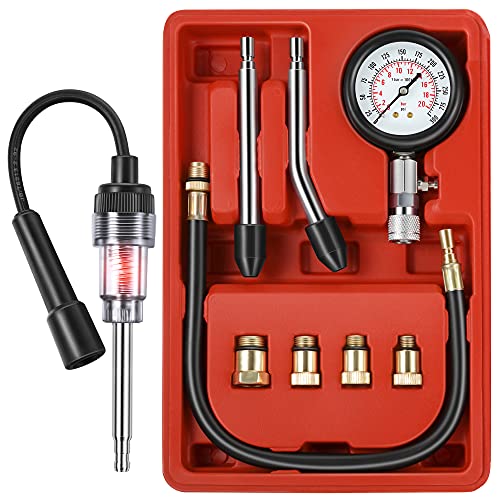
Fiada 9 Pieces Automotive Compression Tester Kit and Spark Plug Tester, Universal Car and Motorcycle Engine Testing Tools for Cylinder Pressure Gauge (Red)
【Complete Kit for Car Testing】: the 9pcs cylinder testing kit comes with 8 x compression tool and 1…
As an affiliate, we earn on qualifying purchases.
As an affiliate, we earn on qualifying purchases.