A good parts washer saves you time in restoration by quickly breaking down stubborn grease, grime, and dirt without manual scrubbing. It allows you to clean multiple parts at once, reducing repetitive work and speeding up your workflow. Plus, it prevents buildup that can cause delays or damage, helping your tools last longer. Properly maintained, it keeps your process smooth and efficient, so you can focus on restoring with confidence—there’s more to discover if you keep going.

Get garage and car supplies delivered free — and shop member deals
- Fast, free delivery on millions of items
- Access to Prime Big Deal Days deals on October 6–7
- Prime Video, Amazon Music and more included
Key Takeaways
- Quickly removes stubborn residues, reducing manual scrubbing time significantly.
- Allows simultaneous cleaning of multiple parts, speeding up workflow.
- Prevents buildup and corrosion, minimizing maintenance delays.
- Ensures thorough cleaning, reducing rework and inspection time.
- Enhances safety and reduces downtime with proper filtration and hazard controls.
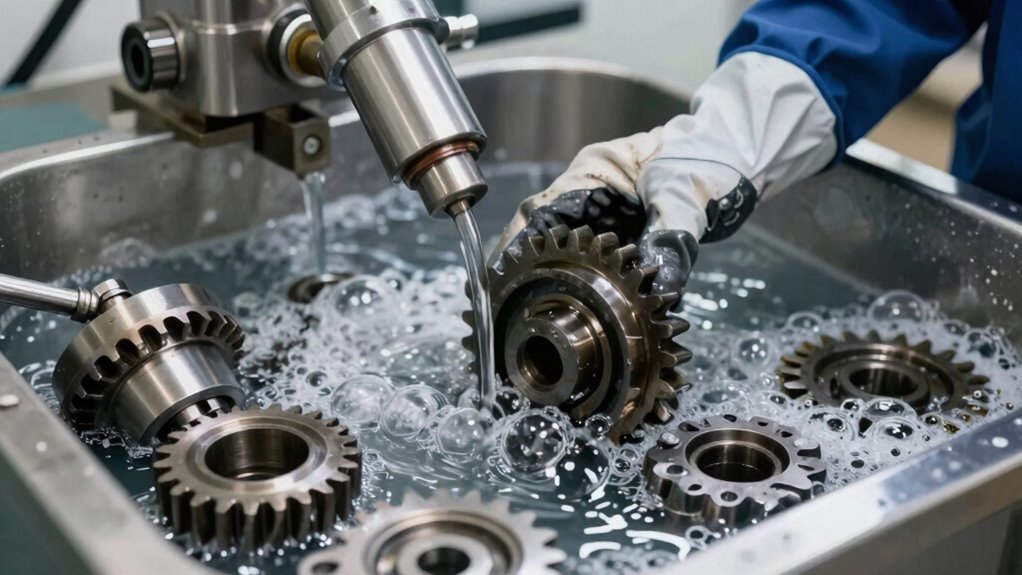
Have you ever struggled to clean stubborn grease and grime from engine parts or vintage tools? If so, you know how frustrating it can be to scrub away at tough residues with limited results. A good parts washer makes this process much easier, saving you significant time and effort. It’s an essential tool for anyone involved in restoration because it streamlines cleaning and prepares components quickly and thoroughly. Using the right cleaning solvents in a parts washer breaks down stubborn dirt, grease, and oil efficiently, unlike manual scrubbing that can be tedious and inconsistent. These solvents are specially formulated to dissolve contaminants without damaging the metal or delicate parts, making your cleaning process faster and safer.
A parts washer simplifies cleaning stubborn grease and grime, saving time and protecting delicate components.
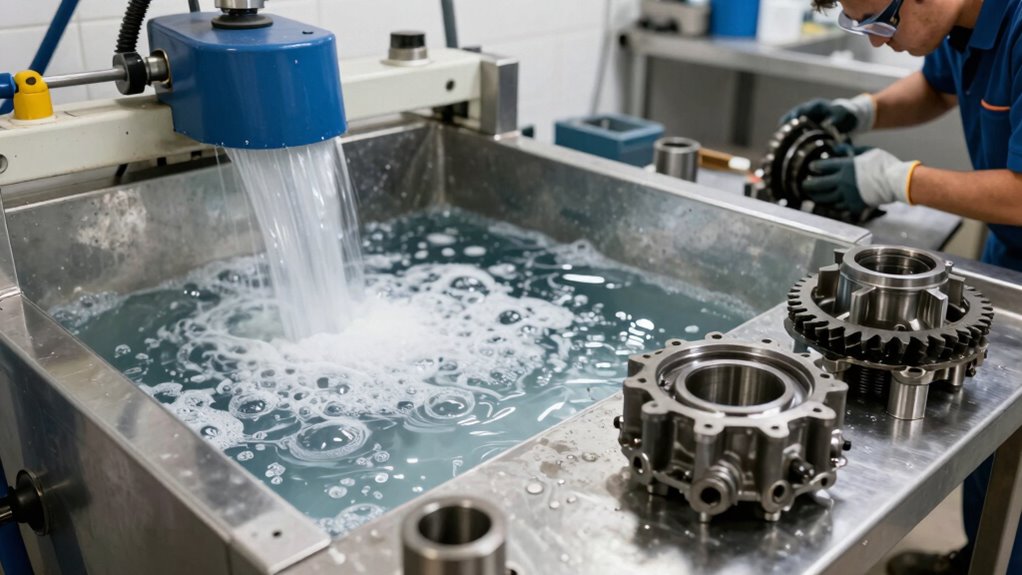
When you use a parts washer, you’re also improving your equipment maintenance routine. Regularly cleaning parts prevents buildup that can cause corrosion or mechanical issues later on. Instead of manually cleaning each piece with brushes and rags, you can submerge and rinse components in the washer, ensuring a more uniform and complete clean. This not only saves time but also reduces wear and tear on your tools and parts, extending their lifespan. Properly maintaining your cleaning equipment with appropriate solutions helps ensure optimal performance and longevity of your parts washer. Additionally, choosing the right cleaning solvents can further enhance the effectiveness of your cleaning process by breaking down specific contaminants more efficiently. Incorporating regular maintenance of your parts washer is also crucial for maintaining its efficiency over time. Using a high-quality parts washer with proper filtration can help remove debris and prevent clogs, further improving cleaning results. Employing quality equipment with proper features can also reduce the need for frequent repairs and downtime.
A good parts washer also boosts your productivity by allowing you to clean multiple parts at once. You can set up racks or baskets to hold various components, then let the machine do the work. This means you spend less time on repetitive scrubbing and more time on other restoration tasks like assembly or finishing touches. The efficiency gained from quick turnaround times is especially valuable when dealing with multiple parts or tight deadlines. Additionally, many washers are designed with safety features—like splash guards and proper drainage—that help you maintain a clean and hazard-free environment.
In the end, investing in a quality parts washer isn’t just about convenience; it’s about enhancing your entire restoration process. It simplifies equipment maintenance, speeds up cleaning, and ensures your parts are spotless and ready for use. By choosing the right cleaning solvents and utilizing an effective washing system, you save countless hours and reduce frustration. This allows you to focus on the more rewarding aspects of restoration, confident that your components are as clean and functional as possible. Overall, a good parts washer is a smart, time-saving addition to any restoration toolkit.
As an affiliate, we earn on qualifying purchases.
Frequently Asked Questions
What Types of Contaminants Can a Parts Washer Remove Effectively?
A good parts washer effectively removes various contaminant types, including grease, oil, dirt, and carbon deposits. It guarantees chemical compatibility with different materials, so you don’t risk damaging parts during cleaning. By targeting these contaminants efficiently, you save time on manual scrubbing and reduce the need for multiple cleaning steps. This streamlines your restoration process, making it faster and more reliable, especially when dealing with complex or sensitive components.
How Often Should a Parts Washer Be Cleaned and Maintained?
You should clean and maintain your parts washer regularly, ideally after each use or at least weekly, depending on how frequently you operate it. Consistent cleaning frequency prevents buildup of grease, dirt, and contaminants that can impair performance. Maintenance importance can’t be overstated; it guarantees the washer functions efficiently, extends its lifespan, and keeps your restoration process smooth and effective, saving you time and effort in the long run.
Can a Parts Washer Handle Different Sizes of Restoration Parts?
Your parts washer acts like a versatile artist’s palette, handling various restoration parts with ease. Its impressive cleaning capacity and flexibility mean you can confidently clean everything from tiny screws to large engine components. This adaptability, or parts washer versatility, streamlines your workflow, saving you time and effort. With a reliable parts washer, you’re equipped to tackle different sizes effortlessly, ensuring each piece gets the thorough cleaning it deserves.
Are There Environmental Regulations for Used Cleaning Solvents?
Yes, there are environmental regulations for used cleaning solvents. You need to guarantee environmental compliance by properly managing solvent disposal. Many regions require you to store used solvents safely and dispose of them through licensed waste management services. Using environmentally friendly or biodegradable solvents can also help you meet regulations and reduce environmental impact. Staying informed about local regulations protects you from penalties and promotes eco-friendly practices in your restoration process.
What Safety Precautions Are Necessary When Operating a Parts Washer?
Ironically, safety might seem like an obvious concern, yet many overlook it. When operating a parts washer, you need to wear protective gear like gloves and goggles to shield against splashes. Make certain proper ventilation to avoid inhaling fumes, even if the smell’s not immediately noticeable. Following ventilation requirements and using protective gear isn’t just smart—it’s essential for your safety and health during the cleaning process.
industrial parts cleaning machine
As an affiliate, we earn on qualifying purchases.
As an affiliate, we earn on qualifying purchases.
Conclusion
A quality parts washer is your trusty tool to trim tedious tasks and turbocharge your restoration time. With its swift, spotless cleaning, you’ll save stress and sidestep setbacks. Say goodbye to scrubbing and soaking, and hello to hassle-free harmony. When you invest in a good parts washer, you’re not just cleaning parts—you’re creating a clean, confident, and cost-effective craftsmanship that keeps your project moving smoothly from start to finish.
As an affiliate, we earn on qualifying purchases.
heavy-duty parts cleaning solvent
As an affiliate, we earn on qualifying purchases.
As an affiliate, we earn on qualifying purchases.
Fall Picks
fall essentials
As an affiliate, we earn on qualifying purchases.