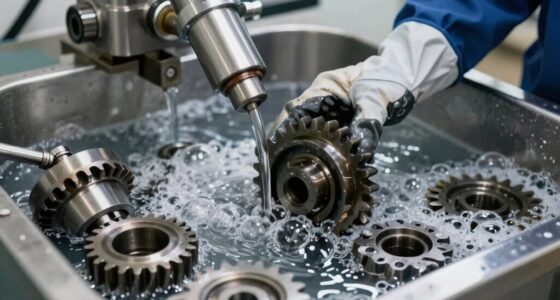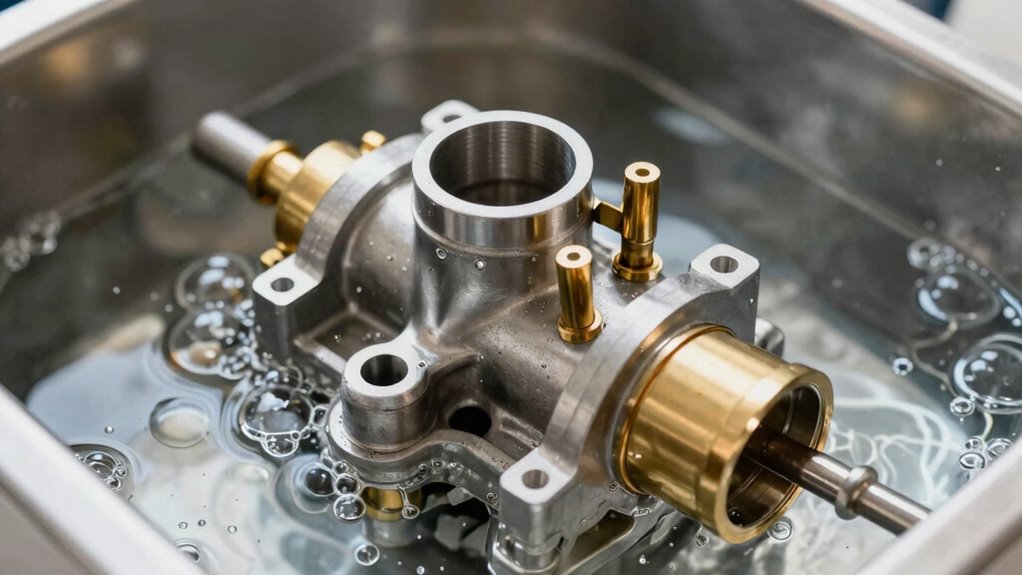

An ultrasonic cleaner helps restore carburetors by using high-frequency sound waves to generate microscopic bubbles that scrub away dirt, grease, and varnish. These bubbles collapse with powerful cavitation, reaching deep into tiny passages, jets, and crevices that manual cleaning can’t access. This guarantees a thorough and uniform clean, reducing your overall work time and minimizing damage to delicate parts. Keep exploring how this technology can make your carburetor restoration more efficient and effective.
Key Takeaways
- Ultrasonic cleaners use high-frequency sound waves to remove dirt, grease, and varnish from intricate carburetor parts effectively.
- They reach deep into small channels and jets, ensuring thorough cleaning that manual methods might miss.
- Ultrasonic cleaning speeds up the restoration process while reducing the risk of damaging sensitive components.
- Proper cleaning solutions compatible with carburetor materials enhance the removal of stubborn deposits.
- Overall, ultrasonic cleaning results in a cleaner, better-functioning carburetor, improving engine performance.
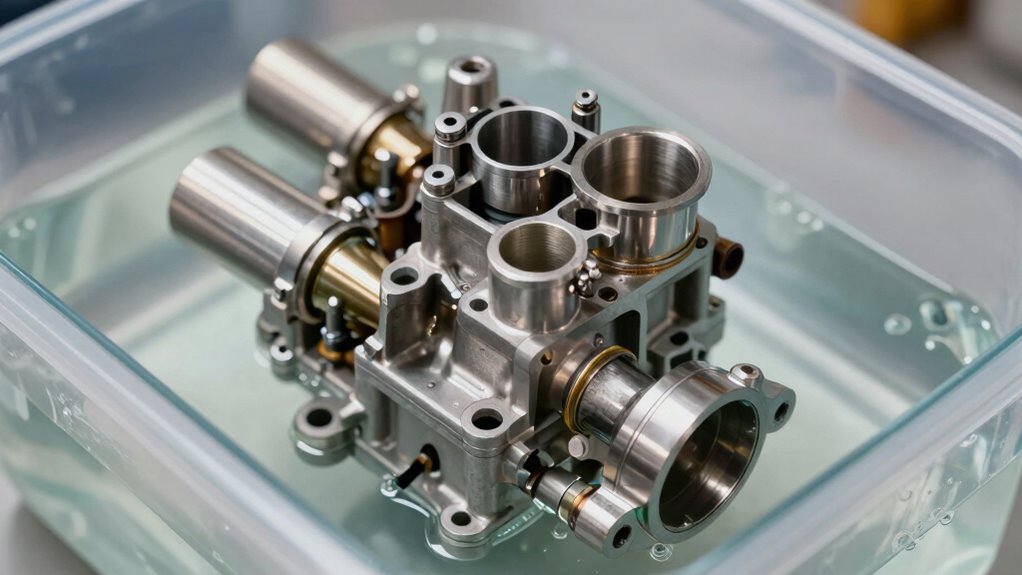
Restoring a carburetor can be a meticulous and time-consuming task, but an ultrasonic cleaner makes the process much more efficient. When you use an ultrasonic cleaner, you’re leveraging advanced cleaning solutions and ultrasonic frequencies to break down stubborn dirt, grease, and varnish that often accumulate inside carburetors. These devices work by generating high-frequency sound waves that create microscopic bubbles in a cleaning solution. When these bubbles collapse, they produce powerful scrubbing action capable of reaching into tiny crevices and intricate passages that are nearly impossible to clean manually. This is particularly beneficial for carburetors, which have numerous small jets, passages, and channels requiring thorough cleaning.
Ultrasonic cleaning uses high-frequency sound waves to reach tiny passages and remove stubborn dirt from carburetors efficiently.
Choosing the right cleaning solutions is vital for achieving maximum results. You want solutions that are compatible with the materials of your carburetor and designed to dissolve grease, oil, and carbon deposits without damaging delicate components. Many commercially available ultrasonic cleaning solutions are formulated specifically for engine parts. When you add the proper cleaning solution to your ultrasonic cleaner, it works in tandem with ultrasonic frequencies to loosen and lift grime from even the most hard-to-reach areas. The ultrasonic frequencies, typically between 20 kHz and 40 kHz, generate the ideal amount of cavitation to dislodge contaminants without harming the metal parts of your carburetor. Additionally, selecting the correct ultrasonic frequency helps optimize the cleaning process for different types of deposits and materials. Proper ultrasonic cleaning techniques also contribute significantly to achieving the best results. Using the appropriate cleaning solutions ensures compatibility and safety for your carburetor’s components. Employing proper cleaning procedures can also prevent damage and ensure a thorough cleanup.
Using an ultrasonic cleaner not only speeds up the cleaning process but also enhances its effectiveness. Instead of scrubbing and soaking, you simply place the carburetor in the cleaner filled with the appropriate solution, set the timer, and let the ultrasonic waves do the work. This method ensures a more uniform cleaning, reaching deep into tiny passages and removing deposits that might otherwise be missed or require painstaking manual work. Plus, because the process is so thorough, you’ll spend less time disassembling and reassembling parts, reducing the risk of damaging delicate components during manual cleaning. Incorporating ultrasonic cleaning solutions that are specifically formulated for engine parts can further improve results and protect sensitive materials.
In the end, employing an ultrasonic cleaner with suitable cleaning solutions and ultrasonic frequencies makes restoring your carburetor a more straightforward, efficient, and effective task. It helps you achieve a cleaner, better-functioning carburetor in less time while minimizing the risk of damage. Whether you’re a professional mechanic or a dedicated DIY enthusiast, this technology simplifies one of the most tedious parts of engine restoration, guaranteeing your carburetor performs at its best once reassembled.

Commercial Ultrasonic Parts Cleaner 3l,Stainless Steel Lab Digital Professional Ultrasonic Parts Cleaner,110v Large Sonic Machine Cleaner for Jewelry Watch Automotive Parts Carburetor
EXCEPTIONAL ULTRASONIC PARTS CLEANING:Commercial Stainless Steel Lab Digital Professional Ultrasonic Parts Cleaner 3L,large110v Sonic Cleaner Machine for Jewelry…
As an affiliate, we earn on qualifying purchases.
As an affiliate, we earn on qualifying purchases.
Frequently Asked Questions
Can Ultrasonic Cleaning Damage Delicate Carburetor Parts?
Ultrasonic cleaning is generally safe for delicate components, but improper use can cause ultrasonic damage to fragile carburetor parts. You should avoid using overly aggressive settings or harsh cleaning solutions, as they might weaken or damage delicate components. Always follow the manufacturer’s guidelines and guarantee the cleaner’s frequency and duration are appropriate. When done correctly, ultrasonic cleaning effectively restores carburetors without risking damage to their delicate parts.
How Long Does the Cleaning Process Typically Take?
Imagine tiny bubbles gently expanding and collapsing, lifting grime from every nook. The cleaning process with ultrasonic technology usually takes about 3 to 5 minutes for carburetors, but this depends on how dirty they are and your cleaning frequency. You’ll find that a short, efficient cycle restores precision and performance, making the carburetor look and work like new. Trust the process, and you’ll see results in just a few minutes.
Is Ultrasonic Cleaning Effective on Stubborn Carbon Deposits?
Yes, ultrasonic cleaning is highly effective on stubborn carbon deposits. Its cleaning efficiency comes from cavitation bubbles that reach into tiny crevices, loosening tough grime. When you use an ultrasonic cleaner, it guarantees thorough carbon removal without damaging delicate parts. This process penetrates deep, making it ideal for restoring carburetors with stubborn deposits, ultimately improving performance and ensuring a cleaner, more efficient engine.
Are There Specific Cleaning Solutions Recommended for Carburetors?
Yes, specific cleaning solutions are recommended for carburetors, typically ultrasonic-safe, biodegradable, and low-chemical-impact formulas. You should prioritize chemical safety to prevent health risks and consider environmental impact, choosing eco-friendly options. Avoid harsh solvents that can damage components or harm the environment. Always follow manufacturer instructions and test solutions first to verify compatibility, maintaining both effective cleaning and safety standards during the process.
How Often Should You Ultrasonic Clean a Carburetor?
You should ultrasonic clean your carburetor every 1 to 2 years, depending on usage and fuel quality. Regular carburetor maintenance with ultrasonic frequency guarantees thorough cleaning, removing dirt and deposits that can impair performance. If you notice rough idling or poor acceleration, it’s a good sign to perform an ultrasonic cleaning sooner. Consistent cleaning extends the life of your carburetor and keeps your engine running smoothly.

NORTHWEST ENTERPRISES Ultrasonic Cleaner Solution for Carburetors and Engine Parts. Concentrated Washing Compound for use in Ultrasonic Machines and Immersion Washers – Automotive Fluid (1 Gallon)
Scientifically Engineered Ultrasonic Cleaner Fluid: This sonic cleaner solution removes, dirt, varnish, gums and other contaminants that deposit…
As an affiliate, we earn on qualifying purchases.
As an affiliate, we earn on qualifying purchases.
Conclusion
Now that you see how an ultrasonic cleaner can effortlessly restore carburetors, imagine what it can do for your next project. With its deep cleaning power, you might just release hidden performance and reliability. But there’s more to discover—unexpected benefits that could change the way you approach maintenance forever. Are you ready to explore the full potential of this incredible tool? The secret to perfect carburetors might be closer than you think, waiting just beneath the surface.
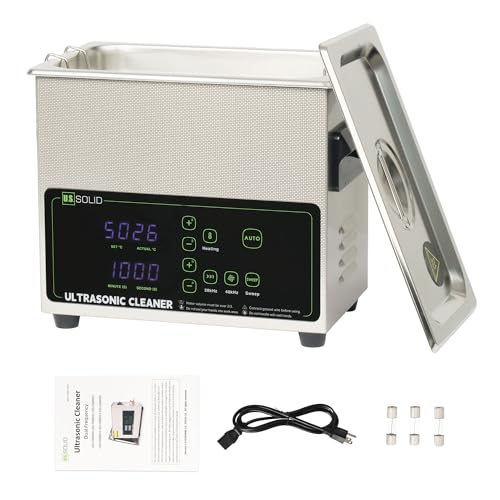
U.S. Solid 3L Ultrasonic Cleaner – 28/40kHz Dual-Frequency Digital Ultrasonic Cleaning Machine with Heater, Timer, and Degas Function
Dual Frequency Technology: Features two selectable frequencies (28kHz and 40kHz) to optimize cleaning performance. The 28kHz frequency is…
As an affiliate, we earn on qualifying purchases.
As an affiliate, we earn on qualifying purchases.

Valchoose Premium Torch Tip Cleaner, Stainless Steel Carburetor Cleaning Kit Heavy Duty, Density Nylon for Motorcycle Jet Lawnmower Small Engine Welding Stove Airbrush Spray Gun
SAVE YOUR TIME AND HANDY – Did you ever spend a lot of time on cleaning the ports?…
As an affiliate, we earn on qualifying purchases.
As an affiliate, we earn on qualifying purchases.