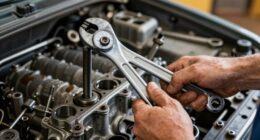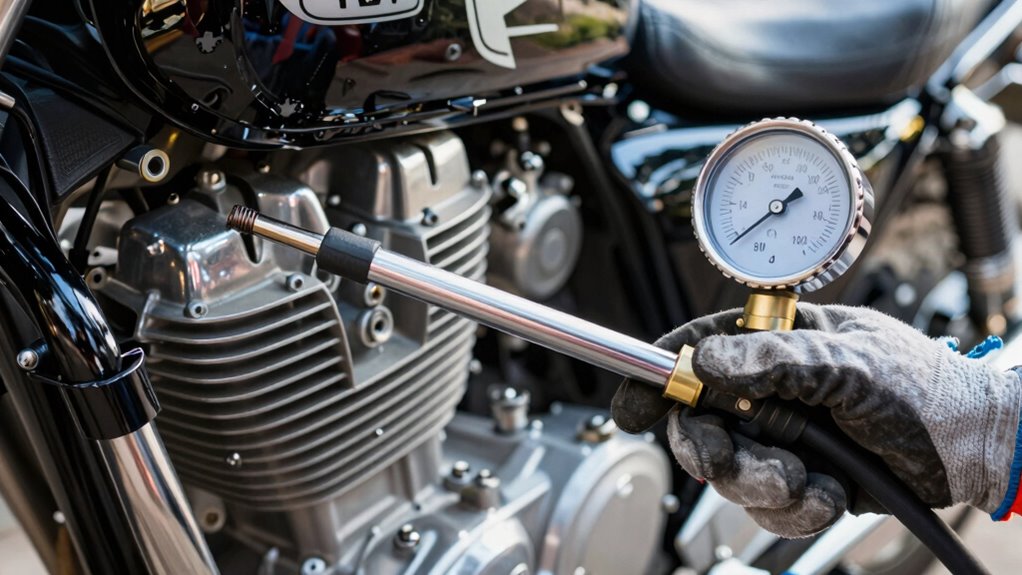
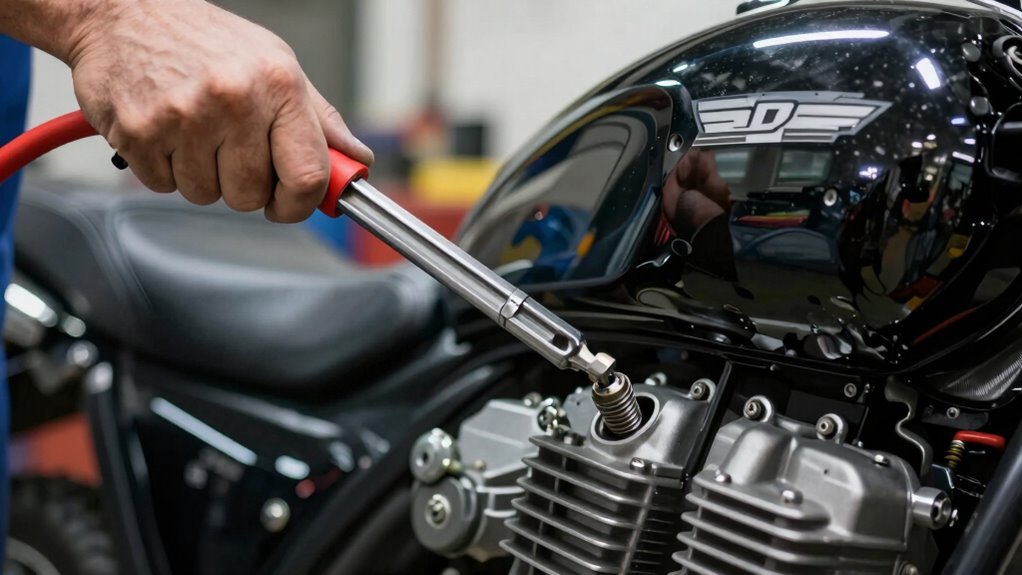
To use a compression tester on your motorcycle engine, warm up the engine first for accurate results. Turn off the fuel and ignition, then remove the spark plug from the cylinder you want to test. Attach the tester securely to the spark plug hole, hold the throttle wide open, and use the starter to turn over the engine. Observe the gauge and record the reading, repeating 2-3 times for consistency. If you want to understand what your results mean, keep going.
Key Takeaways
- Remove the spark plug(s) from the tested cylinder(s) before testing.
- Attach the compression tester securely to the spark plug hole, ensuring a tight fit.
- Fully open the throttle to allow maximum air intake during engine cranking.
- Crank the engine multiple times using electric or kick-start, and note the gauge reading.
- Repeat the process 2-3 times for consistent results and compare with manufacturer specifications.
Have you ever wondered how to accurately diagnose your motorcycle’s engine health? Using a compression tester is an effective way to do just that. It allows you to assess the condition of your engine’s internal components, which directly impacts fuel efficiency and engine cooling. When your engine isn’t producing proper compression, it can lead to incomplete combustion, resulting in poor fuel economy and increased heat buildup. By checking compression, you can identify issues early, saving you money and preventing bigger problems down the road.
Using a compression tester helps diagnose engine health, improve fuel efficiency, and prevent costly repairs before issues worsen.
To start, make certain your engine is at its normal operating temperature. Warm engines tend to give more accurate readings because metal parts expand and seal better. Next, turn off the fuel and ignition systems to prevent the engine from starting during testing. Remove the spark plug or spark plugs on the cylinder you want to test. This step is vital because it allows the piston to move freely without firing, producing a more precise compression reading. Before attaching your compression tester, verify it’s properly calibrated and securely connected to the spark plug hole.
Now, hold the throttle wide open. Opening the throttle ensures maximum air intake, which provides the most accurate compression measurement. Then, kick-start your motorcycle or use the electric start to turn the engine over a few times. As the engine cranks, the compression tester gauge will show a reading. It’s best to record this number and repeat the process two or three times to get consistent results. If the readings vary considerably, double-check your connections, or consider that your engine may have uneven compression. A compression test can help you quickly pinpoint potential issues before they lead to more serious damage. Conducting regular engine diagnostics using a compression tester is essential for maintaining optimal performance. Additionally, understanding the typical compression range specified by your motorcycle’s manufacturer can help you interpret the results more accurately.
A healthy, well-maintained engine usually produces compression readings within a manufacturer’s specified range. Low readings can indicate worn piston rings, cylinder walls, or valves, all of which can cause poor fuel efficiency and hinder proper engine cooling. Regular testing allows for early detection of such problems, saving time and money. Keeping a maintenance schedule can help you stay on top of necessary checks and repairs. Conversely, unusually high readings might point to carbon buildup or a head gasket issue. If your measurements fall outside the normal range, it’s time to dig deeper, possibly by performing a leak-down test or consulting a professional mechanic.
Regularly using a compression tester helps you stay ahead of potential engine problems. By catching issues early, you can maintain excellent fuel efficiency and ensure your engine cools properly during operation. This proactive approach keeps your motorcycle running smoothly, preventing overheating and saving you money in the long run. Remember, a simple compression test is a powerful diagnostic tool that keeps your engine in top shape, so don’t skip it when troubleshooting or performing routine maintenance. Proper engine maintenance is key to ensuring your motorcycle performs at its best over time.
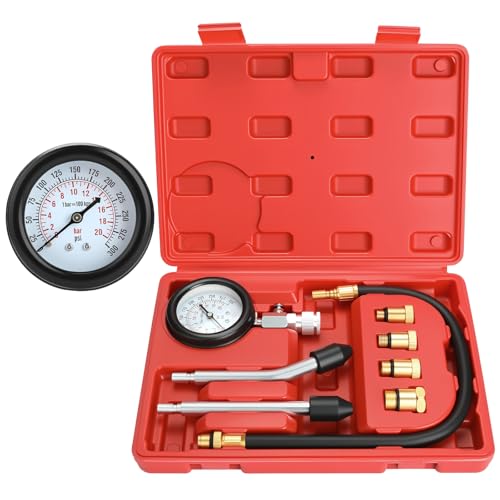
BETOOLL HW0130 8pcs Petrol Engine Cylinder Compression Tester Kit Automotive Tool Gauge
Checking Compression On Petrol Engine Quickly And Accurately
As an affiliate, we earn on qualifying purchases.
As an affiliate, we earn on qualifying purchases.
Frequently Asked Questions
Can I Use a Car’s Compression Tester on a Motorcycle Engine?
You shouldn’t use a car’s compression tester on a motorcycle engine because of car compatibility issues. Motorcycle engines typically have different compression ranges, and car testers might not be calibrated correctly for these smaller engines. Using an uncalibrated tester can give inaccurate readings. Always choose a compression tester designed for motorcycles to guarantee proper readings, and check the calibration before testing to avoid errors.
How Often Should I Perform a Compression Test?
Think of your motorcycle engine like a garden; regular testing keeps it healthy. You should perform a compression test every 10,000 to 15,000 miles or if you notice power loss or difficulty starting. This helps monitor engine wear and catch issues early. Follow proper testing procedures each time to guarantee accurate results, preventing small problems from blooming into costly repairs. Regular checks keep your engine running smoothly, just like tending a thriving garden.
What Is Considered a Normal Compression Reading?
A normal compression reading typically ranges between 125 to 150 psi, but it can vary depending on your motorcycle’s make and model. Refer to your owner’s manual for specific compression standards. If your readings are within this range, your engine is generally healthy. Consistently low or uneven readings indicate potential issues like worn piston rings or valves, signaling that your engine health may be compromised and needs further inspection.
Do Temperature Changes Affect Compression Test Results?
Temperature effects can cause compression fluctuations, so cooler temperatures often result in lower readings, while warmer conditions lead to higher ones. When testing, you should perform the test at a consistent engine temperature to get accurate results. Rapid temperature changes can skew your readings, making it look like there’s an issue when there isn’t. Always let the engine warm up properly before testing to make certain of reliable compression measurements.
Can a Compression Tester Damage My Engine?
Did you know improper use can cause engine damage? A compression tester, if used correctly, won’t harm your engine and actually helps improve engine longevity by identifying issues early. It’s an essential part of maintenance scheduling. However, excessive or careless testing might lead to damage. Always follow the manufacturer’s instructions, guarantee the engine is off, and handle the tester gently to prevent any unintentional harm.

Clatoon 8pcs Petrol Engine Cylinder Compression Tester Kit, Small Engine Compression Tester Automotive Tool Gauge 0-300PSI for Testing Car Motorcycle Outboard Motor Snowmobile Chainsaw
Professional Tester Kit: Our engine cylinder compression tester kit helps you measure pressure on gasoline engine cylinder quickly…
As an affiliate, we earn on qualifying purchases.
As an affiliate, we earn on qualifying purchases.
Conclusion
Think of your motorcycle engine as a musical instrument. Just as tuning a guitar ensures every string plays in harmony, using a compression tester helps you fine-tune your engine’s performance. When you check compression, you’re adjusting the internal notes that keep your bike running smoothly. Regular tests keep your engine in perfect pitch, preventing dissonance and breakdowns. Keep it in tune, and your motorcycle will sing like a well-played symphony on every ride.

14mm&16mm Spark Plug Socket Set, Thin Wall 3/8" Drive Spark Plug Sockets Removal Tool, 12 Point, Magnetic Swivel Spark Plugs Socket for Most Car Models
Quality Material: The spark plug removal tool is made of high-performance chrome vanadium steel, with matte nickel-plated rust-resistant…
As an affiliate, we earn on qualifying purchases.
As an affiliate, we earn on qualifying purchases.
Clatoon 8pcs Petrol Engine Cylinder Compression Tester Kit, Small Engine Compression Tester Automotive Tool Gauge 0-300PSI for Testing Car Motorcycle Outboard Motor Snowmobile Chainsaw
Professional Tester Kit: Our engine cylinder compression tester kit helps you measure pressure on gasoline engine cylinder quickly…
As an affiliate, we earn on qualifying purchases.
As an affiliate, we earn on qualifying purchases.