
TL;DR

Get business pricing on garage and car supplies
- Business-only prices and quantity discounts
- Tax-exempt purchasing
- Multiple users, one account, clear invoices
Rhode Island’s Department of Transportation is covering some streetlight wiring access points with 700-pound concrete blocks to deter copper theft. The agency says it has lost more than $1 million to theft, but did not specify the period; 87 of 151 planned blocks have been installed, at a reported program cost of $75,000.
Rhode Island’s Department of Transportation is placing 700-pound concrete blocks over access covers for streetlight wiring to deter copper thieves, after the agency reported more than $1 million in stolen copper losses. RIDOT said the measure has worked so far; it plans to install 151 blocks, with 87 completed at the time of the report.
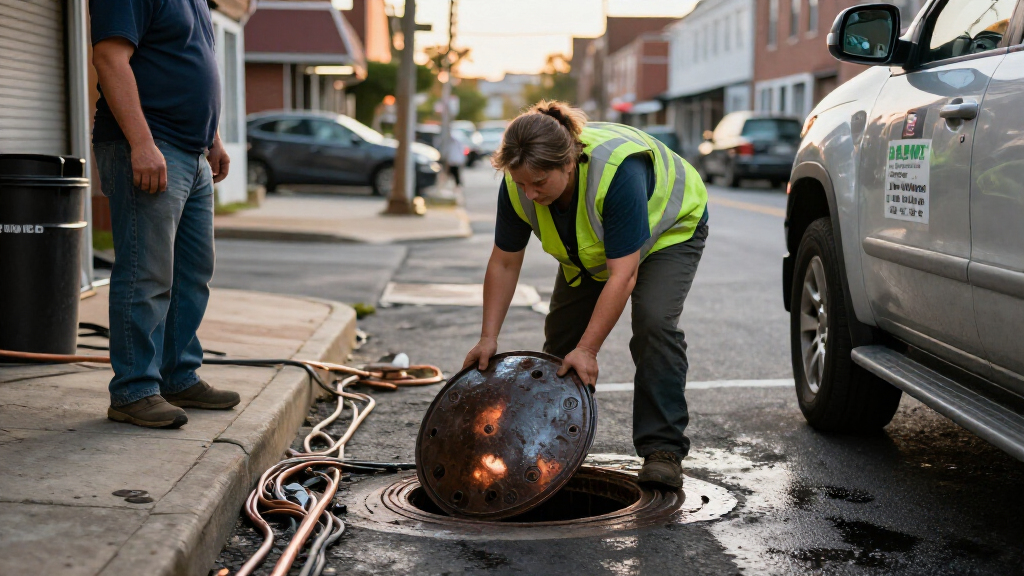
RIDOT began placing the blocks over manhole-style access covers in recent months. The covers provide access to wiring that powers streetlights. The concrete barriers are heavy enough to require equipment to move, making it harder for thieves to reach and remove the copper wire, according to the report by The Drive, which cited NBC 10 WJAR.
Interim RIDOT Director Robert Rocchio told WJAR the state had lost more than $1 million to copper theft. He did not specify the period covered by that figure. Rocchio said the agency repeatedly repairs the wiring only to find it stolen again. RIDOT’s plan calls for 151 blocks; 87 had been installed when the report was published.
The program cost was reported as $75,000. WJAR later corrected its written report after its video segment stated a figure of $750,000. Where the blocks are near roads, the concrete is buried or ground down to sit level; away from roads, the structures may remain visible above ground.
Protecting Streetlights From Repeat Theft
The blocks are intended to reduce the repeated cost and disruption of replacing streetlight wiring. When copper is removed, agencies must repair the system, while affected streetlights may remain out until work is completed. RIDOT’s account that thefts have continued after repairs points to the operational challenge: replacing the wire alone may leave the same access point exposed.
The reported figures give a sense of the state’s response but do not establish its overall financial return. RIDOT cited more than $1 million in losses without giving a timeframe, while the concrete program was reported to cost $75,000. Without a defined period or longer-term results, those numbers cannot show how much the blocks will save.
Products Worth Considering

Autel Level 2 Smart EV Charger, 50 Amp, 240V, NACS Connector, 25-Foot Cable

Autel MaxiCharger AC Home Level 2 EV Charger, 50A, J1772, Hardwired, 25-Foot Cable

Vantrue N4 Pro S 4K 3-Channel Dash Cam with Triple STARVIS 2 HDR
As an affiliate, we earn on qualifying purchases.
A Recurring Copper Theft Problem
Rocchio told WJAR that the thefts began a few years ago as copper prices rose, and described the situation as a continuing cycle of repair and renewed theft. The report places Rhode Island’s response within a wider pattern of copper-wire theft affecting public infrastructure and private companies.
The Drive cited examples including stolen wires leaving a Philadelphia youth football team practicing without lighting and AT&T reporting 4,300 thefts of its own wire in the previous year. That figure refers to AT&T’s reported incidents, not a nationwide total. AT&T construction and engineering representative Scott Gonzaga told NPR that thieves may cut and move cable, strip its outer covering and burn it to recover copper for resale or recycling.
“It’s a constant battle—we restore it, they steal the copper, we go back in.”
— Robert Rocchio, interim director of the Rhode Island Department of Transportation, speaking to NBC 10 WJAR
Loss Timeline and Long-Term Results
The report does not say how many thefts RIDOT has recorded, which locations have received blocks, or how long the agency has tracked the more-than-$1 million loss figure. Rocchio said the approach had worked so far, but the report gives no measurement period or comparison of theft rates before and after installation.
It is also unclear whether the blocks will prevent theft at every protected site or shift attempts to other access points. The reported cost is $75,000, following a correction to the higher figure shown in WJAR’s video segment. No further cost breakdown was provided.
Completing the Planned Installations
RIDOT’s stated plan is to install 151 concrete blocks; the report said 87 were in place. The remaining installations are the next identified step. The source material does not provide a completion date or say whether the agency plans to expand the program beyond those 151 sites.
Further updates would be needed to establish whether thefts decline at protected locations and how much the measure saves compared with ongoing repairs. RIDOT has not provided a timeline for publishing those results in the cited report.
Key Questions
Why is Rhode Island putting concrete blocks over access covers?
RIDOT is using 700-pound blocks to make access to streetlight wiring harder for copper thieves. Moving the blocks requires equipment, according to the report.
How many blocks are planned?
RIDOT’s plan calls for 151 blocks. The report said 87 had been installed when it was published.
How much has copper theft cost Rhode Island?
Interim RIDOT Director Robert Rocchio told NBC 10 WJAR that the state had lost more than $1 million in stolen copper. He did not identify the timeframe for that figure.
How much did the concrete-block program cost?
The program was reported to cost $75,000. WJAR later corrected its written version after a video segment gave a figure of $750,000.
Has the program been proven to stop copper theft?
Rocchio said the plan had worked so far, but the report does not give theft-rate data or a time period for measuring results. Its long-term effectiveness remains unclear.
Source: thedrive.com