
TL;DR

Get business pricing on garage and car supplies
- Business-only prices and quantity discounts
- Tax-exempt purchasing
- Multiple users, one account, clear invoices
Mercedes plans to offer MB.Drive Assist Pro, a destination-based driver-assistance system, on many electric and combustion models early next year, with eligible existing vehicles able to receive it through an over-the-air update. It permits hands-free driving on controlled-access highways but requires a hand on the wheel on surface streets, a restriction that could matter to drivers comparing it with Tesla’s FSD (Supervised).
Mercedes plans to bring MB.Drive Assist Pro, a destination-based driver-assistance system, to many of its electric and combustion vehicles early next year, including eligible vehicles already on the road through an over-the-air update. The system will allow hands-free driving on controlled-access highways, but requires drivers to keep a hand on the wheel on surface streets—a key difference from Tesla’s FSD (Supervised) that may affect which system drivers prefer.
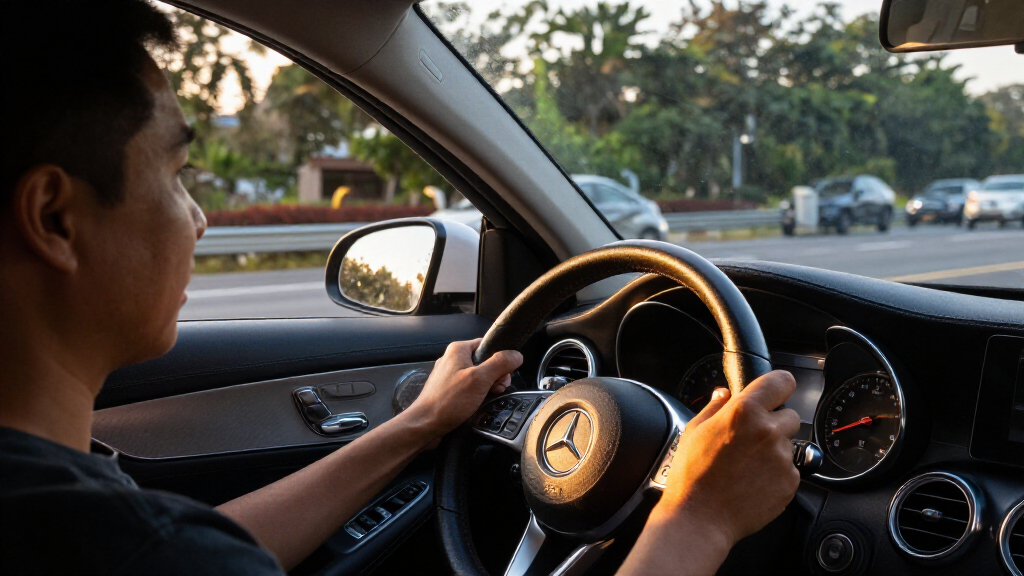
Like Tesla’s FSD (Supervised), MB.Drive Assist Pro is designed to take a driver-entered destination and handle the drive, including parking. Mercedes describes it as Level 2 Plus Plus: the driver remains responsible and must supervise the system. The company’s approach means hands-free operation is limited to controlled-access highways; on city streets, drivers must keep a hand on the wheel.
Mercedes Chief Technology Officer Jörg Burzer told InsideEVs that the distinction between Level 2 and Level 3 concerns who is responsible for the driving task. He said highways offer fewer variables for a Level 2 system than the more complex and unpredictable environment of surface streets. Mercedes has not announced detailed availability, pricing, or a full list of eligible models in the material provided; the new CLA is among the vehicles mentioned as a potential fit.
The system uses cameras, five radar sensors and 12 ultrasonic sensors, according to the report. Mercedes Head of Active Safety Christoph von Hugo said the additional sensor inputs improve performance and safety. That is the company’s assessment, not independent evidence in the report comparing real-world safety outcomes with Tesla’s system.
The Hands-On Rule Could Shape Demand
The distinction is more than a technical detail for drivers considering a change from Tesla. Some Tesla owners interviewed by InsideEVs said requiring a hand on the wheel on city streets would feel like a step back from their current experience, even if a Mercedes offered a more appealing interior or design. One Los Angeles driver said he probably would not switch under that condition; an Indianapolis owner described the requirement as a regression from the hands-off use he had become accustomed to.
Other drivers may see the rule as a useful safety boundary. A motorcyclist interviewed for the report said keeping a hand on the wheel could reduce the time needed to react to an unexpected event. The competing views show why the comparison is not simply about which system performs more tasks: it is also about driver responsibility, trust and expectations. Mercedes’ sensor mix is a stated design difference, but the information available does not establish that it makes the system safer overall.
Products Worth Considering

Vantrue S1 Pro Max Dual 4K Dash Cam with Front and Rear STARVIS 2 Sensors

Nextbase 222X Front and Rear Dash Cam

Nextbase Piqo 2K Smart Dash Cam with App
As an affiliate, we earn on qualifying purchases.
Mercedes Draws a Line at Level 2
Mercedes is framing the hands-on-wheel requirement around the SAE levels of driving automation. In Burzer’s explanation, Level 2 systems leave responsibility with the human driver, while a Level 3 system can take responsibility under defined conditions. Mercedes calls its system Level 2 Plus Plus, not a system that lets occupants stop supervising.
Tesla’s FSD product is named “Full Self-Driving (Supervised),” and the report describes it as a Level 2 system as well. Yet drivers’ reported experiences and expectations differ: some Tesla users say they operate hands-free on surface streets, while Mercedes is setting a more explicit hands-on requirement there. The report also notes that Tesla’s system is expanding in Europe, but does not provide a direct, controlled performance comparison between the two products.
“There is a very important borderline between the levels. That borderline is that with Level 2 Plus Plus, you are responsible. At Level 3, the machine, the car, the software stack, is responsible.”
— Jörg Burzer, Mercedes chief technology officer, speaking to InsideEVs
Availability and Performance Details
Mercedes has said the system is planned for a large number of electric and combustion models early next year, and that eligible existing vehicles will be able to add it through an over-the-air update. The report does not specify the complete model list, launch dates by market, pricing, or vehicle eligibility rules. It also does not establish whether all functions, including destination-based routing and parking, will be available on every supported model.
There is no apples-to-apples test data in the source comparing how often Mercedes’ and Tesla’s systems require intervention, how they handle unusual road situations, or their safety records. Mercedes’ comments about its sensors are company claims. It also remains unclear how U.S. customers will respond to the hands-on city-street rule; Burzer said the company had customer research indicating European drivers favor such a requirement but said he did not yet know about U.S. customers.
Model Rollout and Market Response
The next reported milestone is Mercedes’ planned early-2026 rollout. Owners will need to learn whether their vehicles are eligible for the software update and what the system costs, while prospective buyers will need market-specific details about availability and supported features. Mercedes’ customer response in the United States could help show whether the hands-on rule is seen as reassurance or a limitation.
Real-world evaluations after launch will be needed to compare performance and driver monitoring across road types. Until then, the confirmed distinction is operational: Mercedes permits hands-free use on controlled-access highways but requires a hand on the wheel on surface streets. That requirement speaks to Mercedes’ chosen approach to driver responsibility; it does not, by itself, settle which system is better.
Key Questions
What is Mercedes MB.Drive Assist Pro?
It is a planned destination-based driver-assistance system that can guide a vehicle toward a driver-entered destination and park. Mercedes classifies it as Level 2 Plus Plus, meaning the driver remains responsible and must supervise.
Does Mercedes’ system allow hands-free driving?
According to the report, it allows hands-free driving on controlled-access highways. On surface streets, the driver must keep a hand on the wheel.
When will MB.Drive Assist Pro be available?
Mercedes plans to add it to many electric and combustion vehicles early next year. Eligible vehicles already purchased are expected to be able to receive it through an over-the-air update. A full model list and market-by-market schedule were not provided.
Is Mercedes’ system safer than Tesla FSD?
The report does not establish that. Mercedes says its cameras, five radar sensors and 12 ultrasonic sensors add useful inputs, but no independent, direct safety comparison was included.
Why does Mercedes require a hand on the wheel in cities?
Mercedes says surface streets are more complex than controlled-access highways and that Level 2 drivers remain responsible for driving. The company also points to its interpretation of the SAE automation levels.
Source: insideevs.com