To guarantee your bike runs smoothly, first align your sprockets by checking if the teeth are evenly spaced and not worn down. Use a sprocket alignment tool or sight along the teeth to spot any misalignment. Check sprocket and chain wear with a wear gauge or ruler—look for elongation or missing teeth. Regularly inspecting and correcting these issues prevents poor shifting and prolongs component lifespan. Keep going to discover detailed steps for precise alignment and wear assessment.
Key Takeaways
- Regularly inspect sprockets for wear, such as hooked teeth or excessive gaps, to ensure proper alignment.
- Use a ruler or chain wear tool to measure chain stretch, indicating sprocket and chain condition.
- Align sprockets by adjusting derailleur hanger and ensuring sprockets are perpendicular to the chain for smooth operation.
- Check for uneven sprocket tooth wear, which can cause misalignment and shifting issues.
- Replace worn sprockets and chains promptly to prevent further damage and maintain optimal drivetrain performance.
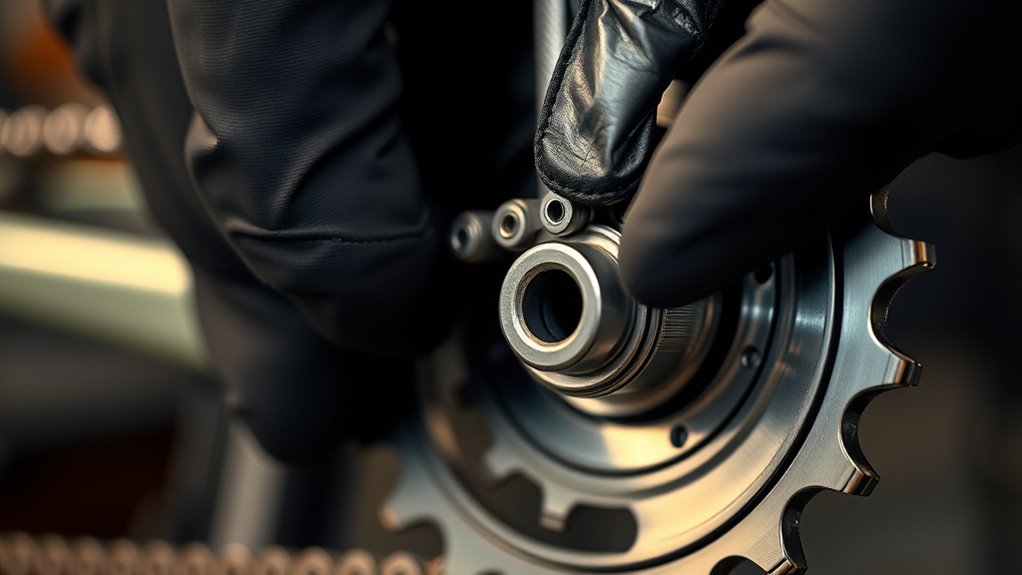
Are you ready to take your chain maintenance to the next level? Properly caring for your chain involves more than just a quick lube now and then. To keep your bike running smoothly and extend the lifespan of your components, you need to master advanced techniques like precise lubrication and accurate chain tension adjustment. These steps might seem straightforward, but executing them correctly makes a significant difference in performance and durability.
Start with lubrication techniques. Instead of applying lubricant haphazardly, focus on getting the right amount in the right places. Clean the chain thoroughly first to remove dirt, grime, and old lubricant, which can cause accelerated wear. When applying lubricant, hold the spray or bottle close to the chain and rotate the pedals backward, ensuring the lubricant penetrates deep into the rollers and pins. After applying, wipe off any excess to prevent dirt buildup. Proper lubrication reduces friction, prevents rust, and minimizes wear on the chain and sprockets. Remember, over-lubrication attracts dirt, while under-lubrication leads to increased wear and potential failure. Regular maintenance also involves checking the contrast ratio of your drivetrain components to ensure consistent performance over time.
Proper chain lubrication involves thorough cleaning, precise application, and wiping off excess to prevent dirt buildup.
Next, pay close attention to chain tension adjustment. A chain that’s too tight can cause unnecessary stress on your drivetrain, leading to premature wear, while a loose chain risks slipping or derailing. To get it just right, shift your bike onto the smallest chainring and smallest sprocket. Check the slack by pressing the chain midway between the front and rear sprockets; you should see about half an inch of movement. Adjust the tension by loosening the rear axle nuts, then turning the tensioners or rear derailleur as needed. Tighten the nuts back once the chain has the correct slack. An ideal tension allows smooth pedaling without binding or excessive sag. This ensures efficient power transfer and prevents unnecessary strain on your sprockets and chain links. Regularly checking and adjusting tension is vital, especially after riding on rough terrain or after a long ride. Proper alignment of your sprockets also plays a crucial role in minimizing wear and maintaining smooth operation.

Chain & Sprocket Alignment Tool – Laser Application
THE ULTIMATE CHAIN AND SPROCKET ALIGNMENT TOOL
As an affiliate, we earn on qualifying purchases.
As an affiliate, we earn on qualifying purchases.
Frequently Asked Questions
How Often Should Sprockets Be Replaced for Optimal Performance?
You should replace sprockets based on their material and replacement intervals, typically every 15,000 to 20,000 miles for standard steel sprockets. If you notice excessive wear, damaged teeth, or misalignment, replace them sooner. Regular inspections help you catch wear early, ensuring peak performance. Remember, using high-quality sprockets and sticking to recommended replacement intervals extend sprocket life and keep your drivetrain running smoothly.
What Tools Are Best for Precise Chain Alignment?
You should use a chain alignment tool for precise sprocket calibration and tension adjustment. A straight edge or laser alignment tool helps guarantee sprockets are perfectly aligned, reducing wear and extending chain life. Dial indicators or digital gauges also work well for accurate measurements. Always double-check sprocket positioning after tension adjustments. Proper tools make it easier to maintain ideal performance and prevent premature wear by keeping everything precisely aligned.
Can Chain Wear Be Accurately Predicted With Measurements?
Yes, chain wear can be accurately predicted with measurements. By checking chain stretch using wear measurement techniques, you can determine how much the chain has elongated over time. Regularly measuring your chain’s length helps identify wear early, preventing sprocket damage and costly repairs. Using precise tools like a chain wear gauge guarantees your measurements are accurate, so you can plan maintenance before issues become severe.
What Are Signs of Sprocket Misalignment Beyond Wear?
You’ll notice sprocket misalignment through vibration issues and noise anomalies during operation. If the sprockets aren’t aligned properly, they might cause uneven chain tension, leading to increased vibration or unusual sounds like grinding or squealing. Keep an ear out for these signs, as they often indicate misalignment before significant wear occurs. Regularly inspecting for these issues helps prevent more serious damage and guarantees smooth, efficient chain performance.
How Do Environmental Factors Affect Chain and Sprocket Longevity?
Environmental factors critically impact your chain and sprocket longevity. Corrosion effects from moisture or chemicals can weaken metal, leading to failures. Temperature impacts also play a role; high heat accelerates wear, while cold can cause brittleness. To extend their lifespan, make certain of proper lubrication, store equipment in controlled environments, and regularly inspect for signs of rust or damage. Taking these steps helps your chain and sprockets last longer and perform better.

Park Tool CC-4.2 Bicycle Chain Wear Checker
Takes the guesswork out of determining when a chain is worn out
As an affiliate, we earn on qualifying purchases.
As an affiliate, we earn on qualifying purchases.
Conclusion
Think of your chain and sprockets like the gears in a finely tuned orchestra. When you stay vigilant—aligning sprockets and checking for wear—your bike performs smoothly, just as a symphony comes together flawlessly. I once ignored a slight misalignment, only to have my chain slip on a steep hill. Regular care keeps everything running seamlessly, preventing surprises. By staying proactive, you’ll enjoy a ride as smooth as a well-conducted concerto.

TAODAN 2PCS Bicycle Chain Adjuster Adjustable Chain Buckle Bicycle Wheel Fixing Button Zipper Chain Tensioner Chain Adjuster Suitable for Dead Fly Bicycles Folding Bicycles and Mountain Bikes
Floating pulley and spring adjustment device to achieve perfect chain tension.
As an affiliate, we earn on qualifying purchases.
As an affiliate, we earn on qualifying purchases.
Park Tool CC-4.2 Bicycle Chain Wear Checker
Takes the guesswork out of determining when a chain is worn out
As an affiliate, we earn on qualifying purchases.
As an affiliate, we earn on qualifying purchases.