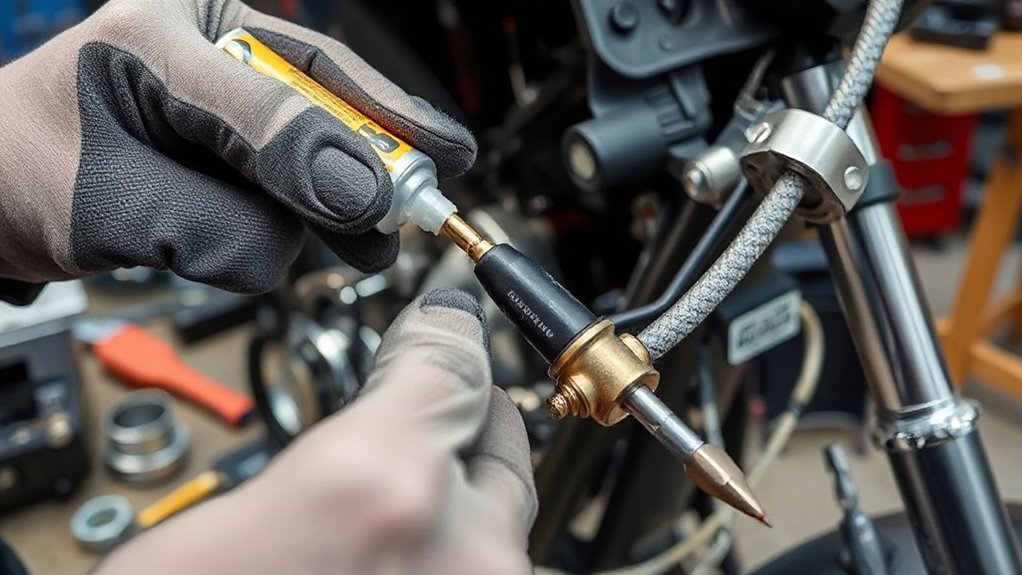

To properly care for your throttle and clutch cables, regularly check them for wear, fraying, or stiffness. Lubricate the entire length with a suitable cable lubricant to reduce friction and prevent corrosion, making sure to disconnect the cables from lever ends first. If you notice sluggish response or visible damage, clean and re-lubricate or replace the cables promptly. Following best practices extends their life and ensures safety—continue to explore for detailed care tips.
Key Takeaways
- Disconnect cables from levers before applying lubricant to ensure even distribution and prevent dirt buildup.
- Use a suitable cable lubricant, applying along the entire length and moving the cable to spread it evenly.
- Regularly inspect cables for fraying, kinks, or corrosion, and replace if damage is found for safety and performance.
- Clean cables with appropriate solvent before lubrication to remove dirt and debris, restoring smooth operation.
- Follow manufacturer guidelines for replacement intervals and proper routing to maintain optimal cable function and safety.
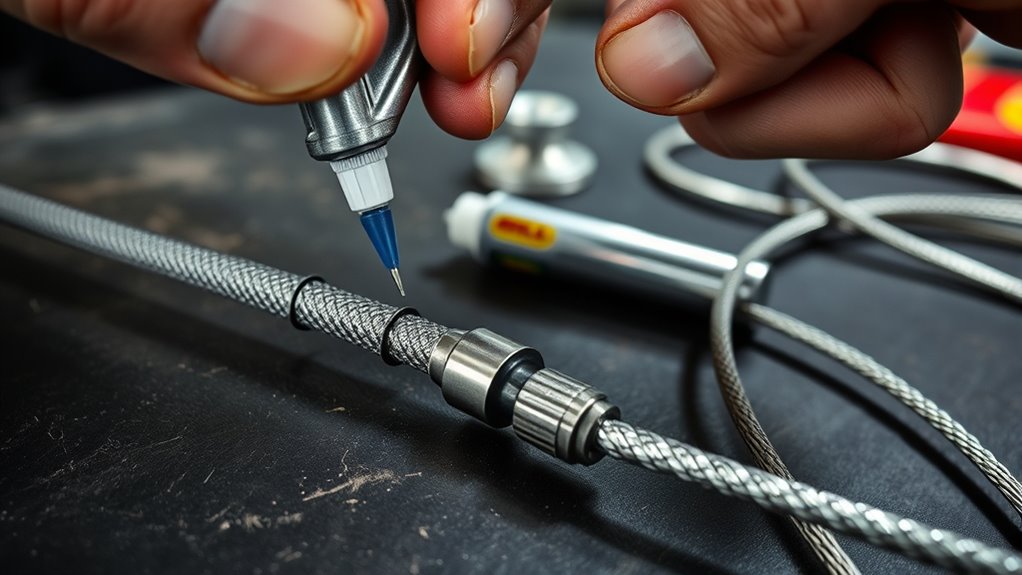
Have you ever wondered how to keep your cables in top shape? Proper cable care not only extends their lifespan but also ensures your vehicle or equipment runs smoothly. One essential aspect is maintaining and replacing throttle and clutch cables when needed. Regular maintenance tips involve checking your cables frequently for signs of wear, fraying, or stiffness. If you notice resistance when pulling the throttle or clutch lever, it might be time for a thorough inspection. Lubrication is key; applying the right lubricant helps reduce friction and prevents corrosion. Use a cable-specific lubricant, and avoid over-spraying, which can attract dirt and grime. To lubricate, disconnect the cable from the lever ends, then spray or apply the lubricant along the cable’s length. Move the cable back and forth to ensure even distribution of the lubricant. This simple maintenance tip can markedly improve cable responsiveness and lifespan, saving you money on replacements. Additionally, selecting high-quality cables can significantly impact durability and performance over time.
Troubleshooting techniques are crucial when your cables start to malfunction. If the throttle feels sluggish or sticks, first check for dirt or debris that may have accumulated inside the cable housing. Sometimes, dirt can cause resistance, making the cable harder to operate. In such cases, cleaning the cable with a suitable solvent and re-lubricating it can restore smooth movement. If cleaning and lubrication don’t resolve the issue, inspect the cable for fraying, kinks, or corrosion. Damaged cables need replacement to prevent sudden failure, which could compromise safety. Replacing throttle or clutch cables involves disconnecting the old cable from the lever and the actuator arm, then installing the new one in reverse order. Make sure the cable is routed correctly, without sharp bends or pinches, to avoid premature wear. Adjust the cable tension as specified by your vehicle’s manual; too tight or too loose can cause poor operation or damage. Proper maintenance and timely replacement are essential for ensuring optimal performance and safety.
Always follow the manufacturer’s guidelines for maintenance and replacement intervals. Regularly inspecting your cables and applying proper maintenance tips will keep your controls responsive and trustworthy. Troubleshooting techniques help you identify issues early, preventing costly repairs or safety hazards. Remember, safety first—never ignore abnormal cable behavior, and always replace worn or damaged cables promptly. With a bit of care and attention, your throttle and clutch cables will continue to perform exceedingly well, ensuring smooth operation and peace of mind every time you ride or operate your equipment. Proper cable care is simple but essential, and a little proactive effort goes a long way in maintaining peak performance. Proper cable selection, such as choosing cables with high-quality materials, can also enhance durability and reduce the frequency of replacements.
Frequently Asked Questions
How Often Should I Lubricate My Cables for Optimal Performance?
You should lubricate your cables every 500 to 1,000 miles or whenever you notice stiffness or sluggishness. Regular cable maintenance keeps everything running smoothly and prevents corrosion. Use a suitable cable lubricant and make sure you clean the cables before applying. Frequent lubrication enhances responsiveness and prolongs the lifespan of your throttle and clutch cables. Make it a habit to check and maintain your cables to guarantee peak performance on every ride.
Can I Replace Cables Myself or Should I Seek Professional Help?
You can definitely replace cables yourself if you’re comfortable with DIY maintenance, but it requires some mechanical skill and the right tools. If you’re unsure or want to ensure everything’s done correctly, seeking professional service is a smart choice. Professionals have the experience to replace cables efficiently and safely, preventing potential issues down the road. Decide based on your confidence level, but don’t hesitate to get expert help if needed.
What Signs Indicate My Cables Need Urgent Replacement?
If you notice cable corrosion, fraying, or the cable routing feels stiff or sticky, it’s time to replace your cables immediately. Signs also include difficulty in throttle or clutch response, or if the cables have stretched beyond normal play. Don’t ignore these issues, as they can compromise safety. Prompt replacement guarantees smooth operation and prevents further damage, so act quickly when you observe these symptoms.
Are There Specific Lubricants Recommended for Motorcycle Cables?
Sure, you want the perfect lubricant for your cables, don’t you? Avoid the chaos of cable corrosion and incompatible lubricants by choosing one specifically designed for motorcycle cables. A high-quality, water-resistant lubricant works best, ensuring smooth operation and longevity. Steer clear of generic sprays that might cause more harm than good. Your cables deserve the best, so pick a product that’s compatible and keeps corrosion at bay—your ride will thank you.
How Do Temperature Changes Affect Cable Lubrication and Longevity?
Temperature changes cause cable lubrication issues because temperature expansion affects the lubricant’s viscosity. When it’s hot, the lubricant thins, reducing its ability to protect and lubricate the cable properly, which shortens its lifespan. Conversely, cold temperatures increase viscosity, making cables stiffer and harder to operate. To maintain longevity, select lubricants designed for temperature fluctuations, and regularly check and reapply lubricant as needed to guarantee smooth operation.
Conclusion
Think of your cables as the lifelines of your ride—keeping them well-lubricated and replaced guarantees smooth journeys ahead. Like a trusted compass guiding you through uncharted roads, proper cable care keeps your motorcycle responsive and reliable. Neglect them, and you risk losing your way. So, cherish these tiny but mighty cables, for they are the silent guardians of your adventure. With regular care, you’ll always steer confidently into new horizons.