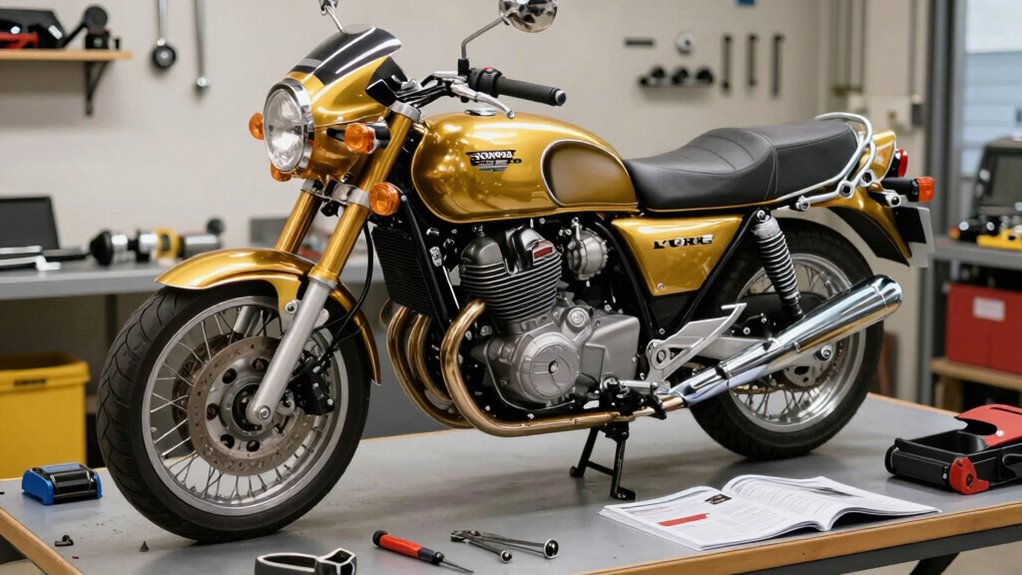

To keep your Honda Gold Wing GL1000 or GL1100 roadworthy, regularly perform engine tune-ups like checking valve clearances and synchronizing carburetors, and change the oil. Inspect the electrical system, fix any loose connections, and test the charging components. Maintain the drive shaft and suspension, and check the steering and forks for leaks or play. Staying on top of safety checks guarantees dependability; continue exploring for detailed tips to keep your bike in prime condition.
Key Takeaways
- Regularly perform engine tune-ups, including valve clearance checks and carb synchronization, to maintain optimal performance.
- Maintain proper clutch adjustment and change transmission oil at recommended intervals for smooth shifting.
- Inspect and replace worn electrical components, including bulbs and wiring, to ensure reliable lighting and charging systems.
- Check drive shaft, U-joints, and final drive oil to prevent wear and ensure drive train longevity.
- Routinely inspect suspension, fork seals, and frame for damage or corrosion, and refer to official manuals for precise maintenance procedures.
Essential Engine Tune-up and Maintenance Practices
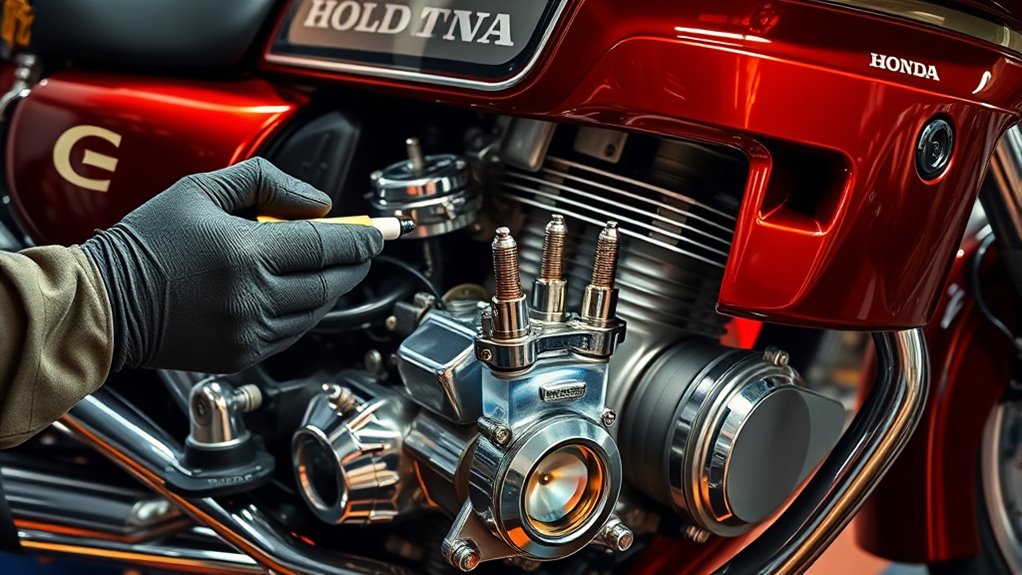
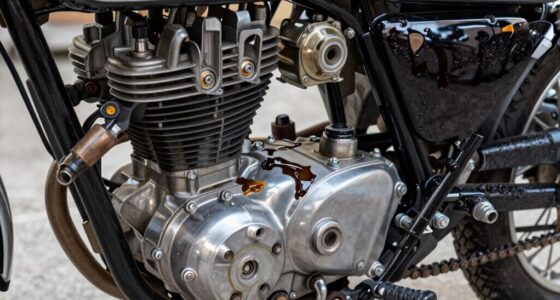
Maintaining your Honda Gold Wing’s engine in peak condition requires regular tune-up and maintenance practices that guarantee smooth performance and prevent costly repairs. Start by checking valve clearances to ensure proper engine breathing; neglecting this can cause power loss and damage. Synchronize the carburetors to keep fuel delivery balanced, which results in smoother running and better fuel economy. Regularly change the engine oil with recommended type and grade to protect internal components and prevent wear. Inspect and replace spark plugs as needed to ensure reliable starts and efficient combustion. Also, clean the fuel system, including replacing filters, to prevent clogs that impair engine response. Ensuring proper engine calibration helps optimize overall performance and efficiency. Following these essential practices keeps your engine running smoothly and prolongs its lifespan, saving you time and money on repairs.
Maintaining Electrical System Reliability

A reliable electrical system is essential for your Honda Gold Wing’s safe operation and overall performance. To keep it dependable, regularly inspect connections for corrosion or looseness. Clean and tighten terminals, especially on the battery, to ensure proper voltage flow. Test the charging system’s components, like the stator and regulator/rectifier, periodically to catch issues early. Also, check all bulbs—headlights, taillights, and instrument panel—for proper operation and replace any burnt-out units. Finally, routinely examine wiring harnesses and control switches for wear, damage, or shorts. This proactive approach prevents electrical failures and keeps your bike running smoothly. Understanding the basic electrical components helps riders identify potential issues before they lead to failures. Consistent maintenance of these key areas guarantees reliable electrical performance and peace of mind during every ride. Additionally, understanding free floating electrical connections can help in troubleshooting intermittent problems effectively. Regularly inspecting connection integrity ensures that minor issues do not escalate into major electrical failures. Staying vigilant about corrosion and wear can significantly extend the lifespan of your motorcycle’s electrical system. Moreover, familiarizing yourself with electrical schematics can aid in faster diagnosis and repairs when problems arise.
Transmission and Drive Train Upkeep
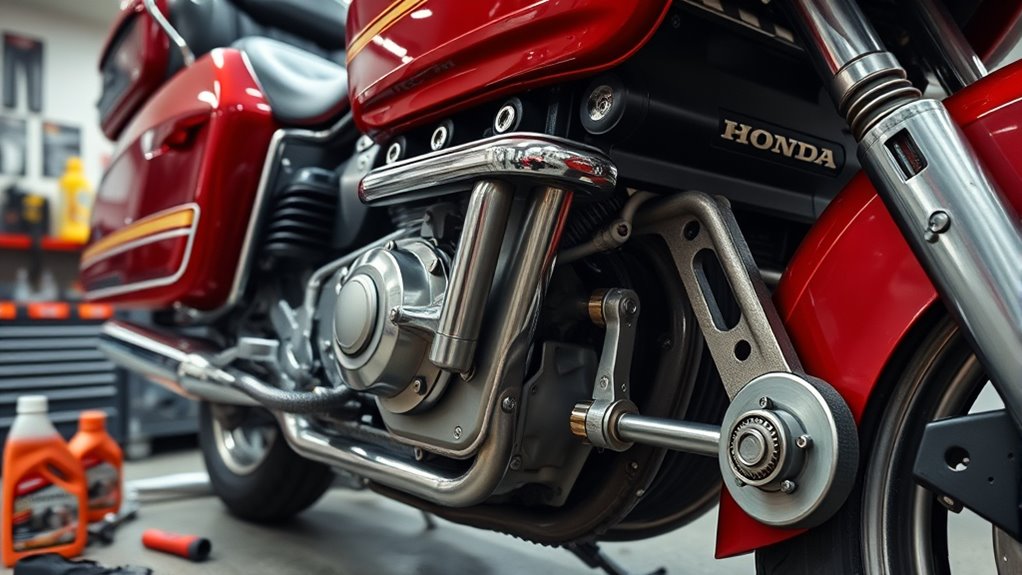
Keeping your transmission and drive train in top condition is key for smooth rides. You should regularly check and adjust the clutch for proper engagement, change the transmission oil on schedule, and inspect the drive shaft for any issues. Staying on top of these tasks guarantees your Gold Wing stays reliable and performs at its best. Additionally, implementing best practices in quality assurance can help identify potential issues early, ensuring your maintenance remains thorough and effective. Incorporating traditional Indonesian craftsmanship principles into your maintenance routines can also promote longevity and optimal performance. For example, paying attention to heritage techniques can enhance the durability of your bike’s components over time. Regular performance monitoring through website analytics can also aid in understanding how your maintenance routines impact overall bike health. Moreover, adopting a holistic approach to maintenance can further extend the lifespan of your Gold Wing’s drive components.
Clutch Adjustment Tips
Proper clutch adjustment is essential for smooth gear shifts and ideal control of your Gold Wing. If your clutch feels slack or engages too early, it’s time to fine-tune it. Start by loosening the locknut and turning the adjuster screw. Here are some key tips:
- Check clutch free play — aim for about 1/8 to 1/4 inch of movement when the clutch lever is pulled.
- Adjust gradually — small turns make a big difference, so adjust in small increments.
- Test after each adjustment — engage and disengage the clutch to ensure smooth operation without slipping or drag.
- Monitor for optimal clutch performance — maintaining proper adjustment helps prevent premature wear and ensures reliable operation. Regular adjustments can also prevent clutch slippage and improve overall riding feel.
- Make sure to revisit your transmission and drive train periodically to keep everything functioning smoothly.
- Remember that proper clutch cable lubrication and inspection can also impact adjustment accuracy and overall clutch function.
- Additionally, inspecting the clutch plates for wear can help identify potential issues before they affect your riding experience.
Regularly checking and adjusting your clutch keeps gear shifting smooth and extends the life of your clutch components.
Transmission Oil Changes
Regular transmission oil changes are vital to guarantee smooth gear shifts and prevent premature wear of internal components. Over time, oil breaks down and collects debris, reducing its lubricating properties. Fresh oil ensures the transmission operates smoothly and prolongs its lifespan. To change the oil, position the bike on a stand, remove the drain plug, and let the old oil drain completely into a container. Check the service manual for the recommended quantity and type of oil. Once drained, replace the drain plug securely, then refill with fresh transmission oil through the fill port. Make sure to check the level with the bike on a level surface. Performing this maintenance at regular intervals keeps your Gold Wing shifting smoothly and running reliably on the road.
Drive Shaft Maintenance
How often should you check your drive shaft? You should inspect it at least every 10,000 miles or if you notice unusual vibrations, noises, or handling issues. Proper maintenance guarantees smooth power transfer and prevents costly damage. Focus on these three key areas:
- U-Joint condition: Check for looseness, rust, or wear, and lubricate or replace if necessary. Understanding the flushing mechanisms can help in diagnosing certain issues related to lubrication and cleanliness.
- Drive shaft boot: Inspect for cracks, tears, or leaks that could allow dirt or moisture in. Ensuring these components are intact helps maintain overall drive system integrity.
- Oil levels: Ensure the final drive or drive shaft oil is topped up and changed according to your manual’s schedule. Regularly monitoring your vehicle’s maintenance needs helps identify potential issues early. Additionally, understanding the components of modern drive systems can aid in troubleshooting and maintenance. Regular inspections and proper lubrication are essential for preserving drive shaft longevity and optimal performance on the road.
Suspension, Frame, and Wheel Care
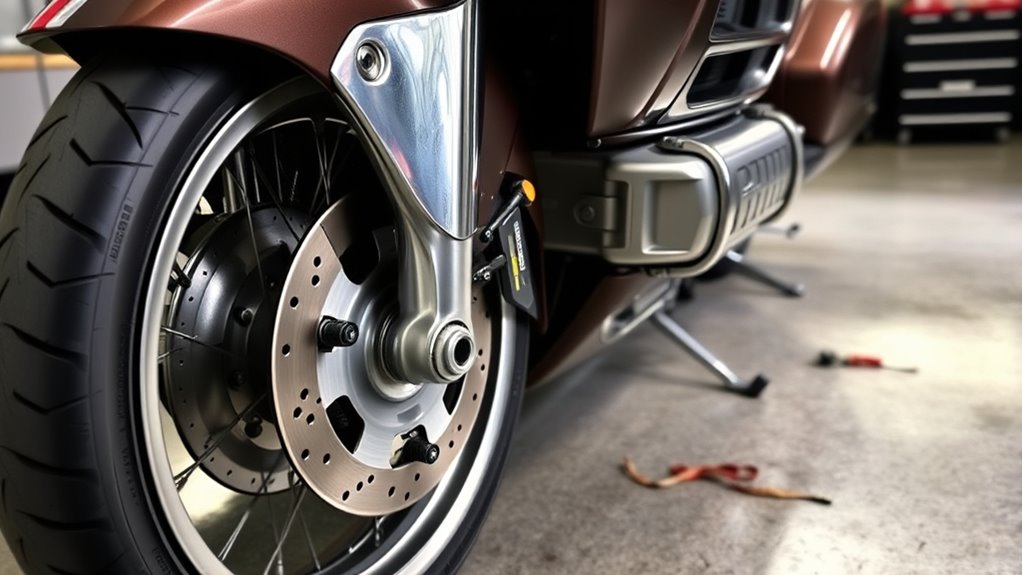
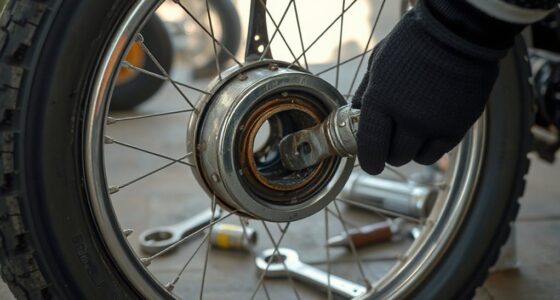
To keep your Gold Wing handling smoothly, regularly inspect your front fork seals for leaks and replace them if needed. You should also check for play in the steering and adjust it to make sure precise, responsive steering. Staying on top of these maintenance points helps maintain your bike’s safety and ride quality. Additionally, ensuring your suspension components are in good condition can prevent uneven tire wear and improve overall handling sustainable cloud solutions. Regular wheel maintenance and keeping your frame free of corrosion further contribute to the bike’s longevity and performance. Maintaining these key bike systems ensures your Gold Wing remains roadworthy and reliable over time.
Inspect and Replace Fork Seals
Inspecting and replacing fork seals is essential for maintaining your Gold Wing’s suspension performance and preventing fluid leaks that can damage other components. Over time, dirt and debris can wear seals, causing oil leaks and compromised damping. Regular checks help identify issues early. To inspect your fork seals:
- Look for oil or grease around the fork tubes and lower fork legs.
- Check for fork stiction or uneven movement.
- Watch for any visible damage or cracks on the seals.
- Remember that seal integrity is crucial for smooth suspension operation and overall ride quality.
If you notice leaks or rough operation, replacing the seals is necessary. Carefully disassemble the fork, remove the old seals, and install new ones using proper tools. Maintaining fresh seals guarantees smooth handling, ideal damping, and prevents costly repairs down the line.
Check and Adjust Steering Play
Regularly checking and adjusting the steering play on your Honda Gold Wing helps guarantee precise handling and safety. To do this, sit on the bike and hold the front brake. Gently push the handlebars forward and backward. Feel for any excessive movement or looseness. If there’s play, loosen the steering head nut, tighten the adjusting nut, then recheck. Tighten the nut to eliminate slack but avoid over-tightening, which can hinder steering. Use the table below to guide your adjustments:
| Step | Action | Result |
|---|---|---|
| 1 | Sit on bike, apply front brake | Stabilizes front wheel |
| 2 | Gently push handlebars | Detects steering play |
| 3 | Loosen steering head nut | Prepare for adjustment |
| 4 | Tighten adjusting nut gradually | Remove slack, maintain smooth steering |
| 5 | Recheck play, tighten nut if needed | Ensures safe, responsive handling |
Routine Safety and Functionality Checks

Routine safety and functionality checks are essential for ensuring your Honda Gold Wing operates reliably and safely on every ride. Regularly inspecting critical systems helps prevent breakdowns and keeps you prepared. Focus on these three key areas:
- Brake system: Check brake fluid levels, inspect pads and discs for wear, and ensure proper operation.
- Cables and controls: Lubricate throttle, clutch, and choke cables, and adjust for smooth, responsive control.
- Lights and signals: Test headlight, taillight, turn signals, and horn to confirm they’re working correctly and visible.
Perform these checks before each ride or at regular service intervals. Staying proactive in safety guarantees your Gold Wing remains dependable and responsive, giving you peace of mind on every journey.
Accessing Quality Manuals and Documentation
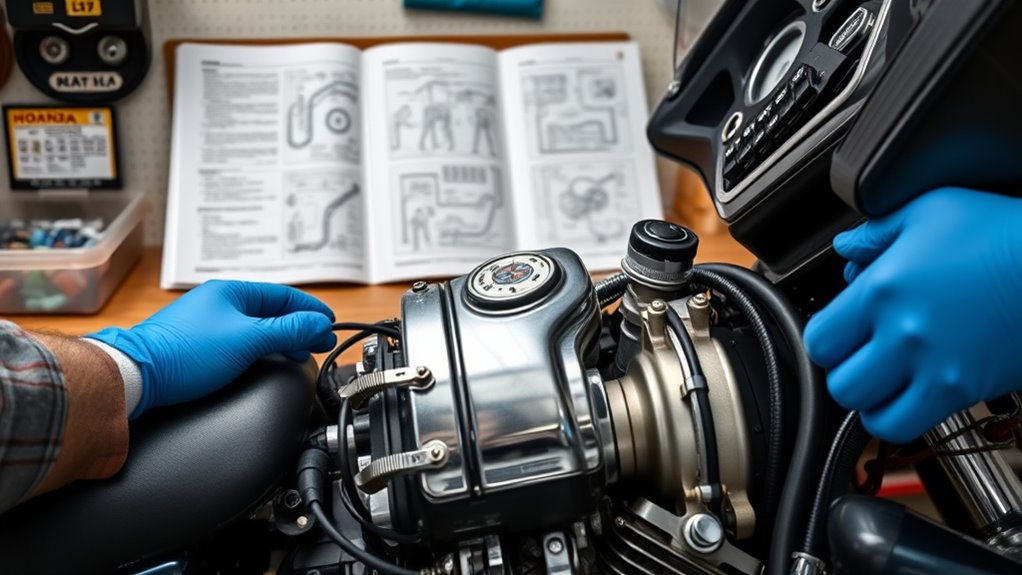
Wondering how to find reliable maintenance information for your Honda Gold Wing? The best place to start is with official service manuals. These manuals provide detailed, step-by-step instructions supported by photos, making DIY repairs straightforward. You can purchase printed copies or download free PDFs from trusted Goldwing forums and websites. Many online communities share links to official manuals or scanned copies, saving you money and time. Specialized manuals exist for specific tasks like rebuilding the starter or diagnosing electrical issues, ensuring you have the right guidance for every repair. Make sure to choose the correct manual version for your GL1000 or GL1100 model. Accessing quality documentation empowers you to maintain your bike confidently, ensuring it stays roadworthy for years to come.
Frequently Asked Questions
How Often Should I Replace the Timing Belts on a Gl1000/1100?
You should replace the timing belts on your GL1000 or GL1100 every 60,000 to 80,000 miles, or roughly every 5 to 7 years, whichever comes first. Regular replacement prevents belt failure, which can cause severe engine damage. Check your service manual for specific intervals, and consider inspecting the belts for cracks or wear during routine maintenance. Staying proactive with belt replacement keeps your bike running smoothly and avoids costly repairs.
What Are Common Signs of Electrical System Failures in These Models?
A chain is only as strong as its weakest link, and the same applies to your bike’s electrical system. Watch for flickering or dimming lights, frequent blown bulbs, or electrical component failures. If your bike stalls unexpectedly, has difficulty starting, or if switches and gauges behave erratically, these are signs of trouble. Regular inspections and maintenance help catch issues early, keeping your Gold Wing running reliably.
How Do I Properly Adjust the Clutch Cable Tension?
To properly adjust the clutch cable tension, start by loosening the lock nut on the cable adjuster. Then, turn the adjuster to create about 1/8 inch of free play at the clutch lever’s end. Once satisfied, tighten the lock nut to secure the adjustment. Test the clutch engagement and repeat if necessary until the lever feels smooth and responsive without slipping or excessive free play.
What’s the Recommended Tire Pressure for Different Riding Conditions?
Imagine cruising down an open highway, your Gold Wing feeling perfectly balanced. For perfect handling, keep your tires at 36 psi for the front and 41 psi for the rear in normal riding. Adjust to lower pressures around 32-34 psi for off-road or wet conditions, and higher, about 40-42 psi, for heavy loads or high-speed riding. Maintaining proper tire pressure guarantees safety, comfort, and maximum tire longevity.
Where Can I Find Reliable Sources for Free Service Manuals?
You can find free service manuals for your Honda Gold Wing on dedicated forums like GoldwingDocs or Motorcycle.com. These sites host scanned copies and user-shared PDFs of official manuals, making it easy to access detailed repair guides. Additionally, some motorcycle enthusiast communities on Reddit or Facebook often share resources or direct you to trusted sources. Just verify you’re downloading from reputable sites to avoid malware or incorrect information.
Conclusion
By staying diligent with these maintenance tips, you keep your Gold Wing not just riding, but soaring. Think of your bike as a trusted friend—you nurture it, and it’ll reward you with miles of smooth, reliable performance. Remember, neglect is the only true enemy here; with proper care, your GL1000 or GL1100 can remain a steadfast companion on every journey. So, why wait? Keep that legend alive and riding—your adventure awaits!