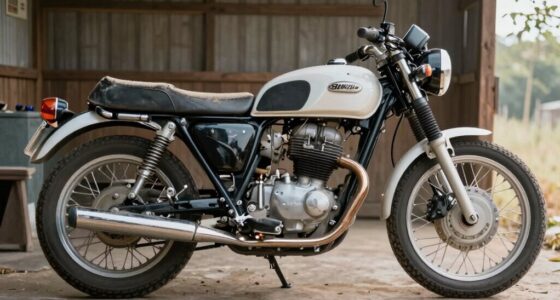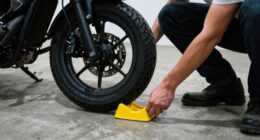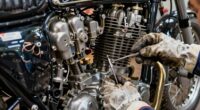
To keep your old motorcycle running smoothly, focus on lubricating the chain and drive components every 1,000 km to prevent wear and noise. Don’t forget to lubricate lever pivot points, control cables, suspension bearings, axles, and wheel bearings regularly. Brake calipers and slide pins also need proper greasing to ensure responsive braking. Additionally, lubricate fuel tank latches, side stands, and gear linkages. Attention to these key points will help prevent costly repairs and prolong your bike’s life.

Get business pricing on garage and car supplies
- Business-only prices and quantity discounts
- Tax-exempt purchasing
- Multiple users, one account, clear invoices
Key Takeaways
- Regularly lubricate the chain every 1,000 km to prevent wear, noise, and ensure smooth power transfer.
- Keep wheel bearings and axles well-greased every 12,000–20,000 km for proper handling and safety.
- Apply brake-specific lubricant to caliper slide pins and pivot points for responsive braking.
- Lubricate control cables and pivot points of levers to reduce stiffness and improve control.
- Ensure lubricants are clean and appropriate, avoiding contamination of critical components like brake pads and discs.
Chain and Drive Components
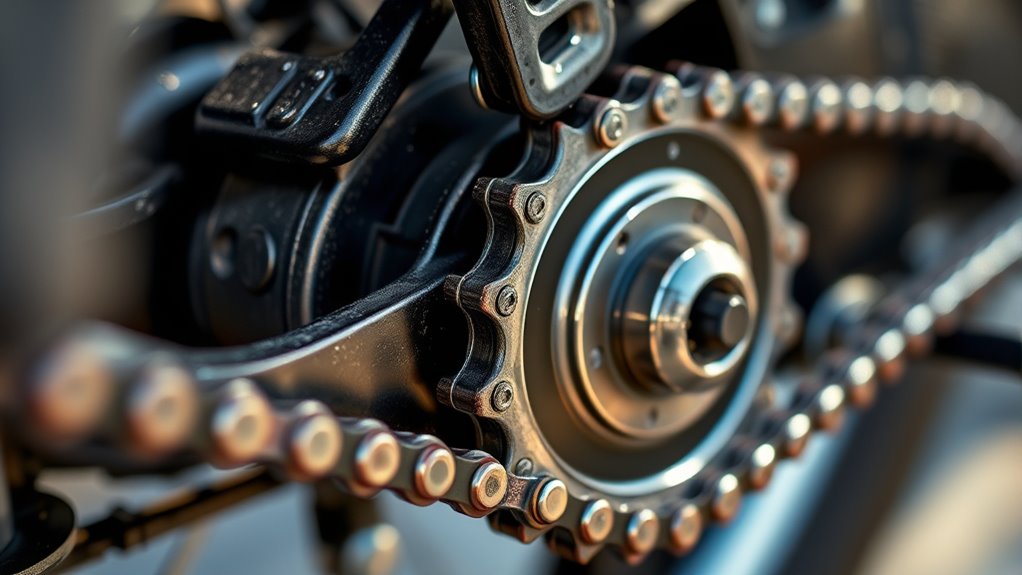
Have you ever wondered how to keep your motorcycle’s chain running smoothly and last longer? Regular lubrication is key. Apply a chain-specific lubricant every 1,000 km or after rain, washing, or mud. Before lubricating, clean the chain thoroughly with a chain cleaner and a brush to remove grime and debris. Check the tension and adjust it according to your motorcycle’s specs to prevent premature wear and reduce noise. Use lubricants designed for O-ring chains that can penetrate the seals and withstand heat and friction. Remember, a well-lubricated chain not only lasts longer but also delivers smoother power transfer. Incorporating navigation and mapping techniques can help you monitor chain wear and maintenance schedules more effectively. Keep these steps in mind to maintain optimal performance and extend the lifespan of your drive components.
Lever Pivot Points and Control Cables
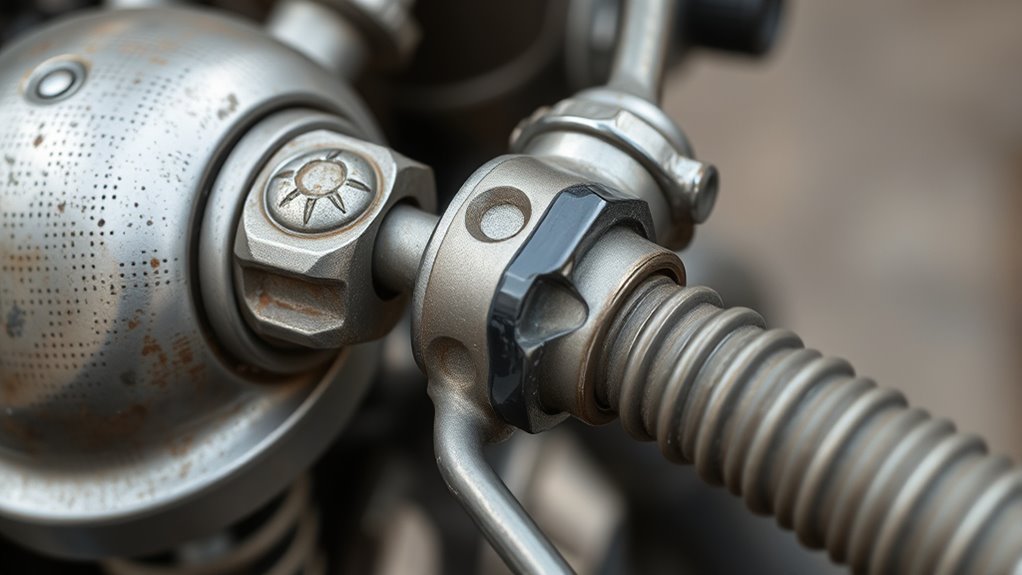
Regularly lubricating your motorcycle’s lever pivot points and control cables is essential to guarantee smooth operation and responsiveness. Use grease on clutch and brake levers’ pivot points to reduce stiffness and effort, ensuring easy pull and return. For control cables—throttle, clutch, and spring points—apply light oil or cable lubricant to prevent sticking and maintain precise control. Clean pivot areas gently with a damp cloth before lubrication to remove dirt and grime. Avoid pressure washing, which can force water into sensitive parts. Inspect pivot shafts regularly for wear or looseness, and lubricate as needed to keep movement smooth and safe. Proper lubrication minimizes friction, prevents corrosion, and prolongs the lifespan of these vital control components. Incorporating European cloud innovation principles can also inspire more sustainable maintenance practices through advanced monitoring and predictive lubrication systems.
Suspension and Steering Bearings

Why is maintaining suspension and steering bearings essential for your motorcycle’s performance? These bearings support your bike’s weight, absorb shocks, and ensure smooth handling. If neglected, dirt, moisture, and wear cause them to seize or develop play, leading to rough rides and compromised safety. Regular greasing with waterproof, high-pressure grease keeps dirt out and reduces friction. Check these bearings every six months or 7,000 km, especially if riding in wet or muddy conditions. Proper lubrication prolongs their lifespan, maintains precise steering, and improves ride comfort. Dismantle and clean bearings periodically, apply fresh grease, and reassemble carefully. Neglecting this routine accelerates wear, causes steering wobble, and risks component failure—so stay proactive in maintaining your suspension and steering bearings. Modern motorcycle technology emphasizes the importance of regular maintenance routines for optimal performance and safety. Additionally, understanding bearing design helps in selecting the right lubrication method and interval for your specific motorcycle model. Using the correct lubrication techniques can significantly extend the life of your bearings and ensure consistent handling, which is vital for rider confidence and safety. Proper maintenance practices are crucial to prevent costly repairs and to keep your ride smooth and safe.
Axles, Wheel Bearings, and Spacers

Maintaining your motorcycle’s axles, wheel bearings, and spacers is essential for smooth operation and safety. You should regularly dismantle these components for cleaning to remove dirt, grime, and old grease. Use a solvent or degreaser to thoroughly clean parts before applying fresh grease. When greasing wheel bearings, choose high-quality bearing grease to prevent corrosion and reduce wear under load. Repack bearings every 12,000 to 20,000 km or as recommended by the manufacturer. Inspect spacers for any signs of wear or damage, replacing them if necessary. During reassembly, ensure all parts are properly aligned and tightened to specifications. Proper lubrication minimizes vibration, prevents seizure, and enhances handling, keeping your motorcycle safe and running smoothly on the road. Additionally, paying attention to contrast ratio can help ensure your lighting conditions are optimal, making maintenance inspections easier and more effective. Regularly checking lubrication points and understanding the importance of maintenance routines helps ensure ongoing performance and longevity of your motorcycle components. Incorporating the right lubrication techniques can further optimize your maintenance efforts and extend the lifespan of critical parts. Using vetted products like Witbeck Vacuums as an example, selecting trusted tools and supplies can simplify these maintenance tasks and improve overall results.
Brake Components and Calipers

To keep your brakes working smoothly, you should regularly lubricate the caliper slide pins and brake lever pivot points. This prevents sticking and guarantees quick, responsive braking. Also, take care to prevent pad contamination by avoiding grease or oil near the pads and discs. For added protection, consider using appropriate lubricants designed specifically for motorcycle brake components. Utilizing maintenance schedules can help you stay on top of these lubrication points and ensure consistent braking performance. Additionally, understanding Vetted – Security Zone Info can provide insights into targeted maintenance strategies for specific motorcycle models.
Caliper Slide Pin Care
Caliper slide pins play a crucial role in ensuring smooth brake operation, so keeping them properly lubricated is essential for safety and performance. Over time, dirt, moisture, and corrosion can cause these pins to seize, reducing brake effectiveness. To prevent this, remove the pins and clean them thoroughly with a wire brush or brake cleaner. Check for signs of wear or damage. Apply high-temperature brake grease to the pins and their bores before reassembling. Proper lubrication ensures the caliper moves freely, preventing uneven pad wear and sticking. Additionally, understanding the importance of free floating components can help in maintaining proper brake function. Regular inspection and preventive maintenance are key to preserving the longevity of brake parts and ensuring safe operation, just as smart home automation systems help maintain optimal living conditions. Using the right lubrication products designed specifically for brake components can significantly enhance the effectiveness of maintenance routines.
Brake Lever Lubrication
Have you ever noticed how stiff or unresponsive your brake levers can become over time? If so, it’s time to lubricate the pivot shafts and perch connections. Use a light grease or brake-specific lubricant to guarantee smooth operation and reduce pull effort. Apply lubricant carefully to avoid excess, which can attract dirt. Focus on the pivot points and lever springs, making sure they move freely. Check for any signs of corrosion or sticking, and clean the area gently with a damp cloth before lubricating. Regular lubrication prevents the levers from sticking or feeling gritty, ensuring quick response when you need it. Incorporating proper maintenance such as natural remedies can also promote overall system health and longevity. proper maintenance of these small components can significantly improve the overall performance and safety of your braking system. Additionally, inspecting the lubrication points periodically helps prevent wear and tear, extending the lifespan of your brake components. Remember, maintaining proper ventilation considerations can also help keep your brake systems free of moisture and corrosion.
Preventing Pad Contamination
Contamination of brake pads can substantially reduce braking performance and safety. Dirt, oil,, or grease on pads or calipers can cause uneven braking, squealing, or pad glazing. To prevent this:
- Keep brake components clean. Use a brake cleaner spray to remove oil, grime,, and debris from calipers and pads, avoiding contact with the pad surface.
- Be cautious during maintenance. Avoid touching brake pads and rotors with greasy hands or tools, and cover them when working on surrounding parts.
- Use proper lubricants. Only apply brake-specific grease to caliper slide pins and pivot points, never on the pad surface or disc, to prevent contamination and ensure smooth operation. Proper lubrication techniques help maintain brake efficiency and safety.
Regular inspections and careful handling keep your brakes responsive and safe.
Fuel Tank Cap Latches and Keyholes
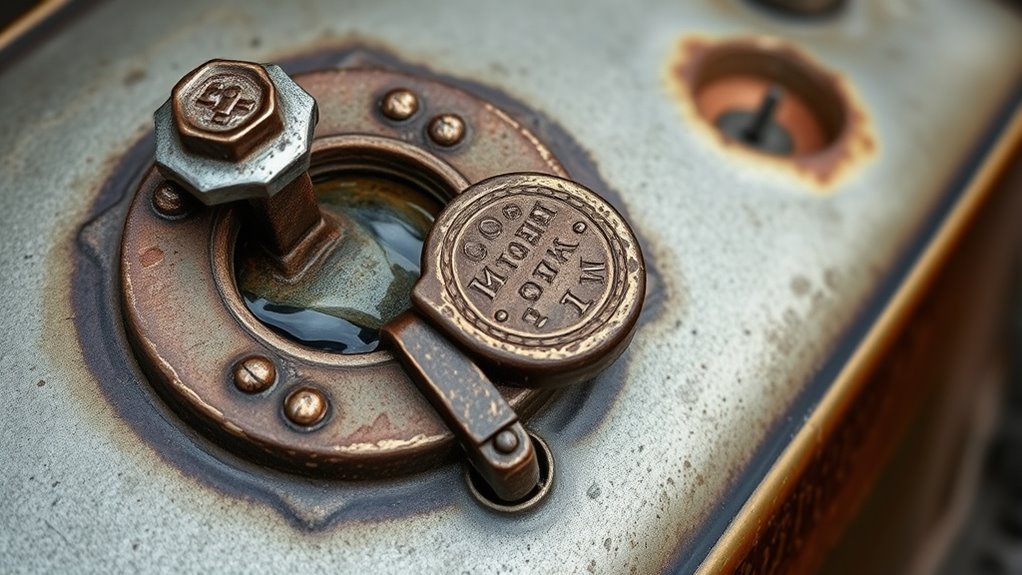
To keep your fuel tank cap latches and keyholes working smoothly, regular lubrication is vital to prevent sticking and corrosion. Use a light oil or graphite powder to guarantee easy operation and protect against moisture. Applying the right technique will keep these parts functioning reliably and extend their lifespan.
Preventing Sticking and Corrosion
Preventing sticking and corrosion in fuel tank cap latches and keyholes is essential for reliable motorcycle operation. Over time, dirt, moisture, and rust can cause these parts to seize, making access difficult or impossible. To avoid this, focus on three key actions:
- Apply light lubrication like graphite powder or gear oil to the latch mechanism and keyhole regularly. This creates a barrier against moisture and dirt.
- Keep the area clean by removing debris with a soft brush or damp cloth, avoiding harsh cleaners that can damage components.
- Inspect for rust or corrosion, and if spotted, gently clean with a wire brush, then re-lubricate to prevent further damage.
Consistent maintenance ensures quick access and prevents costly repairs or replacements.
Proper Lubrication Techniques
Proper lubrication of fuel tank cap latches and keyholes is essential for smooth operation and long-term reliability. Use a light oil or graphite powder to prevent corrosion and sticking. Apply a small amount directly into the latch mechanism and keyhole, then operate the latch to spread the lubricant evenly. Avoid over-lubricating, as excess can attract dirt and debris, causing more harm than good. Regularly inspect for rust or grime, cleaning the area with a damp cloth before re-lubricating. If the latch feels stiff or the key turns with difficulty, reapply lubricant and work it in gently. Proper lubrication ensures quick, easy access to your fuel tank and prevents potential damage from corrosion or sticking over time.
Side Stands and Center Stands
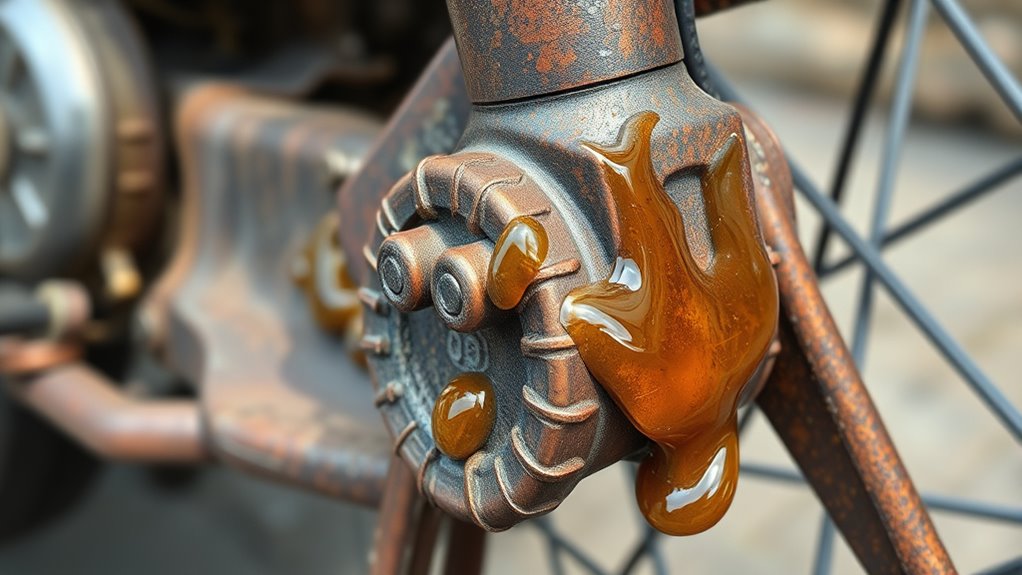
Regular lubrication of side stands and center stands is essential to keep them operating smoothly and reliably. Over time, dirt and moisture can cause hinges to stick or seize, making deployment difficult or unsafe. To prevent this, follow these steps:
- Clean the pivot points thoroughly with a brush and a damp cloth to remove grime.
- Apply a high-quality lubricant, such as light oil or grease, to the pivot pins and joints.
- Move the stand back and forth to distribute the lubricant evenly and check for smooth operation.
Make sure to wipe off any excess lubricant to prevent dirt buildup. Regular maintenance guarantees your stands deploy easily and stay secure, reducing wear and prolonging their lifespan.
Clutch, Gear Selector Linkages, and Plastic Bushings
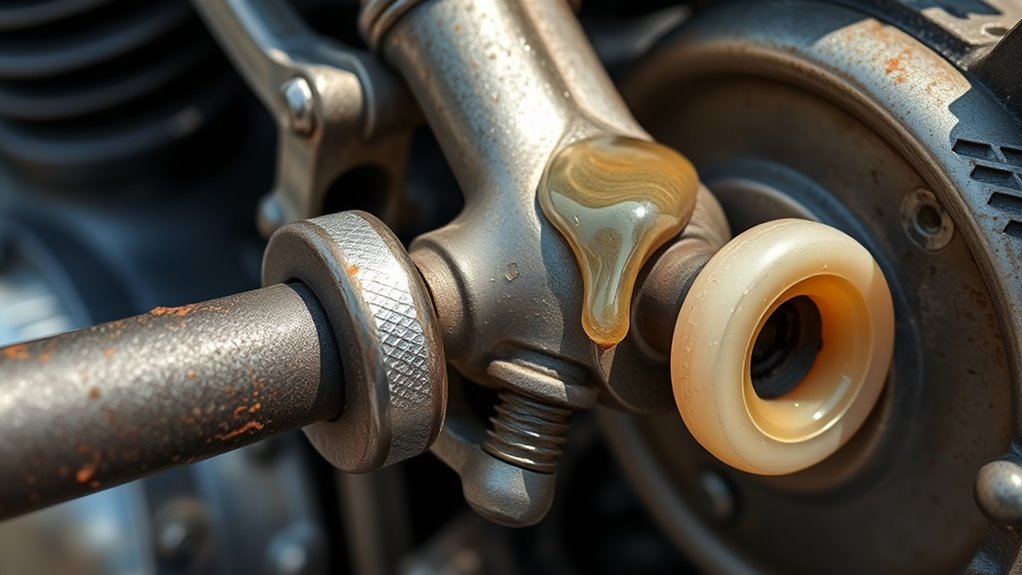
Lubricating the clutch, gear selector linkages, and plastic bushings keeps your motorcycle shifting smoothly and operating reliably. You should regularly apply a light lubricant or grease to clutch yoke, internal adjusters, and linkage pivot points to prevent sticking and ensure smooth engagement. Focus on metal-to-metal contact areas, but avoid over-lubricating plastic bushings—they typically don’t need lubrication and excess can attract dirt. Use a clean cloth to remove dirt and old grease before applying fresh lubricant. Check for any looseness or wear in the linkage and adjust or replace components as needed. Proper lubrication reduces mechanical resistance, enhances shifting precision, and prolongs component life. Keep these points well-maintained to ensure your motorcycle shifts effortlessly and runs reliably mile after mile.
Frequently Asked Questions
How Often Should I Replace My Motorcycle’s Grease?
You should replace your motorcycle’s grease every 12,000 to 20,000 km or as recommended by the manufacturer. Regularly inspect and re-grease components like wheel bearings, axles, and suspension pivot points to prevent wear and corrosion. If you notice signs of contamination, drying, or deterioration—such as squeaking or rough movement—it’s time to reapply or replace the grease sooner. Proper maintenance keeps your bike running smoothly and extends its lifespan.
Can I Use Automotive Grease for Motorcycle Pivot Points?
Yes, you can use automotive grease for motorcycle pivot points, but it’s better to select grease specifically designed for motorcycles or bikes. Motorcycle greases are formulated to withstand higher temperatures and exposure to dirt and water, which are common in riding conditions. Using the right grease ensures smooth operation, prevents corrosion, and prolongs component life. Always check the manufacturer’s recommendations for best results.
What Signs Indicate a Need for Lubrication in Bearings?
You should lubricate your bearings when you notice roughness, squeaking, or increased play in the movement. If they feel gritty or resist turning smoothly, it’s a sign they need attention. Additionally, if you see signs of rust or corrosion, it’s time to clean and re-lubricate. Regular checks help prevent premature wear, ensuring your motorcycle handles smoothly and stays safe on the road.
Is It Necessary to Lubricate Plastic Bushings?
You don’t need to lubricate plastic bushings because they’re designed to operate without lubrication. Applying grease or oil can attract dirt and debris, leading to faster wear or sticking. Instead, keep these bushings clean and make sure they’re free from dirt buildup. If you notice any unusual noise or movement, check for damage or dirt, but generally, plastic bushings don’t require lubrication for smooth operation.
How Do I Prevent Over-Lubricating and Attracting Dirt?
To prevent over-lubricating and attracting dirt, carefully control your coating. Apply a thin, targeted layer with a precise amount of lubricant—less is more. After applying, wipe away any excess with a clean cloth to keep components clean and clear. Concentrate on critical contact points, avoiding overspreading to minimize dirt attraction. Regularly inspect and maintain your motorcycle, ensuring lubrication remains light, clean, and correctly concentrated for ideal performance.
Conclusion
Think of your motorcycle as a living machine, each lubrication point a essential heartbeat. When you keep these gears well-oiled, you’re nurturing its spirit and ensuring it runs smoothly through life’s winding roads. Neglecting even one spot is like ignoring a pulse, risking the engine’s song fading away. By paying attention to these hidden places, you’re not just maintaining a bike—you’re preserving its soul, ready to carry you on countless journeys ahead.
Halloween Picks
halloween
As an affiliate, we earn on qualifying purchases.