
Changing oil on your older motorcycle is essential for engine health and longevity. Warm up the engine, then carefully drain the old oil, removing and replacing the filter with a quality one. Use the right oil viscosity and a high-zinc formula for added protection. Refill, check for leaks, and dispose of used oil responsibly. Following proper tools, safety measures, and disposal methods ensures a smooth and effective oil change—keep going to learn more tips and tricks.
Key Takeaways
- Warm up the engine briefly, then drain old oil through the drain plug, ensuring the motorcycle is stabilized securely.
- Replace the oil filter with a quality filter, tightening to manufacturer-specified torque to prevent leaks.
- Choose the right viscosity and high-zinc oils recommended for vintage engines, following the manufacturer’s guidelines.
- Refill with fresh oil, start the engine, and check for leaks and proper oil level before riding.
- Properly dispose of used oil at designated recycling centers to protect the environment.

NOCO Lithium NLP20: Ultra-Light 12V Lithium Powersport Battery – Group 20 – 7Ah – 600A Start Power – Intelligent BMS – UL Certified
BETTER THAN LEAD-ACID — No sulfation. No acid. No maintenance. No activation. Ships pre-charged, though we recommend charging...
As an affiliate, we earn on qualifying purchases.
Why Regular Oil Changes Are Vital for Older Motorcycles

Regular oil changes are essential for older motorcycles because they help prevent engine wear and overheating. As your bike ages, the oil breaks down faster, losing its ability to lubricate properly and dissipate heat. When oil becomes old and contaminated with debris, it can cause increased friction, leading to faster wear of engine components. Neglecting regular oil changes accelerates sludge buildup, which can clog passages and reduce efficiency. Fresh oil ensures that the engine’s moving parts stay properly lubricated, especially important for older engines with tighter tolerances and more wear. Proper oil circulation is crucial to maintain engine health and performance in aging motorcycles. By maintaining clean, effective oil, you extend your motorcycle’s lifespan and guarantee reliable performance. Skipping oil changes risks costly repairs and premature engine failure, making routine maintenance indispensable. Additionally, using the correct oil type and viscosity tailored for older engines can further enhance engine longevity and ensure optimal operation. Regularly checking and maintaining proper oil levels also helps prevent oil starvation, which can cause severe engine damage. Furthermore, understanding oil compatibility can help prevent issues related to using incompatible oils that may not provide adequate protection for aging engines.

Antigravity ATX12-HD. Heavy Duty Lithium Motorcycle and Powersport Battery with Built in Jump Starting, 8Ah, ATV, Quad, UTV, Scooter, Lawn Mower, Generator Battery - Harley, Honda, Kawasaki
Introducing Built-In Jump Starting! - Never be stranded by a dead battery again with our "RE-START" Technology! No...
As an affiliate, we earn on qualifying purchases.
Choosing the Right Oil for Your Vintage Bike

When choosing oil for your vintage bike, make certain to select a viscosity rating that matches your engine’s needs and operating conditions. Look for oils with higher zinc (ZDDP) content, as they help protect flat-tappet camshafts and other critical parts. Always follow the manufacturer’s recommendations to guarantee ideal protection and performance for your older motorcycle. Additionally, consider using Free Floating oils, which can provide better lubrication and reduce wear on older engine components. Using oils with verified performance ratings can also help you find products that are highly rated and trusted by other vintage motorcycle enthusiasts. Furthermore, choosing oils with verified performance ratings ensures you select products proven to support the longevity of your classic engine, especially when taking into account the load and operating conditions that older engines often face.
Suitable Viscosity Ratings
Choosing the right oil viscosity for your vintage motorcycle is essential because older engines often have tighter clearances and wear patterns that differ from modern bikes. You want an oil that flows easily at startup but maintains a strong film under operating conditions. Usually, a slightly higher viscosity than recommended for newer engines works better, providing extra protection for worn parts. Check your owner’s manual for the recommended viscosity, but consider using a 10W-40 or 20W-50, especially in colder or hotter climates. Thicker oils help prevent leaks and maintain proper lubrication in aging components. Proper viscosity selection ensures excellent engine performance and longevity. Additionally, consider oil additives that can help reduce engine wear and improve lubrication in vintage engines. Selecting the appropriate oil type and viscosity can also enhance the engine’s overall performance and extend its service life.
High-Zinc Content Oils
High-zinc content oils, often labeled as ZDDP (zinc dialkyldithiophosphate) oils, are especially important for older motorcycles with flat-tappet camshafts. These engines rely on zinc compounds to protect metal-on-metal contact, reducing wear on cam lobes and lifters. Modern oils tend to have lower zinc levels due to emissions regulations, which can leave your vintage engine more vulnerable. Using an oil with higher zinc content ensures proper film strength and wear protection during startup and operation. Look for oils specifically formulated for older bikes or those labeled as “classic car” or “vintage motorcycle” oils with elevated ZDDP levels. This added zinc helps maintain the integrity of your engine’s camshaft and valve train, prolonging engine life and maintaining ideal performance. Incorporating high-zinc oils can also be beneficial in preventing engine wear, especially during the critical initial startup phase, as it supports metal-on-metal contact protection essential for vintage engines.
Manufacturer Recommendations
To guarantee your vintage motorcycle runs smoothly and reliably, it’s vital to adhere to the manufacturer’s oil recommendations. Your owner’s manual provides specific guidance on oil type, viscosity, and change intervals tailored for your bike’s engine. Using the recommended oil ensures proper lubrication, reduces wear, and maintains engine performance. Modern oils may not be suitable if they contain additives incompatible with older engines, so always double-check. Additionally, selecting oils with the appropriate viscosity range is essential for optimal engine operation.
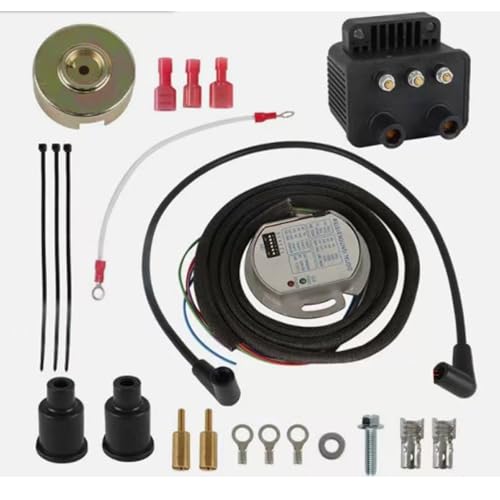
Single Fire Programmable Ignition Coil Kit - Compatible with 1970-1999 Harley-Davidson Big Twin (Except Twin Cam) & 1986-2003 Sportster (Except S models), Replaces 53-660
Wide Compatibility: Compatible with Harley-Davidson Big Twin models 1970–1999 (except Twin Cam) and Sportster 1986–2003 (except ‘S’ models).Also...
As an affiliate, we earn on qualifying purchases.
Essential Tools and Supplies for an Effective Oil Change
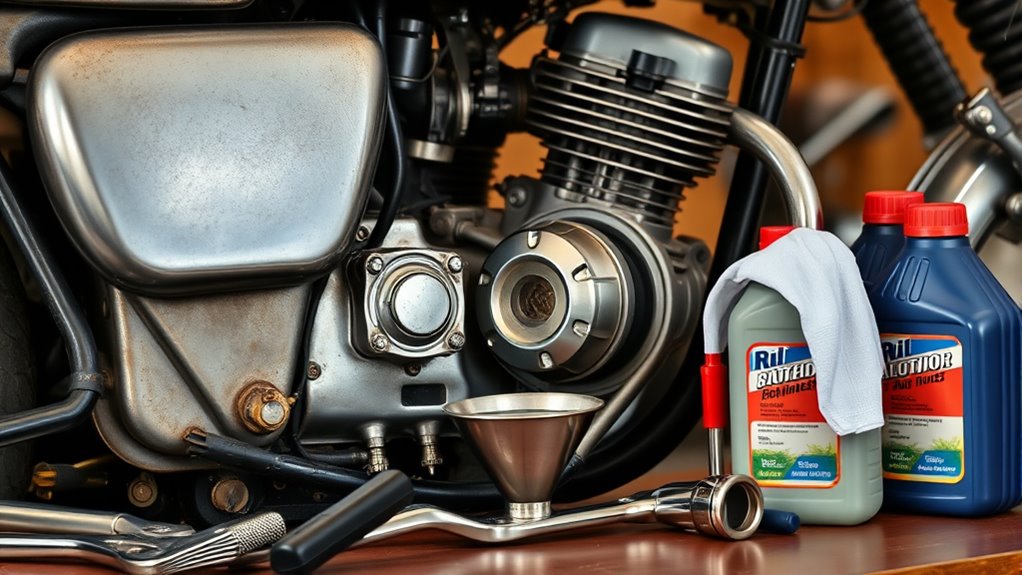
Having the right tools and supplies on hand is crucial for an efficient and mess-free oil change on your motorcycle. First, select the correct engine oil based on your bike’s make, model, and age. You’ll also need a compatible oil filter—sometimes aftermarket options offer better filtration for older engines. A wrench or socket set, including an oil filter wrench, is necessary for removing drain plugs and filters. An oil drain pan is indispensable to catch old oil safely and prevent spills. Gloves and rags or shop towels help keep the area clean and protect your skin. Additionally, a torque wrench ensures bolts and filters are tightened to specifications, avoiding leaks or damage. Having these tools ready streamlines the process and helps maintain your motorcycle’s engine health.

32 Amp Alternator Charging System for 1970-1984 Shovelhead & 1984-1999 "EVO Evolution Big Twin FX/FL, Softail, Dyna, FXR, Touring Models (Except Twin Cam & EFI Models) with Stator, Rotor, Reg/Rec
Upgrade your '70-'84 Big Twins weak charging system with this upgraded 32 Amp Kit! These systems are the...
As an affiliate, we earn on qualifying purchases.
Step-by-Step Guide to Changing Your Motorcycle’s Oil

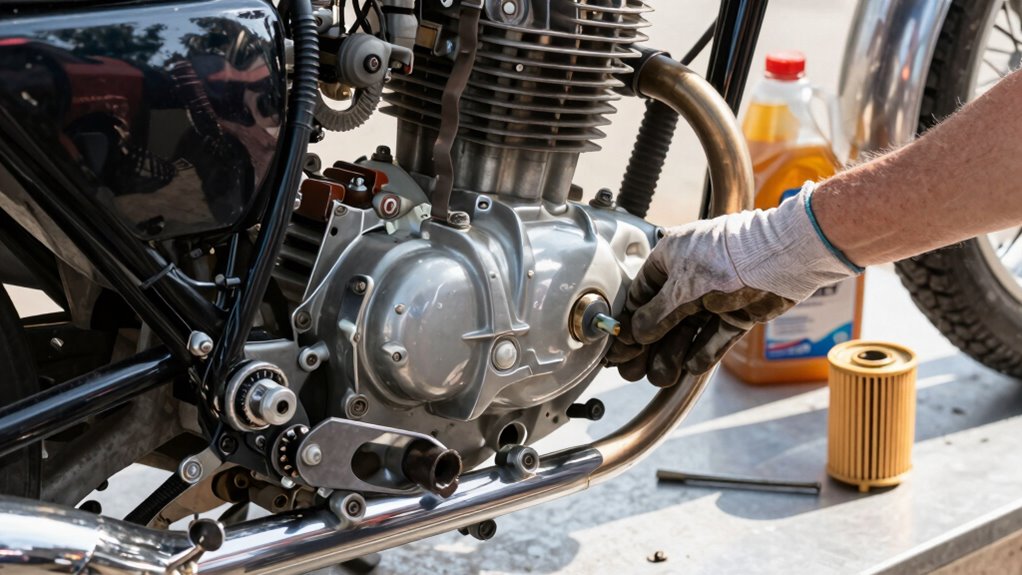
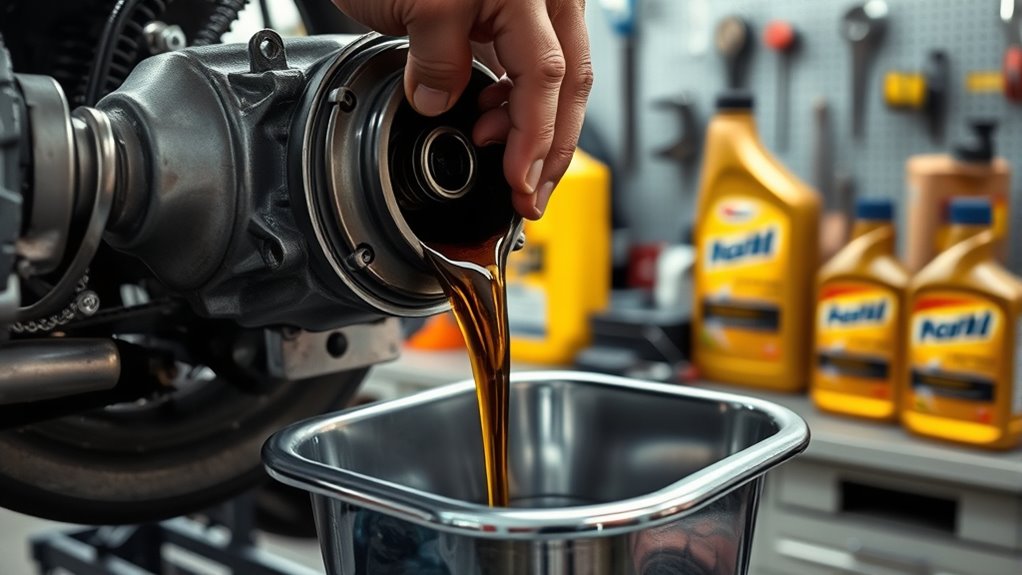
Changing your motorcycle’s oil involves a straightforward sequence of steps that guarantee your engine stays properly lubricated and protected. First, warm up the engine briefly, then park the bike on a stand for safety and levelness. Locate the drain plug and carefully remove it using the correct wrench, allowing the oil to drain completely into your pan. Next, remove the old oil filter, making sure the gasket comes off entirely. Before installing the new filter, lubricate its gasket with fresh oil and tighten it by hand to the manufacturer’s torque specs. Replace the drain plug with a new washer, tighten it securely, and then refit the oil fill cap. Finally, pour in the recommended amount and type of oil, start the engine briefly, and check for leaks and proper oil level.
Best Practices to Maintain Your Motorcycle’s Engine Health
Maintaining your motorcycle’s engine health requires consistent attention and proper care. Regularly check your oil level and condition between changes, looking for color and thickness to spot early issues. Stick to the recommended oil change intervals, which can vary based on riding conditions and bike age. Always use the best oil suited for your motorcycle, considering viscosity and additives like zinc for older engines. Keep the air filter clean to ensure proper airflow and reduce engine strain. Use a quality oil filter and replace it with each oil change to prevent debris buildup. After service, run the engine briefly and check for leaks before riding. Keeping detailed records of maintenance helps you track wear and plan future services, prolonging your motorcycle’s lifespan. Incorporating creative studio expertise can also help you document and share your maintenance journey visually. Regularly inspecting your piercings and following proper aftercare can prevent infections and irritation, ensuring your body remains healthy and safe. Additionally, understanding the importance of oil quality ensures you select the most suitable oils that provide optimal engine protection and performance. To further safeguard your engine, consider using proper ventilation to prevent heat buildup and ensure consistent cooling during operation. Recognizing the significance of engine diagnostics can help identify potential problems early, saving time and repair costs.
Tips for Proper Disposal and Environmental Responsibility
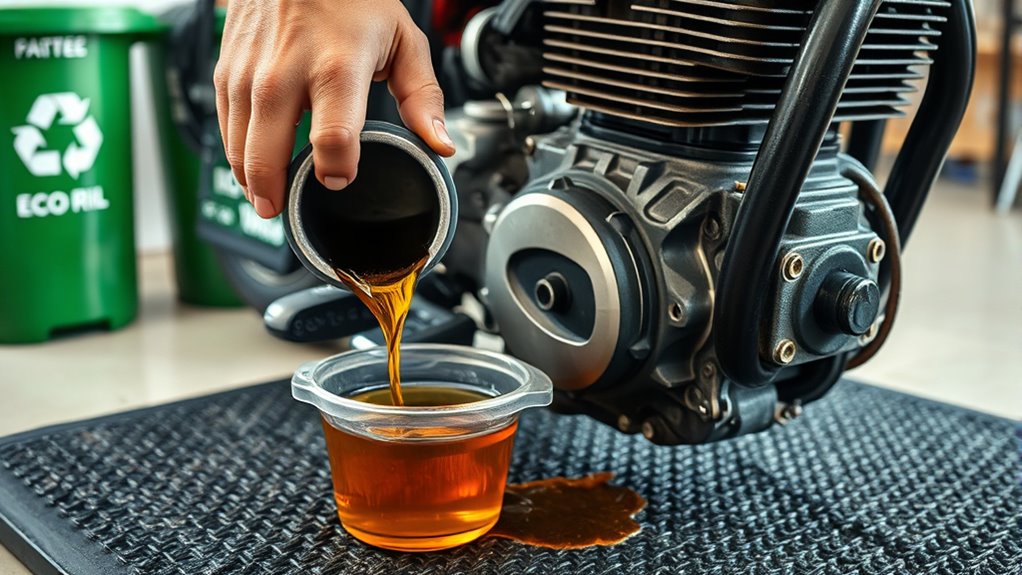
When you change your motorcycle’s oil, it’s important to dispose of it responsibly to protect the environment. Recycling old oil at designated collection centers prevents contamination and pollution. Being aware of proper disposal locations guarantees you do your part in maintaining a cleaner, healthier planet. Additionally, exploring reputable Gold IRA markets can help you secure your financial future through precious metal investments. To further ensure safe disposal, consult local regulations and guidelines for environmental responsibility when handling used oils. Engaging with AI ethicist jobs can also influence how industries develop sustainable practices and policies for waste management. Understanding time zones can help coordinate disposal efforts efficiently across different regions. Implementing proper disposal methods ensures that you minimize environmental impact and comply with legal requirements.
Recycling Old Oil
Proper disposal of old motorcycle oil is essential to protect the environment and comply with local regulations. You should never pour used oil down drains, onto the ground, or into water sources. Instead, store the oil in a sealed container until you can properly recycle it. Many recycling centers and auto shops accept used oil for proper disposal. Before recycling, make sure to keep the oil in a clean, leak-proof container to avoid spills and contamination. Recycling old oil reduces pollution and conserves resources by allowing the oil to be reprocessed or repurposed. Additionally, understanding astrological signs and their influence on perceptions can encourage responsible environmental awareness among enthusiasts.
Proper Disposal Locations
Knowing where to take your used motorcycle oil guarantees you’re doing your part to protect the environment. Used oil shouldn’t be poured down drains, onto the ground, or into storm sewers, as it contaminates water sources and harms wildlife. Instead, look for local recycling centers, hazardous waste disposal sites, or facilities designated for used oil collection. Many auto parts stores, service stations, and recycling centers accept used motor oil free of charge or for a small fee. Before dropping off the oil, confirm it’s stored in a sealed, leak-proof container. Proper disposal not only prevents environmental damage but also keeps your community clean. Always follow local regulations for disposal to ensure you’re acting responsibly and legally.
Environmental Impact Awareness
Protecting the environment starts with responsible disposal of used motorcycle oil. You should never pour old oil down drains, onto the ground, or into stormwater systems, as it contaminates water and harms wildlife. Instead, take your used oil to authorized recycling centers or collection points. Proper disposal prevents soil and water pollution, safeguarding ecosystems. Always store used oil in sealed, clearly labeled containers until you can recycle it. When changing oil, consider using environmentally friendly products with fewer harmful additives. Recycling your old oil helps conserve natural resources and reduces environmental damage.
- Transport used oil in a leak-proof container to recycling facilities
- Avoid mixing used oil with other chemicals or contaminants
- Follow local regulations for disposal and recycling to guarantee environmental safety
Additional Tips for a Smooth and Safe Oil Change Process
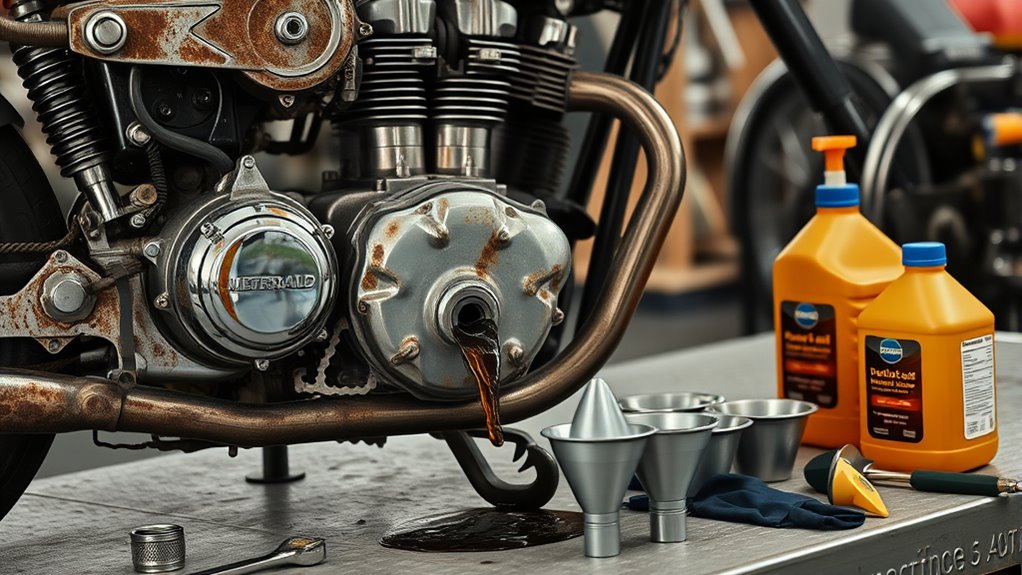
To guarantee your oil change goes smoothly and safely, start by stabilizing the motorcycle on a sturdy stand or lift. This prevents tipping and makes draining and filter removal easier. Warm the engine briefly to ensure oil flows freely, but don’t overheat. When removing the drain plug, do so slowly to avoid spills and wear on the threads. Be cautious with the oil filter—keep track of small parts and springs to prevent misassembly. Pre-filling the new filter with oil is optional but can reduce dry starts. Always tighten bolts and filters to the manufacturer’s torque specs to prevent leaks or damage. Use a torque wrench if available, and double-check all fittings before refilling. Proper preparation minimizes messes and guarantees a safe, efficient oil change.
Frequently Asked Questions
How Often Should I Change Oil on My Vintage Motorcycle?
You should change the oil on your vintage motorcycle every 3,000 to 6,000 miles or twice a year, whichever comes first. If you ride in severe conditions like heavy traffic, extreme temperatures, or dusty environments, change it more frequently. Regular oil changes keep your engine well-lubricated and prevent damage. Always follow your owner’s manual for specific recommendations tailored to your bike’s age and model.
Can I Use Synthetic Oil in an Older Engine?
Yes, you can use synthetic oil in an older engine. Studies show synthetic oils can extend engine life by resisting breakdown up to five times longer than mineral oils. They offer better flow, oxidation resistance, and protection for aging components. Just make certain you follow your motorcycle’s manufacturer recommendations, especially regarding viscosity and additives like zinc. Properly chosen synthetic oil can improve performance and longevity for your vintage bike.
What Signs Indicate I Need an Oil Change Sooner?
You need an oil change sooner if you notice the oil looks dark, gritty, or has a burnt smell. Thin or milky oil indicates contamination or water intrusion. Increased engine noise, rough running, or sluggish response also signal you should change the oil. Regularly check the oil level and condition, especially if you’ve ridden in severe conditions or longer intervals, to prevent engine wear and maintain performance.
How Do I Check if My Oil Filter Is Properly Installed?
You can verify your oil filter’s proper installation by checking for leaks around the filter, which indicates a good seal, and ensuring it’s tightened to the manufacturer’s torque specs. Researchers suggest that over-tightening can damage the gasket, causing leaks, while under-tightening risks loosening during operation. After installation, start the engine and inspect again for leaks or drips, confirming the filter’s secure and correct placement.
Is Pre-Filling the Oil Filter Necessary or Beneficial?
Pre-filling the oil filter isn’t necessary, but it can be beneficial. When you pre-fill, it helps guarantee oil reaches the engine faster during startup, reducing dry start wear. This practice can improve initial lubrication, especially in cold weather or with larger filters. However, if you’re careful during installation and the filter is filled with oil beforehand, your engine will still receive proper lubrication without pre-filling.
Conclusion
So, next time you change your old motorcycle’s oil, remember—what’s old is gold, right? Regular oil changes keep that vintage engine purring, even if it’s seen better days. Just don’t forget to dispose of that used oil responsibly; after all, saving your engine shouldn’t come at the planet’s expense. Who knew maintaining a classic could be so simple—and ironically, so crucial? Keep riding smooth, and let those old bones run like new!