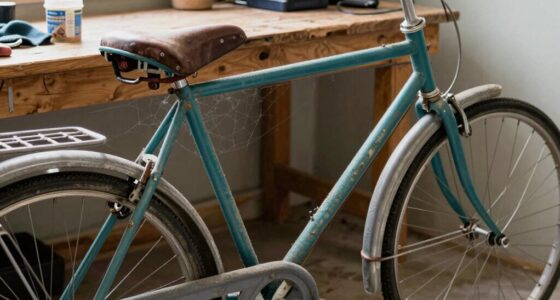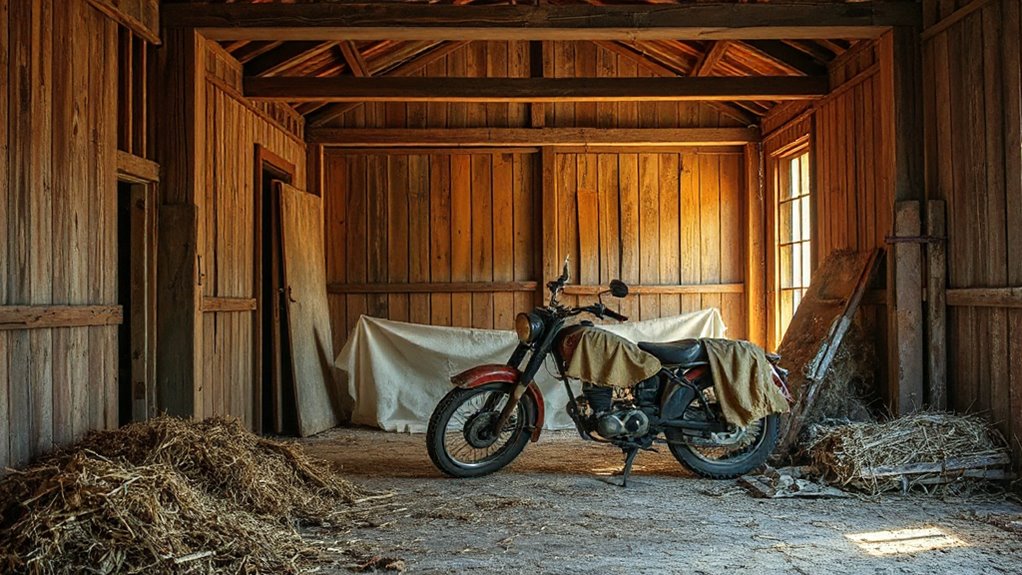
To prevent your unrestored barn find from deteriorating, keep it in a stable, climate-controlled environment with consistent temperature and humidity levels between 40-50%. Use gentle cleaning methods and proper packaging materials like acid-free tissue and bubble wrap. Elevate items to prevent contact with damp surfaces and regularly inspect for pests or mold. Remaining attentive to these preservation strategies will help you maintain its authenticity and condition for years to come. Continue to learn how best to safeguard your vintage treasures.
Key Takeaways
- Store barn finds in climate-controlled environments with stable temperature and humidity to prevent deterioration.
- Use acid-free materials and proper packing techniques to protect delicate and vintage parts.
- Regularly inspect stored items for pests, mold, and signs of deterioration.
- Elevate items on pallets or shelves to avoid contact with damp surfaces and moisture.
- Handle objects gently and avoid harsh chemicals to preserve authenticity and prevent damage.
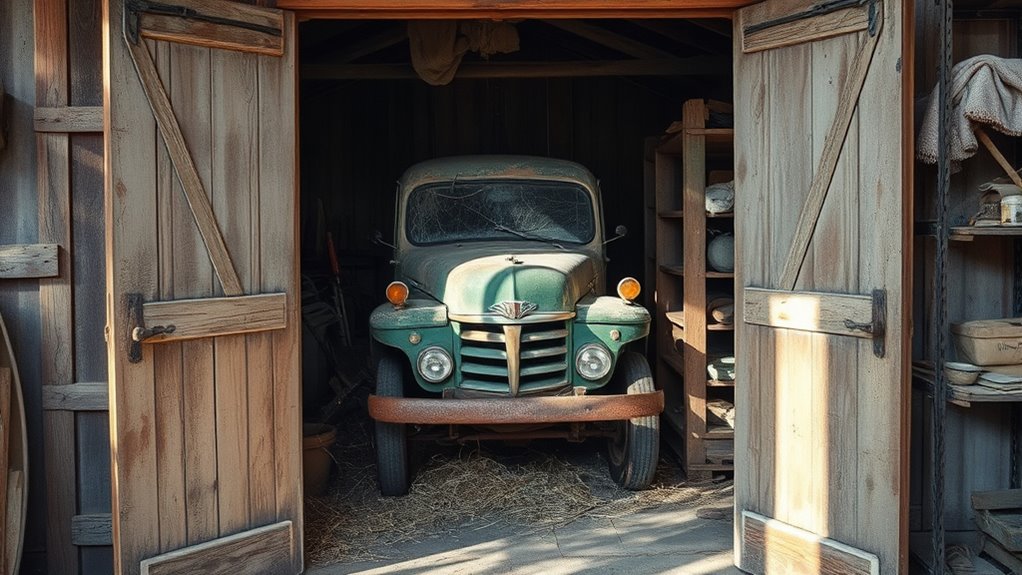
Have you ever wondered how to keep your belongings safe and fresh over time? When it comes to preserving a unrestored barn find, understanding vintage techniques and climate control is essential. Barn finds often come with a unique charm, but without proper care, they can quickly deteriorate. To prevent this, you need to use proven methods that respect their age while safeguarding their condition. Vintage techniques, for example, include gentle cleaning with soft brushes and mild solutions, avoiding harsh chemicals that could cause damage. These methods help preserve the original materials and maintain the authenticity of the piece. Additionally, carefully inspecting for pests or mold is crucial before storing anything long-term. Addressing these issues early prevents more serious problems down the line. Proper storage conditions are vital for long-term preservation, especially when dealing with delicate materials.
Preserve barn finds with gentle cleaning, pest checks, and climate control for lasting authenticity.
Climate control plays a pivotal role in storage preservation. Fluctuations in temperature and humidity accelerate deterioration, leading to warped wood, rusted metal, or mold growth. To keep your barn find in top shape, aim for a stable environment. Use dehumidifiers to maintain consistent humidity levels—ideally between 40-50%—and avoid placing the items near sources of heat or direct sunlight. Extreme heat can cause materials to crack or warp, while excessive moisture invites mold and rust. A climate-controlled storage space, whether a dedicated room or a climate-controlled unit, provides a stable environment that minimizes these risks. If you don’t have access to such facilities, consider adding insulation or desiccants to your storage area to help regulate moisture and temperature. Employing climate control techniques can significantly extend the lifespan of your stored items.
Another vintage technique worth considering is proper packing and support. Use acid-free tissue paper or bubble wrap to cushion delicate parts, and avoid using newspapers or cheaper packing materials that could stain or degrade over time. Elevating items off the floor on pallets or shelves prevents contact with damp surfaces that could promote deterioration. Regularly inspecting your stored items is also essential; even in climate-controlled environments, environmental changes or pests can pose threats. Keeping a close eye allows you to catch problems early and address them before they cause irreversible damage.
Ultimately, preservation isn’t a one-time effort but an ongoing process. Combining vintage techniques with effective climate control helps you maintain the integrity and value of your unrestored barn find. Respect the history embedded in these items by handling them gently and storing them thoughtfully. With patience and care, you’ll ensure that your treasure remains as fascinating and authentic as the day it was discovered.
Frequently Asked Questions
How Often Should I Check on My Stored Barn Find?
You should check on your barn find at least once every few months. This helps you prevent mold growth and identify any issues early. When inspecting, make sure you’re choosing proper storage containers that provide ventilation and moisture control. Regular checks allow you to spot signs of deterioration like rust or mold, so you can take prompt action to protect your vintage find and keep it in good condition over time.
What Are the Best Climate Conditions for Preservation?
Did you know that improper climate control can cause damage in as little as a few weeks? For your barn find, aim for a stable temperature around 55-65°F and humidity levels between 40-50%. Moisture control and temperature stability are vital to prevent mold, rust, and wood rot. Keep the environment consistent, avoid extreme fluctuations, and regularly check your storage to preserve your find’s condition.
Can Chemical Treatments Prevent Wood Decay?
Chemical treatments, like chemical inhibitors, can effectively prevent wood decay when used properly. You should apply these treatments to enhance wood preservation, especially in barn finds exposed to moisture or pests. They penetrate the wood, offering a protective barrier against fungi and insects. Regularly treating your wood with suitable chemical inhibitors can markedly extend its lifespan, helping you maintain the barn find in good condition for years to come.
Is It Better to Store Indoors or Outdoors?
Imagine a cozy haven where your barn find thrives, shielded from the harsh elements. It’s better to store it indoors, where you control humidity and keep garage insulation in check, preventing moisture from sneaking in. Outdoors exposes it to weather swings and pests. Inside, you preserve its charm and integrity, ensuring it stays in prime condition for years to come, free from the risks that outdoor storage invites.
How Do I Handle Pests in Storage Areas?
You should regularly inspect your storage area for pests by practicing pest identification. Once you spot signs of rodents or insects, place traps strategically—near entry points, corners, and likely hiding spots. Use bait to attract pests and check traps frequently. Keep the area clean and dry to discourage pests from settling in. Proper trap placement and regular monitoring help protect your barn find from pest damage effectively.
Conclusion
To keep your unrestored barn find from deteriorating, proper storage is essential. Guarantee it’s kept in a dry, climate-controlled environment, and regularly inspect for signs of moisture or pests. Did you know that cars stored in ideal conditions can last up to 50 years longer than those left exposed to the elements? By taking these simple steps, you’ll preserve your treasure for future enjoyment and value, protecting your investment for years to come.