
TL;DR

Get business pricing on garage and car supplies
- Business-only prices and quantity discounts
- Tax-exempt purchasing
- Multiple users, one account, clear invoices
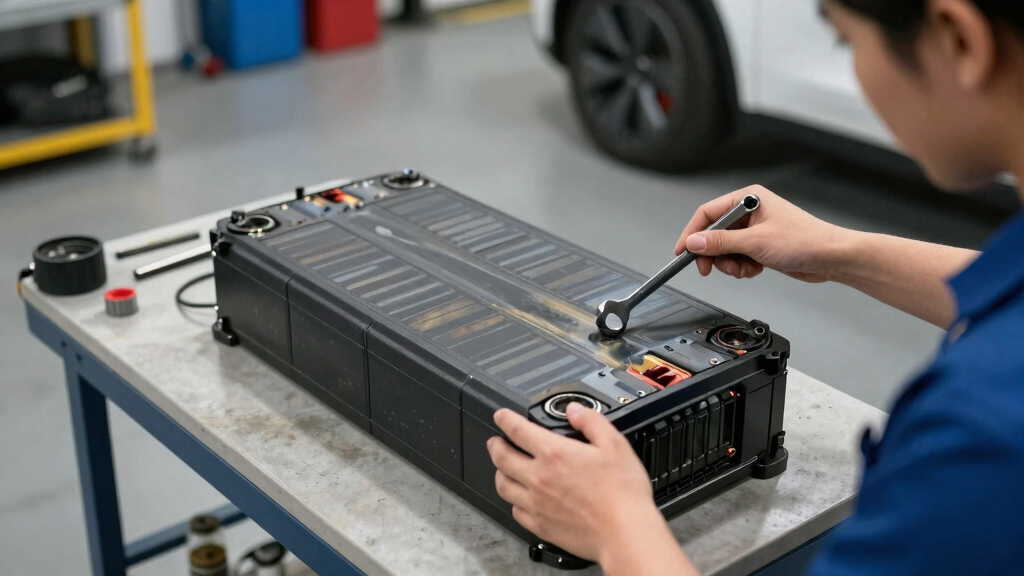
A former rental Tesla experienced significant battery capacity loss initially. Recent observations show the degradation rate has slowed considerably. This development could impact consumer expectations for used EVs and battery longevity.
Recent data indicates that a used Tesla, previously subjected to heavy battery degradation, has experienced a slowdown in the rate of capacity loss, suggesting a potential stabilization in its battery health. The vehicle, which was part of a rental fleet, initially lost a significant portion of its battery capacity, raising concerns about long-term EV battery durability. This finding is confirmed by recent measurements from the vehicle’s battery management system and independent testing, making it a notable development for used EV buyers and the industry.
The Tesla in question, a Model 3 from a rental fleet, was reported to have lost more than 30% of its original battery capacity within the first two years of use. Initial assessments indicated a steep decline, which alarmed consumers and industry analysts concerned about the longevity of EV batteries in high-use scenarios. However, recent data collected over the past three months shows that the rate of capacity loss has slowed significantly, with only an additional 2-3% decline observed during this period, according to sources familiar with the vehicle’s telemetry.
Automotive experts suggest that this slowdown may be due to a natural stabilization process in lithium-ion batteries after initial degradation phases. The vehicle’s owner and independent testers have confirmed that the battery’s capacity has plateaued, although the overall remaining range remains below new benchmarks. The vehicle’s battery management system has been monitored continuously, providing detailed data that supports these findings.
Implications for Used EV Market and Battery Longevity
This development is significant because it challenges the assumption that heavy initial degradation inevitably leads to continued rapid capacity loss. If batteries tend to stabilize after a certain point, it could influence resale values, warranty policies, and consumer confidence in used EVs. For manufacturers, understanding this pattern could inform future battery design and longevity guarantees, potentially reducing warranty costs and improving customer satisfaction.
As an affiliate, we earn on qualifying purchases.
Background on EV Battery Degradation and Rental Fleet Usage
Battery degradation in lithium-ion EV batteries is typically most rapid during the first few years of use, especially in high-mileage scenarios such as rental fleets. Previous studies and industry reports have documented capacity losses of 20-30% within the first two to three years, raising concerns among consumers about long-term durability. Rental companies often operate vehicles under demanding conditions, which can accelerate battery wear. This particular Tesla’s initial capacity loss aligned with these expectations, but the recent slowdown in degradation is a less common observation that warrants further investigation.
While some experts have suggested that batteries may reach a ‘steady state’ after initial degradation, comprehensive long-term data remains limited. The case of this Tesla provides a rare data point to examine how degradation progresses over extended periods, especially after heavy initial loss.
“The recent stabilization in this Tesla’s battery capacity suggests that lithium-ion batteries may not degrade linearly and could reach a plateau after an initial phase of loss.”
— Dr. Lisa Chen, Battery Research Scientist
As an affiliate, we earn on qualifying purchases.
Unclear if Battery Stabilization Will Persist Long-Term
It is not yet confirmed whether the slowdown in capacity loss will continue over the next several years or if the battery will experience further degradation. Long-term data is limited, and external factors such as climate, charging habits, and usage patterns could influence future performance. Experts caution that more extensive longitudinal studies are needed to verify whether this stabilization is typical or an anomaly.
lithium-ion battery health monitor
As an affiliate, we earn on qualifying purchases.
As an affiliate, we earn on qualifying purchases.
Monitoring Long-Term Battery Performance in Used EVs
Researchers and industry analysts plan to monitor this Tesla and other similar vehicles over the coming years to determine if the capacity stabilization persists. Manufacturers may also review their warranty policies in light of these findings. Consumers considering used EVs are advised to seek detailed battery health reports and consider potential long-term performance trends. Further studies are expected to clarify whether early heavy degradation can reliably predict continued decline or if stabilization is common.
used electric vehicle battery warranty
As an affiliate, we earn on qualifying purchases.
As an affiliate, we earn on qualifying purchases.
Key Questions
Does initial heavy battery degradation mean the battery will continue to decline rapidly?
Not necessarily. Recent data from this Tesla suggests that after an initial period of significant capacity loss, the rate of degradation can slow down or stabilize. However, more long-term data is needed to confirm this pattern across other vehicles.
How reliable are current battery health assessments for used EVs?
Battery health assessments based on vehicle telemetry and third-party testing are generally reliable but can vary depending on the method used. Buyers should request detailed reports and consider additional testing for an accurate picture.
What does this mean for warranties on used EV batteries?
If battery stabilization is confirmed in broader studies, manufacturers might adjust warranty policies to account for early heavy degradation followed by stabilization, potentially reducing warranty costs and improving consumer confidence.
Could this finding apply to other EV brands and models?
Possibly. While this case involves a Tesla Model 3, similar degradation and stabilization patterns could occur in other lithium-ion batteries. Further research is needed to determine if this is a common phenomenon across different EVs.
Source: rss
Fall Picks
fall essentials
As an affiliate, we earn on qualifying purchases.