To inspect and true vintage spoked wheels, first check tire pressure to guarantee proper riding conditions. Examine spokes for looseness, bends, or breaks, and pluck them to gauge tension, aiming for a consistent pitch. Use a spoke tension meter if available. For truing, loosen spokes causing rim misalignment, then tighten the opposite side gradually, making small adjustments. Proper lacing and tension are vital for a smooth, durable ride—continue to learn how fine-tuning keeps your wheel in top shape.
Key Takeaways
- Visually inspect spokes for looseness, bending, or breakage; use a spoke tension meter or pluck spokes to check tension consistency.
- Ensure spokes are properly laced with correct crossing patterns and evenly spaced for optimal wheel strength.
- Use a wheel truing stand or brake calipers to identify side-to-side and up-and-down rim deviations.
- Gradually tighten or loosen spokes with a spoke wrench, making small quarter-turn adjustments to true the rim.
- Regularly check and maintain spoke tension to prevent warping, cracking, or rim deformation over time.
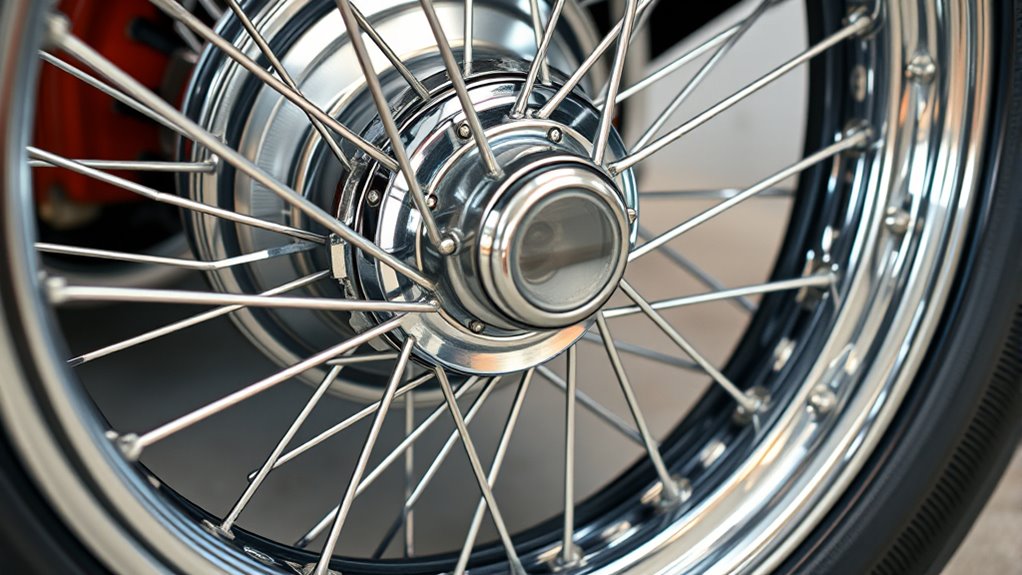
Have you ever wondered how to enhance the performance and appearance of your spoked wheels? Whether you’re riding a vintage bicycle or restoring an old motorcycle, properly tuning your wheels makes a huge difference. The first step is understanding the importance of tire pressure and spoke lacing. Correct tire pressure ensures a smooth ride and prolongs the lifespan of your rims and tires. Too low, and you’ll experience sluggish handling and increased risk of flats; too high, and you’ll lose comfort and grip. Check your manufacturer’s recommended PSI and regularly maintain that pressure for peak performance. This simple adjustment can dramatically improve how your wheels roll and how they look.
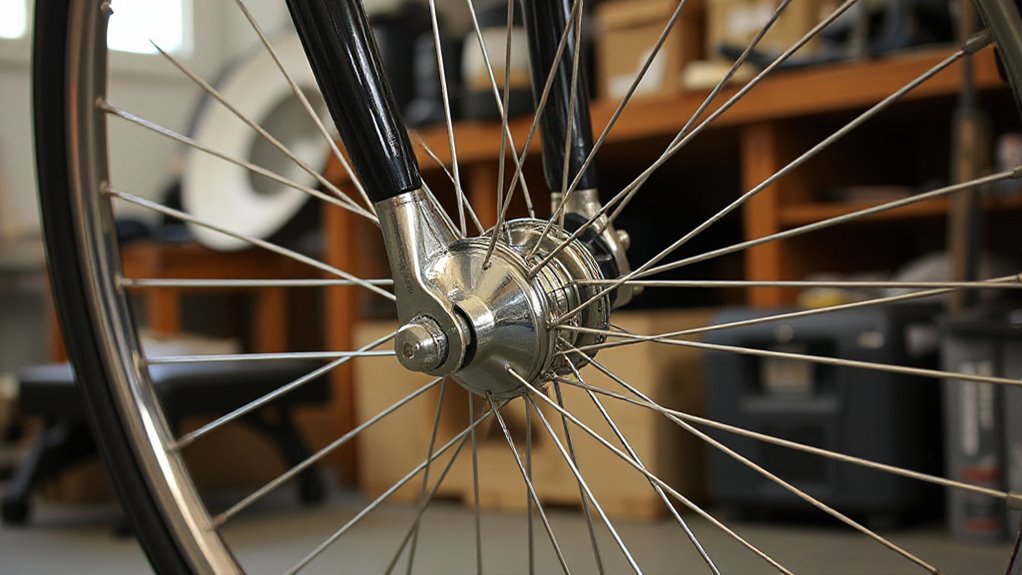
Next, focus on spoke lacing. Proper spoke tension is essential for wheel strength, true roundness, and overall durability. When inspecting your vintage rims, start by visually examining the spokes. Look for any that are loose, bent, or broken. Loose spokes cause wobbling, uneven wear, and can lead to more serious damage if neglected. Use a spoke tension meter or pluck the spokes gently to gauge their sound; consistent pitch indicates even tension. If some spokes are noticeably different, you’ll need to tighten or loosen them to bring the wheel back into true. Remember, spoke lacing isn’t just about aesthetics—it affects the wheel’s structural integrity. A well-laced wheel distributes tension evenly across all spokes, preventing warping or cracking over time.
When you’re ready to true the wheel, loosen the tension on the spokes that are pulling the rim out of alignment and tighten those on the opposite side. Make gradual adjustments, turning the spoke nipples by quarter turns, and check your progress frequently. A true wheel spins smoothly without wobbling side to side or up and down. This process may require patience, especially on vintage rims that have seen years of use. While tuning, keep an eye on the overall tension—if the spokes are too tight, they can cause stress fractures or rim deformation. Proper spoke lacing also involves ensuring that the spokes cross correctly and are evenly spaced. This helps maintain the wheel’s strength and prevents uneven wear. Additionally, understanding spoke tension and how it impacts wheel durability can help you achieve a safer, more reliable ride.
Frequently Asked Questions
How Often Should Vintage Spoked Wheels Be Inspected?
You should inspect your vintage spoked wheels at least every 3 to 6 months, especially if you ride frequently or on rough terrain. Check for wheel alignment issues, which can affect performance, and look for spoke corrosion that might weaken the structure. Regular inspections help catch problems early, ensuring your wheels stay true and safe. Don’t skip these checks to maintain peak performance and longevity of your vintage rims.
Can I Tune Spokes Without Professional Tools?
You can attempt to tune spokes without professional tools, but it’s challenging. Start by examining your spoke patterns and checking for loose or broken spokes, which affect rim maintenance. Use your hands to gently tighten or loosen spokes, keeping an eye on tension balance. However, for precise adjustments and to avoid damaging your vintage rims, it’s best to consult a professional bike mechanic. Proper tuning guarantees smooth riding and rim longevity.
What Are Signs of a Rim Needing Replacement?
If your rim shows signs of corrosion or you notice spoke rust, it’s likely time to replace it. Look for cracks, dents, or warping, which indicate structural issues. Excessive rust weakens the rim’s integrity, making it unsafe. If you see significant corrosion or rust that can’t be cleaned or treated, replacing the rim guarantees safety and peak performance. Regular inspections help catch these signs early before they become serious problems.
How Does Spoke Tension Affect Wheel Durability?
You should know that proper spoke tension is vital for wheel durability. If the tension is too loose, your wheel becomes prone to warping and damage under stress. Conversely, overly tight spokes can cause rim deformation or spoke breakage. Maintaining balanced spoke tension ensures even load distribution, preventing premature wear. Regularly check and adjust spoke tension to keep your vintage wheel strong, reliable, and ready for riding.
Are There Specific Maintenance Tips for Different Rim Materials?
You should regularly check for rim corrosion, especially if you ride in wet or salty conditions, and clean your rims with gentle brushes and water. For different rim materials, like aluminum or steel, apply appropriate spoke lubrication to reduce corrosion and friction. Proper maintenance also means inspecting for cracks or warping and re-lubricating spokes periodically, ensuring your wheel remains strong and smooth over time.
Conclusion
By regularly inspecting and truing your vintage spoked wheels, you guarantee a smooth, safe ride and prolong their lifespan. For example, imagine noticing a slight wobble before a long ride—addressing it promptly by adjusting the spokes can prevent uneven wear or potential failure. With a little practice and attention, you’ll keep your rims in top shape, preserving both their vintage charm and riding performance for years to come.