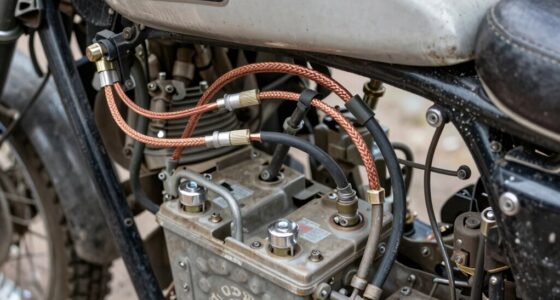
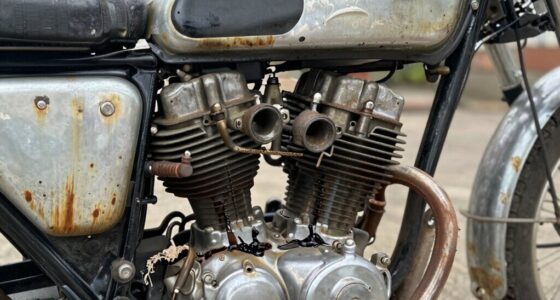
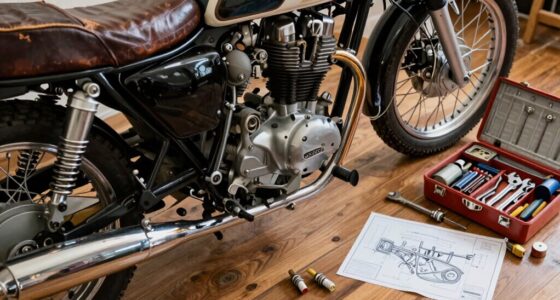
When planning a vintage ride, pack a compact emergency toolkit with essential tools like a multi-tool, screwdriver set, pliers, and a portable tire pump, along with spares such as extra fuses and a spare tube. Include safety items like a flashlight with batteries, reflective gear, and a whistle for signaling. Having these essentials will keep you prepared for common issues and roadside safety. Keep exploring for tips to optimize your vintage adventure kit.
Key Takeaways
- Carry a multi-tool, screwdriver set, and pliers for versatile on-the-spot repairs.
- Include a portable tire pump, spare tube, and basic fuses for flat and electrical issues.
- Bring extra batteries, a flashlight, and reflective gear for visibility and nighttime emergencies.
- Pack a printed map, GPS device, and two-way radios for navigation and communication.
- Practice DIY repair skills beforehand to handle common mechanical problems efficiently.

Have you ever wondered if you’re truly prepared for unexpected emergencies? When you’re out on a vintage ride, the last thing you want is to find yourself stranded because of a minor mechanical issue or communication breakdown. That’s where assembling a reliable emergency toolkit becomes essential. Your toolkit isn’t just about having the right tools; it’s about being ready to handle situations swiftly and confidently. With a few DIY repair tips and the right emergency communication gear, you can navigate many problems that might otherwise ruin your day.
Start by including basic tools that cover most common repairs. A quality multi-tool, a set of screwdrivers, pliers, and a portable tire pump should be at the top of your list. These are versatile and can help you fix flat tires, tighten loose bolts, or adjust parts on the spot. Carry spare fuses, a small flashlight, and extra batteries to guarantee you’re prepared for low-light conditions or sudden power failures. Remember, simple DIY repair tips can go a long way—knowing how to change a flat or tighten a loose chain can save you hours of waiting for roadside assistance. Practice these skills beforehand so they become second nature when needed.
Equally important is your emergency communication gear. Cell phone coverage might be spotty or nonexistent in remote areas, so consider packing a portable charger or power bank. A two-way radio or walkie-talkies are excellent additions, especially if you’re riding with a group. These devices allow you to stay in touch even without cell service, which can be vital if someone gets separated or needs help. A whistle and reflective gear improve your visibility to others, especially during roadside stops or if night falls unexpectedly. Don’t forget a printed map or GPS device—digital navigation tools can fail, and having a backup map guarantees you won’t lose your way.
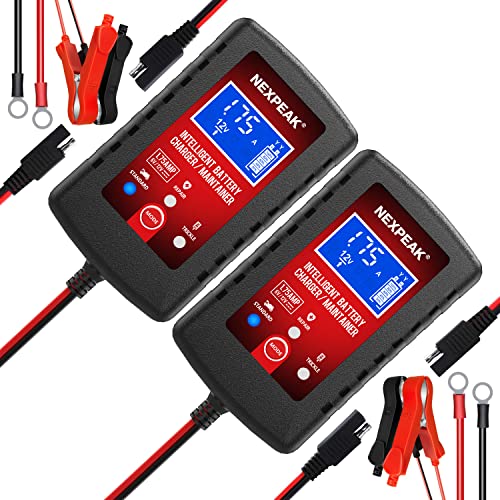
2-Pack Smart Fully Automatic 6V 12V Battery Charger Maintainer for Car, Marine, Motorcycle, Lawn Mower
【Battery Charger, Maintainer & Desulfator】An compact size portable 4 in 1 battery charger, battery maintainer, trickle charger, and...
As an affiliate, we earn on qualifying purchases.
Frequently Asked Questions
How Do I Choose the Right Tools for My Vintage Motorcycle?
To choose the right tools for your vintage motorcycle, start with a custom tool kit tailored to your bike’s make and model. Refer to vintage repair guides to identify essential tools like wrenches, screwdrivers, and pliers. Focus on quality and portability, ensuring you can handle common issues on the road. Regularly update your toolkit based on your riding experiences to stay prepared for any unexpected repairs.
What Are Common Spares Needed for Vintage Rides?
Oh, the irony of vintage rides—breakdowns are almost part of the charm. You’ll want spare parts like spark plugs, clutch cables, and brake shoes for quick fixes. Carry extra filters, fuses, and bulbs to keep things running smoothly. Remember, regular maintenance tips like checking oil levels and brake function help prevent surprises. With these spares, you’re ready for the unexpected, making your ride more enjoyable and less stressful.
How Do I Pack My Toolkit Efficiently for Vintage Travel?
You pack your toolkit efficiently by focusing on tool organization and lightweight packing. Use a small, sturdy container to keep your tools sorted by function, making quick access easy. Select only essential spares and multi-tools to minimize weight. Wrap sharp or fragile items carefully, and keep everything compact. This way, your toolkit stays manageable, ensuring you’re prepared without overloading your vintage ride, so you can enjoy your journey seamlessly.
Can I Repair Vintage Bikes Without Specialized Training?
You can handle basic repair techniques on vintage bikes even without specialized training. With some guidance, you’ll learn to perform simple fixes like adjusting brakes or fixing a flat. Keep your tools well-maintained, so they work smoothly when needed, and practice common repair techniques to boost your confidence. While complex issues might require expert help, your proactive approach and the right toolkit will help you enjoy your ride with peace of mind.
What Safety Precautions Should I Take When Fixing on the Road?
When fixing your bike on the road, always wear safety gear like gloves and eye protection to prevent injuries. Make sure your phone is charged and emergency contacts are easily accessible in case you need help. Work in a safe, well-lit area away from traffic, and keep your tools organized. Stay alert, and if you’re unsure about a repair, don’t hesitate to seek professional assistance to stay safe.

Trickle Charger 12V 1000mA Smart Battery Charger & Maintainer and Automatic Float Charger for Motorcycle, ATV, Lawnmowers and More
Easy To Use - Small size design, easy to install in tight places. 12V battery charger easy connection...
As an affiliate, we earn on qualifying purchases.
Conclusion
Having a well-stocked emergency toolkit ensures you’re prepared for unexpected setbacks. Imagine you’re miles from help when your vintage bike’s chain snaps — with a spare link and multi-tool in your kit, you quickly fix the issue and keep riding. Carrying essential spares and tools isn’t just about convenience; it’s about peace of mind. Stay proactive, be prepared, and enjoy your vintage ride knowing you can handle surprises along the way.

Battery Tender Plus 4 Bank Multibank Charger - 5 AMP (1.25 AMPs Per Bank) - Smart 12V Multi Battery Charger and Maintainer for Standard, AGM, and Lithium LiFePO4-022-0148-DL-WH
4 Charging Stations: Charge up to four 12 volt batteries at 1.25 AMPs simultaneously; automatically switches from full...
As an affiliate, we earn on qualifying purchases.
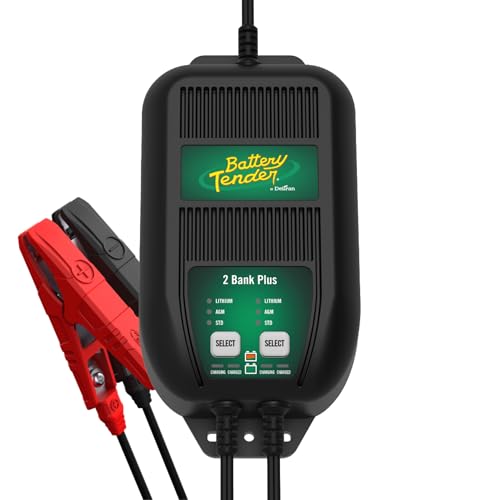
Battery Tender Plus 2 Bank Multibank Charger - 2.5 AMP (1.25 AMPs Per Bank) - Smart 12V Multi Battery Charger and Maintainer for Standard, AGM, and Lithium LiFePO4-022-0165-DL-WH
Solid state two color LED indicates stage of charger; spark proof and reverse polarity protected
As an affiliate, we earn on qualifying purchases.