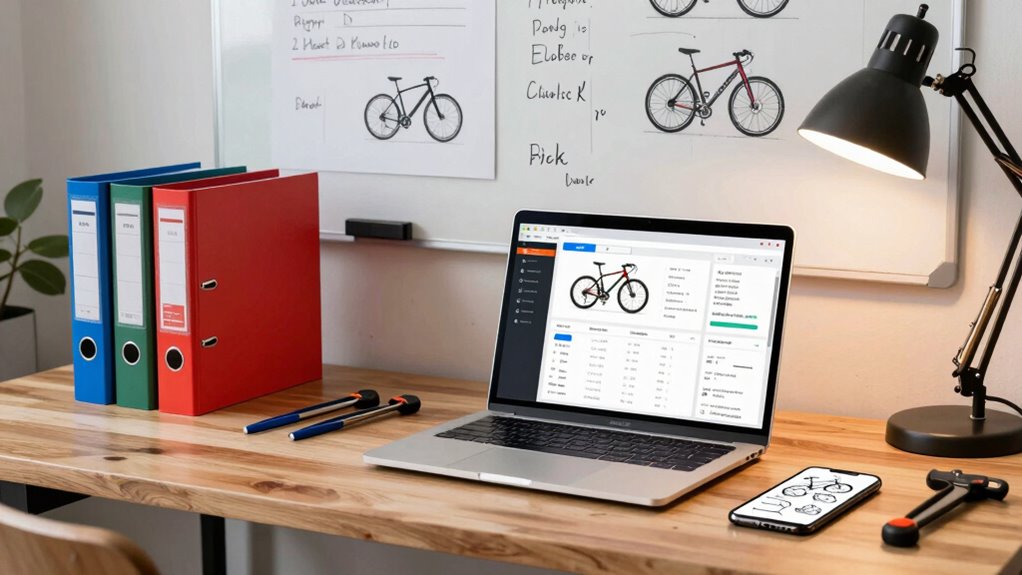

To build an information archive for your bike, start by documenting maintenance logs, safety checks, incident history, riding habits, and environmental conditions regularly. Keep track of parts used, component longevity, and any recurring issues to prevent future problems. Use this data to plan proactive maintenance and safety measures. Staying consistent helps you stay on top of bike care and safety. If you keep exploring, you’ll discover how to optimize your bike’s performance even further.

Get business pricing on garage and car supplies
- Business-only prices and quantity discounts
- Tax-exempt purchasing
- Multiple users, one account, clear invoices
Key Takeaways
- Create a dedicated maintenance log documenting dates, activities, parts used, and bike condition for easy reference.
- Record safety checks, troubleshooting steps, and incident reports to monitor recurring issues and improve safety.
- Track component lifespan and repairs to plan proactive replacements and extend bike longevity.
- Log riding habits, environmental conditions, and routes to customize maintenance and safety routines.
- Regularly review and organize all records to develop a comprehensive archive for resale, professional assistance, or future reference.
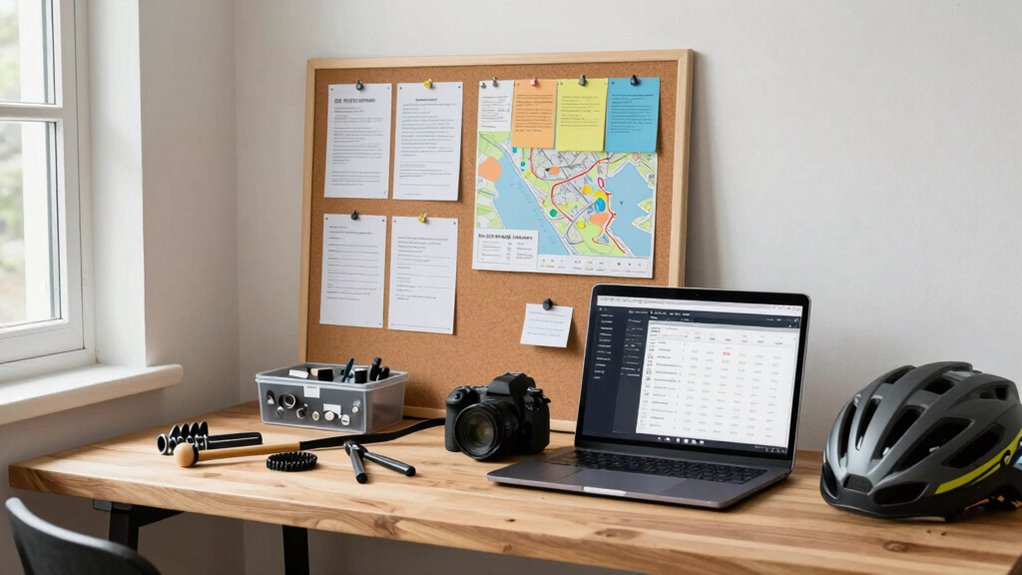
A well-organized archive should include a maintenance log where you record every bike maintenance activity, like chain lubrication, brake adjustments, tire replacements, and gear tuning. Write down the date, what was done, and any parts used. This not only keeps you informed about your bike’s condition but also helps identify patterns that could indicate underlying issues. For example, if your brake pads wear out faster than expected, you’ll know when to check for potential problems and apply safety tips to prevent accidents. Maintenance schedule is essential for keeping your bike in optimal condition. Additionally, establishing a routine for reviewing these records can help you stay proactive about maintenance and safety.
Incorporate safety tips into your archive by noting any safety checks you’ve performed. These can include tire pressure verification, brake effectiveness tests, and light or reflector inspections. Regularly reviewing these records ensures you don’t overlook critical safety aspects before riding. If you encounter specific issues, document how you fixed them, including troubleshooting steps and solutions. This record becomes invaluable if you need to seek professional help later or if you plan to sell your bike, as it demonstrates proper care and maintenance. Additionally, keeping a record of bike-related incidents can help you track recurring issues and improve overall safety. Maintaining a detailed record can also help you identify component lifespan and plan for replacements proactively.
Additionally, keep a record of your riding habits and conditions, such as frequent routes or weather conditions. This information can help you customize your maintenance schedule and safety tips accordingly. For example, if you ride in wet conditions often, you might need to clean and lubricate your chain more frequently to prevent rust and ensure smooth operation. Over time, your archive becomes a personalized safety manual that guides your bike care routine, helping you ride safely and efficiently. Regularly updating your maintenance records can also help extend the lifespan of your bike components. Furthermore, maintaining this detailed archive can aid in tracking component lifespan, allowing for better planning of replacements before failure occurs.
As an affiliate, we earn on qualifying purchases.
Frequently Asked Questions
How Often Should I Update My Bike’s Information Archive?
You should update your bike’s information archive anytime you install new bike accessories or participate in cycling events. Regular updates guarantee all details, like maintenance records, part replacements, and upgrades, are current. After major repairs or upgrades, update immediately. If you attend cycling events, note your performance and experience. Keeping your archive fresh helps with maintenance, resale, and tracking your cycling journey, making your riding experience smoother and more organized.
What’s the Best Way to Organize Digital Records?
The best way to organize your digital records is to use clear folders labeled by categories like maintenance, upgrades, and receipts. Save files in a consistent format for easy searching. Use digital storage on your computer or external drives, and always back up your data to the cloud. Cloud backup guarantees your bike information stays safe even if your devices are lost or damaged. Regularly update and review your organization system.
Can I Include Maintenance Tips in the Archive?
Think of your bike archive as a well-stocked toolbox. Yes, you can include maintenance tips to keep your bike in top shape. Document its bike history, including repairs and upgrades, and note spare parts used or needed. This way, when issues arise, you’ll quickly find the advice and details to troubleshoot. Your archive becomes a trusted guide, helping you maintain your bike’s performance and extend its lifespan.
How Secure Is My Personal Bike Information Online?
Your personal bike information online can be quite secure if you use strong privacy settings and data encryption. Always enable privacy options on your platform, restrict access to trusted individuals, and choose encrypted storage solutions. Regularly update your privacy settings and use secure passwords. These steps help protect your data from unauthorized access, ensuring your bike information remains private and safe from potential online threats.
Should I Share My Archive With Other Cyclists?
Yes, sharing your archive with other cyclists can be beneficial, but you should consider sharing privacy and archive accessibility carefully. If you share, guarantee sensitive details are protected and only relevant information is accessible. Sharing can foster community support and knowledge exchange, but always prioritize your privacy. You decide who accesses your archive, balancing openness with security, so you maintain control over your personal bike information.
As an affiliate, we earn on qualifying purchases.
Conclusion
By creating this archive, you’re not just storing data—you’re building a legacy, much like the rider who leaves tracks for others to follow. Think of it as your personal compass, guiding you through future repairs and adventures. Just as a well-worn trail reveals stories of journeys past, your organized information becomes a proof to your dedication and love for riding. Keep this archive alive, and it will serve you well on every path you take.
As an affiliate, we earn on qualifying purchases.
bike repair and troubleshooting kit
As an affiliate, we earn on qualifying purchases.
As an affiliate, we earn on qualifying purchases.
Fall Picks
fall essentials
As an affiliate, we earn on qualifying purchases.