When buying a classic motorcycle online, always verify the seller’s identity and trustworthiness using trusted platforms and documents. Check the vehicle’s history, VIN, and documentation thoroughly, and request detailed inspection videos or professional assessments. Conduct in-person or remote inspections carefully, paying attention to rust, damage, and key components. Protect your payment with secure methods, and watch out for red flags like low prices or suspicious photos. To avoid scams and find a reliable bike, stay vigilant; more helpful tips await you.
Key Takeaways
- Verify seller identity with trusted platforms, official documents, and in-person meetings to ensure trustworthiness.
- Check detailed vehicle history reports, VIN authenticity, and inspect for signs of damage or hidden issues.
- Conduct thorough in-person or remote inspections and test rides, focusing on structural and mechanical integrity.
- Use secure payment methods, escrow services, and avoid sharing sensitive bank details to prevent fraud.
- Recognize red flags like unrealistically low prices, stolen photos, and establish a realistic budget with community advice.
Verifying Seller Identity and Trustworthiness
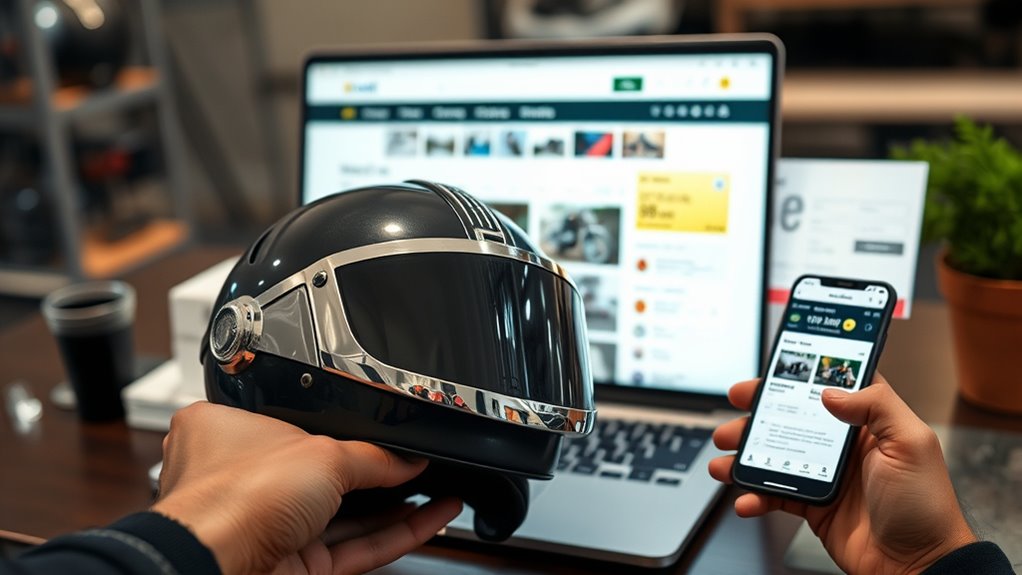
To avoid scams when buying a classic motorcycle online, verifying the seller’s identity is essential. Use identity verification services or platforms that authenticate users during account creation—these help confirm the seller isn’t using a fake profile. Ask for a government-issued photo ID or use biometric verification, like matching the seller’s photo with their ID through secure, privacy-compliant services. Cross-check contact details across different platforms to catch inconsistencies or fake accounts. Look for sellers with verified badges from reputable marketplaces, indicating they’ve completed formal identity checks. Finally, confirm the seller owns the motorcycle by verifying the title matches their name on official documents. These steps markedly reduce your risk of falling for scams and ensure you’re dealing with a legitimate seller. Verifying seller identities is a crucial step in protecting yourself from potential fraud, especially since online marketplaces often have mechanisms to help authenticate sellers and their listings.
Scrutinizing Vehicle History and Documentation
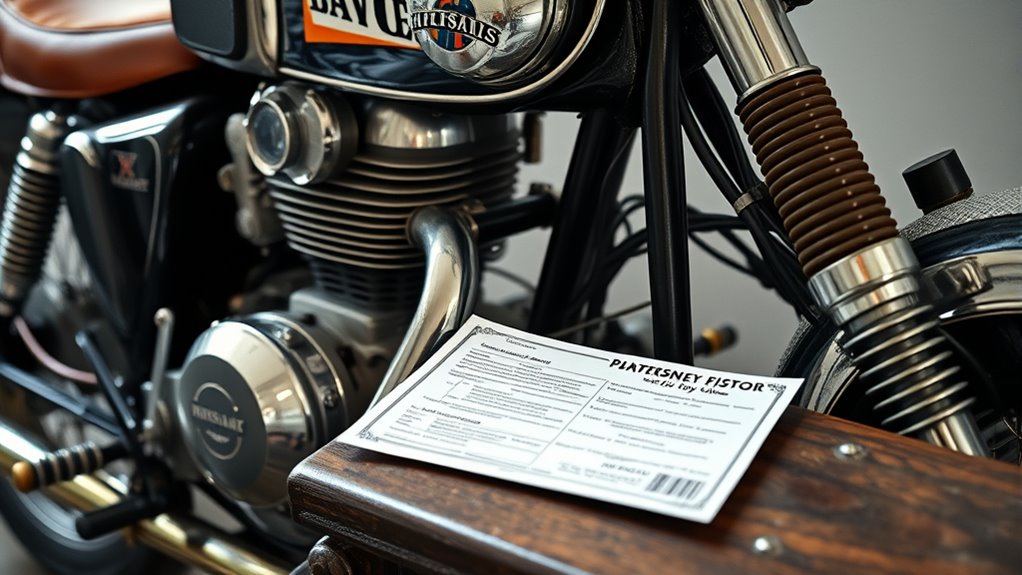
After confirming the seller’s identity, it’s equally important to scrutinize the motorcycle’s history and documentation. This step helps you verify the bike’s authenticity and condition. Here are key aspects to review:
Verify the motorcycle’s history and documents to ensure authenticity and condition before buying.
- Vehicle history reports: Check for title status (clean, salvage, rebuilt), accident records, and ownership history. These details reveal potential red flags and maintenance consistency. Note that Carfax does not provide motorcycle history reports, so using specialized services is essential. Understanding the importance of contrast ratio in visual quality can be analogous to assessing the clarity of a vehicle’s background — clear, detailed reports ensure you see a true picture without hidden flaws.
- Odometer readings: Ensure readings match the bike’s age and maintenance records. Watch for inconsistencies or rollback signs that could indicate tampering.
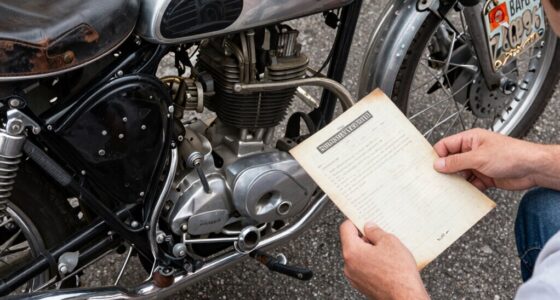
- Official documents: Confirm the VIN matches the frame, review title certificates, and verify repair or recall records. Missing or conflicting info may signal problems or fraud.
Thoroughly scrutinizing these elements helps you avoid surprises and guarantees you’re making an informed purchase.
Conducting Remote and In-Person Inspections
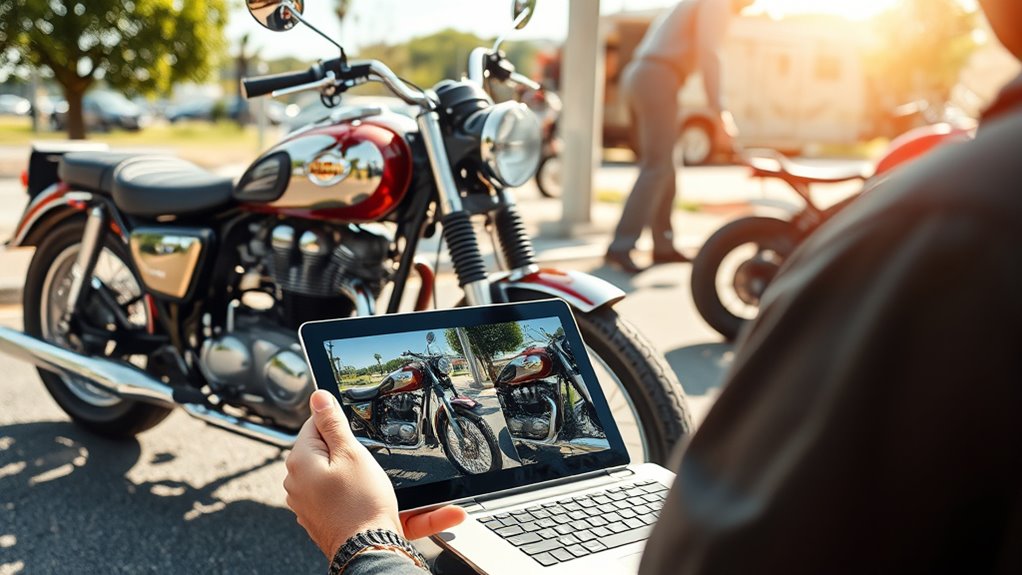
Conducting detailed inspections is essential when buying a classic motorcycle remotely or in person. For remote inspections, request high-definition videos showing all angles, including close-ups of tires, chain, and frame welds. Ask for videos of the bike running at idle and revving to spot abnormal noises or smoke. Use real-time calls to guide the seller in showing key components and performing simple tests like turn signals or brake engagement. Also, obtain measurements like tire tread depth or chain slack from the seller or a local mechanic. In person, check for frame cracks, rust, dents, and weld repairs. Examine tires for tread, dry rot, or uneven wear. Test lights, brakes, suspension, and controls. Verify serial numbers, maintenance history, and current issues. Consider hiring a professional for a thorough inspection. Thorough inspections can help identify hidden issues and prevent costly surprises. Additionally, understanding the horsepower of electric dirt bikes can give you insight into the bike’s performance capabilities and help assess whether it meets your riding needs.
Securing Payments and Ensuring Transaction Safety
Securing payments during a classic motorcycle transaction is essential to protect both buyers and sellers from fraud and financial loss. To do this effectively, guarantee your payment process incorporates:
- End-to-end encryption, so card data stays protected during transmission.
- PCI DSS-compliant payment gateways that handle data securely and prevent breaches.
- Multi-layer authentication like 3D Secure, AVS, and CVV checks, adding extra verification for card-not-present transactions.
- Regular security updates to your payment systems ensure vulnerabilities are patched promptly, maintaining the integrity of each transaction.
- Utilizing trusted payment platforms with bank-level encryption or escrow services that hold funds until both parties confirm the deal is complete. Avoid sharing bank details directly, and consider verified digital wallets for instant, secure transfers. These steps help minimize risks and ensure your payment process is safe and trustworthy.
Identifying Common Red Flags and Warning Signs
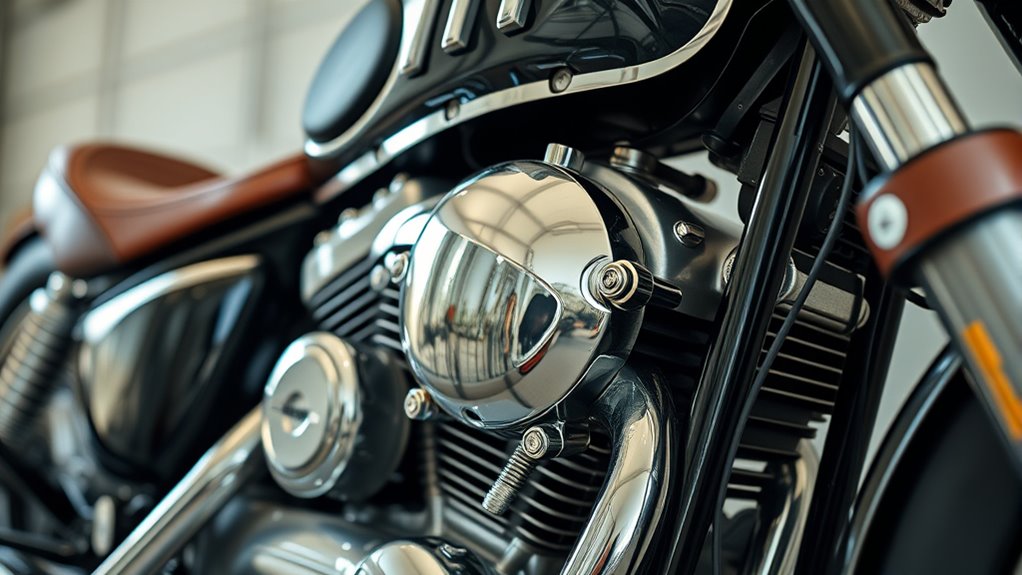
When inspecting a classic motorcycle, spotting red flags early can save you from costly problems down the line. Watch for signs of poor engine condition, like stalling, hard starts, smoke, or oil leaks, which suggest expensive repairs. Unusual noises or engine modifications without professional work also raise concerns about reliability. Check structural integrity—dents, rust, or frame cracks indicate past damage or neglect. Mismatched or cracked tires, uneven wear, or wheel issues compromise safety and hint at poor maintenance. Lack of detailed records or a clear title can hide hidden problems or legal risks. Signs of neglect, such as rusted bolts, excessive wear, or unprofessional repairs, warn you of long-term issues. Trust your instincts and look for consistent maintenance history to avoid buying a lemon. Always verify the title status to prevent potential legal complications later on. Additionally, understanding the importance of maintenance records can help you assess the motorcycle’s true condition and history.
Recognizing Fake Listings and Impersonation Tactics
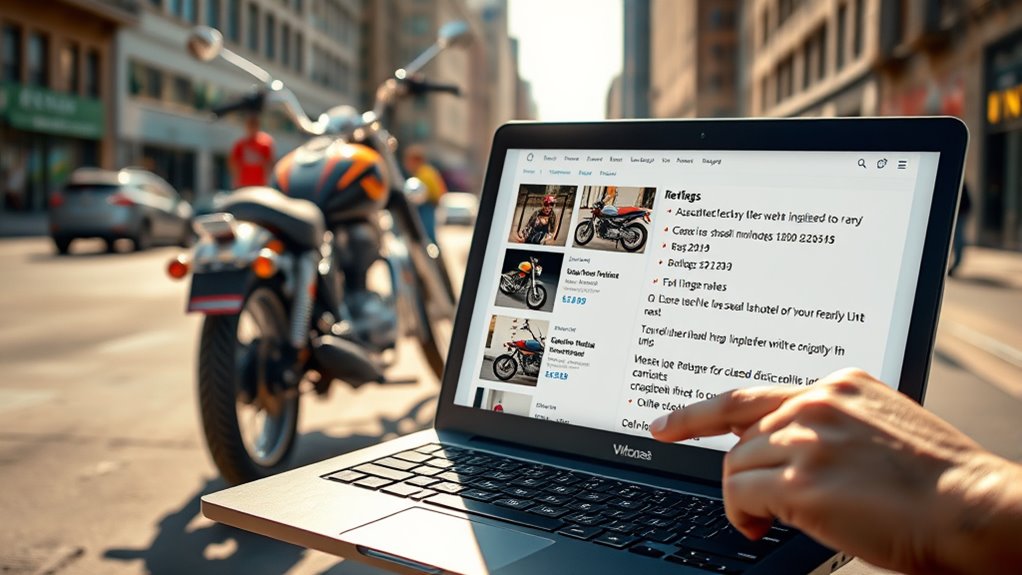
Recognizing fake listings and impersonation tactics is essential to avoid falling victim to online motorcycle scams. Scammers often use methods like:
To avoid scams, verify seller identity and inspect bikes in person whenever possible.
- Posting bikes with unrealistically low prices to lure quick deposits before inspection.
- Creating urgency through stories of financial hardship, military deployment, or limited-time offers.
- Using stolen or copied photos, VINs, and descriptions to mimic legitimate listings.
- Altering or disguising the odor characteristics of the vehicle or related items to mislead buyers.
Impersonation tactics include fake seller accounts, delaying proof of identity, and copying contact details of real sellers. They may also pressure you to communicate outside official platforms or request deposits via wire transfer. Always verify seller identities, request vehicle history reports early, and see the bike in person when possible to protect yourself from these scams.
Tips for a Safe and Successful Purchase Experience

Ensuring a safe and successful purchase of a classic motorcycle requires careful planning and diligent research. Start by setting a realistic budget that includes not just the bike’s price but also potential repairs, restorations, shipping, insurance, and registration costs. Research model history and verify the VIN to confirm authenticity and check for prior accidents or theft. Engage with owner groups and forums for insights on common issues. When choosing a seller, prefer those who allow test rides and meet in person at secure locations, such as events or trusted venues. Always conduct a thorough inspection and test ride before buying. Check critical components like the frame, engine, and brakes, and look for rust or leaks. Join owners’ groups and forums for insights, which can provide valuable advice on what to look for and typical problems. Additionally, consulting vetted resources can help you identify reputable sellers and avoid scams. This approach minimizes risks and helps you make a confident, informed purchase.
Frequently Asked Questions
How Can I Verify a Seller’s Physical Address and Contact Details?
You can verify a seller’s physical address by using online mapping services like Google Maps to confirm it exists and matches the description. Cross-check the address on social media or other platforms for consistency. For contact details, use reverse phone lookups and validation services for emails to confirm authenticity. Call or email the seller to test responsiveness, and avoid anyone who provides disposable contact info or is evasive.
What Are the Best Third-Party Tools to Check Motorcycle VIN Authenticity?
Think of third-party VIN tools as your digital detective, uncovering hidden truths. You should use VinPit for thorough history reports, including ownership, damage, and salvage records. Check NICB’s VINCheck to see if the motorcycle’s linked to theft or insurance claims. For detailed insights, VinAudit offers ownership and title info, while NHTSA’s free decoder confirms structural validity. These tools help you spot fakes and guarantee authenticity before buying.
How Do I Detect if Vehicle Photos Have Been Digitally Altered?
You can spot digital alterations by carefully examining the photos for unnatural shadows, inconsistent lighting, or overly sharp edges around the motorcycle. Look for repetitive patterns or cloned textures that suggest editing, and check for color inconsistencies across different parts. Use image forensic tools like Error Level Analysis or pixel-level inspection to identify anomalies. Cross-reference images online or request videos to verify the vehicle’s authenticity and guarantee the photos are genuine.
What Specific Questions Should I Ask the Seller About the Motorcycle’s History?
Think of uncovering a motorcycle’s history like peeling an onion—layers reveal true value or hidden flaws. You should ask about the VIN’s authenticity, any signs of tampering, and if it matches engine numbers. Inquire about past accidents, repairs, modifications, and ownership history. Request maintenance records, original parts, and details on paint and restorations. These questions help you see through the surface and avoid surprises later.
How Can I Confirm the Legitimacy of an Escrow Service Before Payment?
You can confirm an escrow service’s legitimacy by verifying its licensing with state authorities and contacting them directly. Check for a physical address, a working phone number, and secure website features like HTTPS. Look for reviews or endorsements from consumer protection agencies, and avoid sites with suspicious domains or requesting payments through untraceable methods like Western Union. Ascertain clear communication, and demand verified identification to protect your transaction.
Conclusion
By staying vigilant and following these tips, you’ll navigate online motorcycle purchases like a seasoned rider on a open road. Trust your instincts, double-check all details, and don’t be afraid to ask questions—it’s your best armor against scams and lemons. Remember, a smooth ride begins with a cautious start. With the right preparation, you’ll soon be cruising on your classic motorcycle, turning heads and leaving worries in the dust.