
To get a title for your custom or kit-built bike, you need to guarantee it meets your local regulations for materials, safety standards, and proper labeling. This often involves passing an inspection, providing proof of parts, and possibly registering a serial number with your DMV or equivalent authority. Make sure your bike has all required components and certifications to avoid delays. Keep going to find out the specific steps needed in your area.

Get business pricing on garage and car supplies
- Business-only prices and quantity discounts
- Tax-exempt purchasing
- Multiple users, one account, clear invoices
Key Takeaways
- Verify local regulations and requirements for registering custom or assembled bikes in your region.
- Obtain necessary documentation such as receipts, manufacturer specs, and proof of component compliance.
- Ensure the bike’s frame and materials meet safety standards and are approved for road use.
- Schedule an inspection with a certified technician to confirm compliance and obtain certification.
- Register the bike with your local DMV or transportation authority, providing all required documentation and identification.

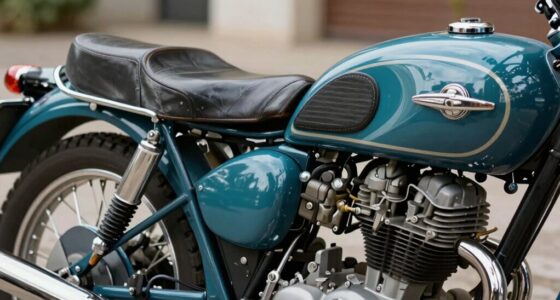
Have you ever wondered what it takes to officially register a custom build? When you’re creating a unique bike from scratch or assembling one from a kit, getting a title isn’t just about putting it together; it involves a few critical steps to make sure everything is legit. One of the first things you need to consider is the bike frame materials. Not all materials are created equal, and some might even impact your ability to register your bike legally. For example, frames made of certain metals or composites must meet specific standards to be considered roadworthy and compliant with safety regulations. If your custom frame uses unconventional or experimental materials, you might face additional scrutiny during the registration process to prove its strength and durability. Making sure your bike frame materials meet the required standards is essential because authorities want to make sure your bike can handle regular use without safety risks.
Beyond the frame, understanding legal compliance requirements is vital. Different states and countries have their own rules about what makes a bike eligible for registration and titling. Generally, your bike needs to have certain components, like working brakes, lights, and reflectors, and meet safety standards. If you’ve assembled your bike from a kit or built it from scratch, you’ll need to verify that all parts are legal and properly installed. This might mean keeping receipts, manufacturer specifications, or certification labels handy to demonstrate compliance if asked. Some jurisdictions also require that your bike has a VIN or a similar identification number. For custom builds, you may need to get a serial number registered or assigned through the local DMV or transportation authority. Additionally, utilizing appropriate safety standards can facilitate the registration process and ensure legality.
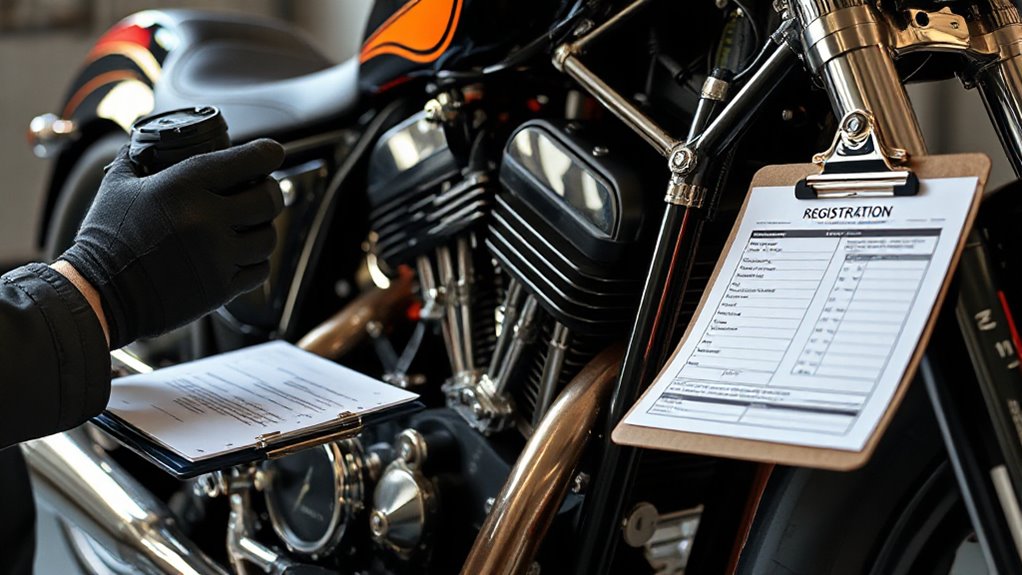
The process often involves an inspection, where a certified technician examines your bike to confirm it matches legal standards. During this step, they’ll check the bike’s components, frame integrity, and overall safety features. If your bike passes, you’ll receive the necessary documentation to register it officially. Remember, missing legal compliance requirements can delay or even prevent you from obtaining a title. So, before you start the registration process, double-check your local regulations and make sure that your build adheres to all safety and legal standards. Preparing all documentation in advance, including proof of parts and compliance, helps streamline the process.
Frequently Asked Questions
How Long Does the Registration Process Typically Take?
The registration process usually takes about 2 to 4 weeks, but processing times can vary depending on your local DMV. You might experience registration delays if there’s missing paperwork or if they need additional information. To avoid delays, guarantee you submit all required documents correctly and promptly. Checking with your DMV beforehand can give you a clearer idea of current processing times and help you plan accordingly.
Are There Fees Associated With Custom Build Registration?
You might worry about costs, but many jurisdictions offer a registration fee waiver for custom build variants, making the process more affordable. Typically, there is a registration fee, but it varies by location. It’s best to check with your local DMV, as some areas waive fees for certain custom builds. Overall, expect some expenses, but opportunities for fee waivers can substantially reduce your costs.
Can I Register a Bike Built From Multiple Kits?
Yes, you can register a bike built from multiple kits, but you’ll need to guarantee proper frame identification and kit compatibility. Check that each kit’s components fit together correctly and that the frame meets your state’s requirements. You may also need to provide detailed documentation to verify your build’s originality. This process helps confirm your bike’s identity, making registration smoother and ensuring legal compliance for your assembled bike.
What Documents Are Required for Registration?
Getting a title is like hitting two birds with one stone. You’ll need proof of ownership, such as receipts and a bill of sale, plus your ID. Don’t forget the VIN verification, which confirms your bike’s identity. Check your state’s license requirements, as some may ask for additional documents. Gather these ahead of time to make registration smooth sailing and avoid any last-minute surprises.
Is There a Deadline for Registering a Custom Build?
You need to register your custom build within the designated registration window limits, as build registration deadlines vary by state. Typically, you should complete registration soon after assembly to avoid penalties or delays. Check your local DMV’s specific deadlines since missing the registration window limits could result in fines or additional paperwork. Don’t wait too long—timely registration guarantees you get your title and can legally ride your bike.
Conclusion
Think of your custom build as a unique masterpiece, a ship you’ve carefully crafted for your journey. Registering it with a title is like hoisting your flag high—claiming ownership and pride in your creation. As you hold that title, it becomes your beacon, guiding you through future adventures and proving your story is one of craftsmanship and passion. Embrace this moment; it’s the key to setting sail on countless miles of memories ahead.
Halloween Picks
halloween
As an affiliate, we earn on qualifying purchases.