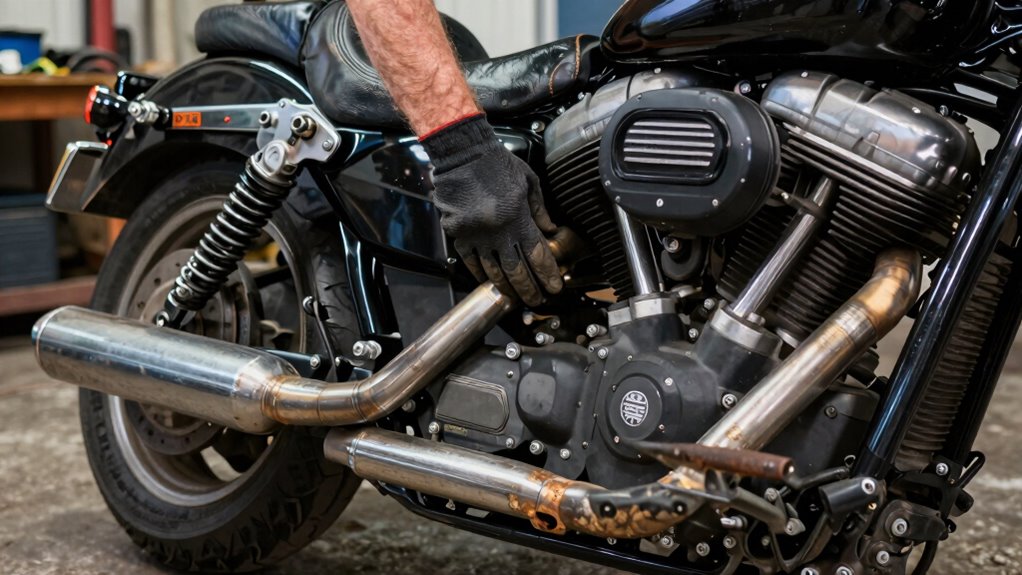

To inspect a used Harley touring bike like an expert, start by examining its overall appearance, noting any aftermarket parts or signs of poor workmanship. Check maintenance records for regular service and repairs. Physically inspect critical components—listen to the engine, check for leaks, rust, and frame damage. Test ride the bike for handling and stability, and pay attention to brakes and suspension. Ensuring proper documentation and evaluating wear helps confirm reliability. Keep exploring to uncover detailed inspection tips and expert advice.

Get business pricing on garage and car supplies
- Business-only prices and quantity discounts
- Tax-exempt purchasing
- Multiple users, one account, clear invoices
Key Takeaways
- Examine the bike’s overall condition, including frame integrity, aftermarket parts, and signs of poor workmanship or previous damage.
- Review detailed maintenance records, ensuring regular service, recent repairs, and consistent documentation.
- Conduct a thorough physical inspection of critical components like engine leaks, rust, suspension, and tire wear.
- Perform a test ride to evaluate handling, stability, braking, and response under real riding conditions.
- Verify that all modifications are professionally installed and confirm the bike’s history and wear through proper documentation.
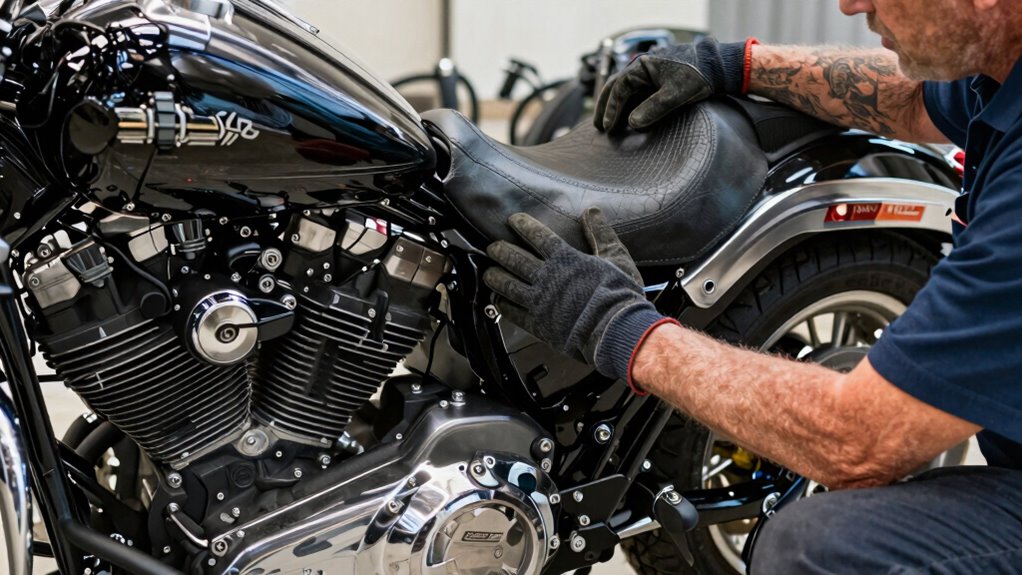
Buying a used Harley Touring bike can be a great way to get into the open road without breaking the bank, but it’s essential to know what to look for before making a purchase. When inspecting a used Harley, start by evaluating its overall condition and paying close attention to customization options. Many Harley owners personalize their bikes with aftermarket parts, which can affect the bike’s reliability and value. Make sure any modifications are professionally installed and compatible with your model. Look for signs of poor workmanship, like loose bolts, uneven welding, or mismatched parts, as these can indicate future issues. Also, consider whether the customization aligns with your riding style and preferences; some modifications may enhance performance, while others could compromise safety or longevity.
Next, explore the bike’s maintenance history. A well-documented maintenance record shows the bike has been cared for properly. Ask the seller for service records, receipts, and any recent work done. Regular oil changes, brake inspections, tire replacements, and scheduled tune-ups are signs of good upkeep. If the maintenance history is sparse or shows signs of neglect, it could lead to costly repairs down the line. Be wary of bikes with unclear or incomplete records, as they might have underlying issues that aren’t immediately visible. Also, inquire about any past accidents or major repairs, as these can impact the bike’s long-term reliability. Understanding the importance of regular maintenance can help you better evaluate the bike’s overall condition and longevity. Additionally, knowing how to identify wear and tear on critical components will help you make an informed decision.
A detailed maintenance history indicates proper care; incomplete records may hide costly issues later.
When you physically inspect the bike, pay attention to the engine, frame, and suspension. Turn the engine over and listen for abnormal noises or rough idling. Check for leaks or oil residue around the engine and transmission, which could indicate sealing or gasket problems. Look over the frame for cracks, rust, or signs of previous damage that might affect safety. Test the suspension by pushing down on the front and rear to see if it rebounds smoothly; any excessive play or squeaking could mean worn-out shocks. Examine the tires for uneven wear or damage, as these issues can impact handling and safety. Remember that the overall condition of critical components can significantly influence the bike’s performance and safety during your ride. Additionally, understanding the importance of regular maintenance can help you better evaluate the bike’s overall condition and longevity. Performing a thorough test ride will also reveal how well the bike performs under real riding conditions and help identify any issues that might not be visible during static inspection. Always remember that proper documentation can significantly influence your confidence in the bike’s history and condition.
Harley Touring bike inspection tools
As an affiliate, we earn on qualifying purchases.
As an affiliate, we earn on qualifying purchases.
Frequently Asked Questions
How Many Previous Owners Has the Bike Had?
You should ask the seller or check the ownership history to find out how many previous owners the bike had. Knowing this can reveal potential signs of previous accidents or mishandling, which might affect the bike’s condition. Fewer owners usually indicate better maintenance, but multiple owners could mean issues. Review service records and request a vehicle history report to confirm the number of owners and uncover any past accidents.
Are There Any Outstanding Recalls on This Model?
You should check for any outstanding recall notices on this Harley Touring model to address potential safety concerns. Visit the manufacturer’s website or contact a Harley-Davidson dealer with the bike’s VIN to verify if there are any recall notices. Staying informed about safety concerns guarantees you’re aware of necessary repairs or updates, which can save you money and keep you riding safely. Always prioritize safety when inspecting a used bike.
What Is the Bike’s Service History?
You want to know the bike’s service history, so ask for detailed maintenance records and the ownership history. Check if regular maintenance was performed and look for any major repairs or recalls. Review the records carefully to spot consistent care or potential issues. Confirm the ownership timeline to verify it wasn’t a short-term or questionable sale. This info helps you determine the bike’s overall condition and reliability before buying.
Has the Bike Been Involved in Any Accidents?
You should ask if the bike has been involved in any accidents, then closely inspect the frame for signs of damage or welds that suggest repairs, ensuring frame integrity. Check the paint condition for inconsistencies, overspray, or mismatched panels, which can indicate past repairs. These signs help you determine if the bike has been in a crash and whether it’s still structurally sound, giving you a clearer picture of its true condition.
Are Aftermarket Parts Affecting the Bike’s Value?
Aftermarket parts can impact the bike’s value, often positively or negatively depending on quality and originality. If the aftermarket impact includes high-quality upgrades that enhance performance or aesthetics, they might increase value. However, if the parts are poorly installed or cheap, they could reduce the bike’s worth and complicate resale. Consider how the aftermarket modifications align with the bike’s overall condition and your personal valuation before purchasing.
used Harley Davidson maintenance records
As an affiliate, we earn on qualifying purchases.
As an affiliate, we earn on qualifying purchases.
Conclusion
Inspecting a used Harley Touring bike is like peeling back the layers of an onion—you’ll discover the subtle signs of wear, history, and care. By paying close attention to every detail, you guarantee your investment won’t turn into a Pandora’s box of surprises. Approach the process with a keen eye and confidence, and you’ll find a gem rather than a gamble. Remember, a well-inspected bike is the key to a smooth ride ahead.
As an affiliate, we earn on qualifying purchases.
Harley Davidson suspension tester
As an affiliate, we earn on qualifying purchases.
As an affiliate, we earn on qualifying purchases.
Fall Picks
fall essentials
As an affiliate, we earn on qualifying purchases.