If you modify your bike with illegal lighting, missing mirrors, or non-compliant exhausts, you risk fines, failed inspections, or impoundment. Changing handlebar width, tires, or engine parts beyond legal limits can also get you in trouble. Using non-DOT approved accessories or altering noise levels may lead to safety issues and legal penalties. Stay within regulations to avoid costly fines—if you continue, you’ll discover how to keep your build street-legal.
Key Takeaways
- Installing non-DOT approved lighting or illegal colors can result in fines and failed inspections.
- Modifying engine, exhaust, or transmission beyond manufacturer specifications may lead to legal penalties.
- Handlingbar width, height, or tire size outside legal limits can make your bike non-compliant.
- Using aftermarket parts not meeting safety or manufacturer standards risks inspection failure and safety hazards.
- Failing to maintain proper documentation, registration, or insurance can cause legal issues and impoundment.
Non-Compliant Lighting and Signaling Equipment
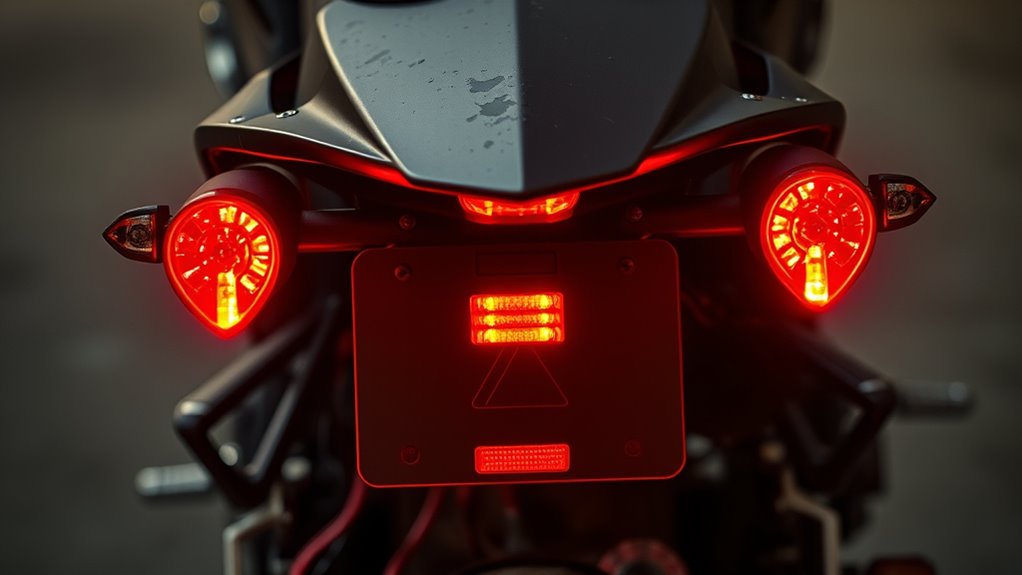
If your motorcycle’s lighting doesn’t meet federal and state standards, you risk legal trouble and reduced safety on the road. Non-compliant lights can lead to tickets, fines, or even jail time for riders, installers, or vendors. All headlights and taillights must adhere to FMVSS 108 standards, including proper beam pattern, color, and brightness. Headlamps should emit only white light; colors like yellow, amber, red, green, blue, or others are illegal for front-facing lights. Additionally, auxiliary or LED driving lights must meet strict regulations for beam pattern and output. Rear lights are typically red or amber, and flashing or oscillating lights are prohibited in most states. Using illegal lighting not only risks penalties but also compromises your visibility and safety on the road. Lighting standards are essential for ensuring your bike remains street legal and safe for all road users.
Improper or Missing Mirrors, Horns, and Visibility Devices

Did you know that having proper mirrors, horns, and visibility devices is essential for your motorcycle to stay street legal? Missing or improperly installed equipment can lead to citations or a bike being deemed illegal. Most states require at least one rearview mirror, with California needing two, including one on the left side that shows at least 200 feet behind. Horns must be functional and audible from about 200 feet; muffled or disabled horns violate safety laws. Visibility devices like mirrors and reflective tape help others see and hear you, reducing accident risk. Ensuring all equipment is in good condition and meets state standards is vital for safe riding and legal compliance.
Excessive or Illegal Exhaust and Noise Levels

Excessive or illegal exhaust and noise levels can quickly turn a street-legal motorcycle into a traffic violation. Laws set maximum noise limits measured at standardized distances, and removing or defacing noise labels on your exhaust infringes federal regulations. Your exhaust system must be in good working order, meet environmental standards, and include federally certified silencers. Using muffler cutouts, bypass devices, or aftermarket pipes without proper baffles is illegal on public roads. Modifications that increase noise beyond legal limits, like removing mufflers or installing unapproved pipes, can lead to fines or penalties. Enforcement often involves sound measurements and visual inspections. Excessive noise frustrates communities and can result in stricter local ordinances. Staying compliant ensures your bike remains street-legal and avoids costly violations. Regulations also specify that noise levels must be measured using approved procedures, ensuring that enforcement is consistent and fair. Additionally, proper maintenance of exhaust systems helps prevent unintentional violations and keeps your motorcycle within legal noise limits.
Unauthorized Handlebar and Tire Modifications
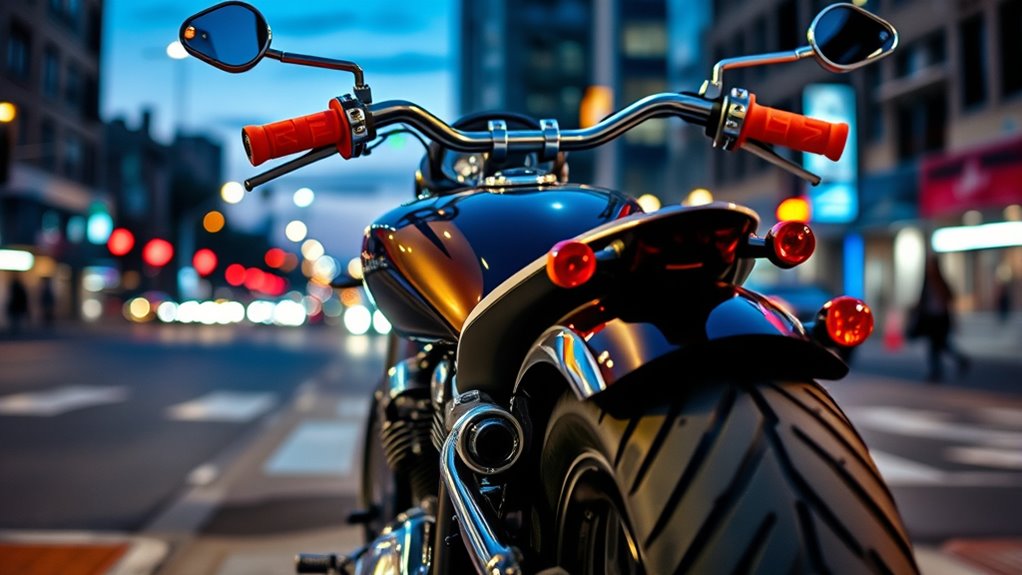
Unauthorized handlebar and tire modifications can compromise your motorcycle’s safety and legality. If your handlebars are too wide, tall, or asymmetrical, you risk failing inspections or facing fines. For example:
Unauthorized handlebar and tire mods can jeopardize safety and legal compliance.
- Handlebar width must be between 250 mm and 450 mm, or up to 550 mm for some categories, excluding mirrors and lights.
- Handlebar height should typically not exceed 15 inches above the seat, with some states allowing up to 30 inches.
- Tires must meet size and tread regulations to ensure proper handling and traction, avoiding oversized or undersized replacements. Tire regulations specify size and tread depth standards to ensure safety and compliance.
Handlebar width restrictions are specified in various regulations, and exceeding these dimensions can lead to legal issues. Going beyond these limits can impair steering, reduce control, and increase accident risk. Plus, non-compliant tires may not pass safety standards, leading to legal trouble and safety hazards.
Lack of Proper Documentation and Registration
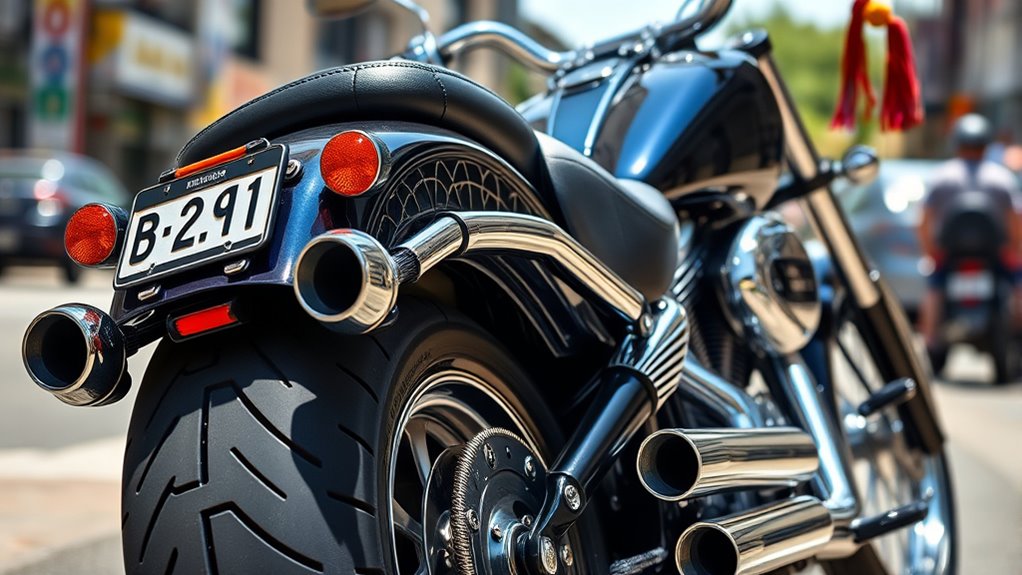
Ensuring your motorcycle is properly documented and registered is a fundamental step toward legal and safe riding. You need a valid title or Manufacturer’s Certificate of Origin to prove ownership, especially when registering or transferring the bike. If you buy from a private seller, a bill of sale is essential, and proper transfer of ownership must be completed to avoid registration issues. Salvaged or custom bikes require additional paperwork and inspections. Without the right documents, your registration can be delayed or denied, risking legal trouble. You also must have proof of insurance that meets your state’s minimum requirements; riding without it can result in fines or impoundment. Additionally, registration requirements vary by state, so understanding local laws is crucial. Finally, a valid driver’s license with the appropriate motorcycle endorsement is necessary to register and operate your bike legally. Staying compliant involves ensuring all necessary paperwork and documentation are in order before hitting the road.
Overly Altered Mechanical and Engine Components

When you modify your motorcycle’s engine or mechanical parts beyond manufacturer limits, you risk violating local laws and safety standards. These unapproved changes can lead to fines, failed inspections, or even impoundment. Staying within legal limits guarantees your bike remains street-legal and safe to ride. Furthermore, unauthorized mechanical modifications can compromise the vehicle’s safety features and overall integrity.
Engine Performance Violations
Are you aware that altering or replacing engine components on a street-legal motorcycle without proper certification can lead to serious legal consequences? If you perform modifications like engine swaps or performance upgrades, you risk violating federal and state laws. Here’s what you should consider:
- Using uncertified engines or aftermarket parts that aren’t EPA-approved can void your insurance or cause registration issues.
- Installing high-performance engines that aren’t certified may make your bike unsafe or difficult to control, increasing accident and liability risks.
- Failing to pass emissions and safety inspections after modifications can result in fines, impoundment, or losing your license.
- EPA regulations now explicitly prohibit modifying emissions-certified street bikes for racing or performance purposes, which could lead to legal trouble even if the vehicle is not used on public roads. Additionally, compliance with emission standards is crucial to ensure your bike remains street-legal.
Stay within legal limits to avoid hefty penalties, civil fines up to $37,500 per violation, and potential safety hazards.
Unapproved Mechanical Changes
Modifying or replacing mechanical and engine components without proper approval can quickly lead to legal trouble and safety hazards. If you alter critical parts like the engine, carburetor, or transmission improperly, you risk failing safety inspections and violating local laws. Overly aggressive modifications can also cause mechanical failures or reduce reliability on the road. Installing aftermarket parts that don’t meet manufacturer standards or aren’t certified can be deemed illegal, especially if they impair the bike’s performance or safety features. These changes might also void your insurance coverage, leaving you liable in case of an accident. Always confirm that any mechanical upgrade is approved by relevant authorities and installed by qualified professionals. Proper installation and adherence to regulations are crucial. Additionally, using certified aftermarket parts can help ensure your modifications stay within legal limits. Otherwise, your bike may no longer be street-legal, risking fines, impoundment, or worse.
Installing Non-DOT Approved Parts and Accessories
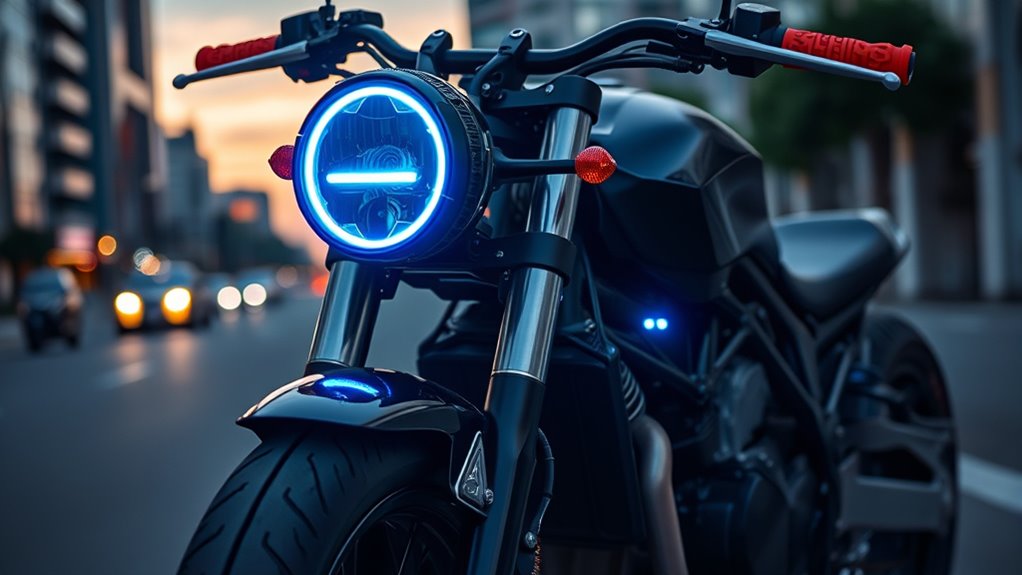
Installing non-DOT approved lighting components or aftermarket accessories might seem like a quick way to customize your bike, but it can lead to legal issues and safety hazards. Many of these parts don’t meet federal standards and can cause your bike to become illegal for street use. Make sure all accessories are certified to stay compliant and protect yourself on the road. Using an unapproved brewing method or incompatible parts can also affect your bike’s performance and safety.
Non-compliant Lighting Components
Using non-DOT approved lighting components on your motorcycle can seem like a quick way to customize, but it often leads to serious legal and safety issues. Non-compliant lights may have improper beam patterns, inadequate brightness, or incorrect colors, making them illegal in most states. Installing these can result in:
- Reduced visibility for you and other drivers, increasing accident risk
- Glare or poor illumination due to improper angles, causing safety hazards
- Legal trouble during inspections or traffic stops, risking fines or citations
Manufacturers self-certify DOT compliance by marking their products accordingly, but fake or misleading labels are common. Riding with non-compliant lighting jeopardizes your safety and legality, so choose certified components to stay street legal. Additionally, DOT standards ensure the lights meet safety requirements for brightness and durability, helping prevent equipment failure on the road. Non-compliant lights can also compromise your safety by failing during critical moments, which underscores the importance of adhering to certified standards.
Unsafe Aftermarket Accessories
Adding aftermarket accessories to your motorcycle might seem like a straightforward way to customize your ride, but opting for non-DOT approved parts can introduce serious safety and legal risks. Non-certified safety gear like gloves or jackets may lack proper abrasion resistance, increasing injury risk in a crash. Accessories that interfere with controls or visibility, such as improperly mounted mirrors or signals, can distract you or fail during inspection. Using uncertified or non-compliant parts like mirrors or turn signals often results in legal violations and failed inspections. These accessories might also cause mechanical issues, reduce crash survivability, or void warranties. Always verify that aftermarket parts are DOT-approved to ensure compliance and safety. Incorporating safety-critical components that meet regulatory standards is essential to maintain your bike’s legality and your protection. Ultimately, installing unsafe, non-DOT approved accessories puts your safety at risk and can lead to fines, citations, or even riding restrictions, so always choose certified, approved parts for your bike.
Risks and Penalties for Illegal Customizations
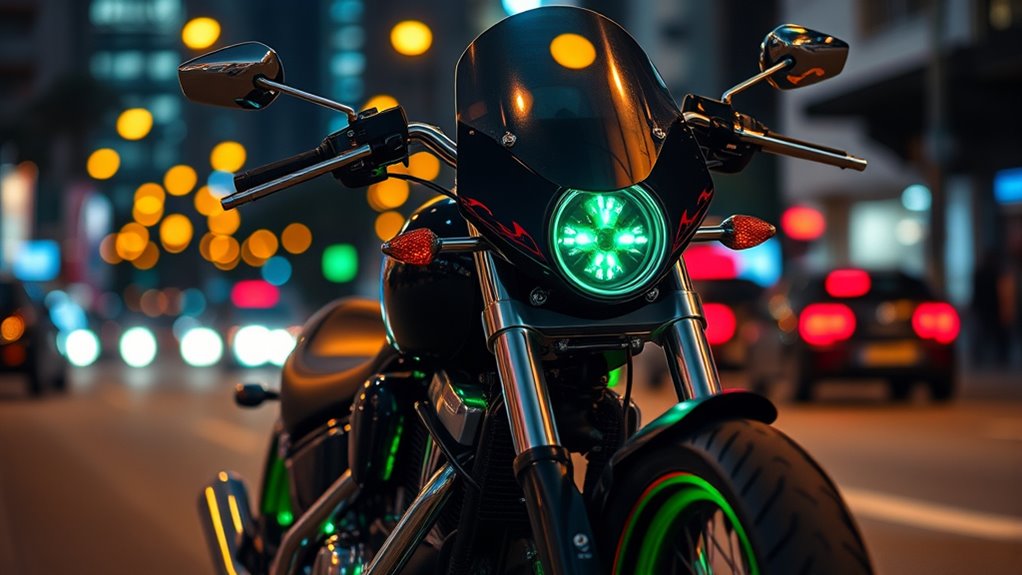
Engaging in illegal motorcycle modifications can lead to serious legal consequences that you need to be aware of. The risks include fines, impoundments, and legal charges. Here are some key penalties you might face:
- Warnings, fines, or orders to restore your bike to legal standards.
- Seizure or impoundment of your motorcycle after unsafe or illegal engine swaps.
- Fines for excessive noise and potential insurance policy cancellations if your mods contributed to an accident.
Ignoring these rules could also lead to complications with accident liability and insurance claims. In some cases, law enforcement may perform raids, resulting in misdemeanors or felonies. Staying compliant helps you avoid legal trouble and keeps your bike on the road safely.
Frequently Asked Questions
Can I Legally Upgrade My Motorcycle’s Headlights to Brighter LEDS?
Yes, you can upgrade your motorcycle’s headlights to brighter LEDs, but only if they meet federal and state regulations. Make sure they comply with FMVSS No. 108, have DOT or SAE markings, and stay within legal brightness limits. Avoid exceeding lumen thresholds or using illegal colors like blue or red. Proper aiming and beam pattern are essential to prevent glare and stay road-legal. Always verify your local laws before upgrading.
Are Aftermarket Exhaust Systems Allowed if They Are Quieter Than Stock?
Yes, if your aftermarket exhaust system is quieter than stock, you’re generally in the clear. Quieter exhausts usually meet legal standards, especially if they keep noise levels at or below OEM limits, and have built-in, non-removable baffles. Installing such systems can help you avoid police citations and community complaints. Just make sure your exhaust has the proper EPA or local certification stamps to guarantee full compliance and peace of mind on the road.
What Are the Consequences of Removing or Modifying My Motorcycle’s Mirrors?
If you remove or modify your motorcycle’s mirrors, you risk fines, citations, or even vehicle confiscation, depending on your state’s laws. It also increases your chance of accidents since you lose essential rear visibility, making lane changes and traffic awareness harder. Plus, your insurance might deny claims or raise premiums, and in some places, removing mirrors can void your warranty. Always keep mirrors compliant to stay safe and legal.
Do I Need to Notify My Insurance Company About All Modifications?
Think of your insurance as a safety net; you need to inform it of all modifications to keep it strong. You should notify your insurer about any change, big or small, especially performance or structural upgrades. Failing to do so risks claim denial or policy cancellation. Keep receipts, photos, and detailed descriptions ready. Proper communication guarantees your coverage stays intact and your bike remains protected, no matter how you customize it.
How Can I Verify if My Motorcycle’s VIN Is Valid for Registration?
To verify if your motorcycle’s VIN is valid for registration, start by physically inspecting the VIN on your bike, usually on the frame or dashboard. Make certain it matches your registration and title documents. You can take your motorcycle to an authorized inspection station or law enforcement agency for a formal check. They’ll examine the VIN for tampering or alterations and issue a verification certificate, confirming your bike’s eligibility for registration.
Conclusion
If your bike isn’t street legal, you risk hefty fines and dangerous accidents. Did you know that over 60% of modified bikes are pulled over for illegal modifications each year? Staying within legal limits not only keeps you safe but also saves you from costly penalties. Always double-check your upgrades and verify your bike complies with local laws. Keep your ride legal, safe, and enjoyable—don’t let illegal mods turn your passion into a problem.