To sell your classic motorcycle successfully, start by organizing all essential documents like the title, registration, maintenance, and restoration records to build trust with buyers. Research comparable listings to set a fair price based on condition and originality, and consider getting a professional appraisal. Highlight vintage parts sourcing and recent restoration work to justify your asking price. Clear communication about the bike’s history and thorough paperwork can attract serious buyers—exploring these tips further can help you maximize your sale.
Key Takeaways
- Ensure all essential documents, including clear title, registration, and maintenance records, are organized to build buyer trust.
- Research market prices for similar models to set a competitive and fair asking price based on condition and originality.
- Highlight restoration work, vintage parts sourcing, and authenticity to justify higher values and attract serious buyers.
- Obtain a professional appraisal and use detailed documentation to support your asking price and demonstrate transparency.
- Communicate clearly about the bike’s history, restoration details, and paperwork to build trust and facilitate a smooth sale.

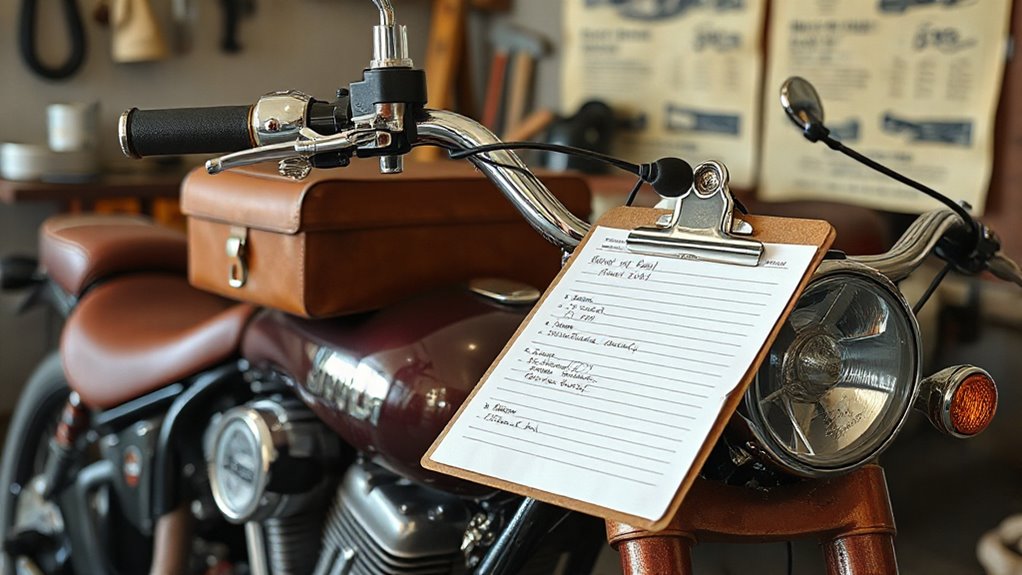
Thinking about selling your classic motorcycle? Before you list it for sale, it’s essential to understand how to handle the paperwork and determine a fair price. First, make sure all your documents are in order. This includes the title, registration, and any maintenance or repair records. Having a clear title that matches the motorcycle is crucial, as buyers want assurance that the bike isn’t stolen or encumbered. Gathering receipts for parts and restoration work can also boost your vehicle’s value by showing it’s been well cared for. If your motorcycle has undergone restoration, be ready to explain the techniques used. Highlighting professional restoration techniques or showing that you’ve preserved the bike’s originality can make a significant difference in setting an attractive price. If you’ve sourced vintage parts to keep the bike authentic, mention that as well. Vintage parts sourcing demonstrates your commitment to maintaining the motorcycle’s historical integrity and can justify a higher asking price. Additionally, understanding the market demand for your specific model can help you set a competitive price.
When it comes to pricing, research is your best tool. Check online listings for similar models in comparable condition. Take note of what other sellers are asking and how long their bikes have been on the market. Remember, the condition of your motorcycle influences its value. If it’s in mint condition with original parts and recent restoration work, you can command a premium. Conversely, if there are cosmetic or mechanical issues, be realistic about adjusting your asking price. Don’t forget to consider the demand for your particular model. Classic bikes with a strong collector following tend to fetch higher prices.
You might also want to get a professional appraisal to establish a fair market value. An appraiser can evaluate your motorcycle’s condition, originality, and rarity, giving you confidence in your asking price. When setting the price, leave some room for negotiation, but don’t undervalue your motorcycle. Be prepared to justify your asking price with documentation and details about the bike’s history, restoration work, and vintage parts sourcing. Clear communication about these aspects can help potential buyers see the true value of your motorcycle. Ultimately, honesty and transparency build trust, making it easier to close the sale at a price that reflects your bike’s worth. By organizing your paperwork thoroughly and doing your homework on pricing, you’ll position yourself as a serious seller and attract buyers who appreciate the true value of your classic motorcycle.
Frequently Asked Questions
How Do I Verify the Authenticity of My Motorcycle’s Documents?
To verify your motorcycle’s documents, start by restoring its history through research on production records and previous ownership. Check for consistent details like VIN, engine numbers, and matching signatures. Contact the issuing agency or a professional appraiser to confirm document authenticity. Cross-reference registration papers with official databases and look for signs of tampering. This guarantees your documents are genuine, helping you confidently sell or showcase your classic motorcycle.
What Factors Influence the True Market Value of a Classic Motorcycle?
Ever wonder what truly sets your classic motorcycle’s worth? Factors like rarity, overall condition, and restoration costs play key roles. A rare model with original parts commands a higher price, especially if restoration costs are low. Keep in mind, the market demand and historical significance also influence value. By evaluating these elements, you’ll better understand what buyers are willing to pay and position your bike competitively.
Are There Specific Legal Requirements for Transferring Ownership?
Yes, there are specific legal requirements for transferring ownership of your classic motorcycle. You need to complete a title transfer and verify all legal documentation, like the bill of sale and registration papers, are properly filled out. These steps legally document the ownership change, protect both parties, and prevent future disputes. Make sure to submit the paperwork to your local DMV or relevant authority to finalize the transfer legally and smoothly.
How Can I Protect Myself From Potential Scams During Sale?
To protect yourself from scams during the sale, prioritize payment security by accepting secure methods like bank transfers or escrow services. Always verify the buyer’s identity through reliable buyer verification steps, such as checking their contact info and reputation. Avoid cash deals or wire transfers from unknown sources. Stay cautious of offers that seem too good to be true and document all transactions to guarantee your rights are safeguarded.
Should I Obtain a Professional Appraisal Before Selling?
Getting a professional appraisal before selling your classic motorcycle is a smart move. It helps you understand its true value, considering restoration costs and collector interest. This way, you set a fair price that attracts serious buyers and avoids undervaluing your bike. Plus, an appraisal provides documented proof of value, protecting you during negotiations and ensuring a smooth sale. Don’t skip this step if you want a confident, profitable sale.
Conclusion
Selling your classic motorcycle can feel like steering a winding road, but with the right paperwork and pricing strategies, you’ll reach your destination smoothly. Think of it like tuning a vintage engine—attention to detail ensures peak performance. I once sold a bike for triple its value by knowing its history and market worth. Remember, preparation and patience are your best gears. Stay sharp, and you’ll pass the finish line with a satisfied smile and a great deal.