
To rebuild a classic bike on a budget, focus on restoring your existing frame by cleaning, rust removal, and repainting instead of buying a new one. Source used or refurbished parts from online marketplaces, local shops, or salvage yards, and prioritize safety-critical components like tires and brakes. Reuse and refurbish your current parts whenever possible, and learn basic repairs to save money. With careful planning and patience, you’ll be able to restore your bike affordably—more tips await if you continue.
Key Takeaways
- Restore the existing frame through sanding, rust removal, and repainting to save costs and ensure safety.
- Source used or refurbished parts from local shops, online marketplaces, or salvage yards for affordability.
- Clean, repair, and refurbish current components like chains and wheels instead of replacing them.
- Focus on safety-critical parts first and delay cosmetic upgrades until additional funds are available.
- Plan carefully, compare prices, and negotiate deals to maximize budget efficiency throughout the restoration.
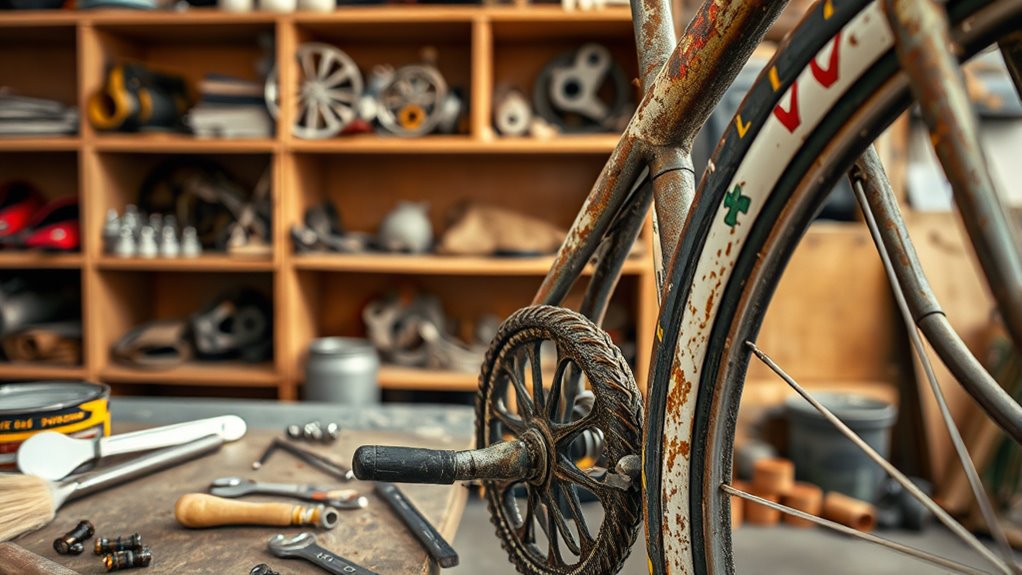
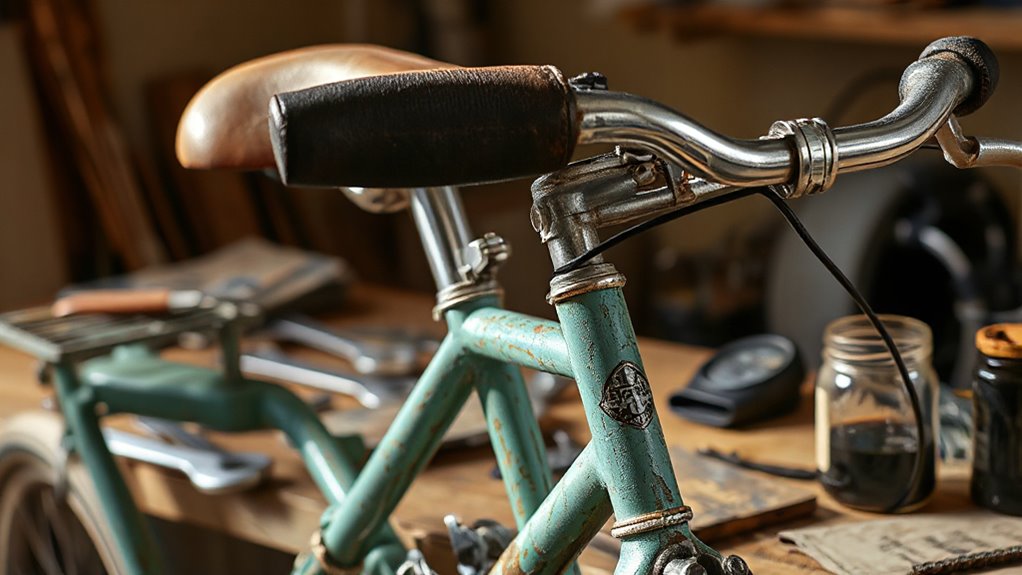
Rebuilding a classic bike can be a rewarding project, but it often comes with a hefty price tag. If you’re looking to save money while breathing new life into an old ride, focusing on the frame restoration process is a smart move. The frame is the backbone of your bike, and restoring it properly guarantees safety and longevity. Instead of buying a new frame, consider repairing or repainting your existing one. Sandblasting and rust removal can be done at home with basic tools, and a quality paint job can be achieved with patience and proper prep. This approach saves you a significant amount compared to purchasing a new frame, especially if your current one is structurally sound. Additionally, exploring European cloud innovation resources and guides can provide valuable insights into cost-effective restoration techniques and best practices.
Restoring your bike’s frame can save money and ensure safety with proper sanding, rust removal, and repainting at home.
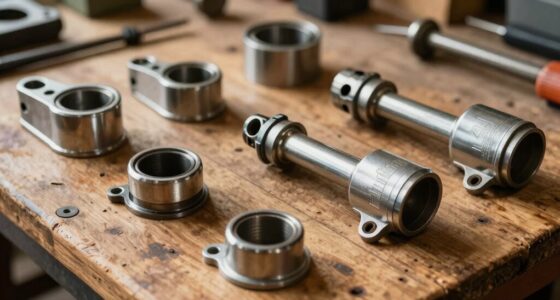
When it comes to parts sourcing, being strategic can cut costs dramatically. Instead of buying brand-new components, look for used or refurbished parts from local bike shops, online marketplaces, or salvage yards. Many enthusiasts sell parts they no longer need, often in excellent condition, at a fraction of the retail price. Keep an eye out for deals on vintage components that match your bike’s make and model, as these can often be found at lower prices. Joining online forums and social media groups dedicated to bike restoration can also connect you with people willing to trade or sell parts cheaply. Be patient and willing to do some research—sometimes, waiting for the right deal can save you hundreds of dollars.
Another cost-effective tip is to prioritize the most essential parts for safety and performance, such as the brake system and tires, while being flexible with less critical components like accessories or cosmetic upgrades. You can upgrade these later once your budget permits. Take the time to clean and refurbish parts instead of replacing them outright. For example, cleaning the chain and cassette thoroughly or re-lubricating moving parts can restore functionality without new purchases. If you’re comfortable with minor repairs, consider learning basic techniques like wheel truing or headset adjustment, which can extend the life of your existing parts and eliminate the need for replacements.
Finally, do your homework before making any purchase. Compare prices across multiple sources, and don’t be afraid to negotiate. Sometimes, a little effort in sourcing parts and restoring the frame yourself can save hundreds, if not thousands, of dollars. With patience and resourcefulness, you can rebuild your classic bike without breaking the bank, achieving a ride that’s both nostalgic and reliable.
Frequently Asked Questions
What Are the Best Sources for Affordable Vintage Bike Parts?
You should check out online marketplaces like eBay and Craigslist for vintage parts, as they often have affordable sources for hard-to-find items. Join classic bike forums and Facebook groups where enthusiasts sell or trade vintage parts at reasonable prices. Also, visit local salvage yards and bike co-ops, which can be excellent sources of affordable vintage parts. These options help you save money while restoring your bike authentically.
How Can I Identify Genuine Parts Versus Reproductions?
You can identify genuine parts versus reproductions by conducting authenticity verification and careful part identification. Start by examining markings, serial numbers, and logos against original specifications. Reproductions often lack precise details or have subtle differences. Use reputable sources or expert opinions to confirm authenticity. Don’t rely solely on appearance—cross-reference with manufacturer catalogs or vintage bike communities. This way, you verify your restoration retains its true vintage value.
Are There Recommended Tools for Budget-Friendly Bike Restoration?
For DIY maintenance and budget-friendly bike restoration, you should start with basic tools like a set of screwdrivers, wrenches, and pliers. A good Allen wrench set is essential for many repairs, and a bike-specific tool kit can save you money in the long run. Look for multi-use tools and consider buying quality used tools to keep costs low while ensuring reliable tool selection for your project.
How Do I Assess the Value of a Classic Bike Before Restoration?
Think of valuing your vintage bike as peeling back layers of history. Start with vintage bike pricing guides and online listings to get a sense of the market. Inspect the frame, components, and originality to gauge restoration value assessment. Consider rarity and condition—these are the compass points guiding your decision. By doing thorough research, you’ll know if your project is a treasure worth restoring or a relic better left as is.
What Safety Precautions Should I Consider During Restoration?
When restoring your bike, prioritize safety by always wearing protective gear like gloves, goggles, and a mask to prevent injuries and inhalation of fumes. Make certain your workspace is well-ventilated, organized, and free of hazards like loose tools or spills. Use proper lighting and stable surfaces. Keep fire extinguishers nearby, and handle chemicals with care. Staying mindful of workspace safety and protective gear keeps you safe throughout your restoration project.
Conclusion
Think of your classic bike as a phoenix, rising from the ashes with new life. Every penny saved is a feather in its wings, helping you restore its glory without draining your coffers. By carefully choosing affordable parts and DIY efforts, you’re not just rebuilding a bike—you’re reigniting a passion that symbolically soars above the cost. So, embrace the journey, and watch your vintage beauty spread its wings once again.