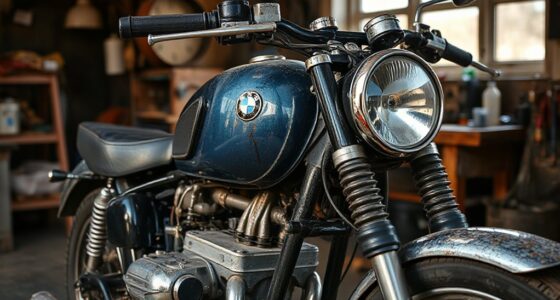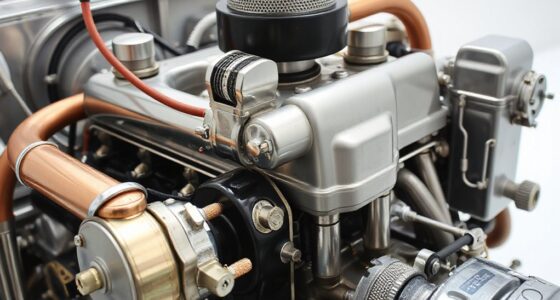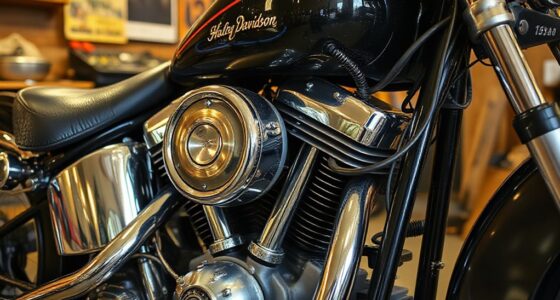
When choosing a project motorcycle engine, start by ensuring it fits your bike’s frame, mounting points, and cooling system without major modifications. Consider your riding style—lighter engines suit nimble handling, while heavier, powerful engines are better for speed. Prioritize reliability and easy maintenance by selecting proven models with readily available parts. Balance power and weight to match your goals, whether for cruising or racing. Keep exploring to discover more tips for making the best choice.

Get business pricing on garage and car supplies
- Business-only prices and quantity discounts
- Tax-exempt purchasing
- Multiple users, one account, clear invoices
Key Takeaways
- Verify engine compatibility with your bike’s dimensions, mounting points, and frame to ensure a seamless fit.
- Match engine power and weight to your riding style and performance goals for optimal handling.
- Choose reliable engines with easy maintenance and strong support communities to ensure longevity.
- Consider the engine’s cooling system, available space, and adaptability to different conditions.
- Balance engine specifications to achieve the desired power-to-weight ratio for responsive, enjoyable riding.

Selecting the right project motorcycle engine is crucial to guarantee your build meets your performance goals and riding style. When you’re choosing an engine, one of the first things to consider is engine compatibility. Not every engine fits seamlessly into every frame or chassis, so you need to verify the dimensions, mounting points, and overall design match your bike’s structure. If you pick an incompatible engine, you’ll face costly modifications or compromises that might affect the bike’s integrity and safety. Take the time to research engine models that are known to fit well with your frame or that can be adapted with minimal fuss. Think about the engine’s mounting points, cooling system, and the available space in your bike’s frame. Compatibility isn’t just about size; it’s about making sure all components work together smoothly. Additionally, understanding the engine’s biodiversity and its adaptability to different environments can influence your maintenance needs and longevity. Recognizing the engine’s versatility can help you choose a model that performs well across various conditions and uses.
Next, think about the power to weight ratio. This metric directly influences how your bike handles and performs. A higher power to weight ratio usually means better acceleration, agility, and overall responsiveness. When choosing an engine, aim for a balance that matches your riding intentions. If you want a nimble street bike, a lightweight engine with enough power to keep things lively without feeling unwieldy is ideal. On the other hand, if you’re after a high-speed cruiser or drag bike, you might prioritize more horsepower, even if it adds weight. Remember, a heavy engine with high power can strain the frame and suspension, reducing handling finesse. Conversely, a lightweight engine that produces sufficient power can give you that quick throttle response and maneuverability you desire. Aim for an engine that offers an ideal power to weight ratio tailored to your riding style, whether that’s aggressive racing, casual cruising, or something in between. Ensuring the engine’s performance aligns with your specific riding needs can greatly enhance your overall experience.
Finally, don’t overlook the importance of engine reliability and maintenance. An engine that’s compatible and offers the right power to weight ratio is no good if it’s prone to frequent breakdowns or requires extensive upkeep. Look for engines known for durability and easy servicing. Also, consider the availability of parts and the support community around that engine model, as these factors can save you time and money down the road. By carefully evaluating engine compatibility, power to weight ratio, and reliability, you make smarter choices that lead to a successful build. Your project bike will perform better, feel more responsive, and be tailored precisely to your riding goals.
motorcycle engine compatibility kit
As an affiliate, we earn on qualifying purchases.
As an affiliate, we earn on qualifying purchases.
Frequently Asked Questions
What Are the Best Engine Brands for Project Motorcycles?
You should look for engine brands known for their durability and reliability, like Honda, Yamaha, and Suzuki. These brands consistently produce engines with strong engine durability, making them ideal for project motorcycles. They also have a solid reputation for brand reliability, ensuring your build runs smoothly over time. Choosing a reputable brand helps you avoid frequent repairs and guarantees better performance. Prioritize these brands to build a dependable and long-lasting motorcycle.
How Much Does a Motorcycle Engine Replacement Typically Cost?
Replacing a motorcycle engine usually costs between $1,000 and $4,000, depending on your choice of engine and labor rates. The replacement process is like a complicated dance—remove old parts, fit the new engine, and hope you didn’t forget any bolts. A cost comparison shows that DIY might save some bucks, but a professional guarantees your bike runs smoothly without turning into a paperweight.
Can I Upgrade My Engine’s Performance Later?
Yes, you can upgrade your engine’s performance later. Start with engine tuning to optimize existing components, then consider adding performance parts like high-flow air filters, exhaust systems, or upgraded carburetors. These modifications can boost power and efficiency. Keep in mind, some upgrades might require adjustments to your motorcycle’s ECU or additional tuning to guarantee everything works smoothly and safely, giving your bike the performance boost you’re aiming for.
What Tools Are Needed for Engine Installation?
You’ll need basic tools like wrenches, screwdrivers, and pliers for engine installation. Focus on engine mounting tools to secure the engine properly, ensuring it’s aligned and bolted tightly. For fuel system integration, have fuel line clamps, a fuel pump, and a filter ready to connect and secure the fuel lines correctly. A torque wrench helps tighten bolts to manufacturer specs, preventing damage and ensuring safety during installation.
How Long Does a Typical Engine Overhaul Take?
An engine rebuild’s overhaul timeline varies, but typically, it takes anywhere from a few days to several weeks, depending on complexity and your experience. You might find yourself immersed in the process, keenly wondering how long it’ll take to see your project come to life. Patience is key, as a thorough overhaul ensures your engine runs smoothly. Expect to spend focused days on disassembly, parts inspection, and reassembly to achieve the best results.
high performance motorcycle engine
As an affiliate, we earn on qualifying purchases.
As an affiliate, we earn on qualifying purchases.
Conclusion
Choosing the right project motorcycle engine hinges on understanding your goals and skill level. For example, if you’re building a cruiser for daily riding, a reliable V-twin might suit you best. Conversely, if you want a high-performance bike for racing, a lightweight, high-revving engine is ideal. By evaluating your needs and doing thorough research, you’ll guarantee your engine choice aligns with your vision, making your project both enjoyable and successful.
reliable motorcycle engine for project build
As an affiliate, we earn on qualifying purchases.
As an affiliate, we earn on qualifying purchases.
motorcycle engine cooling system
As an affiliate, we earn on qualifying purchases.
As an affiliate, we earn on qualifying purchases.
Halloween Picks
halloween
As an affiliate, we earn on qualifying purchases.