To restore your classic bike effectively, gather essential hand tools like wrenches, screwdrivers, pliers, and a socket set, along with precision instruments such as calipers and feeler gauges. Invest in specialized equipment like an ultrasonic cleaner and carburetor synchronizer, plus safety gear like gloves and goggles. Keep everything organized with proper storage solutions. Mastering the right techniques and using quality tools is key—explore further to guarantee your restoration is both thorough and rewarding.
Key Takeaways
- Essential hand tools like wrenches, screwdrivers, and calipers are crucial for disassembly, measurement, and reassembly.
- Specialized equipment such as ultrasonic cleaners and valve spring compressors ensure thorough cleaning and precise repairs.
- Safety gear, including gloves and goggles, protects against hazards during restoration work.
- Proper tool organization with labeled storage minimizes lost parts and improves workflow efficiency.
- Knowledge of techniques and regular maintenance of tools extend their lifespan and enhance restoration quality.
Essential Basic Hand Tools for Bike Restoration
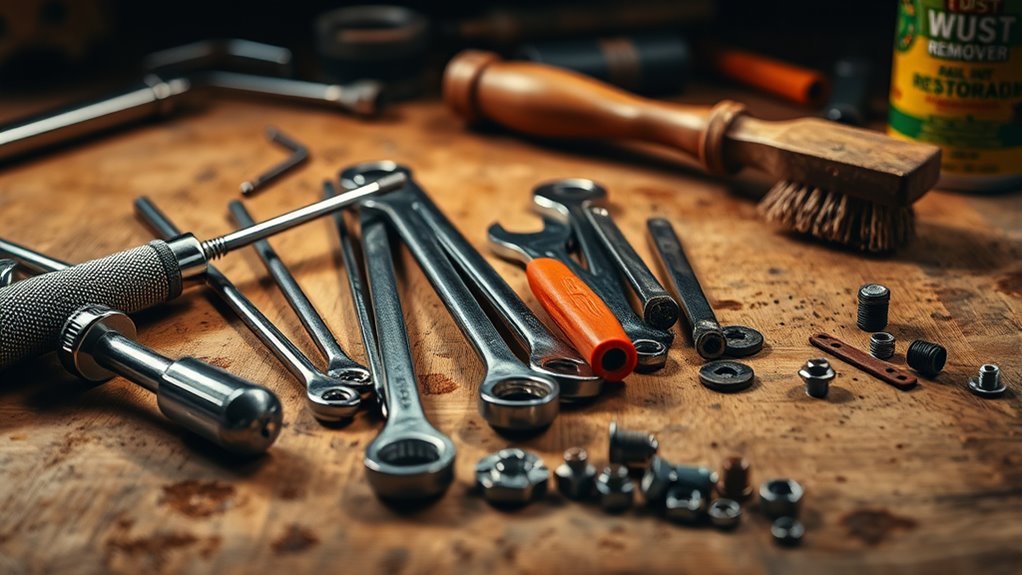
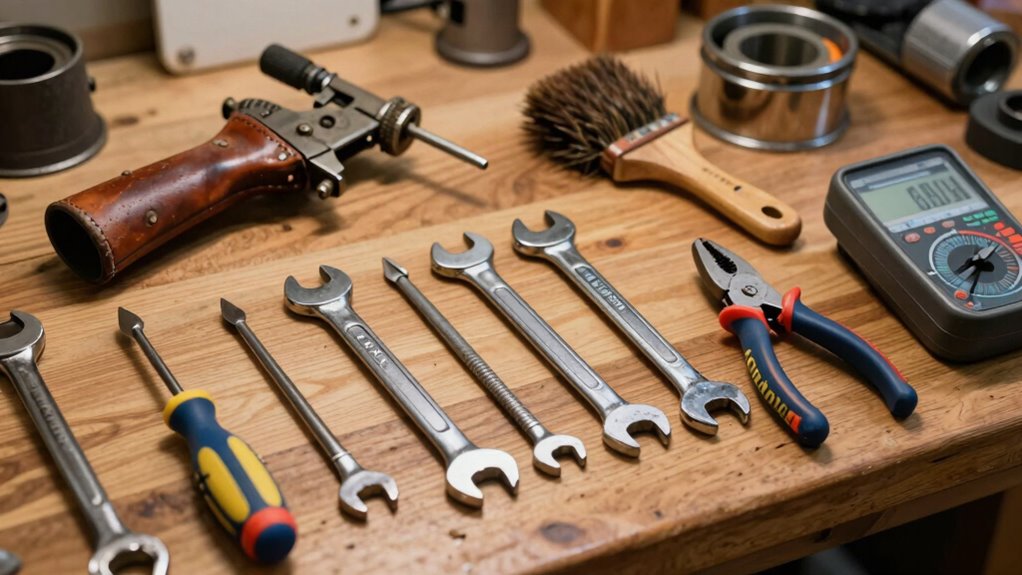
When starting your classic bike restoration, having the right basic hand tools is vital to guarantee the job goes smoothly. A solid set of wrenches, including open-end, box-end, and adjustable types, helps you handle nuts and bolts of various sizes efficiently. Make sure you have quality screwdrivers, especially JIS screwdrivers if you’re working on vintage Japanese bikes, to avoid stripping screws. Pliers—needle-nose, locking, and snap ring—are essential for gripping, bending, and removing small parts or retaining rings. A thorough socket set with a ratchet handle allows you to quickly loosen or tighten fasteners. Don’t forget a torque wrench to apply the correct force, protecting delicate engine and frame components. Proper tool maintenance ensures your tools stay in optimal condition and last for many projects. Regular cleaning and lubrication of your tools can prevent rust and ensure smooth operation. Incorporating sound vibrations into your maintenance routine can even help identify issues with your tools or parts, ensuring everything functions smoothly. Additionally, understanding Glycolic Acid Benefits for Skin can be useful if you’re working in a shop environment where skin care is important to maintain hand health. Being aware of grocery savings strategies can help you manage your budget for parts and supplies needed for restoration projects. These basic tools form the foundation for a successful restoration project.
Specialized Restoration Equipment for Vintage Motorcycles
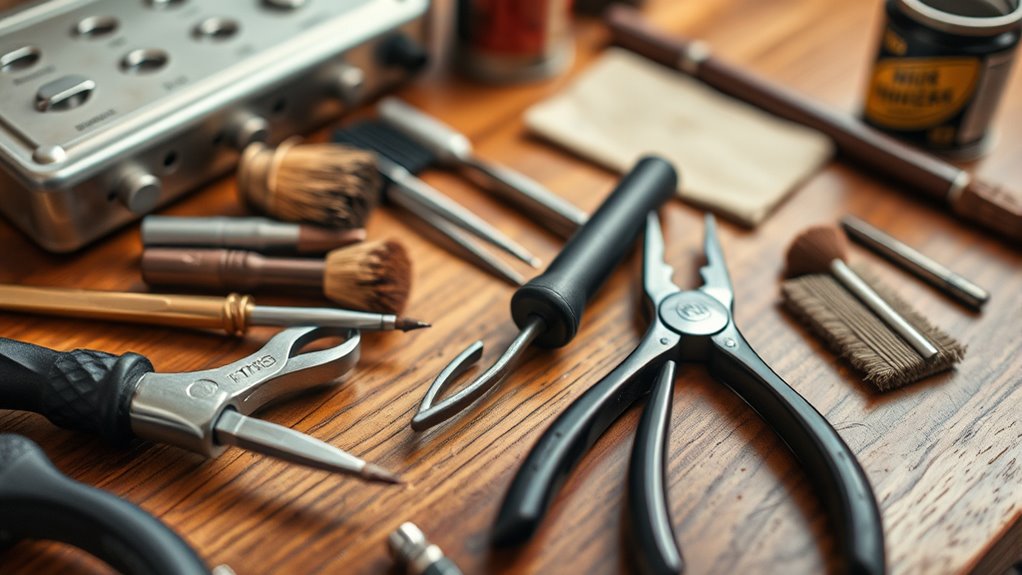
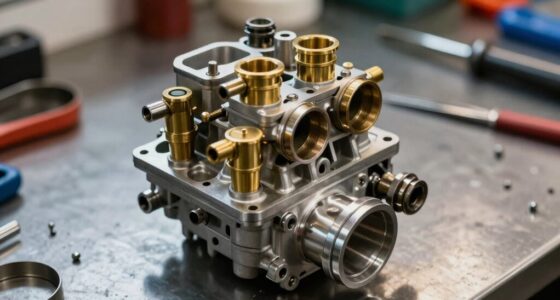
To effectively restore vintage motorcycles, you need specialized tools designed for detailed cleaning, precise adjustments, and careful handling of delicate components. These tools help you reach tight spots, clean thoroughly, and avoid damage. For example, an ultrasonic cleaner blasts away grime from carburetors, while a valve spring compressor safely removes springs without harm. A carburetor synchronizer balances multi-carb setups for optimal performance. Use a magnetic parts dish to keep small fasteners organized. Proper sound therapy techniques can also complement restoration efforts by maintaining focus and reducing stress during long projects. Understanding restoration fundamentals can help you plan your project more effectively, ensuring you use the right tools and techniques from the start. These tools make restoration precise, efficient, and less risky. Additionally, selecting appropriate protective gear is essential to safeguard yourself during detailed work and prevent injury. Familiarity with specialized tools can greatly improve your efficiency and results in vintage motorcycle restoration. Incorporating safety precautions into your workflow not only protects you but also enhances the quality of your restorative work.
Cleaning and Maintenance Supplies to Keep Your Bike Pristine
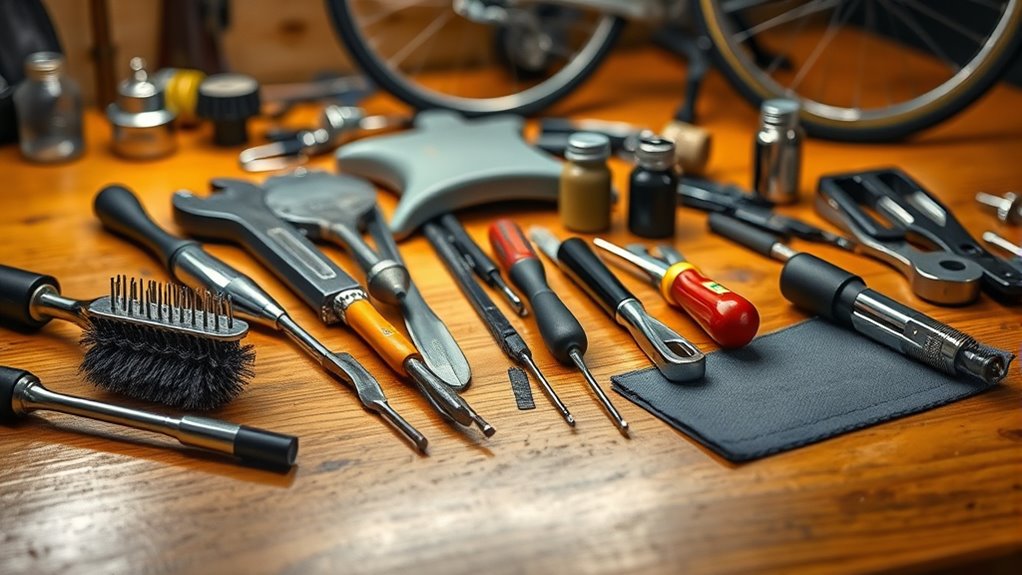
Maintaining your vintage motorcycle’s pristine condition requires high-quality cleaning and maintenance supplies. Start with degreasers and bike-specific cleaners to tackle oil, grease, and dirt on engine parts and chrome surfaces. Use brushes—wire for heavy grime and soft for delicate finishes—to scrub without damage. Microfiber cloths are essential for polishing and removing residue. Keep a variety of engine oils and brake fluids on hand, ensuring they match your bike’s specifications for ideal lubrication. Gasket and seal kits help replace worn components, preventing leaks. For tire maintenance, tubeless repair kits and tire irons are invaluable. Proper cleaning preserves the bike’s appearance and function, while regular maintenance supplies ensure it runs smoothly and safely. Investing in these supplies keeps your vintage motorcycle looking sharp and performing reliably.
Documentation and Resources for Accurate Restoration
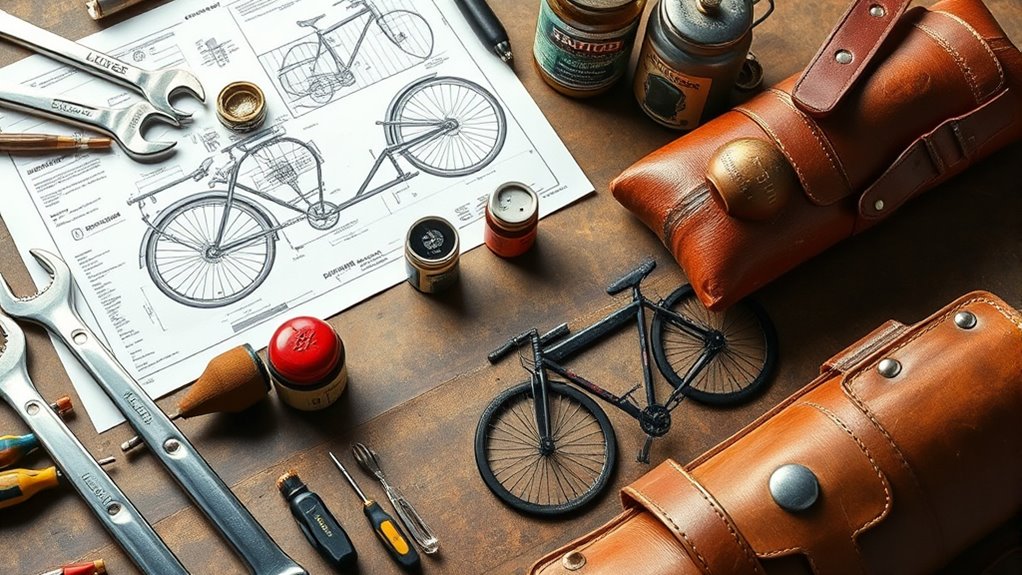
Accurate restoration relies heavily on high-quality documentation and resources that guide each step of the process. You need precise information to avoid errors and guarantee authenticity. Service manuals for your specific bike model are invaluable for detailed procedures. Online forums provide practical tips and troubleshooting advice from experienced enthusiasts. Restoration books, like the “Triumph Motorcycle Restoration Guide,” offer expert insights. Authentic OEM parts catalogs confirm compatibility, saving you time and money. Keeping a record of your work through photos or videos simplifies reassembly and helps track progress. Using comprehensive resources ensures a smoother restoration process and a more authentic final result. Additionally, understanding kitchen science & materials can inspire innovative solutions during restoration, such as selecting appropriate lubricants or finishes. Furthermore, familiarity with wiring basics can prevent common electrical issues and enhance safety during assembly. Use this table to compare essential resources:
| Resource Type | Purpose |
|---|---|
| Service Manuals | Step-by-step procedures for disassembly and reassembly |
| Forums & Guides | Community advice, tips, troubleshooting |
| Restoration Books | In-depth techniques and historical context |
| OEM Catalogs | Ensures part authenticity and correct fit |
Safety Gear and Workshop Essentials for a Secure Work Environment
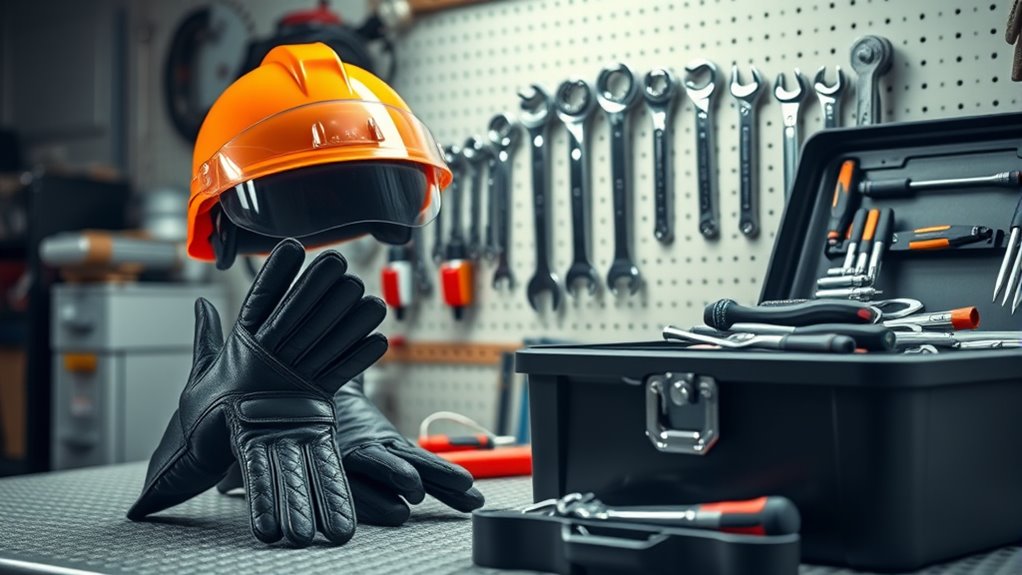
Ensuring safety in your workshop is essential for a successful bike restoration project. You need the right gear to protect yourself from injuries and hazards. Invest in quality:
Prioritize safety with quality gear to protect yourself during bike restoration.
- Gloves and safety goggles to shield your hands and eyes from chemicals, debris, and sparks.
- Ear protection if you’re using loud tools or working in noisy environments.
- A sturdy workbench with good lighting to improve visibility and stability.
- Ventilation systems or masks to avoid inhaling fumes from solvents and paints.
- Fire extinguishers nearby, especially when working with flammable liquids or electrical components.
Having these essentials makes your workspace safer and more efficient. Remember, safety gear isn’t optional—it’s your first line of defense against accidents. Prioritize protecting yourself to enjoy the restoration process stress-free. Proper workspace setup also plays a crucial role in maintaining safety and efficiency during your projects, especially when considering workplace safety protocols. Additionally, understanding hazard identification can help you anticipate and mitigate risks before they lead to accidents. Incorporating risk assessment into your safety routine ensures a comprehensive approach to potential dangers in your workshop. Recognizing the importance of proper maintenance can further prevent equipment failures that might cause injuries.
Precision Measurement and Adjustment Instruments
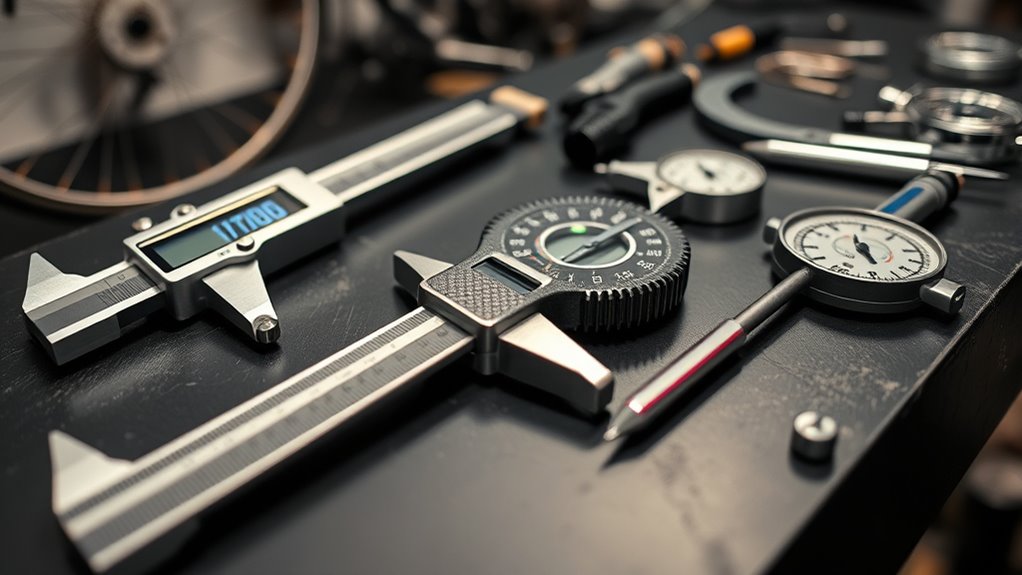
Precision measurement and adjustment instruments are essential tools that help you fine-tune your vintage bike for peak performance. These tools guarantee accurate settings, preventing damage and enhancing functionality. A dial indicator, for example, checks wheel runout, ensuring smooth operation. Calipers measure critical engine parts, confirming proper clearances. Feelers gauges adjust valve clearances with precision, maintaining ideal engine timing. Use these instruments regularly to prevent issues before they escalate. Proper use of these precision tools is vital for achieving a high-quality restoration. Having these in your toolkit keeps your restoration precise and reliable. Additionally, understanding the history and significance of these tools can help you better appreciate their role in successful restorations. Familiarity with measurement techniques can improve your ability to diagnose and correct issues efficiently. Developing a good measurement technique can also save time and reduce errors during your restoration process.
Organizing and Storing Tools to Maximize Efficiency
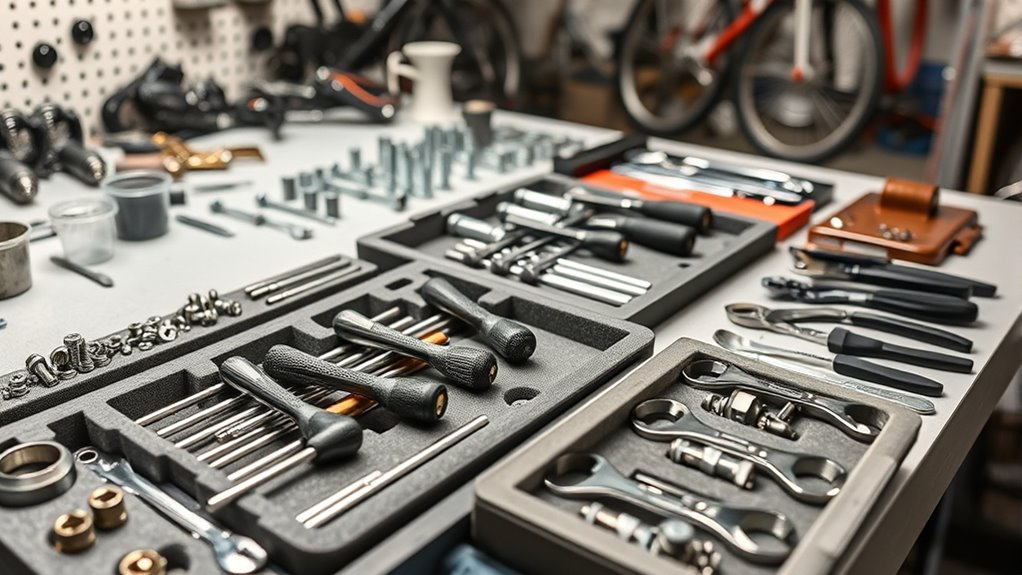
Organizing your tools effectively can considerably boost your efficiency during restoration projects. When everything has a designated spot, you spend less time searching and more time working. Keep frequently used tools within arm’s reach, and store specialty items separately to avoid clutter. Use labeled bins or drawers to categorize tools by type or project phase. Magnetic strips on walls can hold wrenches and screwdrivers, making them easy to grab. Clear containers help you quickly identify small parts and fasteners, reducing the risk of losing critical components. Regularly clean and maintain your storage system to keep it functional and tidy. Incorporating proper tool organization techniques ensures your workspace remains efficient, especially when working with a variety of tools and components. Additionally, implementing storage solutions designed for your specific tools can further enhance accessibility and workflow. Investing in adjustable storage options allows you to customize your setup as your collection of tools grows or changes over time. Using labeling systems can also speed up your workflow by helping you locate items at a glance.
Frequently Asked Questions
What Are the Must-Have Tools for Diagnosing Electrical Issues on Vintage Bikes?
To diagnose electrical issues on vintage bikes, you need a multimeter to check voltage, continuity, and resistance. A test light quickly identifies live circuits, while a wiring diagram helps trace connections. A spark tester verifies ignition spark, and a battery tester ensures your power source is healthy. These tools allow you to pinpoint problems efficiently, saving time and preventing unnecessary replacements. Make sure you comprehend how to use each tool properly for accurate diagnostics.
How Do I Select the Right Lubricants and Fluids for Different Motorcycle Models?
Choosing the right lubricants and fluids can make or break your bike’s performance. You need to match engine oils, brake fluids, and gear lubricants precisely to your vintage model’s specifications. Check your owner’s manual for recommended grades and types, then source authentic products from trusted suppliers. Using the wrong fluids risks damage and reduces reliability, so don’t settle for anything less than the exact match your bike demands.
What Safety Precautions Are Essential When Working With Chemical Cleaners and Paints?
When working with chemical cleaners and paints, always wear gloves, goggles, and a respirator to protect your skin, eyes, and lungs. Make certain proper ventilation in your workspace to avoid inhaling fumes. Keep chemicals away from heat sources and open flames. Read labels carefully for safe handling instructions, and store all chemicals in labeled, secure containers. Dispose of waste according to local regulations to stay safe and environmentally responsible.
Which Tools Are Best for Accurately Aligning and Balancing Wheels and Drivetrains?
Did you know proper wheel alignment can extend tire life by up to 20%? To accurately align and balance wheels and drivetrains, you need a dial indicator for precise measurements and chain alignment tools to guarantee proper drivetrain setup. Use these tools together to detect misalignments, adjust components correctly, and improve ride quality. Regularly checking your alignment with these tools helps prevent uneven wear and costly repairs down the road.
How Can I Organize Small Parts and Fasteners to Prevent Loss During Restoration?
You should organize small parts and fasteners using magnetic parts dishes or small labeled containers. Keep similar items together by categorizing them in clearly marked bins or trays, which makes tracking and reassembly easier. Use clear, stackable storage boxes for different components, and take photos or notes during disassembly to remember placement. This approach prevents loss, keeps your workspace tidy, and streamlines the restoration process.
Conclusion
With these tools in your arsenal, you’re well-equipped to breathe new life into your vintage masterpiece. Think of your workshop as a sacred forge where each wrench and brush crafts history anew. As you tinker and restore, remember that patience and passion are your guiding stars, turning raw metal and old parts into a timeless work of art. Embrace the journey—your classic bike’s revival is a symphony composed by your skilled hands.