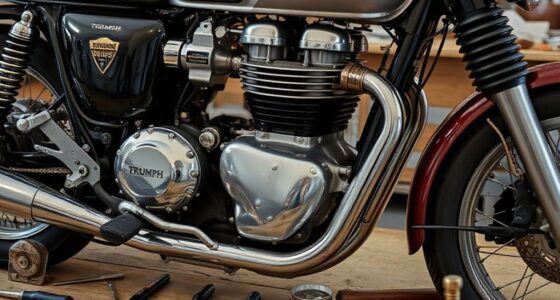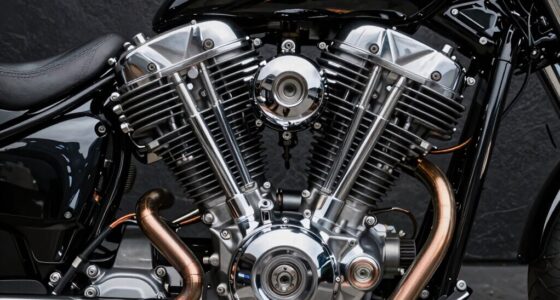

You should consider stripping your bike to the frame if there’s extensive rust, deep corrosion, or visible structural damage, especially after long periods of neglect. Warping, cracks, or misalignment also signal the need for a complete teardown to assess safety and integrity. When preparing for a full repaint or custom build, disassembly guarantees a quality finish. If these signs sound familiar, exploring further will help you understand the full restoration process.

Get business pricing on garage and car supplies
- Business-only prices and quantity discounts
- Tax-exempt purchasing
- Multiple users, one account, clear invoices
Key Takeaways
- When extensive rust or corrosion threaten the structural integrity of the frame.
- If the frame shows signs of warping, cracking, or significant damage affecting safety.
- During a complete overhaul when removing all components for cleaning, repair, or refinishing.
- When restoring a bike with prolonged inactivity that caused internal rust and deterioration.
- For customizations or high-quality finishes requiring bare, clean metal surfaces free of old paint and corrosion.
Signs of Extensive Rust and Corrosion
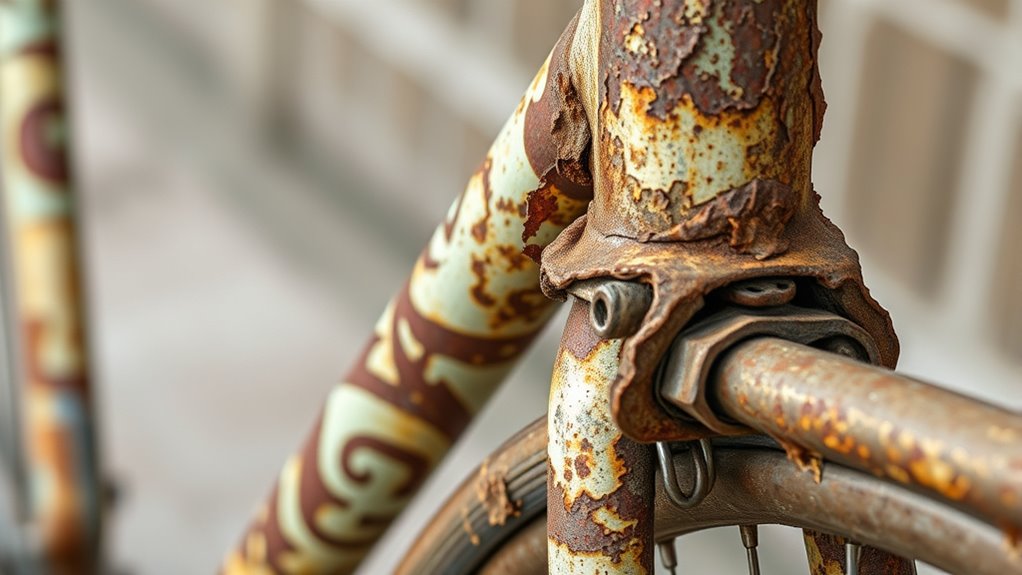
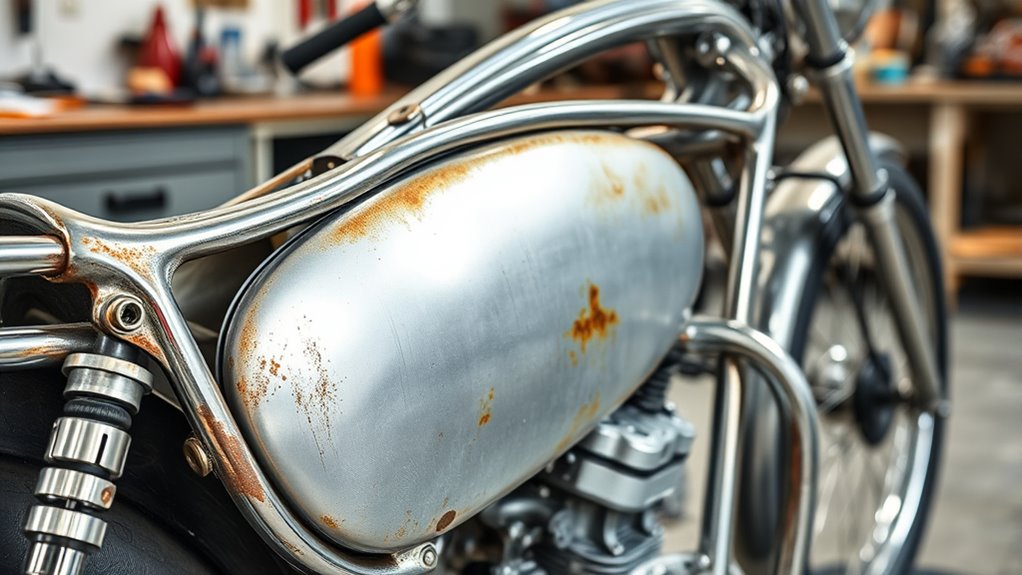
Extensive rust and corrosion are clear indicators that a frame-off restoration is necessary. When you see thick, flaky rust covering your motorcycle’s frame, it’s a sign the metal has been severely compromised. Surface rust might be manageable, but deep corrosion can weaken the structural integrity, making the frame unsafe. If you notice rust holes or pitting, it’s time to disassemble the bike to properly address the damage. Corrosion often spreads to suspension components, fasteners, and other metal parts, signaling that simple cleaning won’t suffice. The presence of rust also suggests the bike has been neglected or exposed to harsh conditions for an extended period. In such cases, a thorough disassembly allows you to remove all rust, inspect for hidden damage, and restore your motorcycle to a safe, like-new condition. Recognizing signs of extensive rust and corrosion early can help prevent costly repairs and ensure your bike remains safe to ride. Additionally, understanding the extent of damage helps determine whether a frame-off restoration is the most effective approach. Regular inspections can also help identify early signs of rust before they develop into extensive damage. Proper restoration techniques, including rust removal methods, are essential to ensure the longevity of your motorcycle.
Structural Damage or Frame Warping
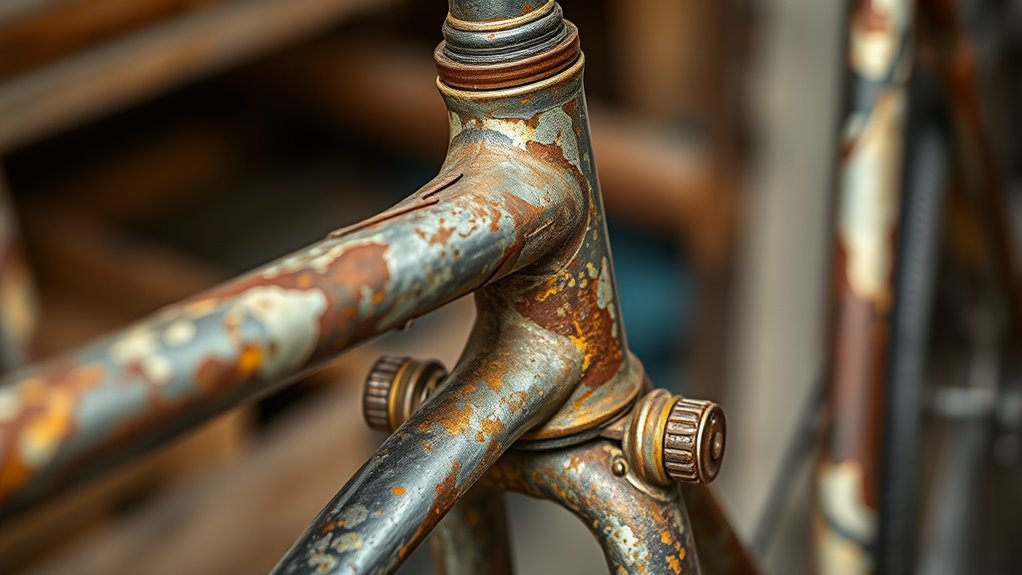
When a motorcycle’s frame has suffered structural damage or warping, it’s a clear sign that a frame-off restoration is necessary. Warping compromises your bike’s safety, handling, and integrity, making repairs impossible without full disassembly. You might notice uneven gaps, cracks, or a misaligned frame that won’t true out. Ignoring these issues risks catastrophic failure. Restoring such damage demands complete removal of all components, inspection, and precise realignment or replacement of the frame. Proper application techniques during restoration are crucial to ensure the bike’s safety and longevity. Additionally, understanding the nature of structural damage can help determine whether a full frame restoration is the best course of action. Recognizing the extent of frame warping can also guide the decision on whether a full restoration or partial repairs are appropriate, especially since proper assessment is essential to avoid future issues.
Long Periods of Inactivity and Mechanical Neglect

Long periods of inactivity and mechanical neglect can cause significant issues that warrant a frame-off restoration. Over time, rust, corrosion, and internal damage develop unnoticed, compromising safety and performance. Imagine:
Extended neglect leads to hidden rust and damage, making frame-off restoration essential for safety and performance.
- Rust creeping inside the fuel tank, causing blockages and leaks.
- Seized or corroded moving parts like bearings or pivots.
- Electrical systems deteriorating from moisture exposure, leading to shorts.
- Deteriorated or cracked rubber hoses and seals from age and neglect.
- Exposure to wave and wind conditions can accelerate deterioration of exposed components, making a thorough restoration even more necessary.
These problems often hide beneath the surface, making partial fixes ineffective. When your motorcycle has been sitting untouched for years or hasn’t received proper maintenance, stripping it down to the frame becomes essential. This thorough approach guarantees you address all hidden damage and restore the bike safely and reliably.
Preparing for a Complete Refinish or Customization

After thoroughly disassembling and cleaning your motorcycle during the frame-off restoration, the next step is to prepare it for a complete refinish or customization. Start by evaluating the frame and components for any remaining rust, damage, or corrosion. Sand or strip old paint and primer using coarse and fine grit sandpaper or chemical strippers. Clean all surfaces meticulously to ensure proper adhesion of paint or coatings. Repair or replace damaged parts, such as cracks or pitted areas, before priming. Consider masking off areas that won’t be painted, like threaded holes or mounting points. If customizing, plan your color scheme, finishes, or powder-coat options. Gather all necessary supplies—primer, paint, clear coats, or specialty finishes—so you’re ready for a smooth, professional-looking refinish or customization process. Proper surface preparation is crucial to achieve a durable and high-quality finish that will last over time. Additionally, inspecting the frame integrity helps identify any structural issues that might require reinforcement or replacement to ensure safety and longevity, especially when using appropriate coating materials for long-lasting protection. Taking the time to assess the net worth of your project can also help you budget effectively and prioritize your restoration goals. Consulting reliable restoration techniques can further enhance your results and prevent future issues.
Planning a Full Mechanical and Cosmetic Overhaul
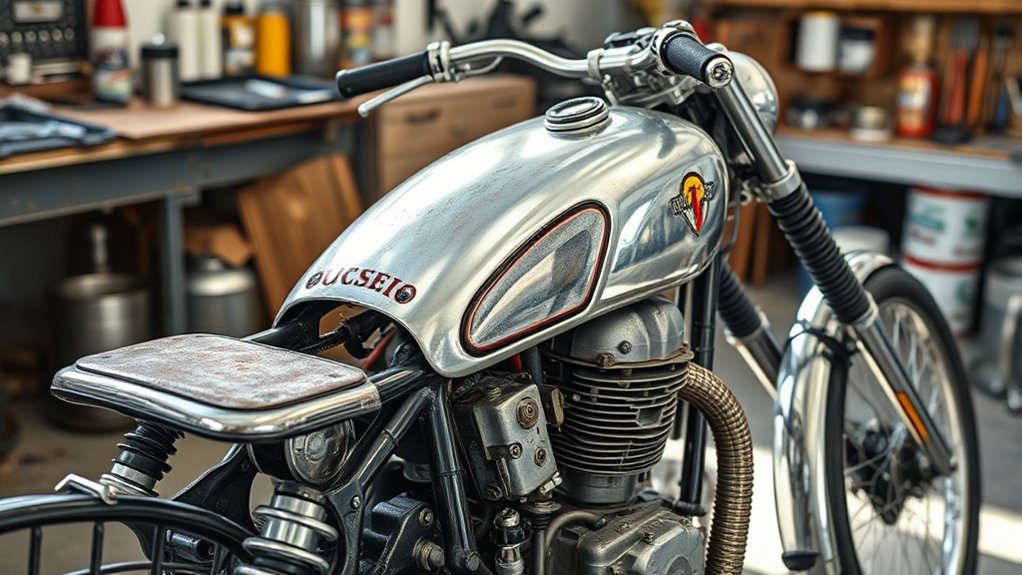
Planning a full mechanical and cosmetic overhaul requires careful assessment of every component to guarantee a thorough restoration. You need to visualize the entire process to avoid missed details. First, inspect the engine and transmission for wear, corrosion, or damage, considering rebuilds or replacements. Second, evaluate the suspension and brakes, looking for rust or weak parts that need upgrading. Third, examine electrical systems, wiring, and lighting for corrosion or faulty connections, planning replacements if necessary. Fourth, review cosmetic elements like paint, chrome, and plastics, deciding whether they need refinishing or replacement. Additionally, utilizing packing & organization techniques can help keep track of parts and tools during the restoration process. Being aware of DIY tools and how they can assist in each step can make the task more manageable. By systematically checking these areas, you create a clear plan, ensuring nothing is overlooked. This approach helps you restore both the bike’s performance and appearance, bringing it back to a like-new condition.
Frequently Asked Questions
How Do I Determine if the Frame Needs Reinforcement or Welding?
You should inspect your frame closely for cracks, rust, or warping, especially in stress areas like welds and joints. Tap the frame gently to listen for hollow or dull sounds indicating corrosion or damage. Check for signs of previous repairs or rust penetration that weaken the structure. If you notice any of these issues, it’s best to reinforce or weld the frame before reassembling to guarantee safety and durability.
What Safety Precautions Are Essential During a Frame-Off Restoration?
You should prioritize safety first during a frame-off restoration. Wear protective gear like gloves, goggles, and a respirator to guard against rust, chemicals, and debris. Confirm your workspace is well-ventilated and free of hazards, with proper lighting and fire safety measures in place. Use sturdy tools and secure the motorcycle properly to prevent accidents. Staying organized and cautious keeps you safe while you breathe new life into your bike.
Can I Restore a Motorcycle Without Fully Disassembling the Engine?
Yes, you can restore a motorcycle without fully disassembling the engine, especially if the engine runs well and only needs cosmetic or minor mechanical updates. Focus on cleaning, inspecting, and replacing worn parts externally or within accessible areas. However, for a thorough restoration or if internal issues are suspected, disassembling the engine guarantees proper inspection, cleaning, and repair, preventing long-term problems and ensuring peak performance.
How Long Does a Typical Frame-Off Restoration Process Usually Take?
A typical frame-off restoration takes anywhere from several weeks to a few months, depending on the bike’s condition and your experience. You’ll spend time disassembling, cleaning, repairing, and rebuilding each part. Delays can happen if you encounter unexpected rust or damage, need special parts, or if you’re working on it part-time. Planning ahead and staying organized helps keep the project on track and minimizes downtime.
What Specialized Tools Are Required for Stripping and Re-Coating the Frame?
You’ll need specialized tools like angle grinders with wire brush attachments and sandblasters to strip the frame effectively. A chemical paint stripper or rust remover helps eliminate old paint and rust, while a media blaster provides thorough cleaning. For re-coating, use spray guns or aerosol paint applicators for even coverage. These tools guarantee you remove corrosion completely and achieve a smooth surface for paint or powder coating.
Conclusion
Knowing when to strip your bike to the frame can save you time and money in the long run. If you notice extensive rust, structural issues, or haven’t ridden your bike for years, a frame-off restoration might be your best option. Are you ready to give your bike a fresh start and guarantee its longevity? Sometimes, stripping it down completely is the only way to truly restore its strength, beauty, and performance for years to come.
Fall Picks
fall essentials
As an affiliate, we earn on qualifying purchases.