To revive your Kawasaki KZ1000, start with a thorough inspection of the frame, suspension, and overall condition, then focus on engine tuning by cleaning or replacing carburetors, spark plugs, and worn parts. Next, restore the paint by cleaning, sanding rust spots, and applying high-quality motorcycle paint with clear coats for a shiny finish. Don’t forget to upgrade essential components like brake pads and tires. If you continue, you’ll discover detailed steps to transform your bike into a reliable, stylish classic.
Key Takeaways
- Conduct a thorough initial inspection to assess structural integrity and identify rust, cracks, or damage.
- Clean and tune the engine, replacing worn parts and ensuring proper carburetor and spark plug operation.
- Strip old paint, sand rust spots, and apply high-quality primer and durable motorcycle paint with clear coats.
- Replace worn brake pads, upgrade tires, and verify electrical wiring for safety and reliability.
- Restore each component methodically, balancing aesthetic improvements with functional repairs for a reliable, stylish bike.

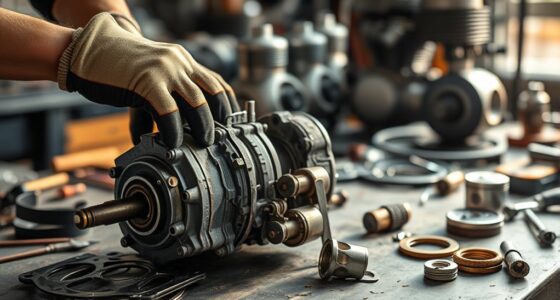
Restoring a Kawasaki KZ1000 can be a rewarding project if you know where to start. To begin, focus on evaluating the overall condition of the bike. Check the frame for rust or cracks, and make sure the suspension components are intact. Once you’ve examined the bike’s structural integrity, turn your attention to the engine. Engine tuning is essential for restoring performance. You’ll want to carefully inspect the carburetors, clean or replace jets, and ensure the spark plugs are in good shape. Tuning the engine not only improves power but also helps prevent future mechanical issues. If the engine runs rough or lacks power, replacing worn-out parts and properly tuning the carbs can make a significant difference. This step is critical in bringing your KZ1000 back to life and making sure it runs smoothly on the road.
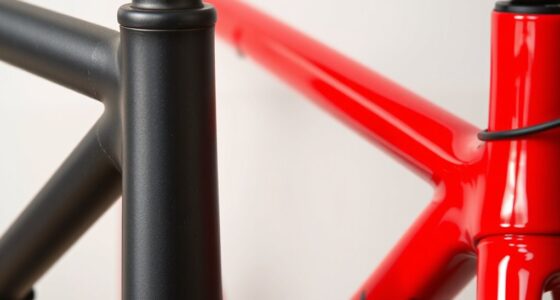
Next, consider the aesthetic aspect of restoration, especially paint restoration. The KZ1000’s original paint can fade or peel over time, but restoring it can dramatically improve the bike’s appearance. Start by thoroughly cleaning the surface to remove dirt, grease, and old wax. Sand down any rust spots or chipped paint to create a smooth surface. If the paint is severely damaged, consider stripping it completely and applying a fresh coat of primer before repainting. Choose high-quality motorcycle paint to ensure durability and a glossy finish. Mask off any areas that shouldn’t be painted, like the chrome parts or rubber components. Applying multiple thin coats will give you a more even finish and help prevent runs or drips. After the paint cures, you can add clear coat for extra shine and protection from the elements. Restoring the paint not only enhances your bike’s look but also helps protect the metal underneath, extending its lifespan. Additionally, understanding the importance of European cloud innovation can inspire modern approaches for safeguarding your restoration projects with secure and sustainable solutions.
While focusing on engine tuning and paint restoration, don’t forget other essential components such as brakes, tires, and electrical systems. Replacing worn brake pads, upgrading to new tires, and ensuring your wiring is intact will make your KZ1000 safer and more reliable. Restoring a Kawasaki KZ1000 isn’t just about aesthetics; it’s about bringing the entire bike back to life, functionality, and style. Approach each step methodically, and don’t rush the process. With patience and attention to detail, you’ll find yourself enjoying a classic superbike that’s as good as new—or even better. The satisfaction of riding a well-restored KZ1000 is unmatched, especially knowing you’ve put your effort into every detail of its revival.
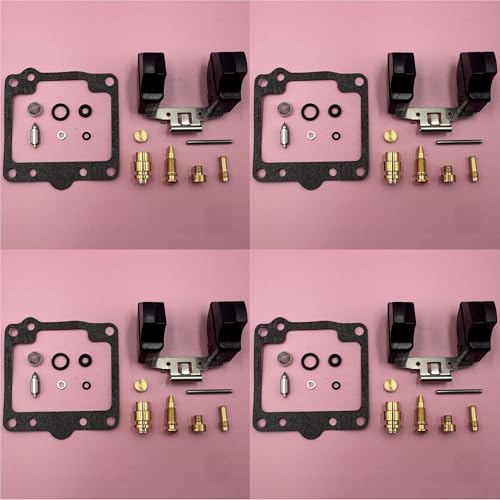
Carburetor Repair Kit with Float for Kawasaki KZ1000 M R J 1981-1983 Carb Rebuild Kit Compatible with KZ 1000 Motorcycle Models(4 pack)
Exact Fit for Kawasaki KZ1000 This carburetor rebuild kit is specifically engineered to fit for Kawasaki KZ1000 M,…
As an affiliate, we earn on qualifying purchases.
As an affiliate, we earn on qualifying purchases.
Frequently Asked Questions
What Are the Most Common Electrical Issues in a Kawasaki KZ1000?
You often face electrical issues like ignition troubleshooting and wiring harness problems on your Kawasaki KZ1000. Commonly, faulty wiring connections cause starting issues or misfires, so inspect your wiring harness thoroughly. Check for corrosion, frayed wires, or loose connections. Ignition problems often stem from a bad ignition switch or faulty spark plug wires. Regularly testing your electrical system helps identify and fix these issues early, ensuring your bike runs smoothly.
How Do I Upgrade the Suspension for Better Handling?
Imagine your Kawasaki KZ1000 as a wild stallion yearning for control. To tame it, upgrade your shocks for smoother, more responsive handling. Invest in high-quality suspension components and fine-tune your suspension settings to match your riding style. With precise suspension tuning, you’ll feel every twist and turn like a dance partner, transforming your ride into a masterpiece of agility and confidence on the road.
What Safety Gear Is Recommended for Restoration Work?
You should always wear motorcycle gloves to protect your hands and eye protection like goggles or safety glasses to shield your eyes from debris and chemicals. These safety gear essentials keep you safe while working on your restoration. Make sure your gloves are durable and fit well, and your eye protection provides a clear view. Prioritize safety to prevent injuries and enjoy your project with peace of mind.
Are There Any Aftermarket Parts Recommended for This Model?
You’ll find aftermarket parts like performance air filters and exhaust systems can really boost your Kawasaki KZ1000’s performance. Many enthusiasts swear by high-quality aftermarket exhausts for better sound and power, while performance air filters improve airflow and throttle response. Before installing, research reputable brands and verify compatibility. Using these upgrades, you’ll enhance your bike’s performance and enjoy an even more thrilling ride.
How Can I Improve the Bike’s Fuel Efficiency During Restoration?
To improve your Kawasaki KZ1000’s fuel economy, start by tuning the carburetor properly. Adjust the air-fuel mixture to guarantee ideal combustion, which can considerably boost efficiency. Regularly clean the carburetor components to prevent clogs and improve responsiveness. Consider replacing worn-out jets or needles with high-quality aftermarket parts. These steps help your bike run smoother, consume less fuel, and deliver better overall performance during your restoration.

Rust-Oleum 331172 Painter's Touch 2X Ultra Cover Spray Paint, 12 oz, High Gloss Black
Ideal for use on interior/exterior surfaces including wood, plastic, plaster, metal, masonry and unglazed ceramic
As an affiliate, we earn on qualifying purchases.
As an affiliate, we earn on qualifying purchases.
Conclusion
Restoring your Kawasaki KZ1000 might seem intimidating at first, but with patience and the right guidance, you’ll bring this classic superbike back to life. Don’t let fears of complexity hold you back—many enthusiasts have successfully tackled their restorations. Just take it step by step, enjoy the process, and remember that every detail you fix adds to the bike’s legacy. Before you know it, you’ll be riding a stunning, restored KZ1000, proud of your achievement.

EBC Brakes FA447HH Disc Brake Pad Set
Designed for maximum stopping power and long usable life^Stainless steel heat radiator plates for most motorcycles^Unique double segment…
As an affiliate, we earn on qualifying purchases.
As an affiliate, we earn on qualifying purchases.

Pirelli Angel ST 120/70ZR17 (58W) Front & 180/55ZR17 (73W) Rear Motorcycle Tires – High-Performance Sport Touring Tire for Enhanced Grip, Durability & Stability – Fits Sport & Touring Bikes
Sport Touring Compound: The high silica content compound is specifically engineered for sport touring, providing excellent grip on…
As an affiliate, we earn on qualifying purchases.
As an affiliate, we earn on qualifying purchases.