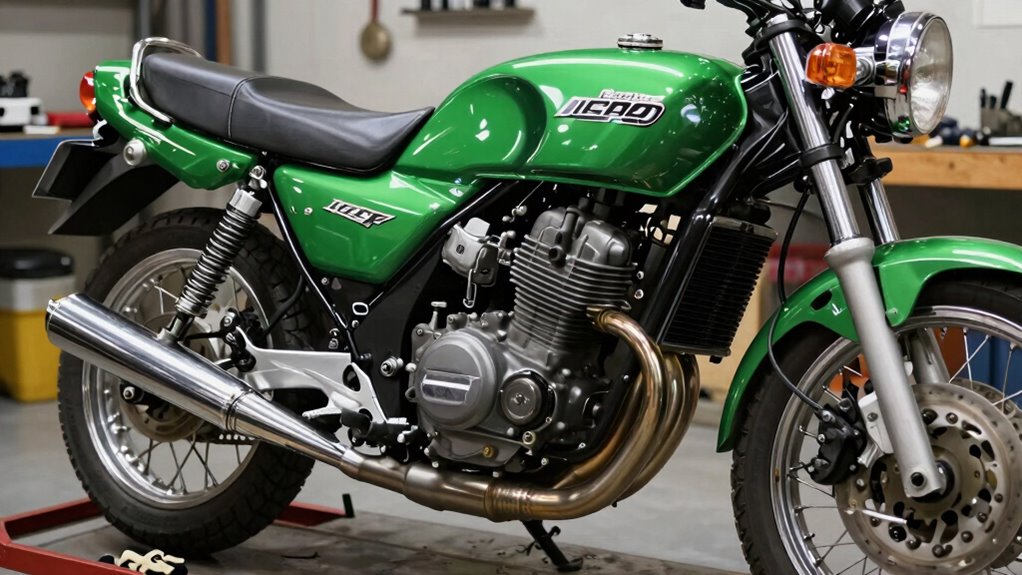

To restore your Kawasaki Z1 to its former glory, start by carefully disassembling and inspecting engine parts, checking for wear and damage. Rebuild the frame and suspension, replacing worn bushings and guaranteeing proper alignment. Rewire and refurbish the electrical system, then overhaul the wheels, brakes, and suspension components. Finally, reassemble, tune, and perform thorough checks to ensure peak performance. Continuing will guide you through each essential step for a complete and successful restoration.
Key Takeaways
- Disassemble and inspect engine components thoroughly, measuring wear and replacing damaged parts to ensure optimal performance.
- Restore the frame and suspension by cleaning, checking for cracks, replacing worn bushings, and ensuring proper alignment.
- Rewire electrical systems with OEM-quality parts, inspecting wiring harnesses, connectors, and testing critical components like ignition and switches.
- Overhaul wheels, brakes, and suspension, replacing worn brake pads, checking bearings, aligning wheels, and bleeding hydraulic lines.
- Assemble the motorcycle with proper torque, adjust engine timing, and perform test rides for fine-tuning and verification of restoration quality.

Damineding 4 sets Carburetor Repair REBUILD Kit fit for ZR750 ZX750 ZL900 ZX900 ZG1000 ZX1000 ZG1200
This item is made with High quality materials. All made in Taiwan.Each kit contains all necessary gaskets, O-rings,…
As an affiliate, we earn on qualifying purchases.
As an affiliate, we earn on qualifying purchases.
Disassembling and Inspecting the Engine Components

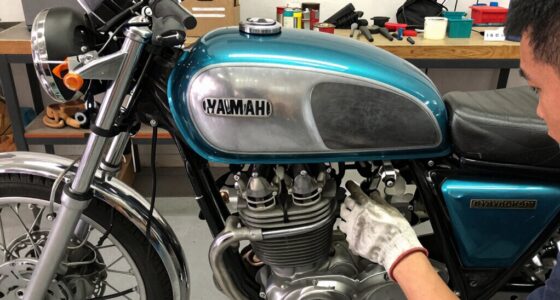
Before you begin disassembling the engine, make certain you have the proper tools, workspace, and a detailed service manual for your Kawasaki Z1 model. Start by draining all fluids—oil and coolant—to prevent spills and contamination. Carefully remove the engine from the frame, following your manual’s instructions. Once out, disassemble the cylinder head, camshaft, valves, and related components. Inspect each part for wear, cracks, or damage. Measure valve shim thicknesses precisely to determine if replacements are needed. Check the camshaft for scoring or warping. Use clean containers and brushes to clean parts thoroughly, and keep track of every bolt and component’s placement. This careful inspection guarantees you identify issues early, setting a solid foundation for a successful rebuild. Proper inspection is crucial for identifying potential issues and ensuring a reliable rebuild. Additionally, paying attention to engine component wear helps you prioritize repairs and replacements for optimal engine performance, especially considering the importance of filtration and pump protection in maintaining clean oil flow during operation. Regularly inspecting wear patterns on engine parts further enhances your ability to detect early signs of trouble and plan effective maintenance. Incorporating thorough cleaning techniques can also extend the lifespan of your engine components and improve overall performance.

KVAEY Chain Alignment Tool for Motorcycle, 08-0048 Aluminum Sprocket Chain Adjustment Tool, Quick & Accurate Professional Chain Alignment Tool Suitable for ATV Scooter Dirt Bike (Blue)
Precision Alignment: The 08-0048 chain alignment tool offers exceptionally accurate measurements for both chain tension and alignment. This…
As an affiliate, we earn on qualifying purchases.
As an affiliate, we earn on qualifying purchases.
Restoring and Rebuilding the Frame and Suspension
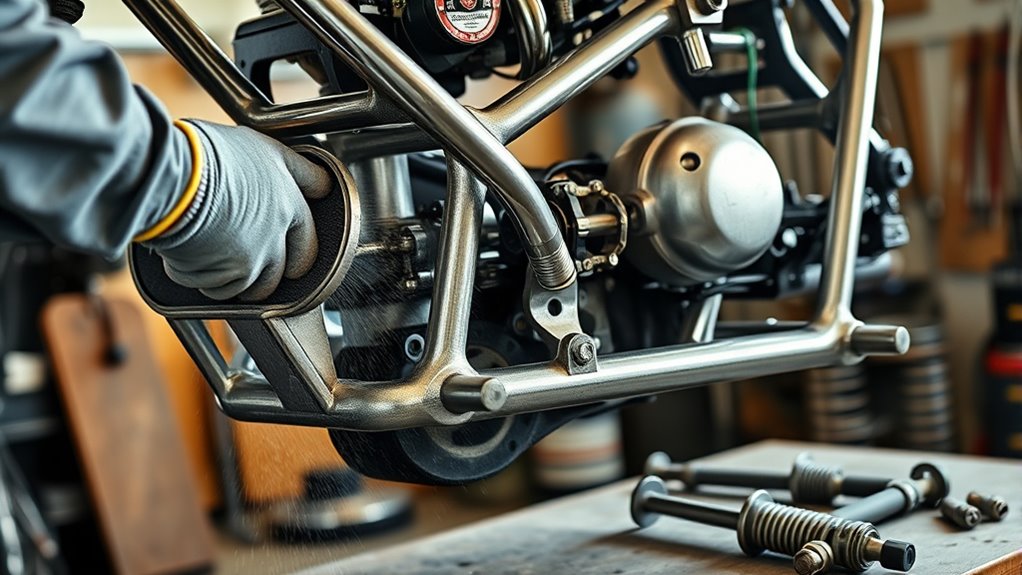
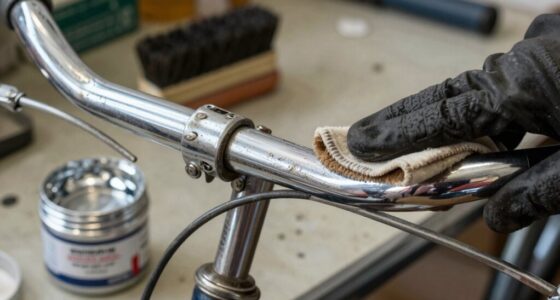
Removing the engine from the frame gives you clear access to inspect and restore the structural integrity of your Kawasaki Z1. Start by checking for rust, cracks, or signs of wear on the frame tubes and welds. Use a straightedge or laser alignment tools to verify the frame’s alignment; misalignment affects handling and safety. Examine suspension mounts and pivot points for worn bushings or bearings, replacing them as needed. Clean the frame thoroughly before applying a protective coating, matching the original finish to maintain authenticity. Document and photograph the original setup to ensure accurate reassembly. When restoring the suspension, replace worn bushings and bearings, and inspect the shock absorbers for leaks or damage. Properly restored frame and suspension are vital for safe, authentic riding. Additionally, inspecting and maintaining the suspension components ensures a smoother, more controlled ride. To achieve optimal performance, consider checking hydraulics and damping characteristics of your shocks and forks during restoration. Regularly inspecting these components can help prevent future issues and prolong the lifespan of your suspension system, especially by addressing wear and tear early before they lead to bigger problems. Incorporating preventative maintenance practices can significantly enhance the durability and reliability of your restored motorcycle.
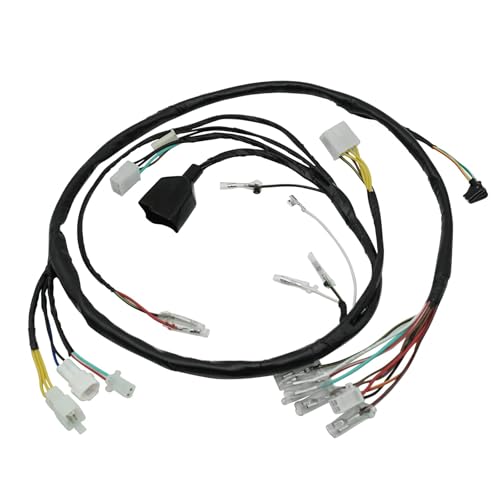
JAVIK Wire Wiring Harness for Kawasaki Bayou 300 KLF300 1986-1987, OEM# 26001-1712
【Fitment】Fit for Kawasaki ATV as Following ▶ KLF300 Bayou 300 1986-1987 ▶ 1986 KLF300 Bayou 300 2×4 ▶…
As an affiliate, we earn on qualifying purchases.
As an affiliate, we earn on qualifying purchases.
Rewiring and Refurbishing Electrical Systems
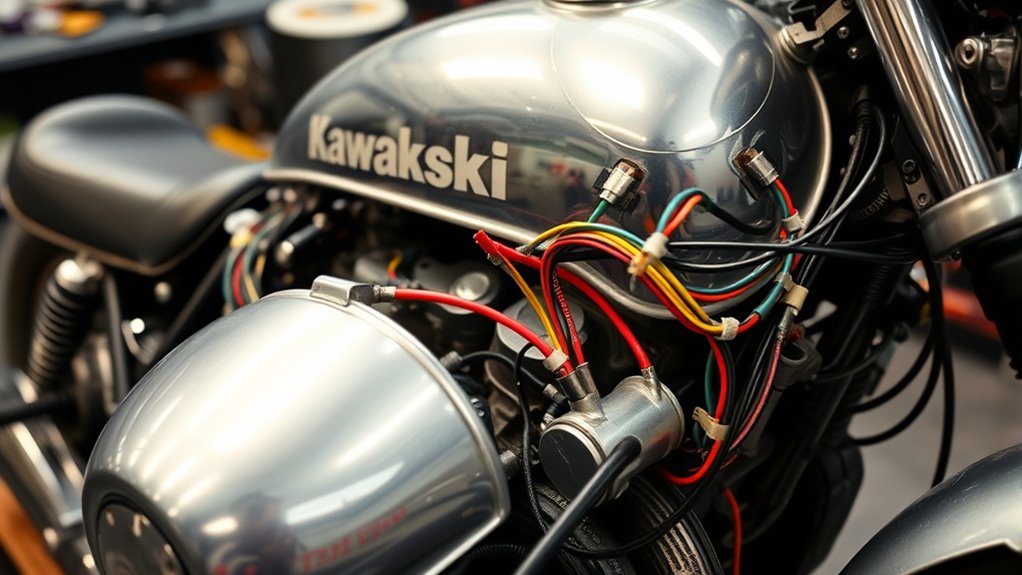
Rewiring and refurbishing the electrical system is a crucial step in restoring your Kawasaki Z1 to its original performance and appearance. Begin by inspecting the wiring harness for cracked insulation, corrosion, or damaged connectors. Replace any faulty wires with OEM-quality replacements to ensure reliability. Test components like ignition coils, switches, and fuse boxes, refurbishing or replacing as needed to meet factory specs. Carefully route cables to prevent mechanical wear and electrical interference, referencing your original wiring diagram. Clean or restore connectors with contact cleaner to improve conductivity. Check the neutral switch behind the sprocket cover and ensure proper operation. Use appropriate lubricants on connectors and terminals during reassembly. A well-maintained electrical system guarantees reliable starting, lighting, and overall functionality, essential for your Z1’s authentic restoration. Proper wiring techniques help maintain the integrity of your electrical system and prevent future issues, especially by considering vetted electrical components to ensure long-term durability. Incorporating proper grounding procedures can further enhance electrical stability and reduce potential faults over time.

GOOFIT Motorcycle Disc Brake Pad Kit Replacement for CM Opening 102 * 39.2 * 9
Replacement for mm opening 102*39.2*9.
As an affiliate, we earn on qualifying purchases.
As an affiliate, we earn on qualifying purchases.
Overhauling Wheels, Brakes, and Suspension

Restoring the wheels, brakes, and suspension of your Kawasaki Z1 is essential to make certain of safe handling and authentic performance. First, inspect wheel bearings for play or damage; replace if needed. Next, true the rims and tighten spokes carefully—avoid overtightening to prevent distortion and ensure longevity. For the brakes, check pads, calipers, and hydraulic lines; replace worn components and bleed the system to ensure responsiveness. Additionally, maintaining proper wheel alignment and tire pressure can significantly improve handling and safety. Proper suspension setup is crucial for a smooth ride and stability, so be sure to adjust shocks and forks accordingly. Lastly, examine suspension components: bushings, forks, and shocks; replace worn parts and restore proper alignment. Maintaining these elements guarantees superior grip and stability. Additionally, ensuring proper wheel alignment can enhance your ride quality and longevity. Here’s what to focus on: 1. Inspect and replace wheel bearings. 2. True rims and tighten spokes. 3. Overhaul brake pads, calipers, and hydraulics. 4. Check and service suspension parts for smoothness.
Assembling, Tuning, and Final Checks for Optimal Performance
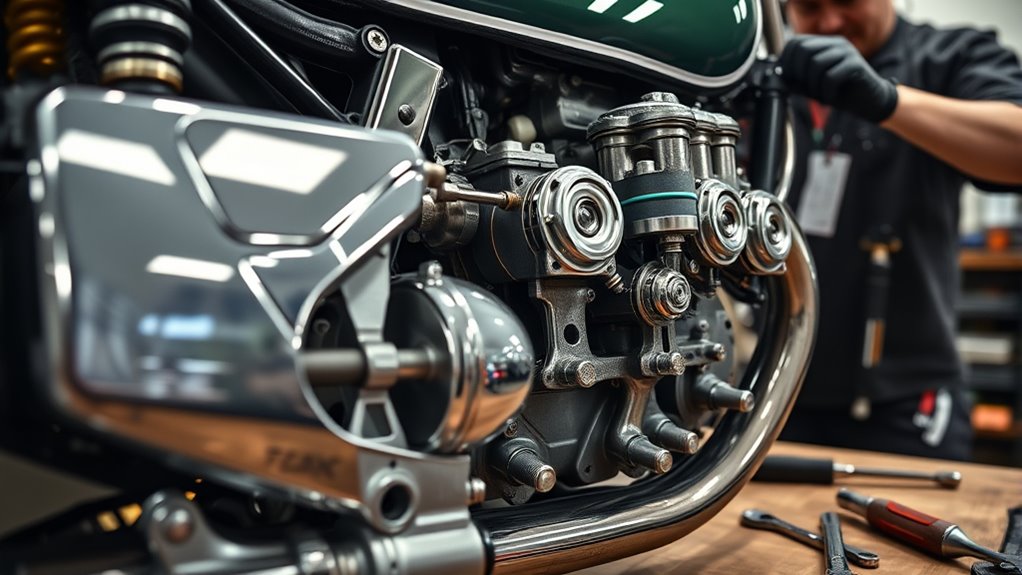
To achieve ideal performance after rebuilding your Kawasaki Z1, precise assembly, careful tuning, and thorough final checks are essential steps. Begin by double-checking all fasteners, ensuring bolts and nuts are torqued to factory specifications. Confirm smooth engine rotation and proper timing by rotating the crankshaft manually. Adjust valve clearances precisely with new shims, avoiding rattles or tightness. Verify that all electrical connections are secure, routed correctly, and free of corrosion. Inspect brake systems and wheel alignment for safety and responsiveness. Prime the lubrication system before starting to prevent dry runs. During initial startup, monitor oil pressure, engine temperature, and smoothness. Perform a test ride, paying attention to handling, acceleration, and noise. Fine-tune carburetors and ignition as needed for optimal performance. Additionally, conducting a thorough pre-ride inspection can help identify any overlooked issues before hitting the road.
Frequently Asked Questions
What Are the Best Practices for Preserving Originality During Restoration?
To preserve originality, you should use OEM or factory-original parts whenever possible, avoiding aftermarket replacements that compromise authenticity. Carefully document and photograph the bike’s original condition before disassembly, and reassemble with the same hardware, finishes, and colors. Maintain original specifications for components like paint, decals, and wiring, and prioritize restoring rather than replacing parts. This careful attention guarantees your bike remains true to its authentic, original design.
How Do I Identify Genuine OEM Parts for My Kawasaki Z1?
Think of OEM parts as the heartbeat of authenticity. To identify genuine Kawasaki Z1 components, inspect packaging for original markings, holograms, or part numbers matching Kawasaki catalogs. Check for consistent quality, casting marks, and correct finishes. Use reputable suppliers, cross-reference part numbers, and compare with original parts or high-quality reproductions. When in doubt, consult with Kawasaki experts or restoration communities to guarantee your parts keep your Z1 true to its roots.
What Safety Precautions Should I Follow During Engine Reassembly?
During engine reassembly, always wear safety goggles and gloves to protect your eyes and skin from sharp edges, hot surfaces, and chemicals. Make certain the engine is cool before working to prevent burns. Use proper tools to avoid slips or damage, and follow torque specifications precisely to prevent parts from failing. Keep your workspace clean and organized to prevent accidents, and double-check connections before starting the engine to make certain of safety and proper function.
How Can I Improve Reliability While Maintaining Period Authenticity?
Did you know that maintaining original parts boosts reliability by up to 30%? To improve reliability while keeping authenticity, focus on using OEM-quality components, especially for critical parts like gaskets, seals, and electrical components. Regularly inspect and replace worn parts, keep everything well-lubricated, and tune the engine precisely. These steps ensure your Z1 performs reliably without sacrificing its period-correct look and feel.
What Tools Are Essential for Precise Frame and Engine Alignment?
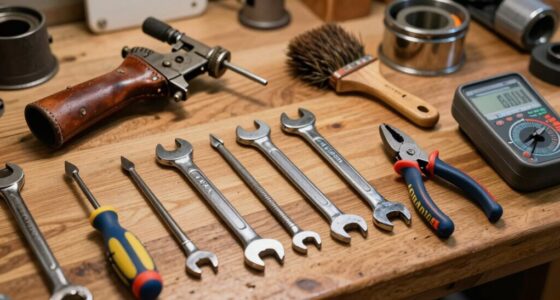
You’ll need a set of precision tools for accurate frame and engine alignment. Use a straight edge or laser alignment tool to check frame straightness. Dial indicators help measure runout and component alignment. Torque wrenches ensure bolts are tightened to factory specs. Clamps and reference blocks assist in positioning parts correctly. Finally, a camshaft alignment tool guarantees proper timing. These tools help you accomplish precise, reliable rebuilds that stay true to original specifications.
Conclusion
By following these steps, you’ll breathe new life into your Kawasaki Z1 and bring it back to its former glory. Patience and attention to detail are key—don’t cut corners or rush the process. Remember, a well-restored bike is only as good as the effort you put in. Keep at it, stay diligent, and you’ll find that the proof of the pudding is in the riding. Your dream Z1 will be worth every bit of your hard work.